You've spent thousands on Facebook ads, Google campaigns, and email marketing. Your analytics show traffic spikes, conversions trickle in, and your CRM fills with customer records. But when you try to connect the dots between that first ad click and the eventual purchase, you hit a wall. Was it the Facebook ad they saw on mobile? The Google search they did at work? The email they opened on their tablet? Without a unified view of each customer's journey, you're essentially flying blind—making budget decisions based on incomplete data and missing the patterns that could double your ROI.
This is where a first party identity graph changes everything. Instead of scattered data points across disconnected platforms, an identity graph creates a single, unified customer profile that follows each person across devices, sessions, and channels. It's the difference between seeing isolated interactions and understanding the complete story of how customers discover, evaluate, and buy from you.
The value proposition is straightforward but powerful: better attribution that shows what's actually driving revenue, smarter ad spend based on complete customer journeys, and more personalized marketing built on data you own and control. In a privacy-first world where third-party tracking is disappearing, building your own identity infrastructure isn't just smart—it's essential for competitive survival.
The Foundation: How Identity Graphs Connect Customer Touchpoints
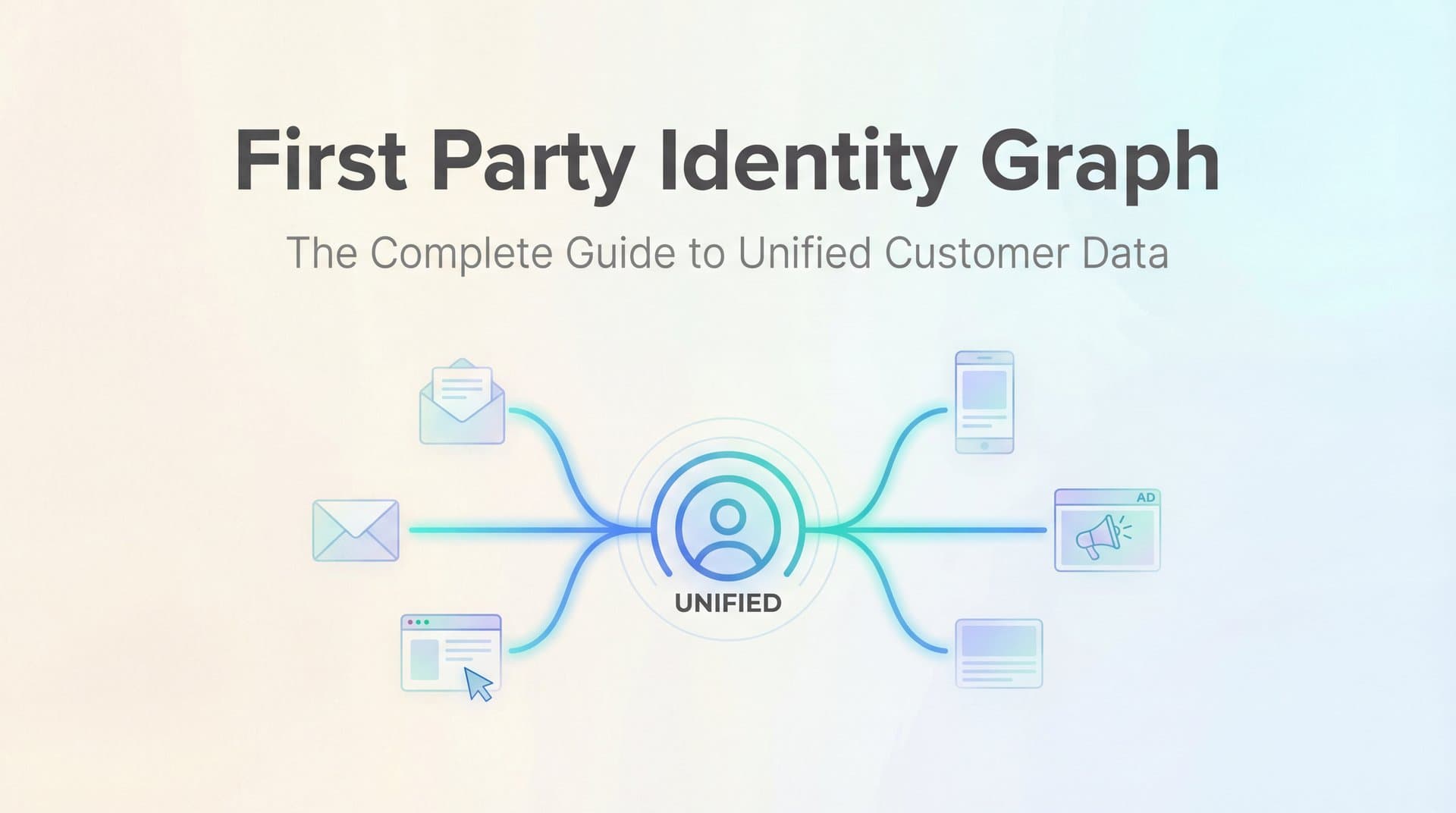
A first party identity graph is a database that links multiple identifiers—email addresses, device IDs, browser cookies, CRM records, and more—to create unified customer profiles. Think of it as a master key that unlocks the full picture of each customer's interactions with your brand.
Here's how it works in practice. When someone clicks your Facebook ad on their iPhone, visits your website from their work laptop, and eventually purchases through a desktop browser, those look like three different people to most analytics platforms. An identity graph recognizes these are the same person by connecting the identifiers from each touchpoint into one profile.
The critical distinction lies in data ownership. First-party identity graphs are built entirely from data you collect directly through customer interactions—website visits, purchases, email signups, and CRM records. You own this data, you control how it's used, and you're not dependent on external providers who might change their policies or lose access to tracking capabilities. Understanding what is first party data is essential for building this foundation.
Third-party identity graphs, by contrast, rely on data purchased from external providers who aggregate information across multiple websites and platforms. While these can be useful, they're increasingly vulnerable to privacy regulations and platform restrictions. More importantly, you don't control the underlying data quality or collection methods.
Identity resolution—the process of connecting these scattered identifiers—happens through two complementary approaches. Deterministic matching uses exact identifiers that definitively prove two records represent the same person. When someone logs into your website with their email address, then makes a purchase using that same email, you have a deterministic match. These are your gold standard connections—100% accurate and reliable.
Probabilistic matching fills the gaps using behavioral patterns and technical signals. If someone visits your site from a specific IP address and device fingerprint, then later returns from the same combination, there's a high probability it's the same person—even without a login. Probabilistic matching analyzes patterns like browsing behavior, timing, location data, and device characteristics to make educated connections.
The most effective identity graphs combine both methods. Deterministic matches provide the solid foundation, while probabilistic matching extends your reach to anonymous visitors and pre-conversion interactions. This hybrid approach captures the complete customer journey from first anonymous browse to final logged-in purchase.
The technical architecture matters here. Modern identity graphs process data in real-time, updating customer profiles as new interactions occur. When a previously anonymous visitor finally converts and provides their email, the graph retroactively connects all their prior touchpoints to that now-known customer profile. This backward resolution is what makes accurate multi-touch attribution possible.
Why Privacy Changes Make First-Party Identity Essential
The tracking landscape has fundamentally shifted, and marketers who haven't adapted are losing visibility fast. Apple's iOS 14.5 update introduced App Tracking Transparency, requiring apps to ask permission before tracking users across other companies' apps and websites. The result? Opt-in rates hovering around 25%, meaning three-quarters of iOS users are invisible to traditional third-party tracking.
Google's planned deprecation of third-party cookies in Chrome represents an even bigger earthquake. When the world's most popular browser stops supporting cookies that track users across websites, the entire third-party data ecosystem loses its foundation. Marketers who relied on cookie-based tracking for attribution, retargeting, and audience building face a future where those methods simply stop working. The shift means saying goodbye to third party cookies as a reliable tracking mechanism.
Privacy regulations like GDPR in Europe and CCPA in California have added legal teeth to these technical changes. Collecting and using third-party data now carries compliance risks that many companies aren't willing to take. Fines for violations can reach into the millions, and the reputational damage compounds the financial cost.
First-party identity graphs provide a privacy-compliant path forward. When you collect data directly from customers who interact with your brand—and you do it with proper consent and transparency—you're operating within the boundaries of current and emerging privacy laws. You're not tracking people across the web; you're tracking their interactions with your own properties.
This distinction matters enormously for both legal compliance and customer trust. Customers generally understand and accept that companies track behavior on their own websites and apps. What they object to is being followed across the entire internet by companies they've never directly interacted with. First-party data collection, done transparently, aligns with customer expectations.
The competitive advantage of building your identity infrastructure now is significant. As third-party data sources dry up, companies with mature first-party identity graphs will have visibility that their competitors lack. They'll understand customer journeys, optimize ad spend effectively, and personalize experiences—while competitors struggle with incomplete data and broken attribution.
This isn't hypothetical. Marketers who delayed building first-party data capabilities after iOS 14.5 spent months trying to make sense of incomplete Facebook attribution while competitors who'd prepared maintained clear visibility. The Chrome cookie deprecation will create a similar divide, except the impact will be broader and more permanent.
The window for building this infrastructure is closing. Once third-party alternatives disappear completely, everyone will be scrambling to build first-party solutions simultaneously. The companies that start now gain months or years of data collection, identity resolution refinement, and competitive advantage.
Building Your Identity Graph: Data Sources and Integration Points
Your identity graph is only as powerful as the data sources you connect to it. The foundation starts with website behavior—every page view, button click, form submission, and conversion event. This behavioral data creates the timeline of how customers interact with your brand, revealing patterns that help both with identity resolution and marketing optimization.
Your CRM represents the other critical pillar. Customer records contain the deterministic identifiers—emails, phone numbers, customer IDs—that anchor your identity graph. When you connect CRM data to website behavior, you transform anonymous browsing sessions into known customer journeys. This connection is what makes the magic happen.
Email engagement data adds another dimension. Opens, clicks, and conversions from email campaigns provide both behavioral signals and opportunities for identity matching. When someone clicks an email link and lands on your website, you can connect their email address to their browsing session, creating a deterministic match that ties together their email and web identities.
Ad platform interactions complete the picture. Clicks from Facebook, Google, LinkedIn, and other channels need to flow into your identity graph so you can track the full customer journey from paid media to conversion. This is where first party data tracking becomes essential—browser-based tracking misses too much data to build reliable attribution.
Purchase history and transaction data provide the outcome metrics that make attribution meaningful. Connecting revenue to specific customer journeys shows which marketing touchpoints actually drive business results, not just vanity metrics like clicks and impressions.
The technical requirements for connecting these sources center on server-side tracking infrastructure. Unlike browser-based tracking that relies on cookies and JavaScript, server-side tracking sends data directly from your servers to your identity graph. This approach bypasses ad blockers, browser restrictions, and privacy tools that block traditional tracking methods.
API connections link your various platforms—CRM, email service provider, ad platforms, e-commerce system—to your identity graph. These connections need to be bidirectional in many cases. Data flows into your identity graph for identity resolution and attribution, then enriched customer data flows back out to ad platforms to improve their targeting algorithms.
Data warehousing considerations become important as your identity graph scales. You need infrastructure that can handle millions of events per day, process real-time identity resolution, and query customer profiles instantly for marketing activation. Cloud-based solutions have made this more accessible, but the architecture still requires careful planning.
Data quality and hygiene determine whether your identity graph produces accurate insights or garbage results. Inconsistent data formatting—like "john@email.com" vs "John@email.com"—can prevent matches that should be obvious. Duplicate records, outdated information, and missing fields all degrade identity resolution accuracy.
Establishing data collection standards across all sources is critical. Every platform that sends data to your identity graph should use consistent naming conventions, formatting rules, and data structures. This standardization might seem tedious, but it's what separates identity graphs that work from those that frustrate.
Data validation and cleaning processes need to run continuously. As new data flows in, automated checks should flag anomalies, correct common formatting issues, and merge duplicate records. The cleaner your input data, the more accurate your identity resolution becomes.
From Unified Profiles to Marketing Action: Practical Applications
Multi-touch attribution becomes possible once you have unified customer profiles. Instead of seeing isolated clicks and conversions, you can trace the complete journey from first touchpoint to final purchase. Did that Facebook ad introduce them to your brand? Did the Google search happen three days later? Did they open two emails before finally converting? Your identity graph connects these dots.
This complete journey visibility lets you assign proper credit across all marketing touchpoints. First touch attribution shows what introduced customers to your brand. Last-touch reveals what closed the deal. Multi-touch models distribute credit across the entire journey, showing how different channels work together to drive conversions. Without an identity graph connecting these touchpoints to the same customer, you're forced to guess or rely on incomplete platform-reported data.
Audience building transforms when you can segment based on complete customer profiles rather than isolated interactions. You can create audiences of people who clicked a Facebook ad, visited your pricing page, but didn't convert—then retarget them with specific messaging addressing common objections. Or build lookalike audiences from your highest-value customers, defined by total purchase history across all channels, not just what one platform can see.
Audience suppression prevents one of the most common wastes of ad spend: continuing to advertise to people who've already converted. Your identity graph knows when someone becomes a customer, allowing you to suppress them from acquisition campaigns immediately. This works across all platforms—once someone converts, they're suppressed everywhere, not just on the platform where they converted.
The financial impact of proper suppression is substantial. Companies often discover they're spending 15-30% of their acquisition budget advertising to existing customers. Eliminating this waste through identity-powered suppression immediately improves campaign efficiency.
Conversion optimization gets a major boost when you feed enriched customer data back to ad platforms. Facebook, Google, and other platforms use machine learning to optimize ad delivery, but they can only work with the data they receive. When your identity graph enriches conversion events with additional customer information—purchase value, customer segment, lifetime value predictions—the platforms' algorithms can optimize more effectively. Understanding ad platform algorithm optimization techniques helps you maximize this advantage.
This data enrichment creates a virtuous cycle. Better data leads to better optimization, which leads to better results, which generates more customer data to enrich future conversions. Companies that implement this approach often see 20-40% improvements in ROAS as ad platforms learn to target higher-value customers more effectively.
Personalization becomes more sophisticated with complete customer profiles. Instead of treating every website visitor the same, you can customize experiences based on their entire journey. Someone who's visited five times and viewed your enterprise pricing deserves different messaging than a first-time visitor exploring basic features. Your identity graph provides the context that makes this personalization possible.
Cross-channel orchestration ensures consistent experiences as customers move between touchpoints. When someone abandons a cart on your website, your identity graph can trigger a personalized email, adjust their Facebook ad experience, and update what they see on their next website visit—all coordinated around their specific journey stage.
Measuring Success: KPIs That Prove Identity Graph Value
Match rate measures what percentage of your customer touchpoints can be linked to known customer profiles. If you're tracking 100,000 website sessions per month and your identity graph can match 60,000 to specific customer profiles, you have a 60% match rate. Higher match rates mean better visibility into customer journeys and more accurate attribution.
Industry benchmarks vary by business model, but mature identity graphs typically achieve 50-70% match rates for anonymous traffic and 85-95% for logged-in interactions. If your match rate is significantly lower, it indicates opportunities to improve data collection, identity resolution logic, or customer authentication.
Tracking match rate trends over time reveals whether your identity infrastructure is improving. As you add data sources, refine matching algorithms, and increase customer logins, your match rate should climb. Stagnant or declining match rates signal problems that need attention.
Attribution accuracy compares identity-powered attribution against platform-reported metrics to reveal discrepancies. Facebook might claim credit for 100 conversions, but when you trace the complete customer journey through your identity graph, you might find only 40 of those were genuinely first touch conversions while the other 60 had earlier touchpoints on other channels.
These discrepancies don't mean platforms are lying—they're just reporting from their limited perspective. Your identity graph provides the complete picture that shows how channels work together. This accuracy is what enables smarter budget allocation across channels.
ROI indicators demonstrate the business impact of better identity resolution. Customer acquisition cost should decrease as you eliminate wasted spend on existing customers and optimize toward higher-value prospects. Companies implementing identity-powered suppression typically see 10-25% CAC reductions within the first quarter.
Return on ad spend improves when you feed enriched conversion data back to ad platforms. As their algorithms learn to target better prospects, your cost per acquisition drops while conversion rates climb. The combination drives ROAS improvements of 20-50% for many businesses.
Customer lifetime value metrics reveal whether you're acquiring the right customers. Identity graphs that track customers across their entire relationship with your brand show which acquisition funnel marketing channels bring in customers who stick around and spend more over time. This insight is far more valuable than knowing which channels drive the most first purchases.
Choosing the Right Identity Solution for Your Marketing Stack
The build versus buy decision depends on your technical resources, data volume, and speed requirements. Building a custom identity graph gives you complete control and customization but requires significant engineering resources. You'll need data engineers to build the infrastructure, maintain integrations, and continuously refine identity resolution algorithms.
Custom solutions make sense for large enterprises with unique data requirements, existing data infrastructure, and engineering teams available to own the project. If you're processing millions of events daily across dozens of data sources, the investment in custom infrastructure might be justified.
For most marketing teams, leveraging platforms with built-in identity capabilities is the faster path to value. Modern attribution software includes identity graph functionality as core infrastructure, letting you focus on using the insights rather than building the plumbing.
Key features to evaluate include real-time identity resolution—can the system connect touchpoints as they happen, or does it only process data in batches? Real-time resolution enables immediate marketing actions like dynamic audience updates and instant conversion attribution.
Cross-platform tracking capabilities determine how completely you can see customer journeys. The solution should track website behavior, mobile app interactions, ad platform engagement, email activity, and CRM events—all connected through unified customer profiles.
CRM integration depth matters because your CRM contains the deterministic identifiers that anchor your identity graph. Look for solutions that sync bidirectionally with your CRM, updating customer profiles in real-time as new data flows in from both directions.
Ad platform syncing capabilities let you activate your identity graph data for marketing optimization. The solution should feed enriched conversion events back to Facebook, Google, and other platforms to improve their targeting algorithms. This closed-loop approach maximizes the value of your identity data.
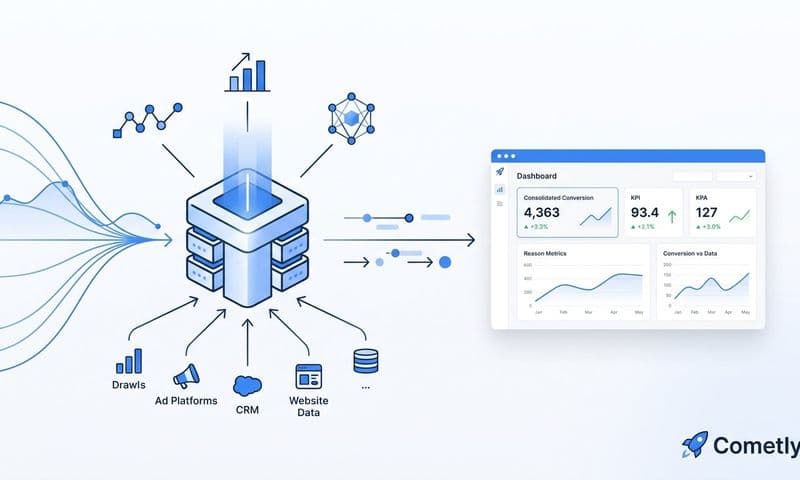
Cometly's approach to identity resolution captures every touchpoint from ad clicks to CRM events, providing the AI with a complete, enriched view of every customer journey. The platform connects your ad platforms, CRM, and website to track the entire customer journey in real-time, then uses that unified data to power accurate multi-touch attribution across all your marketing channels.
What makes this valuable for identity-powered marketing is how Cometly feeds enriched, conversion-ready events back to Meta, Google, and other ad platforms. When your identity graph connects a conversion to the complete customer journey, Cometly sends that enriched data back to improve ad platform targeting and optimization. This creates better results from your ad spend while maintaining the complete attribution visibility you need to make smart budget decisions.
Building Your Identity Foundation for Marketing Success
First-party identity graphs have moved from competitive advantage to essential infrastructure. As third-party tracking disappears and privacy regulations tighten, marketers who can't connect customer touchpoints into unified profiles will operate with incomplete data and broken attribution. The question isn't whether to build identity infrastructure—it's how quickly you can implement it.
The benefits compound over time. Unified customer views improve attribution accuracy, letting you shift budget toward channels that actually drive revenue. Privacy compliance protects you from regulatory risks while building customer trust. Enriched data fed back to ad platforms improves their optimization, creating a virtuous cycle of better targeting and higher returns. A solid first party data strategy becomes the foundation for all these improvements.
Starting now gives you the data foundation and identity resolution refinement that takes months to build. Every day you delay is another day of incomplete attribution, wasted ad spend on converted customers, and missed opportunities to optimize based on complete customer journeys.
The marketing teams winning in this privacy-first landscape are those who invested early in first-party data infrastructure. They see complete customer journeys while competitors struggle with fragmented data. They optimize confidently while others guess. They scale efficiently while others waste budget on attribution blind spots.
Ready to elevate your marketing game with precision and confidence? Discover how Cometly's AI-driven recommendations can transform your ad strategy—Get your free demo today and start capturing every touchpoint to maximize your conversions.