Every dollar you spend on advertising should be traceable to a result. Whether that result is a purchase, a lead form submission, a booked demo, or a phone call, you need to know which ad drove it. That is what ad conversion tracking is all about: connecting your advertising spend to the real-world outcomes it produces.
Without it, you are making budget decisions based on guesswork. You might be pouring money into campaigns that look busy but never actually convert, while starving the ones quietly generating your best customers.
The problem is that tracking ad conversions has gotten more complex in recent years. Privacy changes, cross-device browsing, longer buyer journeys, and multi-platform campaigns all make it harder to see the full picture using native platform tools alone. Apple's iOS 14.5 App Tracking Transparency update fundamentally changed how browser-based pixels work, and ongoing shifts in cookie policies have only added to the challenge.
This guide walks you through the entire process of setting up accurate ad conversion tracking, from defining what counts as a conversion to verifying your data is flowing correctly. By the end, you will have a clear system for knowing exactly which ads and channels drive revenue, so you can optimize with confidence and scale what works.
Step 1: Define Your Conversion Events and Assign Values
Before you install a single pixel or configure a single tag, you need to answer one fundamental question: what counts as a conversion for your business?
This sounds obvious, but many marketers skip this step and end up tracking everything indiscriminately. The result is a data set that is noisy, hard to interpret, and actively misleading to the ad platform algorithms that rely on your conversion signals to optimize campaigns.
Start by separating your conversions into two categories.
Macro conversions are the high-value actions directly tied to revenue. Think completed purchases, submitted lead forms, booked demos, signed contracts, or free trial activations. These are the outcomes your business actually runs on.
Micro conversions are the smaller steps that indicate interest and intent. Email newsletter signups, add-to-cart events, pricing page visits, and video completions fall into this category. They matter for funnel analysis because they help you understand where prospects are dropping off before they reach a macro conversion.
Once you have your list, assign a monetary value to each conversion type. For e-commerce, this is straightforward: the purchase value is the conversion value. For lead generation, you need to work backwards. If your average lead-to-customer rate is known and your average customer lifetime value is known, you can assign a realistic value to each qualified lead submission. This allows you to calculate true return on ad spend rather than just counting events.
Next, map each conversion to a stage in your customer journey. Awareness campaigns should be credited for driving micro conversions. Retargeting and bottom-of-funnel campaigns should be measured against macro conversions. When your tracking aligns with how buyers actually move through your funnel, your optimization decisions become much sharper.
One common pitfall to avoid: tracking too many low-value events as primary conversions. When you send dozens of weak signals to ad platforms, their algorithms get confused about what to optimize for. Keep your primary conversion events focused on actions that actually matter, and use micro conversions as secondary signals for analysis rather than optimization targets.
Write out your final conversion event list with names, definitions, and assigned values before moving to the next step. This document becomes your tracking blueprint.
Step 2: Install Tracking Pixels and Tags on Your Website
With your conversion events defined, the next step is getting the right tracking infrastructure in place. This means installing the pixels and tags for each ad platform you run campaigns on.
The most commonly used tracking tags include the Meta Pixel, the Google Ads conversion tag, the TikTok Pixel, and the LinkedIn Insight Tag. Each one works similarly: a snippet of JavaScript fires on your website and sends behavioral data back to the respective ad platform. Understanding what a tracking pixel is and how it works is essential before you begin implementation.
Rather than adding each of these tags directly to your website's source code, use Google Tag Manager as your centralized tag management system. GTM lets you deploy and manage all your tracking tags from a single dashboard without requiring a developer for every change. It also reduces the risk of code conflicts and keeps your site's performance cleaner.
Here is how to approach the installation:
1. Install GTM on your website first. Add the GTM container snippet to every page of your site, typically in the head and body sections. Most website platforms have a native GTM integration or a plugin that makes this straightforward.
2. Deploy your base pixels through GTM. In GTM, create tags for each platform's base pixel code. Set these to fire on all pages so the platforms can build audience data and track user behavior site-wide.
3. Create event-specific tags for your conversion pages. For each conversion event you defined in Step 1, set up a tag that fires only on the relevant page. Thank-you pages, checkout confirmation pages, and booking confirmation pages are the most common trigger points. Use GTM's trigger rules to fire these tags only when a specific URL is matched or a specific button is clicked.
4. Test every tag before going live. Each platform offers a debugging tool to verify tags are firing correctly. Use Meta's Pixel Helper browser extension, Google's Tag Assistant, and TikTok's Pixel Helper to confirm each tag is active and sending the right events. GTM's own Preview mode lets you walk through your site and see exactly which tags fire on each page.
One critical pitfall to watch for is duplicate tag firing. This happens when the same conversion event fires more than once for a single user action, inflating your conversion counts and sending bad signals to ad platforms. Common causes include having the same pixel installed both directly in the site code and in GTM. Before launching, audit your site for any hardcoded pixels that might conflict with your GTM setup and remove the duplicates.
When your tags are installed and verified, you have the foundation of your tracking system in place. But as you will see in the next step, this foundation has some significant gaps that need to be addressed.
Step 3: Set Up Server-Side Tracking to Fill Data Gaps
Here is the reality of browser-based tracking in the current environment: it misses a meaningful portion of your conversions. Not because the pixels are broken, but because the environment they operate in has fundamentally changed.
Ad blockers prevent pixels from loading. Apple's App Tracking Transparency framework allows iOS users to opt out of cross-app tracking, which significantly limits the Meta Pixel's ability to match conversions back to ad clicks. Browser-level privacy protections in Safari and Firefox restrict third-party cookies. Understanding the full impact of tracking conversions after the iOS update is critical for any advertiser running campaigns today.
Server-side tracking solves this by moving the data collection process off the user's browser and onto your server. Instead of relying on a JavaScript pixel to fire in the user's browser and send data to an ad platform, your server sends the conversion data directly to the platform's API. Ad blockers and browser restrictions cannot interfere with server-to-server communication.
The most widely adopted implementation of this approach is Meta's Conversions API, which allows you to send conversion events directly from your server to Meta's systems. Google offers a similar solution through server-side tagging in Google Tag Manager. To understand the key differences, read about server-side tracking vs pixel tracking and when each approach is most effective.
Cometly's server-side tracking takes this a step further by handling the technical infrastructure for you. Rather than building and maintaining your own server-side event pipeline, Cometly captures conversion data at the server level and routes it to each of your connected ad platforms. This means conversions that your pixels never see still get recorded and attributed correctly.
To understand the impact, compare your pixel-only conversion counts against your server-side conversion counts after setting this up. Many advertisers find that server-side tracking captures a significant number of additional conversions that were previously invisible. Those are real customers your pixel was missing, and the ad platforms were optimizing without that signal.
The success indicator here is simple: after enabling server-side tracking, your total attributed conversion count should increase compared to pixel-only tracking. If it does not, check that your server-side events are properly configured and that deduplication is set up to avoid double-counting events that both the pixel and the server captured.
Step 4: Connect Your Ad Platforms, CRM, and Revenue Sources
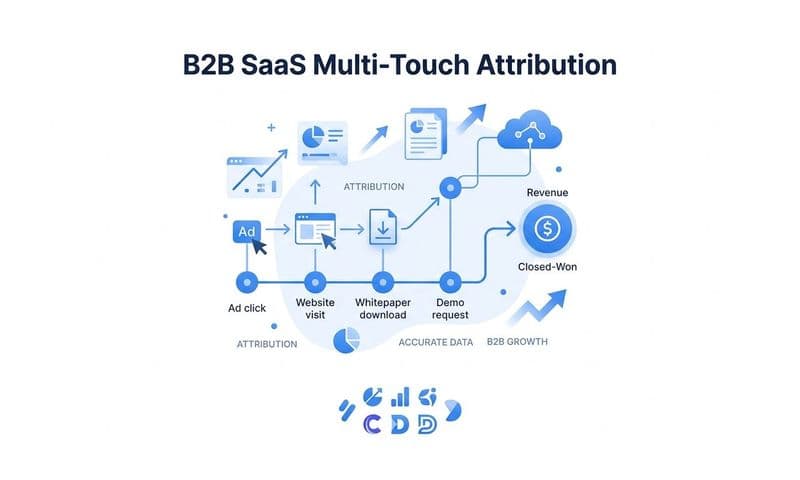
Individual pixels and server-side events give you conversion data within each platform's own ecosystem. But your customers do not live inside a single ad platform. They click a Google ad, visit your site, leave, see a Meta retargeting ad three days later, click through, and convert. Each platform sees only its own piece of that journey.
This is why connecting all your data sources into a central attribution platform is essential. When your ad accounts, CRM, payment processor, and lead capture tools all feed into one place, you can see the complete customer path rather than a series of disconnected fragments. Mastering tracking conversions across multiple ad platforms is what separates sophisticated marketers from those flying blind.
Start by linking your ad accounts. Connect Meta Ads, Google Ads, TikTok Ads, and LinkedIn Campaign Manager to your attribution platform so campaign performance data flows into a single dashboard. This alone gives you a much cleaner view of cross-channel performance without toggling between five different interfaces.
Next, connect your CRM. Tools like HubSpot and Salesforce hold data about what happens after the initial conversion: whether a lead became a qualified opportunity, whether that opportunity closed, and what the actual revenue was. By connecting your CRM to your attribution platform, you can track conversions beyond the click all the way to closed revenue. This is especially important for B2B and high-ticket businesses where tracking conversions for lead generation requires visibility into the full sales pipeline.
Connect your payment processor as well. Integrating Stripe or a similar tool allows you to tie actual transaction revenue back to the specific ad that started the customer journey. Instead of estimating conversion values, you are working with real revenue numbers.
Finally, connect your form tools, scheduling software, and any other lead capture systems you use. If a prospect books a demo through Calendly or submits a form through Typeform, that event needs to be captured and attributed just like any other conversion. Every disconnected tool is a potential gap in your data.
Cometly is built specifically for this kind of cross-platform data consolidation. It connects your ad accounts, CRM, and revenue sources into one real-time view of the customer journey, so you are never working from an incomplete picture.
Step 5: Choose an Attribution Model That Matches Your Funnel
Once your data is flowing into a central system, you need to decide how to assign credit for conversions across the touchpoints that contributed to them. This is what attribution models do, and the model you choose has a significant impact on how you perceive campaign performance.
Here are the main models and what they each prioritize:
Last-click attribution gives 100% of the conversion credit to the final touchpoint before conversion. It is the default on most ad platforms and in Google Analytics. It is simple, but it dramatically undervalues any campaign that introduced the customer to your brand or kept them engaged during the consideration phase.
First-click attribution gives all the credit to the first touchpoint. This is useful for understanding which channels are best at generating new awareness, but it ignores everything that happened after that initial contact.
Linear attribution distributes credit equally across all touchpoints in the customer journey. It acknowledges that every interaction played a role, though it does not weight them by impact.
Time-decay attribution gives more credit to touchpoints that occurred closer to the conversion. The logic is that recent interactions had more influence on the final decision. This works reasonably well for shorter sales cycles.
Data-driven attribution uses machine learning to assign credit based on which touchpoints statistically correlated with conversions in your own data. It requires a sufficient volume of conversions to work reliably, but it is generally the most accurate model when enough data is available.
For businesses with longer sales cycles, particularly in B2B or high-ticket categories, last-click attribution is actively misleading. It makes your bottom-of-funnel retargeting campaigns look like heroes while your top-of-funnel awareness campaigns appear to generate nothing. Understanding tracking conversions across multiple touchpoints is what reveals the true contribution of each campaign in the journey.
The most useful approach is to compare multiple models side by side. When you toggle between last-click and multi-touch attribution, you will often see credit shift dramatically between channels. That shift reveals which campaigns are actually contributing to revenue but not getting recognized under the default model.
Cometly's multi-touch attribution lets you do exactly this. You can view your campaign performance under different attribution models simultaneously, which gives you a much more honest picture of what is working across your entire funnel.
Step 6: Verify Your Data and Troubleshoot Common Tracking Issues
Setting up tracking is only half the job. Verifying that your tracking is actually working correctly is what separates marketers who make decisions on accurate data from those who are optimizing on corrupted signals without knowing it.
Start with a test conversion. Walk through the actual conversion flow on your site, whether that is completing a purchase, submitting a form, or booking a demo, and confirm the event registers correctly in your tracking dashboard, your ad platform, and your attribution tool. Do this for each of your primary conversion events.
Once you have confirmed the basic setup is working, cross-reference your conversion counts across systems. Your ad platform dashboard, your attribution tool, and your CRM should all be reporting numbers that are reasonably close to each other. Significant discrepancies are a signal that something is broken or misconfigured. If you are seeing mismatches, learn more about why your ad platform shows different numbers than your other reporting tools.
Here are the most common tracking issues to investigate:
Duplicate events: If your conversion counts seem inflated, check for duplicate tag firing. This often happens when pixels are installed both directly in the site code and through GTM, causing the same event to fire twice for a single user action.
Attribution window mismatches: Different platforms use different default attribution windows. Meta might attribute a conversion to a campaign that happened 7 days ago, while Google attributes the same conversion to a different campaign with a 30-day window. Make sure you understand the attribution window settings on each platform and try to align them as closely as possible.
UTM parameter stripping: If your URLs go through redirects, those redirects can strip UTM parameters before the user lands on your site. This causes conversions to show up as direct traffic rather than being attributed to the ad that drove them. Understanding UTM tracking and how it helps your marketing will ensure you set up parameters correctly from the start.
Delayed offline conversions: If your sales cycle involves offline steps, such as a phone call or an in-person meeting, those conversions need to be uploaded or synced back to your ad platforms manually or through an integration. If this is not set up, a large portion of your actual revenue is invisible to your tracking system.
Set up a regular audit schedule, weekly for high-spend campaigns and monthly at a minimum for everything else. Tracking breaks happen silently. A site update can accidentally remove a tag, a redirect change can strip UTM parameters, or a pixel can start firing on the wrong page. Regular audits catch these issues before they corrupt weeks of data.
Step 7: Feed Accurate Conversion Data Back to Ad Platforms
This is the step most marketers either skip entirely or do not realize exists. And it is often the highest-leverage action you can take to improve your return on ad spend.
Here is the concept: ad platforms like Meta and Google use machine learning to optimize your campaigns. Their algorithms decide who to show your ads to, when to show them, and how much to bid. The quality of those decisions depends entirely on the quality of the conversion data you send back to them.
When your conversion data is incomplete, delayed, or inaccurate, the algorithm is optimizing on bad information. It might be targeting users who look like people who clicked on your ads but never actually bought anything. This is a common reason behind the frustrating problem of ads showing conversions but no sales. Or it might be avoiding the audiences that actually convert because those conversions were never recorded.
When you send enriched, accurate, and complete conversion data back to the platform, the algorithm learns faster. Lookalike audiences become sharper because they are built on real converters. Smart bidding strategies work better because they have reliable signals about which clicks actually lead to revenue. Campaign optimization improves across the board.
Cometly's Conversion Sync feature automates this process. It takes the verified conversion events captured through Cometly's attribution system, including those captured via server-side tracking that the pixels missed, and pushes them back to Meta, Google, and other connected ad platforms in real time. The platforms receive better data, their algorithms perform better, and your campaigns become more efficient without you having to manually manage the data flow.
Think of it as closing the loop. You track what happens, you attribute it correctly, and then you feed that intelligence back into the systems that are spending your budget. Every part of the cycle improves when the data flowing through it is accurate.
Putting It All Together: Your Conversion Tracking Checklist
Tracking ad conversions is not a one-time setup. It is an ongoing system that requires the right foundation, the right tools, and regular maintenance to keep working accurately as your campaigns and tech stack evolve.
Here is a quick checklist to confirm you have everything in place:
1. Conversion events are clearly defined with assigned monetary values and mapped to your customer journey stages.
2. Tracking pixels and tags are installed through Google Tag Manager and verified with platform debugging tools.
3. Server-side tracking is active to capture conversions that browser-based pixels miss due to ad blockers and privacy restrictions.
4. Ad platforms, CRM, payment processors, and lead capture tools are all connected in a central attribution view.
5. You are using an attribution model that reflects how your customers actually move through your funnel, and you are comparing models to understand the full value of each channel.
6. Data has been verified through test conversions and cross-platform reconciliation, and a regular audit schedule is in place.
7. Enriched conversion data is being sent back to ad platforms to improve their targeting and optimization algorithms.
When all seven steps are in place, you move from guessing to knowing. You can see exactly which ads drive revenue, cut what is not working, and scale what is with confidence.
Cometly brings all of this together in a single platform. It gives you accurate, real-time attribution across every ad channel, server-side tracking to capture the conversions your pixels miss, multi-touch attribution to understand the full customer journey, and Conversion Sync to feed better data back to your ad platforms. Ready to build a tracking system that actually works? Get your free demo today and start capturing every touchpoint to maximize your conversions.