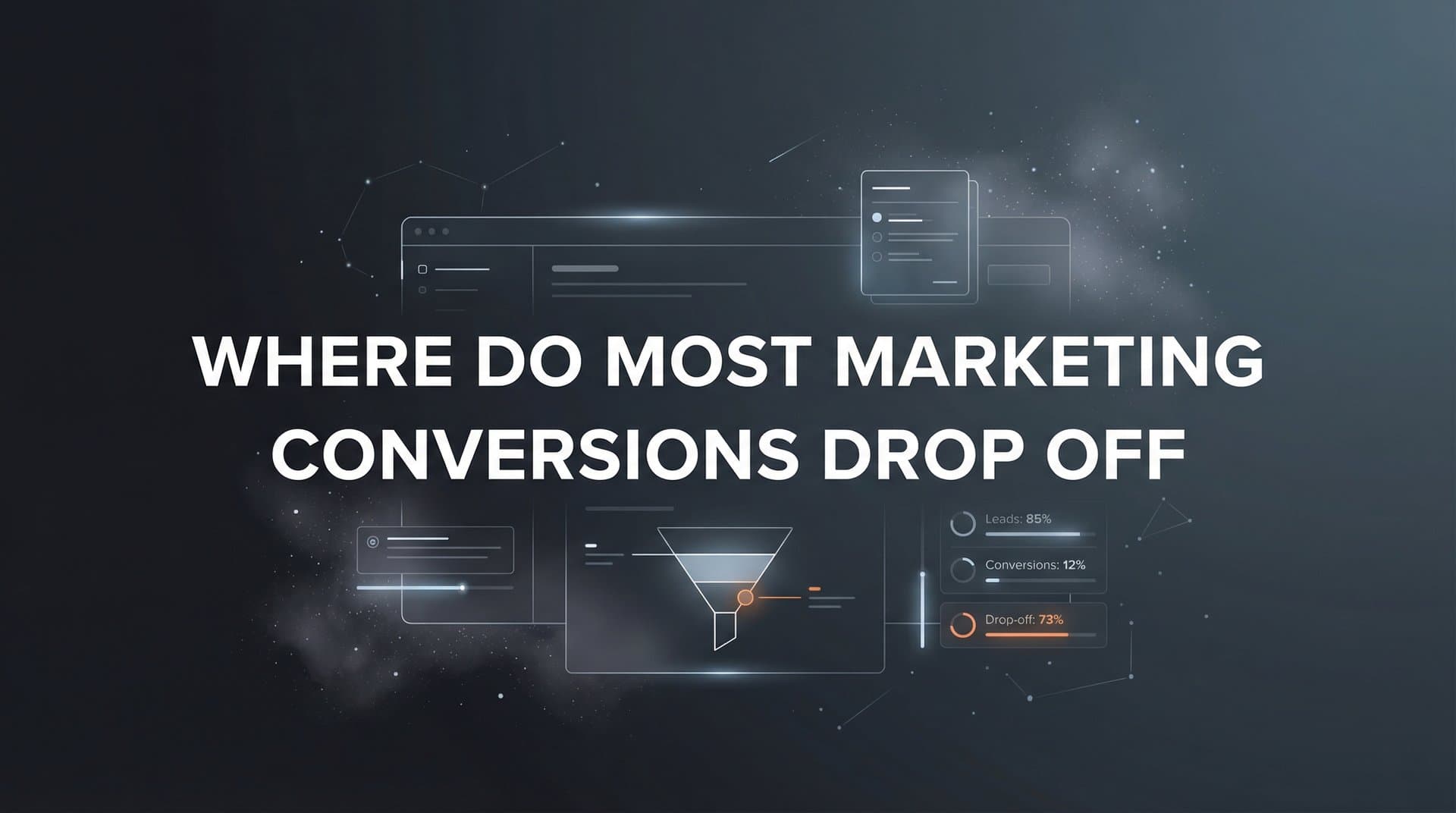
You're running ads. Traffic is flowing. Clicks are happening. But when you check your conversion numbers, something doesn't add up. The math isn't mathing. Somewhere between that first click and the final purchase, potential customers are vanishing into thin air.
This isn't just frustrating—it's expensive. Every lost conversion represents wasted ad spend, missed revenue, and opportunities handed to competitors. The problem isn't that people are dropping off. Drop-off is inevitable. The real problem is that most marketers can't see where it's happening or why.
Think of your marketing funnel like a bucket with holes in it. You keep pouring water in the top, but the bucket never fills. Until you can see exactly where those holes are, you're just guessing at solutions. You might patch the wrong spot while the biggest leak keeps draining your budget.
This guide will help you identify the exact points where most marketing conversions drop off, understand what causes those losses, and build a framework for diagnosing your specific leak points. Because you can't fix what you can't see—and what you can't measure, you can't improve.
Understanding Your Funnel's Critical Stages
Before you can diagnose where conversions are dropping off, you need to understand the anatomy of a typical marketing funnel. Every customer journey moves through distinct stages, and each stage represents a potential exit point with its own unique causes.
The awareness stage is where prospects first encounter your brand—through an ad, search result, or social media post. At this point, they're just browsing. They might not even have strong purchase intent yet. Your goal here is simply to capture attention and spark enough interest to move them forward.
Next comes consideration, where prospects actively evaluate whether your solution fits their needs. They're comparing options, reading reviews, exploring your website, and trying to determine if you're trustworthy. This stage often involves multiple touchpoints across different channels as they research.
The intent stage signals that someone is seriously considering a purchase. They might add items to cart, start filling out a lead form, or request a demo. They're close, but they're also vulnerable to last-minute doubts, distractions, or friction in your conversion process.
Finally, the conversion stage is where prospects become customers. They complete the purchase, submit the form, or schedule the call. But even here, technical issues, payment friction, or sudden hesitation can derail the deal at the last second.
Here's what makes this challenging: each stage has different drop-off triggers. What causes someone to bounce at the awareness stage is completely different from what makes them abandon a checkout page. A slow-loading landing page kills top-funnel conversions, while unexpected shipping costs destroy bottom-funnel momentum. Understanding what are funnel drop-off points is essential for diagnosing these issues effectively.
This is why visibility matters so much. If you're only tracking the beginning and end of the journey, you're missing everything that happens in between. You might see that 1,000 people clicked your ad and 10 converted, but without tracking the consideration and intent stages, you have no idea where the other 990 people went or why they left.
The marketers who consistently improve conversion rates are those who can track every touchpoint across the entire journey. They know exactly which stage is bleeding the most potential customers. They can see whether the problem is their ad messaging, their website experience, or their checkout process. And most importantly, they can prioritize fixes based on where they'll have the biggest impact.
When Your Traffic Arrives But Doesn't Engage
You've nailed your ad targeting. Your click-through rates look solid. People are arriving at your landing page. Then... nothing. They bounce within seconds. This is one of the most common and costly drop-off points in marketing funnels.
The disconnect between ad and landing page is usually the culprit. Picture this: someone clicks an ad promising "50% off running shoes," but lands on your homepage featuring winter coats. The messaging mismatch creates instant confusion and distrust. They came for one thing, found another, and left immediately.
This happens more often than most marketers realize. Ad creative evolves quickly—you test new angles, update offers, rotate messaging. But if your landing pages don't evolve with them, you create friction at the exact moment when prospects are most engaged.
Page speed is another silent killer of top-funnel conversions. Every second of load time increases abandonment. Mobile users are especially impatient. If your page takes more than three seconds to load, many visitors will hit the back button before they even see your content. You're paying for clicks that never had a chance to convert.
Mobile experience failures compound the problem. Many landing pages are designed on desktop and barely tested on mobile. But if most of your traffic comes from mobile devices, you're essentially showing up to a meeting unprepared. Buttons that are too small to tap, text that's impossible to read without zooming, forms that require excessive scrolling—these aren't minor annoyances. They're conversion killers.
Then there's the audience targeting issue. Sometimes the problem isn't your landing page at all—it's that you're reaching people who were never likely to convert in the first place. Broad targeting might generate impressive click volumes, but if those clicks come from tire-kickers, bargain hunters, or people outside your ideal customer profile, they'll bounce no matter how perfect your landing page is.
This is where tracking gaps create a secondary problem. When you can't see what happens after the initial click, top-funnel performance might look worse than it actually is. Maybe people are bouncing from the landing page but returning later through organic search. Maybe they're clicking your ad on mobile but converting on desktop days later. Without complete journey tracking, you might optimize for the wrong problem. Learning how to track marketing campaigns properly can help you avoid these blind spots.
The reality is that top-funnel drop-off is often a symptom of deeper issues: misaligned messaging, technical problems, or targeting that needs refinement. But you can't diagnose which issue is yours without seeing the full picture of how people interact with your content immediately after clicking.
The Consideration Phase Where Momentum Dies
Your prospect made it past the landing page. They're exploring your site, reading product descriptions, maybe even comparing options. They're interested. But then they disappear. No conversion. No follow-up action. Just gone.
Welcome to the consideration stage graveyard—where more potential customers die than most marketers realize.
This stage is particularly tricky because people aren't necessarily rejecting your offer. They're just not ready to commit yet. They want to research more, compare competitors, read reviews, or simply think it over. The problem is that once they leave, many never come back.
Navigation confusion is a major mid-funnel killer. Someone arrives interested in a specific product category, but your site structure makes it hard to find what they're looking for. They click around aimlessly, get frustrated, and leave. Or worse, they find your competitor's site easier to navigate and convert there instead.
Trust signals become critical at this stage. Early in the journey, prospects are just browsing. But as they move toward a purchase decision, they start asking harder questions: Is this company legitimate? Will they actually deliver what they promise? What if something goes wrong?
If your site lacks customer reviews, security badges, clear return policies, or recognizable payment options, you're triggering doubt at the exact moment when confidence matters most. People won't necessarily tell you this is why they left. They'll just quietly exit and buy from someone who made them feel safer.
Information overload creates another type of mid-funnel abandonment. You want to be thorough, so you pack your product pages with every possible detail, specification, and feature. But too much information can be just as paralyzing as too little. Prospects get overwhelmed, can't figure out which option is right for them, and postpone the decision indefinitely.
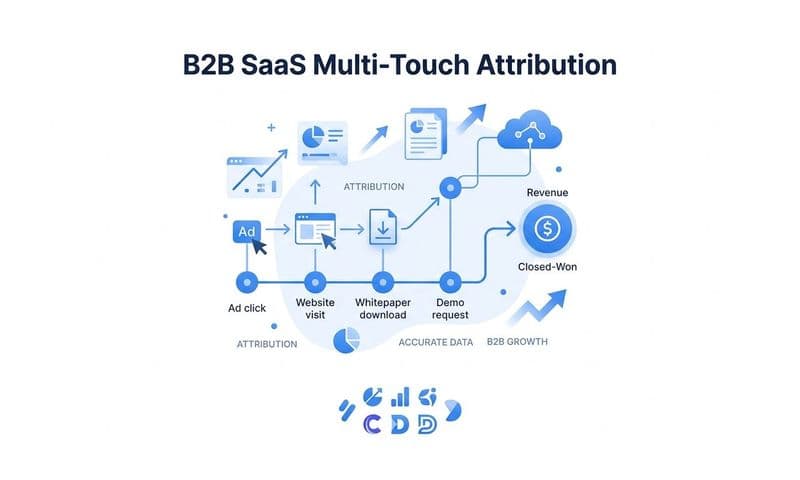
Here's where attribution gets complicated. The consideration stage often involves multiple touchpoints across different channels. Someone might click your Facebook ad, visit your site, leave, see your Google ad the next day, return via organic search, then finally convert after receiving your email. Exploring attribution models in digital marketing can help you understand how each touchpoint contributes to the final conversion.
If you're using last-click attribution, you'd credit that email for the conversion. But in reality, every touchpoint played a role in moving them forward. The Facebook ad created awareness. The Google ad reinforced your brand during their research phase. Organic search showed them you have strong credibility. The email provided the final nudge.
This is why so many marketers struggle with mid-funnel optimization. Single-touch attribution models make it look like certain channels don't generate conversions, when in fact they're essential for moving people through consideration. You might cut budget from a channel that's actually doing critical work in the middle of the journey.
Cross-channel journeys create even more blind spots when touchpoints aren't connected. Someone researches on mobile during their commute, continues on desktop at work, and converts on tablet at home. If your tracking can't connect these sessions to the same person, you're seeing three separate "bounces" instead of one successful conversion journey. Using multi-touch marketing attribution software helps solve this visibility problem.
The consideration stage is where patience and persistence pay off—but only if you can see what's happening. Without complete journey visibility, you're flying blind through the most complex part of the funnel.
Bottom-Funnel Friction When Victory Slips Away
They've made it this far. They're ready to buy. They've added items to cart or started filling out your lead form. You can practically taste the conversion. And then they abandon at the last possible moment.
This is the most painful type of drop-off because these people had clear purchase intent. They weren't just browsing. They were actively trying to convert. Something in your process stopped them.
Checkout and form abandonment rates tell a brutal story. Many businesses lose the majority of potential conversions at this final stage. The reasons vary, but the impact is always the same: wasted marketing spend on prospects who got 95% of the way to conversion before hitting a wall.
Payment friction is a common culprit. Your checkout process requires account creation, asks for information they don't have handy, or doesn't support their preferred payment method. Each extra step, each moment of hesitation, increases the chance they'll abandon. Modern consumers expect Amazon-level convenience. Anything less feels like unnecessary work.
Unexpected costs destroy bottom-funnel conversions faster than almost anything else. Someone is ready to buy your product for $49, but at checkout they discover $15 shipping, a $3 processing fee, and $8 in taxes. Suddenly their $49 purchase costs $75. They feel deceived, even if those costs were disclosed somewhere in the fine print. Many will abandon on principle.
Form length kills lead generation conversions the same way. You want to qualify leads thoroughly, so you ask for their name, email, phone, company, role, company size, budget, timeline, and a description of their needs. By field seven, they're wondering if this is really worth the effort. By field ten, they're gone.
Then there's the retargeting gap. Someone abandons your checkout, and you assume your retargeting campaigns will bring them back. But if your tracking isn't properly configured, they might never see those retargeting ads. Or worse, they see generic brand ads instead of specific cart abandonment messages that remind them what they left behind.
This represents a double loss. You've already spent money to get them to the conversion point. Now you're missing the opportunity to spend a little more to recover that conversion. It's like fumbling the ball on the one-yard line and then not even trying to recover it.
CRM handoff failures create another bottom-funnel leak that's often invisible to marketing teams. Someone fills out a lead form. Marketing celebrates the conversion. But the lead never makes it into the sales team's workflow. Maybe it gets stuck in a queue, assigned to the wrong rep, or simply falls through the cracks of a disconnected system.
From marketing's perspective, this looks like a successful conversion. From the business's perspective, it's a complete waste. The prospect never receives follow-up, assumes you're not interested, and moves on to a competitor. Marketing gets blamed for sending low-quality leads, when the real problem was a broken handoff process.
Bottom-funnel drop-off is particularly frustrating because these were your warmest prospects. They wanted to convert. Your job was simply to make it easy, trustworthy, and frictionless. When they abandon at this stage, it's usually a process problem, not a product or offer problem.
How to Diagnose Your Specific Drop-Off Points
Understanding where conversions typically drop off is helpful. But what you really need to know is where YOUR conversions are dropping off. Every business has a unique combination of traffic sources, audience segments, and funnel characteristics. Your leak points might be completely different from your competitor's.
Start with a comprehensive funnel audit. Map out every stage of your customer journey from first click to final conversion. Don't just focus on the major milestones. Include micro-conversions: video views, PDF downloads, email signups, product page visits, cart additions. These smaller actions reveal how people are moving through your funnel.
Next, segment your analysis by traffic source. Your Facebook traffic might convert completely differently than your Google Ads traffic. Organic visitors might have different drop-off patterns than paid visitors. By analyzing each source separately, you can identify whether certain channels are driving low-quality traffic or whether your funnel treats all traffic the same way when it shouldn't. Understanding channel attribution in digital marketing helps you see which sources truly drive revenue.
Look at device-level data too. Mobile users often have higher drop-off rates, but you need to know exactly where they're dropping off. If mobile users bounce at the landing page, that's a UX problem. If they make it to checkout but abandon there, that's a checkout friction problem. The solution is different depending on where the drop-off happens.
Bounce rate tells you about immediate disconnects. If people are leaving within seconds of arriving, your messaging, page speed, or targeting needs work. Time on page reveals engagement quality. Are people actually reading your content or just skimming and leaving? Are they spending time on pages that should move them toward conversion?
Track micro-conversions as leading indicators. Someone who watches a product demo video is more likely to convert than someone who doesn't. Someone who visits your pricing page three times is showing strong purchase intent. By monitoring these signals, you can identify which touchpoints correlate with eventual conversions and which are dead ends.
Assisted conversions are crucial for understanding mid-funnel value. This metric shows you which channels and touchpoints contributed to conversions even if they didn't get the final click. If a channel has low direct conversions but high assisted conversions, it's playing an important role in your funnel that last-click attribution completely misses.
This is where AI-powered attribution tools provide a significant advantage. Human analysis can spot obvious patterns, but AI can surface subtle correlations that would take weeks of manual analysis to discover. It might reveal that people who interact with your brand on LinkedIn and then see your Google ad within 48 hours convert at three times the normal rate. That's actionable intelligence you can use to optimize your channel mix and timing. Staying current with AI-powered marketing optimization trends can give you a competitive edge.
AI can also identify drop-off patterns you wouldn't think to look for. Maybe conversions drop significantly when certain ad creative variations are shown. Maybe prospects who visit your site on weekends have different conversion paths than weekday visitors. Maybe there's a specific sequence of page visits that predicts high conversion likelihood.
Set up a regular review cadence. Funnel analysis isn't a one-time project. Drop-off points shift as your traffic mix changes, as you launch new campaigns, and as market conditions evolve. Monthly reviews help you catch emerging problems before they become expensive. Weekly reviews during major campaign launches let you spot issues and adjust quickly.
The goal isn't just to identify drop-off points. It's to prioritize them. You'll find multiple leaks in your funnel. Some will be high-volume problems affecting thousands of prospects. Others will be niche issues affecting a small segment. Focus your optimization efforts on the drop-off points where fixing the problem will have the biggest impact on your bottom line.
Strategies for Reducing Drop-Off at Every Stage
Diagnosis is only valuable if it leads to action. Once you know where your conversions are dropping off, you need a systematic approach to plug those leaks. The key is prioritization and continuous testing rather than trying to fix everything at once.
Start with the highest-impact opportunities. If 40% of your traffic bounces at the landing page but only 5% abandons at checkout, fix the landing page first. The math is simple: improving a high-volume drop-off point by a small percentage delivers more conversions than perfecting a low-volume stage.
For top-funnel drop-off, message matching is your first priority. Every ad should lead to a landing page that continues the exact same conversation. If your ad promises "free shipping on orders over $50," your landing page headline should reinforce that offer immediately. Consistency builds trust and reduces cognitive friction.
Page speed optimization delivers immediate results. Compress images, minimize code, leverage browser caching, and consider a content delivery network. Even shaving one second off your load time can meaningfully improve conversion rates, especially on mobile.
Mid-funnel optimization requires making the consideration process easier and more confident. Add trust signals throughout your site: customer reviews, security badges, clear return policies, case studies from recognizable brands. Make it obvious that real people buy from you and have positive experiences.
Simplify your navigation and create clear next steps. If someone lands on a product page, what should they do next? Make that action obvious. Use clear calls-to-action, remove distracting elements, and guide people toward conversion rather than leaving them to figure it out themselves.
For bottom-funnel friction, audit your checkout and form processes ruthlessly. Remove every unnecessary field. Offer guest checkout. Display all costs upfront. Support multiple payment methods. Make it possible to complete a purchase in under two minutes. Every second you save increases conversion likelihood.
Build a feedback loop between your conversion data and your ad platforms. This is where modern attribution really shines. When you can feed accurate conversion data back to Facebook, Google, and other platforms, their algorithms learn which audiences and placements actually drive results. They optimize toward real conversions, not just clicks or cheap traffic. Using marketing attribution software for revenue attribution makes this process seamless.
This creates a virtuous cycle. Better data improves ad platform targeting. Better targeting brings more qualified traffic. More qualified traffic converts at higher rates. Higher conversion rates generate more data to further improve targeting. Over time, this compounds into significantly better campaign performance.
Don't forget about the humans in your funnel. Set up automated email sequences for cart abandoners. Create retargeting campaigns for people who visited key pages but didn't convert. Use chatbots to answer common questions during the consideration phase. Sometimes people just need a small nudge or a quick answer to move forward.
Build a culture of continuous optimization rather than treating this as a one-time project. Run regular A/B tests on high-traffic pages. Try new ad creative variations. Experiment with different offers. Test alternative checkout flows. Small improvements compound over time into substantial conversion rate gains. Focusing on improving marketing campaign performance should be an ongoing priority.
The marketers who consistently outperform their competition aren't necessarily smarter or more creative. They're just more systematic about identifying problems, testing solutions, and scaling what works. They treat their funnel as a living system that requires constant attention and refinement.
Turning Visibility Into Competitive Advantage
Conversion drop-off is inevitable. Every funnel leaks. The question isn't whether you'll lose potential customers along the way—it's whether you'll know where you're losing them, why it's happening, and what to do about it.
The marketers who win aren't the ones with perfect funnels. They're the ones who can see their entire customer journey clearly, identify the highest-impact problems quickly, and optimize systematically. They've moved beyond guessing and hoping to knowing and improving.
This requires complete journey visibility. You need to track every touchpoint from first click to final conversion, connect those touchpoints across devices and channels, and analyze the data to surface actionable insights. Without this foundation, you're optimizing blind. Knowing where to find marketing attribution tools is the first step toward gaining this visibility.
The good news is that modern attribution technology makes this possible. You don't need a data science team or months of manual analysis. AI-powered platforms can automatically identify drop-off patterns, surface optimization opportunities, and even provide specific recommendations for improvement.
The even better news is that most of your competitors probably aren't doing this yet. They're still relying on last-click attribution, making decisions based on incomplete data, and wondering why their conversion rates aren't improving despite all their optimization efforts. This creates an opportunity for you.
When you can see what others can't see, you can act while they're still guessing. You can reallocate budget from underperforming channels to high-impact opportunities. You can fix drop-off points before they waste thousands in ad spend. You can feed better data back to your ad platforms and let their algorithms work more effectively.
Start by evaluating your current attribution and tracking setup. Ask yourself: Can I see every touchpoint in my customer journey? Do I know which channels assist conversions even if they don't get the last click? Can I track users across devices and sessions? Am I feeding accurate conversion data back to my ad platforms?
If you answered "no" or "I'm not sure" to any of these questions, you have a visibility problem. And visibility problems lead directly to conversion problems because you can't fix what you can't see.
Ready to elevate your marketing game with precision and confidence? Discover how Cometly's AI-driven recommendations can transform your ad strategy—Get your free demo today and start capturing every touchpoint to maximize your conversions.