Picture this: your team wraps up a Monday morning performance review. Your Meta Ads dashboard reports 40 conversions from last week. Your CRM shows 65 closed deals. Your analytics platform offers a third, entirely different number. Everyone in the room stares at the screen, quietly wondering which number to trust, and more importantly, which campaigns actually drove the results.
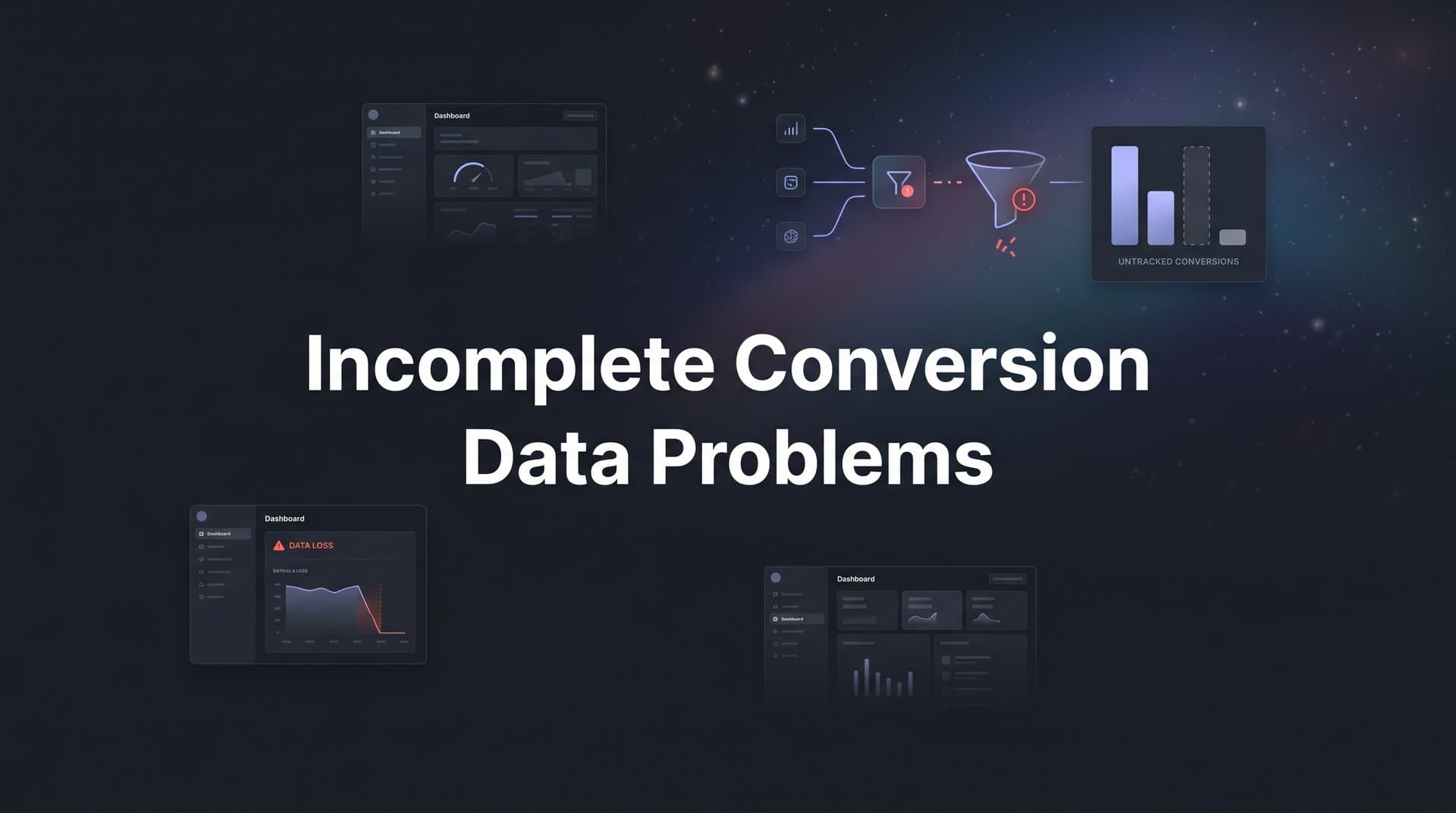
This is not a minor bookkeeping discrepancy. It is a symptom of incomplete conversion data, and it is one of the most damaging and underappreciated problems in modern digital marketing. When your data tells three different stories, every decision downstream becomes a gamble: which campaigns to scale, where to cut budget, which channels deserve more investment.
The problem has grown significantly more complex since Apple's App Tracking Transparency framework changed how apps can track users across platforms. Combined with the ongoing evolution of cookie policies in major browsers, widespread ad blocker adoption, and increasingly fragmented customer journeys across devices and channels, the traditional pixel-based tracking approach simply cannot keep up. Gaps in your conversion data are no longer the exception. For many marketing teams, they are the rule.
This article breaks down exactly where those gaps come from, what they cost your business in concrete terms, how to spot the warning signs in your own campaigns, and the practical steps you can take to build a tracking foundation you can actually rely on. Let's get into it.
The Root Causes of Conversion Data Gaps
Before you can fix incomplete conversion data problems, you need to understand where the holes are actually coming from. There are three primary culprits, and they tend to compound each other in ways that make the total data loss far worse than any single issue alone.
Browser and OS-Level Privacy Changes: The tracking landscape shifted dramatically when Apple introduced App Tracking Transparency, requiring apps to explicitly ask users for permission before tracking them across other apps and websites. A large share of users opt out when prompted. At the same time, Google has been evolving its Privacy Sandbox initiative and phasing out support for third-party cookies in Chrome. The result is that the JavaScript-based pixels most ad platforms rely on frequently fail to fire at all. When a pixel does not fire, the platform never learns a conversion happened, and it cannot factor that signal into future campaign optimization. Understanding the challenges of tracking conversions after iOS updates is critical for any team relying on mobile ad spend.
Ad blockers add another layer of friction. A significant portion of desktop users run some form of browser extension or DNS-level blocking that intercepts tracking scripts before they can execute. Every blocked pixel is a conversion that disappears from your reporting entirely.
Cross-Device and Cross-Platform Journeys: Modern buyers rarely convert on the same device where they first encountered your brand. Think about how often you have seen an ad on your phone during a commute, then later searched for the product on your laptop and completed the purchase there. From the ad platform's perspective, that conversion is invisible because it cannot connect the mobile click to the desktop purchase without persistent cross-device tracking, which privacy restrictions have made increasingly difficult. The challenge of tracking conversions across devices is one of the biggest contributors to data gaps.
The same problem plays out across platforms. A user might click a LinkedIn ad, later see a retargeting ad on Instagram, and finally convert through a Google search. Each platform only sees its own slice of the journey, creating a fragmented picture where every channel appears to underperform and the total reported conversions across platforms often exceed actual conversions due to overlap, or miss them entirely due to gaps.
Delayed and Offline Conversions: Not every conversion happens in a browser session. B2B sales cycles often span weeks or months, with the final deal closed over a phone call or in a signed contract. Phone inquiries, in-store purchases, and contract signings driven by digital ads rarely get reported back to the platforms that generated the initial click. Without a mechanism to close that loop, the ad platform that drove the lead gets zero credit, and its algorithm has no signal to learn from.
The Ripple Effect: How Missing Data Distorts Every Decision
Here is where incomplete conversion data problems move from a technical nuisance to a genuine business threat. The gaps do not just affect your reports. They warp the decisions you make based on those reports, and they corrupt the machine learning systems that power your ad delivery.
Budget Misallocation: When a campaign drives real conversions but those conversions go unreported, the campaign looks like it is underperforming. A marketer reviewing the data sees poor ROAS and makes the logical call: pause or reduce spend on that campaign. Meanwhile, the budget shifts toward campaigns with better-looking numbers, which may only appear stronger because their conversions happen in ways that are easier for pixels to capture. You end up defunding what works and doubling down on what only appears to work. This is a classic case of underreported conversion data silently destroying campaign performance.
This is one of the most costly consequences of incomplete data, and it happens gradually and invisibly. There is no alarm that goes off when you cut a high-performing campaign. You simply see costs rise and results plateau, and the real cause stays hidden.
Broken Ad Platform Algorithms: Meta, Google, TikTok, and every other major ad platform use conversion signals to train their delivery algorithms. These systems are designed to find more users who look like your converters and show them your ads. When you feed these algorithms incomplete data, they optimize toward the wrong targets. They learn from a skewed sample of your actual customers, which leads to higher cost per acquisition, worse audience targeting, and a gradual decline in campaign efficiency that many teams mistake for creative fatigue or market saturation. Understanding why marketing data accuracy matters for ROI helps teams recognize this pattern before it spirals.
The negative feedback loop is real. Fewer reported conversions lead to worse algorithmic targeting. Worse targeting leads to higher CPAs. Higher CPAs lead marketers to reduce budgets or pause campaigns. Reduced signals make the algorithm even less effective. The cycle continues until someone identifies the root cause.
False Narratives in Reporting: When leadership sees inconsistent numbers across platforms, trust in marketing data erodes. Stakeholders start relying on gut instinct rather than analytics. Marketing teams spend time defending their numbers instead of acting on them. The strategic cost of this dynamic is hard to quantify but very real. Data-driven decision-making only works when the data can be trusted, and incomplete conversion tracking quietly destroys that trust.
Spotting the Warning Signs in Your Campaigns
The tricky thing about incomplete conversion data is that it does not announce itself. Your dashboards still populate with numbers. Reports still get generated. Everything looks normal on the surface. You have to know what to look for to catch it.
Large Discrepancies Between Platform Data and CRM Data: If your ad platforms collectively report 50 conversions for the week but your CRM shows 90 new deals closed, that gap is telling you something important. Some of those deals may have come from organic or referral channels, but a persistent, large discrepancy is a strong signal that your pixel tracking is missing a significant share of conversions. The reverse can also be true: platforms over-reporting due to duplicate events, which is a different problem worth investigating. If you are seeing numbers that simply do not add up, this guide on why attribution data doesn't match can help you diagnose the root cause.
Sudden ROAS Drops Without Obvious Cause: When reported return on ad spend drops sharply but you have not changed your creative, your targeting, or your budget, the first assumption is often that the market has shifted or the audience is fatigued. Before making creative or targeting changes, check whether your pixel is still firing correctly. A broken or partially broken tracking setup can make a healthy campaign look like it is collapsing overnight. A deeper look at why your conversion tracking numbers are wrong can save you from making costly reactive decisions.
Conversion Counts That Do Not Match Pipeline Activity: If your sales team tells you the pipeline is full but your ad platforms show flat or declining conversion numbers, that mismatch is a diagnostic signal. Conversely, if platform-reported conversions are climbing but your sales team is not seeing corresponding deal volume, you may have duplicate tracking events inflating your numbers.
Running a simple conversion audit is the starting point. Pull your ad platform conversion data, your analytics platform data, and your CRM data for the same time period and compare them side by side. Quantify the gap. Then trace where the discrepancy appears, whether it is between the ad click and the website visit, between the website visit and the conversion event, or between the reported conversion and the actual closed deal. That trace will tell you where your tracking chain is breaking.
Server-Side Tracking: The Foundation for Reliable Data
Once you understand where your data gaps are coming from, the most important structural fix you can make is moving to server-side tracking. This is the foundation that everything else builds on.
Traditional client-side tracking works by placing a JavaScript pixel on your website. When a user completes a conversion action, the pixel fires and sends that data to the ad platform. The problem is that this entire process happens in the user's browser, which means it is subject to every browser-level restriction, privacy setting, and ad blocker that the user has in place. A single blocked script means a lost conversion signal. Learning about server-side conversion tracking benefits can help you understand why this architectural shift is so impactful.
Server-side tracking works differently. Instead of relying on the user's browser to send conversion data, your own server captures the event and sends it directly to the ad platform's server. The user's browser settings, ad blockers, and cookie restrictions are bypassed entirely because the communication happens server-to-server. This approach is significantly more reliable and is actively recommended by major platforms: Meta calls it the Conversions API, Google supports it through enhanced conversions and server-side Google Tag Manager, and other platforms have developed their own equivalents.
First-Party Data as Your Anchor: Server-side tracking pairs naturally with first-party data collection. When a user provides their email address, phone number, or other identifying information through your own systems, that data becomes a durable identifier that you control. It does not depend on third-party cookies or device identifiers that can be blocked or deprecated. Developing a strong first-party data collection strategy gives you a persistent record of conversion activity that remains accurate regardless of how privacy policies evolve.
Conversion Sync: Closing the Loop with Ad Platforms: The real power of server-side tracking comes when you use it to send enriched conversion data back to the platforms running your ads. This process, often called conversion sync, feeds the ad platform's algorithm with richer, more complete signals about who is actually converting and what actions they are taking. When Meta or Google receives better conversion data, their machine learning can optimize delivery toward audiences that more closely resemble your actual customers, which typically leads to lower acquisition costs and better campaign performance over time.
Multi-Touch Attribution: Seeing the Whole Journey
Server-side tracking solves the problem of missing conversion signals. Multi-touch attribution solves the problem of misattributing the conversions you do capture. These are related but distinct challenges, and you need both to get a complete picture.
Most ad platforms default to last-click or last-touch attribution, which gives 100% of the conversion credit to the final interaction before the purchase. This model is simple and easy to implement, but it systematically distorts your understanding of what is actually driving results. If a customer sees your brand through a Facebook ad, reads a blog post from an organic search, watches a YouTube video, and then converts after clicking a Google search ad, last-click attribution gives all the credit to Google and zero credit to everything else. The challenge of tracking conversions across multiple touchpoints is exactly why multi-touch models exist.
This is how last-click attribution amplifies incomplete conversion data problems: it does not just miss data, it actively misleads you about which channels are valuable.
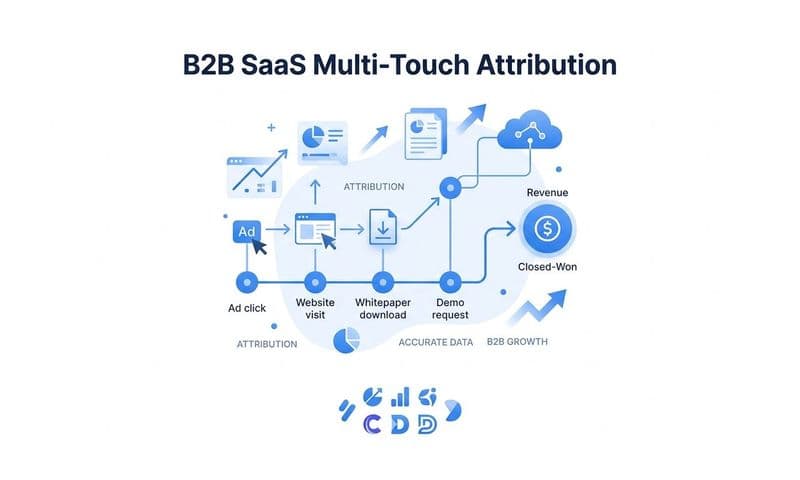
How Multi-Touch Models Distribute Credit: Multi-touch attribution models take a more realistic approach by distributing conversion credit across every touchpoint in the customer journey.
Linear attribution gives equal credit to every touchpoint, which is useful for understanding the full scope of contributing channels without overweighting any single interaction.
Time-decay attribution gives more credit to touchpoints that occurred closer to the conversion, which reflects the reality that recent interactions often play a stronger role in the final decision.
Position-based attribution gives heavier credit to the first and last touchpoints while distributing the remainder across the middle, which is particularly useful for understanding which channels initiate the customer relationship and which ones close it.
Each model has its strengths depending on your sales cycle and business model. The key is moving away from single-touch models that hide the contribution of entire channels and campaigns.
Building a Unified Attribution System: To make multi-touch attribution work in practice, you need to connect your ad platforms, your analytics tool, your CRM, and your website into a single system where every touchpoint is captured and tagged. This means consistent UTM parameters, proper CRM integration so that deal data flows back to your attribution system, and a way to match ad clicks to downstream revenue events. Mastering tracking conversions across multiple channels is essential for building this unified view and making budget decisions based on what is actually contributing to revenue, not just what happens to be the last click before conversion.
Building a Conversion Data Stack You Can Trust
Fixing incomplete conversion data problems is not a single action. It is a series of connected improvements that build on each other. Here is a practical framework for getting there.
1. Start with a conversion audit. Before changing anything, measure the size of your data gap. Compare ad platform conversions, analytics conversions, and CRM deal data for the same period. Identify where the discrepancies are largest and trace them to their source. This gives you a baseline and helps you prioritize which gaps to close first.
2. Implement server-side tracking. Replace or supplement your client-side pixels with server-side event tracking. Set up Meta's Conversions API, Google's enhanced conversions, or your ad platform's equivalent. This is the single most impactful technical change you can make to improve data completeness.
3. Connect your CRM and payment data. Your CRM holds the ground truth about which leads actually became customers and what they were worth. Integrating your CRM with your attribution system closes the loop between marketing activity and actual revenue. If you use a payment processor like Stripe, connecting that data gives you verified purchase signals that are far more reliable than pixel-based conversion events.
4. Adopt multi-touch attribution. Move beyond last-click reporting and implement a multi-touch attribution model that reflects how your customers actually buy. This does not have to be complex to start. Even a linear model that distributes credit across all touchpoints will give you a more accurate picture than last-click alone.
5. Establish ongoing data validation routines. Tracking setups degrade over time. Website updates break pixels. CRM integrations lose sync. Build a regular habit of comparing platform data against CRM data, checking for sudden drops in conversion reporting, and auditing your tracking configuration at least monthly.
This is where Cometly is built to help. Cometly captures every touchpoint from the initial ad click through to CRM events and closed revenue, giving your team a complete view of the customer journey without requiring you to stitch together multiple disconnected tools. Its server-side tracking infrastructure captures conversion signals that client-side pixels miss, and its conversion sync feature sends enriched data back to Meta, Google, and other ad platforms to improve their algorithmic optimization.
Cometly's multi-touch attribution models let you see which campaigns initiate customer relationships and which ones close them, so you can make budget decisions based on verified contribution rather than platform-reported last-click credit. And because the AI layer sits on top of complete, accurate data, the optimization recommendations it surfaces are grounded in what is actually driving revenue, not what appears to be driving it based on a fragmented data set.
The long-term payoff is compounding. When your ad platforms receive better conversion signals, their algorithms improve. When your attribution reflects the full journey, your budget decisions improve. When your reporting is consistent and trustworthy, your team makes faster, more confident decisions and your stakeholders trust the data you bring to the table.
The Bottom Line on Data Integrity
Incomplete conversion data is not a reporting inconvenience. It is a compounding problem that quietly erodes every layer of your marketing performance: your budget allocation, your ad platform algorithms, your team's confidence in the data, and ultimately your ability to scale campaigns based on what actually works.
The good news is that the fixes are concrete and well-established. Server-side tracking closes the gap that browser restrictions and ad blockers create. CRM integration brings offline and delayed conversions into the picture. Multi-touch attribution distributes credit across the full customer journey instead of handing it all to the last click. Conversion sync feeds better signals back to the platforms running your ads. And a regular validation routine keeps the whole system honest over time.
Start with a simple conversion audit. Pull your platform data, your analytics data, and your CRM data for the same period and see how far apart the numbers are. That gap is the cost of your current tracking blind spots, and closing it is one of the highest-leverage investments your marketing team can make.
Ready to elevate your marketing game with precision and confidence? Discover how Cometly's AI-driven recommendations can transform your ad strategy. Get your free demo today and start capturing every touchpoint to maximize your conversions.