You're running ads across Meta, Google, LinkedIn. Leads are coming in. Your sales team is closing deals. But here's the problem: you have no idea which touchpoints actually moved prospects from "just browsing" to "ready to buy." That first ad click? The email they opened three weeks later? The webinar they attended before requesting a demo? It all disappears into a black box between initial interest and closed revenue.
This visibility gap isn't just frustrating—it's expensive. Without understanding how leads progress through each stage of their journey, you're essentially flying blind on budget allocation. You might be over-investing in channels that generate awareness but never convert, or under-funding the touchpoints that actually accelerate purchase decisions.
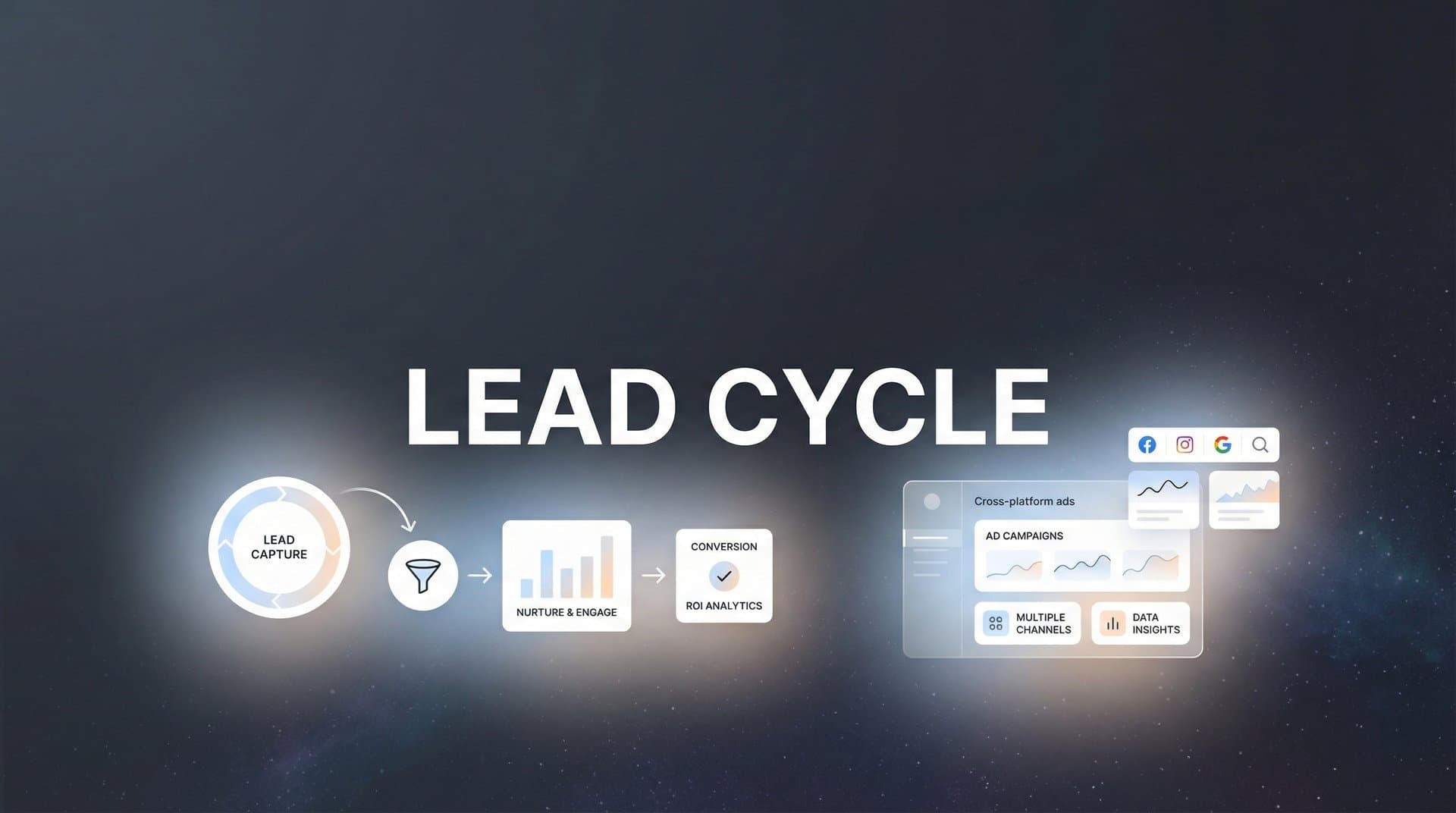
The lead cycle is the framework that solves this problem. It maps the complete journey a prospect takes from first awareness through every interaction until they become a customer. Understanding your lead cycle means knowing not just where leads come from, but how they move, where they stall, and what actually drives them forward. For marketers managing serious ad budgets, this isn't optional insight—it's the difference between scaling with confidence and burning money on guesswork.
The Anatomy of a Lead Cycle: From First Click to Closed Deal
The lead cycle represents every step a prospect takes on their path to becoming a customer. Unlike a sales funnel—which focuses on your internal process for moving leads through stages—the lead cycle tracks the prospect's actual experience across every touchpoint they encounter with your brand.
Think of it as the complete story of how someone discovers your solution, evaluates whether it fits their needs, and ultimately decides to buy. This journey unfolds across six core stages, though the specifics vary based on your business model and industry. Understanding these stages of a lead is fundamental to optimizing your marketing efforts.
Awareness: The prospect first learns your brand exists, typically through paid ads, organic search, social content, or referrals. They're not actively looking to buy yet—they're just becoming aware of the problem you solve or the category you operate in.
Interest: Something catches their attention enough to engage further. They might click an ad, visit your website, read a blog post, or download a resource. They're signaling that your solution category is relevant to them, even if they're not evaluating specific options yet.
Consideration: Now they're actively researching solutions. They're comparing options, reading reviews, consuming educational content, and trying to understand which approach best fits their situation. Multiple touchpoints cluster in this stage as prospects gather information.
Intent: The prospect signals readiness to move forward—requesting a demo, starting a free trial, adding items to cart, or engaging with sales content. They've narrowed their options and are evaluating whether your specific solution meets their requirements.
Evaluation: This is the detailed assessment phase. For B2B, it often involves demos, proposal reviews, and internal stakeholder discussions. For e-commerce, it might be reading detailed product specs, checking shipping terms, or reviewing return policies. The prospect is working through their final objections and questions.
Purchase: The prospect converts into a customer by completing the transaction, signing the contract, or activating their account. This stage marks the end of the lead cycle and the beginning of the customer lifecycle.
Here's what makes this framework powerful: it acknowledges that prospects don't move linearly. Someone might jump from awareness straight to intent if they're already familiar with the problem. Another prospect might cycle between consideration and evaluation multiple times before purchasing. The lead cycle captures this reality instead of forcing prospects into a rigid funnel model.
For attribution purposes, understanding these stages lets you assign value to touchpoints based on where they occur in the journey. That initial Facebook ad that generated awareness plays a different role than the retargeting campaign that re-engaged someone in the consideration stage. Both matter, but they contribute differently to the eventual conversion.
Why Lead Cycle Length Varies (And What It Reveals About Your Marketing)
Not all lead cycles look the same. A SaaS platform selling enterprise software might see cycles spanning six months or longer, while an e-commerce store selling consumables could convert prospects in hours. Understanding what drives these differences—and what your own cycle length reveals—is critical for setting realistic expectations and identifying problems.
Price point is the most obvious factor. Higher-cost purchases require more evaluation time, more stakeholder input, and more risk mitigation. A $50 purchase might need one or two touchpoints. A $50,000 annual contract needs multiple demos, case studies, ROI calculations, and internal approvals. This isn't a flaw in your marketing—it's the natural reality of high-consideration buying.
Decision complexity matters just as much. Even relatively affordable products can have long cycles if the buying decision involves multiple stakeholders or requires significant implementation effort. Marketing automation software might cost less than enterprise CRM, but if it requires technical integration and team training, the evaluation period extends accordingly.
Industry norms create baseline expectations. B2B cycles typically run longer than B2C because business purchases involve multiple decision-makers, formal procurement processes, and higher switching costs. A marketing team evaluating attribution software isn't just deciding whether they like the product—they're assessing how it integrates with existing tools, whether it meets compliance requirements, and how it fits into broader marketing operations.
Your target audience's buying maturity also influences cycle length. Prospects who already understand the problem and have evaluated solutions before move faster than those discovering the category for the first time. If your ads are reaching cold audiences who've never heard of marketing attribution, expect longer cycles than competitors targeting audiences already searching for specific solutions.
Here's what unusually long cycles signal: you might be targeting prospects who aren't actually in-market, your messaging isn't addressing core objections, or you're missing key touchpoints that would accelerate evaluation. When prospects stall in consideration for weeks without moving to intent, it usually means they're not finding the information or proof points they need to progress. Tracking time to qualified lead helps identify these bottlenecks.
Unusually short cycles can be just as revealing. If prospects are converting faster than industry averages, you might have exceptionally strong product-market fit, compelling differentiation, or highly qualified traffic. But very short cycles can also indicate you're attracting low-quality leads who haven't properly evaluated fit—leading to higher churn later.
The key is benchmarking your cycle length against your own historical data and industry standards, then investigating significant deviations. A cycle that suddenly lengthens might indicate targeting drift, competitive pressure, or messaging problems. A cycle that shortens could signal improved content, better ad targeting, or more effective nurturing.
Mapping Touchpoints Across Your Lead Cycle
Every stage of the lead cycle involves specific touchpoints where prospects interact with your brand. Understanding which touchpoints appear at which stages—and how they connect—is essential for attribution and optimization. The challenge is that most marketers only see fragments of this picture.
In the awareness stage, touchpoints are typically paid media: display ads, social ads, search ads targeting broad keywords, or sponsored content. Organic channels like SEO, social media posts, and PR also generate awareness. These touchpoints introduce your brand to prospects who may not have known you existed. The goal isn't conversion—it's recognition and initial interest.
Interest-stage touchpoints involve deeper engagement: website visits, blog post reads, video views, or social media follows. Prospects are consuming content to understand whether your category of solution is relevant to their needs. Retargeting ads often appear here, re-engaging people who visited your site but didn't take action. Email newsletters and educational content also play a role for prospects who've opted in.
Consideration brings more intensive touchpoints: comparison content, case studies, product pages, pricing information, and customer reviews. Prospects might attend webinars, download whitepapers, or engage with interactive tools like calculators or assessments. They're actively researching multiple options, so your touchpoints need to demonstrate differentiation and build confidence.
Intent-stage touchpoints are conversion-focused: demo requests, free trial signups, "contact sales" form fills, or adding items to cart. These actions signal readiness to evaluate your specific solution seriously. Remarketing campaigns targeting high-intent keywords or site visitors who viewed pricing become especially valuable here. Understanding your cost per lead form completion helps optimize these critical conversion points.
Evaluation involves direct sales interactions for B2B: demo calls, proposal reviews, and stakeholder meetings. For e-commerce, it might be reading shipping policies, checking return terms, or reviewing detailed product specifications. Email sequences providing social proof, addressing objections, and offering limited-time incentives also appear in this stage.
Here's the problem: these touchpoints happen across disconnected platforms. A prospect might see your Facebook ad (awareness), click through to read a blog post (interest), return three days later via Google search to view pricing (consideration), then receive a retargeting ad that prompts them to request a demo (intent). If you're only tracking last-click attribution, you'd credit that final retargeting ad with the entire conversion—completely ignoring the earlier touchpoints that built awareness and interest.
Cross-device tracking adds another layer of complexity. That same prospect might see your initial Facebook ad on mobile during their commute, research on their laptop at work, and finally convert on a tablet at home. Without unified tracking, these appear as three separate users, not one continuous journey.
Cookie deprecation and iOS privacy changes have made this challenge even harder. When browsers block third-party cookies and iOS limits tracking, you lose visibility into how touchpoints connect across platforms. The prospect's journey looks fragmented even when it's actually continuous.
This is why first-touch and last-touch attribution models fail for lead cycle analysis. First-touch credits only the initial awareness touchpoint, ignoring everything that happened afterward. Last-touch credits only the final conversion touchpoint, ignoring all the nurturing that made that conversion possible. Both models miss the critical mid-cycle interactions where prospects actually develop conviction and move toward purchase. A proper lead attribution model accounts for these multi-touch realities.
Effective lead cycle mapping requires tracking every touchpoint—from ad clicks to content engagement to CRM events—and connecting them to individual prospects across devices and platforms. Only then can you see which channels contribute at which stages and how touchpoints work together to move prospects forward.
Measuring What Matters: Key Lead Cycle Metrics
Understanding your lead cycle means tracking specific metrics that reveal how efficiently prospects move through stages and where your process breaks down. These metrics transform the lead cycle from a conceptual framework into actionable data that drives optimization decisions.
Lead Cycle Length: This measures the average time from first touchpoint to conversion. Calculate it by tracking the date of initial engagement and the date of purchase for each customer, then averaging across all conversions. For B2B SaaS, cycle lengths often range from 30 to 180 days depending on price point and complexity. E-commerce cycles might be measured in hours or days. Tracking cycle length by channel or campaign reveals which sources attract prospects who convert faster.
Stage Conversion Rates: What percentage of prospects who enter each stage successfully advance to the next? If 1,000 prospects reach the consideration stage but only 100 move to intent, you have a 10% consideration-to-intent conversion rate. Low conversion rates between specific stages highlight where prospects are stalling or dropping off. This pinpoints exactly where to focus optimization efforts.
Cost Per Stage: How much are you spending to move prospects through each stage? Calculate this by dividing total marketing spend by the number of prospects who reach each stage. If you spend $10,000 to generate 1,000 awareness-stage prospects but only 100 reach intent, your cost per intent-stage prospect is $100. Understanding cost per lead at each stage reveals which stages are most expensive to advance prospects through.
Velocity: How quickly do prospects move between stages? Velocity measures the average time spent in each stage before advancing. Fast velocity through awareness and interest but slow velocity through evaluation might indicate strong initial appeal but weak proof points or objection handling. Monitoring velocity by segment or source helps identify which audiences or channels produce prospects who move faster.
Stage-Specific Drop-Off Rates: Where do prospects exit the cycle without converting? High drop-off in consideration might mean your content isn't addressing key questions. High drop-off in evaluation could signal pricing concerns, feature gaps, or competitive pressure. Tracking drop-off by source reveals whether certain channels attract prospects who are less likely to convert.
To benchmark effectively, compare your metrics against your own historical performance first. A 90-day average cycle length means nothing without context—is that improving or declining? Are certain campaigns producing faster cycles? Then compare against industry standards when available, but recognize that your specific business model, price point, and target audience create unique baselines.
The most valuable insight comes from analyzing these metrics together. A channel might have a low cost per awareness-stage prospect but terrible conversion rates to intent—meaning you're generating cheap traffic that never converts. Another channel might have higher initial costs but faster velocity and better stage-to-stage conversion—making it more efficient overall despite the higher upfront investment.
Stage-by-stage analysis reveals bottlenecks that aggregate metrics hide. Your overall conversion rate might look acceptable, but if 80% of prospects are dropping off between consideration and intent, you have a specific problem to solve. Maybe your pricing page doesn't clearly communicate value. Maybe you're missing key proof points like case studies or customer testimonials. Implementing lead scoring helps prioritize prospects most likely to progress through these critical stages.
Without this granular visibility, you're optimizing blind—tweaking ads and landing pages without understanding where the actual friction exists. With stage-based metrics, you can diagnose exactly where prospects are stalling and target your optimization efforts where they'll have the biggest impact.
Optimizing Your Lead Cycle for Faster, Higher-Quality Conversions
Once you understand your lead cycle metrics, the next step is optimization. The goal isn't just to shorten the cycle—it's to move the right prospects through stages more efficiently while maintaining or improving lead quality. Here's how to approach it strategically.
Align Content to Stage-Specific Needs: Prospects in different stages need different information. Awareness-stage prospects need educational content that helps them understand the problem. Consideration-stage prospects need comparison content and proof points. Evaluation-stage prospects need detailed product information and objection handling. Audit your content library to identify gaps. If prospects are stalling in consideration, you might be missing the comparison guides or case studies they need to move forward.
Accelerate Movement with Targeted Nurturing: Use email sequences and retargeting campaigns designed for specific stages. A prospect who viewed pricing but didn't convert needs different messaging than someone who just read an awareness-stage blog post. Stage-based nurturing delivers the right content at the right time, addressing questions and objections as they arise rather than forcing prospects through a one-size-fits-all sequence.
Reduce Friction in High-Drop-Off Stages: If prospects are abandoning your demo request form, simplify it. If they're dropping off after viewing pricing, test different pricing presentations or add value justification content. If they're stalling in evaluation, proactively address common objections through automated email sequences or sales outreach. Small friction reductions in high-impact stages can significantly improve overall conversion rates. Following best practices for improving your lead tracking process ensures you catch these friction points early.
Optimize Ad Spend Based on Stage Contribution: Attribution data reveals which channels contribute most at each stage. You might discover that Facebook ads excel at generating awareness but rarely drive direct conversions, while Google Search ads are expensive for awareness but highly effective at capturing intent-stage prospects. This insight lets you allocate budget strategically—using Facebook for top-of-funnel awareness and Google for bottom-of-funnel intent capture rather than expecting one channel to do everything.
Use Real-Time Tracking to Identify High-Intent Signals: Certain behaviors indicate a prospect is moving toward purchase: multiple pricing page visits, demo video views, case study downloads, or repeated site visits within a short timeframe. When you can identify these signals in real-time, you can trigger timely interventions—a personalized email, a limited-time offer, or a sales outreach—that capitalize on the moment of highest intent.
Test Stage-Specific Offers: Different incentives work at different stages. An awareness-stage prospect might respond to educational content offers like webinars or guides. An evaluation-stage prospect might be motivated by extended trials, money-back guarantees, or implementation support. Test offers matched to stage-specific motivations rather than applying the same incentive across all stages.
Improve Lead Quality Through Better Targeting: A shorter cycle means nothing if you're converting low-quality leads who churn quickly. Use attribution data to identify which sources and campaigns produce prospects with the best combination of fast cycle time and high lifetime value. Measuring lead quality score helps you shift budget toward sources that generate high-value prospects while reducing spend on channels that generate high volume but poor quality.
Feed Better Data Back to Ad Platforms: Modern ad platforms use machine learning to optimize delivery, but they can only optimize based on the conversion data you send them. If you're only tracking form fills as conversions, the platform optimizes for form fills—not for prospects who actually become customers. By sending enriched conversion data that includes downstream events like demo completions or closed deals, you help ad platforms identify and target prospects who are more likely to progress through your entire lead cycle.
The key is treating optimization as an ongoing process, not a one-time project. Lead cycles evolve as your market matures, competitors adjust their strategies, and customer expectations shift. Continuous monitoring and testing ensure you're adapting to these changes rather than optimizing for conditions that no longer exist.
Building a Data-Driven Lead Cycle Strategy That Scales
Understanding your lead cycle transforms from theoretical knowledge into competitive advantage when you build systems that capture, analyze, and act on journey data consistently. This requires connecting your tracking infrastructure, attribution models, and optimization processes into a unified strategy.
Start by auditing your current tracking setup. Can you identify every touchpoint a prospect encounters from first ad click through CRM events? Do you know which channels contribute at each stage? Can you trace individual customer journeys across devices and platforms? Most marketers discover significant gaps—touchpoints that aren't tracked, platforms that don't connect, or data that lives in silos. Implementing proper lead generation attribution tracking closes these visibility gaps.
The goal is unified attribution that connects advertising interactions with downstream revenue outcomes. This means integrating your ad platforms, website analytics, marketing automation, and CRM so that every touchpoint feeds into a single view of the customer journey. When someone clicks a Facebook ad, visits your site, downloads a resource, receives nurture emails, and eventually requests a demo, you should be able to see all of those interactions connected to one prospect.
Multi-touch attribution models become essential for lead cycle analysis because they assign value to touchpoints based on their contribution throughout the journey. Unlike first-touch or last-touch models that credit only one interaction, multi-touch models recognize that awareness, consideration, and intent-stage touchpoints all play roles in driving conversions. This visibility lets you optimize budget allocation based on actual contribution rather than arbitrary attribution rules.
Server-side tracking addresses the privacy-related gaps that increasingly plague client-side tracking. When browsers block cookies and iOS limits tracking, server-side tracking maintains visibility by capturing events directly from your server rather than relying on browser-based tracking pixels. This ensures you're not losing critical journey data due to privacy changes.
Conversion sync takes this further by feeding enriched conversion data back to ad platforms. Instead of just telling Facebook that someone filled out a form, you can send data about whether they completed a demo, became a customer, or generated revenue. This helps ad platforms optimize delivery toward prospects who don't just convert at the top of the funnel but actually progress through your entire lead cycle.
With this infrastructure in place, you can make data-driven decisions about budget allocation. Instead of dividing spend evenly across channels or relying on gut feel, you allocate based on each channel's contribution to moving prospects through stages. You might discover that LinkedIn lead ads generate expensive awareness but produce prospects with shorter cycles and higher conversion rates—making them worth the premium. Or that display ads rarely drive direct conversions but play a crucial role in re-engaging prospects who stalled in consideration.
AI-powered recommendations add another layer of optimization by identifying patterns humans miss. Machine learning can analyze thousands of customer journeys to surface insights like which ad creative combinations produce prospects who convert fastest, which audience segments have the highest lifetime value, or which touchpoint sequences most reliably lead to purchase. These insights let you scale what's working and eliminate what's not with precision.
The action steps are straightforward but require commitment: audit your tracking to identify gaps, implement unified attribution that connects all touchpoints, adopt multi-touch models that reflect actual contribution, and build feedback loops that continuously improve targeting and optimization. Selecting the right attribution software is critical to executing this strategy effectively. This isn't a one-time project—it's an ongoing system that evolves as your marketing matures and your market changes.
Moving Forward with Lead Cycle Mastery
Mastering your lead cycle is what separates marketers who scale with confidence from those who waste budget on guesswork. When you understand how prospects move through stages, which touchpoints drive progression, and where bottlenecks occur, every optimization decision becomes grounded in data rather than assumptions. You stop debating which channel "deserves credit" and start analyzing which combinations of touchpoints actually produce customers.
The difference is tangible. Instead of celebrating vanity metrics like impressions or clicks, you're tracking metrics that matter: stage conversion rates, cycle velocity, and cost per stage. Instead of optimizing campaigns in isolation, you're orchestrating touchpoints that work together across the entire journey. Instead of wondering why leads aren't converting, you're diagnosing exactly where they're stalling and fixing the specific friction points.
This level of visibility doesn't happen by accident. It requires infrastructure that captures every touchpoint from ad clicks through CRM events, attribution models that reflect multi-touch reality, and analytics that connect marketing activities to revenue outcomes. Most importantly, it requires commitment to building systems that maintain this visibility consistently as your marketing scales.
The marketers winning today aren't the ones with the biggest budgets or the flashiest creative. They're the ones who understand their lead cycles deeply, optimize based on stage-specific insights, and feed better data back to their ad platforms. They know which channels contribute at which stages, how long prospects typically take to convert, and what signals indicate someone is ready to buy. This knowledge compounds—every campaign teaches you more about what works, making the next campaign more effective.
Your lead cycle is already happening whether you're tracking it or not. Prospects are moving through stages, encountering touchpoints, and making decisions based on the information and experiences you provide. The question is whether you're capturing that journey data and using it to optimize, or whether you're flying blind while your competitors gain ground.
Ready to elevate your marketing game with precision and confidence? Discover how Cometly's AI-driven recommendations can transform your ad strategy—Get your free demo today and start capturing every touchpoint to maximize your conversions.