You check your ad dashboard and see 47 conversions. Then you pull up your actual sales data and count 89 purchases. Where did the other 42 conversions go? This is not a rounding error or a reporting delay. This is lost conversion data, and it is costing you more than just accurate numbers. When your ad platforms cannot see your real results, their algorithms optimize toward incomplete information, wasting budget on campaigns that look weak but actually perform well, while scaling campaigns that appear strong but deliver less than reported.
Missing conversion data has become the norm rather than the exception for digital marketers. Privacy changes rolled out over the past few years have fundamentally broken browser-based tracking. iOS App Tracking Transparency asks users to opt in to tracking, and most decline. Safari's Intelligent Tracking Prevention actively blocks cross-site tracking. Firefox ships with Enhanced Tracking Protection enabled by default. Chrome is phasing out third-party cookies entirely.
The result? A growing gap between what actually happens and what your ad platforms can see.
But here is the thing: lost conversion data can be recovered. The conversions still happened. The purchases went through. The leads filled out forms. You just need to rebuild your tracking infrastructure to capture what browser-based pixels miss. This guide walks you through exactly how to do that, from diagnosing where your data is leaking to implementing server-side tracking that bypasses browser restrictions entirely.
Whether you are dealing with a sudden drop after an iOS update or a gradual decline you have been ignoring for months, these five steps will help you regain visibility into your true campaign performance and feed better data back to your ad platforms.
Step 1: Audit Your Current Tracking Setup to Find Data Gaps
Before you can fix your tracking, you need to understand exactly how much data you are losing and where the leaks are happening. Start by comparing what your ad platforms report against your source of truth: actual sales in your CRM, payment processor, or backend database.
Pull conversion reports from each ad platform you run for the past 30 days. Then pull actual purchase or lead data from your CRM for the same period. Match them by date and calculate the gap. If Facebook reports 150 conversions but your CRM shows 230 purchases from paid traffic, you have a 35% tracking gap. That is a massive blind spot affecting every optimization decision you make.
Do this for each platform separately. You might find that Google Ads is only missing 15% of conversions while Meta is missing 40%. This tells you where to prioritize your recovery efforts and hints at platform-specific issues like iOS users being more prevalent in your Meta audience. Understanding inaccurate conversion data in ads manager helps you benchmark what normal gaps look like versus critical failures.
Next, check if your tracking pixels are actually firing. Open your website in Chrome, right-click anywhere, and select "Inspect" to open Developer Tools. Navigate to the Network tab and filter by the domain of your tracking pixel. Complete a test conversion on your site and watch whether the pixel fires. If it does not fire at all, you have a fundamental implementation problem. If it fires inconsistently, you are dealing with browser blocking or technical errors.
Use your tag management platform's preview mode to verify tags fire on the right pages at the right times. Google Tag Manager's preview mode shows you exactly which tags fired, which did not, and why. This diagnostic step often reveals tags that never fire because of incorrect triggers or tags that fire multiple times, inflating your numbers.
Document everything you find. Create a spreadsheet showing platform-by-platform tracking gaps, pixel firing rates, and any technical errors you spotted. This becomes your baseline for measuring improvement after you implement fixes.
Pay special attention to mobile traffic, particularly iOS users. Check your analytics platform to see what percentage of your traffic comes from iOS devices. If 60% of your traffic is iOS and your tracking gap is 40%, you have likely identified your primary culprit. iOS 14.5 and later versions require users to opt in to app tracking, and opt-in rates typically hover around 15-25%. That means 75-85% of your iOS users are invisible to browser-based tracking.
Step 2: Diagnose the Root Causes of Your Missing Conversions
Now that you know how much data you are losing, you need to figure out why. The causes of lost conversion data fall into several categories, and you likely have multiple issues compounding each other.
Start with iOS App Tracking Transparency. If you run mobile app install campaigns or drive significant traffic from iOS devices, ATT is probably your biggest data killer. When users decline tracking permission, the IDFA (Identifier for Advertisers) becomes unavailable, and browser-based pixels cannot track those users across apps or websites. Check your audience demographics in your analytics platform. If iOS makes up a large portion of your converting audience, you need server-side tracking to recover this data. Learn more about lost conversion data from iOS and specific recovery strategies.
Test for ad blocker interference by installing popular ad blockers like uBlock Origin or AdBlock Plus, then attempting conversions on your site with the blockers active. Many ad blockers now block tracking pixels by default, not just display ads. If your pixel does not fire with blockers enabled, you are missing every user who runs these extensions, which can be 25-30% of desktop users.
Examine your conversion funnel for cross-domain tracking breaks. If users start on your main domain, click through to a subdomain for checkout, or get redirected to a third-party payment processor, you need proper parameter passing to maintain tracking continuity. Open your site, start a conversion journey, and watch the URL parameters as you move between pages. Look for UTM parameters or click IDs like fbclid or gclid. If these parameters disappear when you cross domains, your tracking chain breaks and conversions go unattributed.
Review your attribution window settings in each ad platform. Facebook defaults to a 7-day click and 1-day view attribution window. Google Ads uses various windows depending on campaign type. If your actual sales cycle is longer than these windows, conversions that occur outside the window do not get attributed to your ads even though they drove the sale. Check your CRM data to calculate average time from first click to conversion. If it is 14 days but your attribution window is 7 days, you are systematically under-reporting results.
Look for technical implementation errors that cause silent failures. Common culprits include pixels placed in the wrong location on your confirmation page, pixels that fire before the page fully loads, duplicate pixels causing deduplication issues, and conversion values passed as strings instead of numbers. Use your browser's developer console to check for JavaScript errors on your conversion pages. A single error can prevent pixels from firing without any visible indication to users.
Consider delayed conversions that happen offline or in systems not connected to your ad platforms. If you run lead generation campaigns and sales happen days or weeks later via phone calls or in-person meetings, your ad platforms have no way to see these conversions unless you manually feed them back. This is especially common in B2B, high-ticket purchases, and industries with long sales cycles. Explore how to track offline conversions from online ads to close this gap.
Step 3: Implement Server-Side Tracking for Reliable Data Collection
Server-side tracking is the most effective solution for recovering lost conversion data because it completely bypasses browser-level restrictions. Instead of relying on pixels that fire in the user's browser (where they can be blocked), server-side tracking sends conversion events directly from your server to ad platforms.
Here is why this matters: when a conversion happens on your site, your server already knows about it. The purchase goes through your payment processor, the lead gets added to your CRM, the order gets logged in your database. Your server has first-party access to this data without needing browser cookies or tracking permissions. Server-side tracking takes that data and sends it directly to Meta, Google, and other platforms through their server-side APIs.
Start by setting up the Conversions API for Meta. This requires generating a Conversions API access token in your Meta Events Manager, then configuring your server to send conversion events to Meta's API endpoint. You will need to capture key information with each conversion: event name, event time, user data like email or phone number (hashed for privacy), and conversion value. Your development team can implement this through Meta's official SDKs or by making direct API calls. For detailed guidance, see how to sync conversion data to Facebook Ads.
The critical piece is matching users between your browser pixel and server events. Meta uses event deduplication to avoid counting the same conversion twice when both your pixel and server send the same event. Include an event_id parameter that is identical in both the browser pixel and server event for the same conversion. This tells Meta to count it only once while giving you the reliability of server-side tracking as a backup when the pixel fails.
For Google Ads, implement offline conversion imports or enhanced conversions. Enhanced conversions hash user information like email addresses and send them to Google along with conversion data, allowing Google to match conversions to ad clicks even when cookies are blocked. Set this up through Google Tag Manager's server-side tagging or by sending conversions directly through the Google Ads API. If you need help with this process, learn how to feed conversion data to Google Ads effectively.
Configure your server to capture the click IDs from ad platforms. When someone clicks a Meta ad, the URL includes an fbclid parameter. When they click a Google ad, it includes a gclid. Store these click IDs in your database when users land on your site, then include them when you send server-side conversion events. This allows ad platforms to attribute the conversion back to the specific ad click.
Test your server-side implementation thoroughly before relying on it. Use the Test Events tool in Meta Events Manager to verify your server events are being received correctly. Check that user data is properly hashed, event names match your pixel events, and values are formatted correctly. In Google Ads, use the conversion tracking status page to confirm offline conversions are being imported and matched to clicks.
Set up proper error handling and logging on your server. If an API call to Meta or Google fails, you need to know about it immediately so you can troubleshoot before you lose days of conversion data. Implement retry logic for failed API calls and alerts when error rates spike.
Step 4: Connect Your CRM and Backend Systems for Complete Attribution
Server-side tracking captures conversions that happen on your website, but many conversions happen later in systems your ad platforms cannot see. Connecting your CRM and backend systems closes this gap and gives you complete attribution across the entire customer journey.
Start by mapping out every step of your actual conversion process. For e-commerce, this might be straightforward: click ad, visit site, add to cart, purchase. But for lead generation or B2B, the journey is longer: click ad, fill out form, receive nurture emails, schedule call, attend demo, negotiate contract, close deal. Each of these steps represents a conversion event that should be tracked and attributed back to the original ad click.
Integrate your CRM with your ad platforms to send these downstream conversions. If you use Salesforce, HubSpot, or similar CRM systems, they likely offer native integrations or APIs that allow you to sync conversion data back to Meta and Google. Configure these integrations to send events when leads progress through your funnel: when they book a meeting, when they become qualified leads, when they close as customers. This approach helps you feed conversion data back to ad platforms consistently.
Set up proper event naming conventions that align with your ad platform optimization goals. Instead of just sending a generic "Purchase" event, send events with clear value indicators: "High Value Purchase" for orders over a certain threshold, "Repeat Purchase" for returning customers, "Enterprise Lead" for qualified B2B opportunities. This allows ad platforms to optimize toward the conversions that actually matter to your business, not just volume.
Configure automated syncing so conversion data flows continuously without manual exports. Manual processes break down, creating gaps in your data. Set up webhooks or scheduled API calls that send conversion data as soon as it happens in your CRM. When a deal closes in Salesforce, that event should reach your ad platforms within minutes, not days.
Include revenue values with every conversion event you send. Ad platforms use conversion values to optimize bids and calculate return on ad spend. If you only send conversion counts without values, platforms cannot distinguish between a $50 sale and a $5,000 sale. Pass the actual purchase amount or lifetime value estimate with each conversion so algorithms can optimize toward revenue, not just conversion volume.
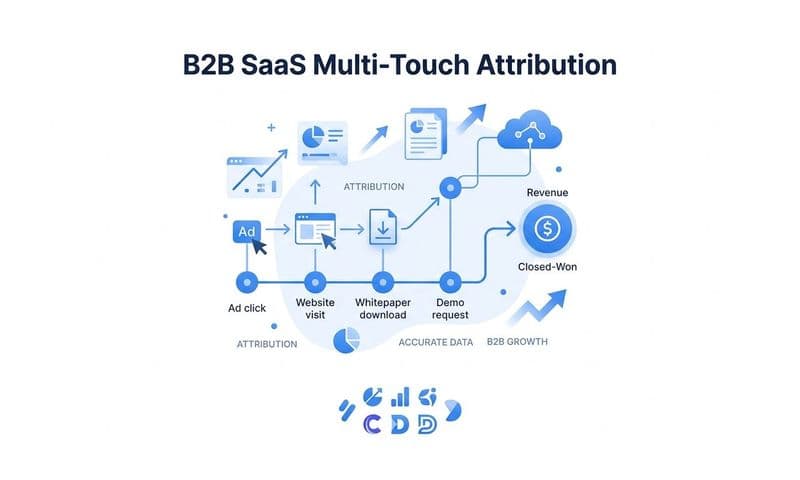
Handle multi-touch attribution by deciding how to credit conversions across multiple touchpoints. If a customer clicked three different ads before purchasing, which ad gets credit? Your CRM integration should send the same conversion to all relevant touchpoints or use a consistent attribution model like last-click, first-click, or linear. Document your attribution methodology so everyone on your team understands how conversions are credited.
Validate that your CRM data is actually reaching ad platforms by checking conversion counts in your ad platform reporting. After setting up CRM integration, compare the number of conversions showing in Meta or Google against the number you expect based on CRM records. If the numbers do not match, troubleshoot the integration before assuming it is working correctly.
Step 5: Validate Your Recovered Data and Optimize Platform Algorithms
After implementing server-side tracking and CRM integration, you need to verify that you are actually recovering lost conversions and that your ad platforms are using this data to improve performance.
Compare your conversion counts before and after implementation. Pull a report showing conversions for the 30 days before you implemented server-side tracking, then compare it to the 30 days after. You should see a significant increase in reported conversions even if your actual sales volume stayed constant. If you previously had a 35% tracking gap and now you are seeing 25% more conversions in your ad platforms, you have successfully recovered a substantial portion of lost data.
Monitor the data quality scores in your ad platforms. Meta's Events Manager shows a quality score for your pixel and Conversions API implementation. A high score indicates your events are being received reliably and matched effectively. Google Ads shows diagnostics for enhanced conversions and offline conversion imports. Check these regularly to catch implementation issues before they cause data loss. Understanding inaccurate conversion tracking data patterns helps you spot anomalies quickly.
Feed your enriched conversion data back to ad platform algorithms by ensuring your campaigns are optimizing toward the events you are now tracking more accurately. If you previously optimized for "Add to Cart" because purchase tracking was unreliable, switch to optimizing for actual purchases now that you have complete data. This allows algorithms to find users who actually buy, not just users who show interest.
Watch for improvements in campaign performance as algorithms receive better data. With more complete conversion information, ad platforms can identify patterns in converting users more accurately. You should see cost per acquisition stabilize or decrease as platforms learn which audiences and placements actually drive results. This improvement might take a few weeks as algorithms process the new data and adjust targeting. Learn how ad tracking tools can help you scale ads using accurate data for maximum impact.
Set up monitoring and alerts for ongoing data gaps. Create a weekly or daily check that compares ad platform conversions against your CRM conversions. If the gap suddenly widens, you know something broke in your tracking setup. Automated alerts let you catch and fix issues quickly instead of discovering weeks later that you have been flying blind.
Document your entire tracking architecture in a shared document your team can reference. Include diagrams showing data flow from user action through your website, server, CRM, and back to ad platforms. List all the tools involved, API endpoints, access tokens, and configuration settings. When team members change or technical issues arise, this documentation becomes invaluable for troubleshooting and maintaining your setup.
Run regular audits to ensure your tracking stays accurate as your tech stack evolves. Every time you update your website, change your CRM, or modify your checkout process, test that conversions still track correctly. Schedule quarterly audits where you manually verify that test conversions flow through your entire tracking system from click to CRM to ad platform reporting.
Your Path to Complete Conversion Visibility
Recovering lost conversion data is not a one-time fix but an ongoing commitment to accurate measurement in an increasingly privacy-focused digital landscape. The five steps you just worked through, auditing your current setup, diagnosing root causes, implementing server-side tracking, connecting your CRM, and validating your data, create a foundation for reliable attribution that withstands browser restrictions and privacy changes.
Use this checklist to confirm you have covered all the critical elements: tracking gap calculated and documented, root causes identified for your specific situation, server-side tracking implemented and tested, CRM connected with automated syncing enabled, and data validation process established with ongoing monitoring. Each element builds on the previous one to create a complete tracking infrastructure.
The real payoff comes when your ad platforms start receiving accurate, complete conversion data. Algorithms that previously optimized based on partial information can now see the full picture. They learn which audiences actually convert, which creatives drive purchases, and which placements deliver real ROI. Your campaigns become more efficient, your cost per acquisition drops, and you can finally make optimization decisions based on truth rather than guesswork.
Remember that privacy regulations and browser restrictions will continue evolving. The tracking methods that work today might need adjustment tomorrow. By building a robust, server-side tracking infrastructure now, you create flexibility to adapt as the landscape changes. First-party data collection through your own systems will always be more reliable than third-party cookies and browser pixels.
Ready to elevate your marketing game with precision and confidence? Discover how Cometly's AI-driven recommendations can transform your ad strategy. Get your free demo today and start capturing every touchpoint to maximize your conversions.