

You've been running campaigns across Meta, Google, TikTok, and maybe a few other platforms. Each dashboard tells you something different about performance. Meta says you got 150 conversions. Google claims 120. Your CRM shows 95 actual sales. Which number do you trust when it's time to allocate next month's budget?
This isn't just a reporting headache. It's a strategic blindspot that costs real money. When you can't connect ad spend to actual revenue, you're essentially flying blind, making budget decisions based on incomplete or conflicting data. Marketing attribution platforms promise to solve this problem by tracking the entire customer journey and showing you which touchpoints actually drive revenue.
But like any significant software investment, attribution platforms come with both compelling advantages and real challenges. Some teams implement them and transform their marketing operations. Others struggle with complex setup processes and wonder if the juice was worth the squeeze. The difference usually comes down to understanding what you're getting into before you commit.
This guide breaks down the honest pros and cons of marketing attribution platforms so you can make an informed decision for your business. We'll explore why these tools have become essential for many marketers, examine their genuine benefits and limitations, and help you determine whether attribution software makes sense for your specific situation.
Why Marketers Are Turning to Attribution Platforms in the First Place
The marketing landscape has fundamentally changed over the past few years, and the old ways of measuring performance simply don't work anymore. If you're still relying solely on native platform reporting, you're probably making decisions based on incomplete information.
Multi-channel campaigns have become the standard, not the exception. Your customers don't see one ad and immediately buy. They might discover you through a Facebook ad, research your product via Google search, watch a YouTube video, click a retargeting ad on Instagram, and finally convert three days later after receiving an email. Each platform wants to claim credit for that conversion, which is why your numbers never add up.
The death of last-click attribution thinking has been a long time coming. Giving all the credit to the final touchpoint before purchase ignores the reality of how modern buyers make decisions. That last Google search might have triggered the purchase, but what about the awareness campaign that introduced your brand in the first place? Last-click attribution systematically undervalues top-of-funnel efforts and overvalues bottom-funnel tactics.
Then came the privacy revolution that changed everything. Apple's iOS 14.5 update and App Tracking Transparency framework essentially broke Meta's ability to track conversions accurately. When users opt out of tracking, Meta can't see what happens after someone clicks your ad. The result? Massive underreporting of actual conversions.
Google's planned deprecation of third-party cookies (even though delayed multiple times) signals the same direction. Browser-based tracking is dying. Native platform reporting increasingly relies on statistical modeling and estimates rather than deterministic tracking. For many advertisers, the gap between platform-reported conversions and actual revenue has grown uncomfortably wide.
This creates a dangerous situation. You might pause campaigns that Meta says aren't performing, not realizing those campaigns are actually driving significant revenue that just isn't being tracked properly. Or you might scale campaigns that look great in the ad platform but aren't actually contributing to your bottom line.
The gap between ad platform metrics and CRM reality has become the central problem for performance marketers. Your ad platforms optimize for their own conversion events, but those events don't always align with what matters to your business. A lead that never closes isn't valuable, but your ad platform counts it as a win. A customer who takes three weeks to convert might not be attributed back to the original ad that started their journey. Understanding inconsistent data across marketing platforms is essential for solving this disconnect.
Attribution platforms emerged to solve this disconnect by using first-party data and server-side tracking to create a more accurate picture of campaign performance. Instead of relying on cookies and pixels that can be blocked, they track events directly from your server and connect them to your actual revenue systems.
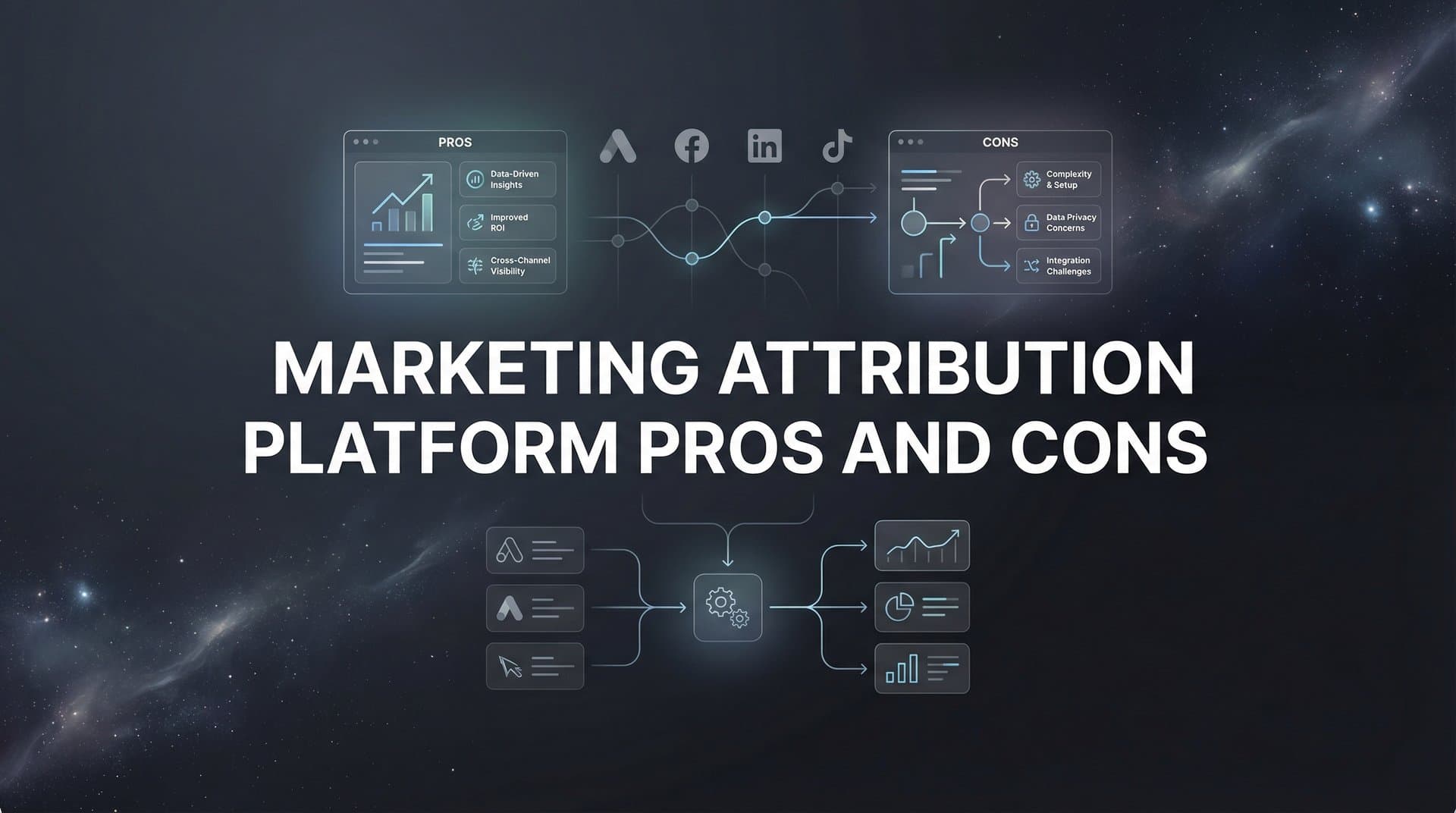
The Clear Advantages of Using Attribution Software
When implemented properly, marketing attribution platforms deliver several game-changing benefits that fundamentally improve how you make marketing decisions. These aren't theoretical advantages. They're practical improvements that impact your day-to-day operations and bottom-line results.
The most immediate benefit is gaining a unified view of your entire customer journey. Instead of logging into five different platforms and trying to mentally piece together what's happening, you see everything in one place. From the first ad impression to the final closed deal, every touchpoint is tracked and connected to actual revenue.
This unified view reveals patterns you couldn't see before. You might discover that customers who see both a YouTube ad and a Facebook ad convert at twice the rate of those who only see one. Or that LinkedIn drives fewer conversions but much higher average order values. These insights only emerge when you can see the complete journey across all platforms simultaneously.
Attribution model flexibility becomes a strategic advantage. Most businesses don't fit neatly into a single attribution model. Sometimes first-touch attribution makes sense because you're primarily focused on awareness and new customer acquisition. Other times, multi-touch marketing attribution provides better insights because your sales cycle involves multiple touchpoints over weeks or months.
With attribution software, you can compare these models side by side. See how your campaign performance looks under first-touch, last-touch, linear, time-decay, and position-based models. This comparison often reveals which channels are being over-credited or under-credited in your current measurement approach. You might find that your content marketing drives far more value than you realized when you switch from last-touch to a multi-touch model.
Real-time optimization based on actual revenue data transforms how you manage campaigns. Instead of waiting for monthly reports to understand what's working, you can see performance updates as they happen. When a campaign starts driving high-quality leads that close into revenue, you know immediately and can scale it. When another campaign generates clicks but no actual customers, you can pause it before wasting more budget.
This real-time visibility is particularly valuable for businesses with longer sales cycles. If you're in B2B SaaS and it takes 30 days from lead to customer, traditional platform reporting tells you almost nothing useful during that month. Attribution platforms connect the dots between today's ad clicks and next month's closed deals, giving you much faster feedback loops.
Server-side tracking accuracy solves the iOS and cookie problems that plague native platform reporting. When you track conversions from your server rather than relying on browser pixels, you capture events that would otherwise be invisible. Users who opt out of app tracking or block cookies still get tracked accurately because the conversion event is recorded server-side when they complete an action on your website.
This improved accuracy has a compounding effect. When you feed better conversion data back to ad platforms through Conversion API integrations, their algorithms get smarter. Meta and Google optimize based on the data you send them. If you're only sending them 60% of your actual conversions due to tracking limitations, their algorithms optimize for the wrong patterns. When you send complete, accurate conversion data via server-side tracking, they can find more customers who actually convert.
The ability to optimize for actual revenue rather than vanity metrics changes your entire strategic approach. Many marketers get caught up optimizing for metrics that don't matter. High click-through rates feel good but don't pay the bills if those clicks don't convert. Lots of leads mean nothing if they're low quality and never close.
Attribution platforms let you optimize for what actually matters to your business. If you're ecommerce, optimize for revenue and customer lifetime value. If you're B2B, optimize for SQL-to-customer conversion rate and deal size. This alignment between optimization targets and business outcomes typically leads to significantly better results than optimizing for intermediate metrics.
Cross-platform budget allocation becomes data-driven rather than guesswork. When you can see which platforms and campaigns contribute most to actual revenue, you can confidently shift budget toward high performers and away from underperformers. This sounds obvious, but it's surprisingly difficult without proper attribution. Many businesses continue spending heavily on channels that feel important but don't actually drive results, simply because they lack the data to make informed reallocation decisions.
The Real Challenges and Limitations to Consider
Attribution platforms deliver significant value, but they're not plug-and-play solutions. Understanding the challenges upfront helps you set realistic expectations and prepare for a successful implementation.
Implementation complexity is the first hurdle most teams face. Setting up proper attribution tracking requires technical work across multiple systems. You need to install tracking scripts on your website, configure event tracking for key actions, connect API integrations with each ad platform, and link everything to your CRM or revenue system.
This isn't a one-click process. Depending on your tech stack, it might require developer resources to implement custom tracking for specific events or to ensure proper data flow between systems. If your website uses a complex checkout process or if you have multiple subdomains, the technical setup becomes even more involved. Budget time and resources for this implementation phase rather than expecting to be up and running in an afternoon.
Data accuracy depends entirely on proper configuration. Attribution platforms can only work with the data they receive. If your tracking isn't set up correctly, or if there are gaps in your conversion funnel where events aren't being captured, your attribution data will be incomplete or misleading.
Common issues include missing UTM parameters on certain traffic sources, conversion events that fire multiple times for a single purchase, or CRM integrations that don't properly connect leads back to their original source. Each of these problems skews your attribution data and leads to incorrect conclusions about campaign performance. Maintaining data accuracy requires ongoing monitoring and occasional troubleshooting as your marketing stack evolves. Exploring attribution challenges in marketing analytics can help you anticipate and avoid these pitfalls.
The learning curve for teams accustomed to native platform reporting shouldn't be underestimated. Your team has spent years learning how to read Meta Ads Manager and Google Ads dashboards. They understand what the metrics mean and how to interpret performance trends. Attribution platforms introduce new terminology, different metrics, and alternative ways of thinking about campaign performance.
This transition period can be uncomfortable. Team members might resist the new system, preferring the familiar dashboards they already know. They might question why the attribution platform shows different numbers than their ad platforms. Training and change management become important parts of successful adoption. Plan to invest time helping your team understand attribution models, interpret the new reports, and trust the data they're seeing.
Cost considerations matter, especially for smaller businesses. Attribution platforms typically charge based on factors like tracked events, connected ad accounts, or monthly ad spend. For businesses spending substantial amounts on advertising, these fees represent a small percentage of overall marketing budget and easily justify themselves through improved performance. For smaller operations, the monthly cost might feel significant relative to total ad spend. Researching marketing attribution platform pricing helps you understand what to expect.
You need sufficient scale to justify the investment. If you're spending a few thousand dollars per month on advertising, the potential optimization gains might not outweigh the platform cost plus implementation effort. The ROI calculation improves dramatically as your ad spend increases because even small percentage improvements in efficiency translate to meaningful dollar savings.
Integration maintenance requires ongoing attention. Ad platforms regularly update their APIs, CRMs change their data structures, and website updates can break tracking implementations. Attribution platforms need to keep up with these changes, and you need to monitor that everything continues working properly.
This isn't set-it-and-forget-it software. Regular audits of your tracking setup help catch issues before they cause significant data gaps. When you launch new campaigns or add new marketing channels, you need to ensure they're properly integrated into your attribution system. This ongoing maintenance is manageable but requires someone on your team to own it.
Model limitations exist even with sophisticated attribution software. No attribution model perfectly captures reality. Multi-touch attribution makes assumptions about how to distribute credit across touchpoints. These assumptions might not align with how your customers actually make decisions. A customer might see ten ads but only one actually influenced their purchase decision. Attribution models can't read minds.
Additionally, attribution platforms struggle with certain scenarios. Offline conversions that happen outside your digital systems are difficult to track accurately. Word-of-mouth referrals and brand awareness built over time don't fit neatly into attribution models. Dark social traffic (people sharing links via private messages) often appears as direct traffic with no clear source. These limitations mean attribution data provides valuable insights but doesn't tell the complete story.
Which Teams Benefit Most (And Who Should Wait)
Not every business needs attribution software right now. Understanding where you fall on the readiness spectrum helps you make a smart decision about timing and investment.
Multi-platform advertisers with complex customer journeys benefit most dramatically from attribution platforms. If you're running campaigns across Meta, Google, TikTok, LinkedIn, and other channels simultaneously, you're exactly who these tools are built for. Your customers interact with multiple touchpoints before converting, and understanding which combinations drive results becomes critical for optimization.
Businesses with longer sales cycles see particularly strong value. When your customer journey spans weeks or months from first touch to closed deal, native platform reporting becomes almost useless. Ad platforms optimize for immediate conversions, but your actual conversions happen much later. Attribution platforms connect these delayed conversions back to their original sources, giving you the feedback data you need to optimize effectively.
Ecommerce brands with significant ad budgets represent ideal candidates for attribution software. If you're spending five figures or more monthly on advertising and running campaigns across multiple platforms, the potential optimization gains quickly justify the investment. Even improving your return on ad spend by 10-20% through better attribution translates to substantial dollar amounts at scale. Many successful brands rely on ecommerce marketing attribution software to maximize their advertising efficiency.
Ecommerce also tends to have clearer conversion events and shorter feedback loops than B2B, making implementation more straightforward. You can see results relatively quickly as you optimize based on accurate revenue attribution rather than platform-reported conversions.
SaaS companies running growth marketing operations across multiple channels also benefit significantly. The subscription business model makes customer lifetime value tracking particularly important. A dedicated marketing attribution SaaS platform helps you understand not just which campaigns drive signups, but which campaigns drive high-value customers who stick around and generate recurring revenue.
For SaaS businesses with free trials or freemium models, attribution becomes even more critical. You need to track beyond the initial signup to see which campaigns drive users who actually convert to paid plans. This deeper attribution reveals which traffic sources are worth scaling versus which ones bring in tire-kickers who never pay.
Marketing agencies managing multiple client accounts find attribution platforms valuable for demonstrating clear ROI. When you can show clients exactly which campaigns drive revenue rather than just reporting on vanity metrics, you deliver more value and justify your fees more easily. The unified reporting also makes client communication more efficient compared to pulling data from multiple platforms.
Early-stage startups still finding product-market fit should probably wait. If you're pre-revenue or just starting to test marketing channels, focus your resources on product development and initial traction. Attribution software solves optimization problems that only matter once you have meaningful traffic and conversion volume to analyze.
Single-channel advertisers running simple campaigns don't need sophisticated attribution. If you only advertise on one platform and have straightforward conversion tracking, native platform reporting probably serves you fine. The complexity and cost of attribution software isn't justified when you're not dealing with multi-touch journeys across platforms.
Businesses with very small ad budgets should prioritize other investments first. If you're spending less than a few thousand dollars monthly on advertising, the attribution platform cost might represent too large a percentage of your total marketing budget. Focus on growing your ad spend and proving out your channels before investing in advanced attribution.
Teams without technical resources for implementation might struggle with setup. If you don't have developer support and your marketing team isn't technical, the implementation process could become frustrating. Some attribution platforms offer more managed setup services, but you still need someone capable of troubleshooting tracking issues and maintaining integrations over time.
How to Evaluate Attribution Platforms for Your Business
If you've determined attribution software makes sense for your situation, choosing the right platform requires careful evaluation. Not all attribution tools are created equal, and the right choice depends on your specific needs and technical environment.
Server-side tracking capability should be a non-negotiable requirement. This is the feature that solves iOS tracking limitations and cookie deprecation issues. Platforms that rely primarily on client-side tracking (browser pixels) will give you incomplete data. Verify that the platform tracks conversions server-side and can send this data back to ad platforms via Conversion APIs.
CRM integration depth determines how well you can track revenue attribution. Surface-level integrations that only capture lead creation aren't enough. You need deep integration that tracks the entire lifecycle from lead to opportunity to closed deal, including deal value and customer lifetime value. Ask specifically how the platform integrates with your CRM system and what data points it can track.
For ecommerce businesses, ensure the platform integrates properly with your ecommerce platform (Shopify, WooCommerce, etc.) and can track not just purchases but also revenue amounts, product categories, and customer segments. This granular data enables much more sophisticated optimization than simple conversion counting. If you're on Shopify specifically, explore dedicated Shopify marketing attribution tools designed for that ecosystem.
Attribution model flexibility matters because different models reveal different insights. The platform should support multiple attribution models including first-touch, last-touch, linear, time-decay, position-based, and ideally custom models you can configure yourself. Being able to compare these models side by side helps you understand how different approaches impact your channel evaluation. A solid foundation in understanding marketing attribution models will help you leverage this flexibility effectively.
Ad platform coverage needs to match your marketing mix. Verify the platform integrates with all the advertising channels you currently use and plan to use. Common platforms like Meta, Google, and TikTok should be standard, but if you advertise on LinkedIn, Pinterest, Snapchat, or other platforms, confirm support exists. Missing integrations create blind spots in your attribution data.
Reporting capabilities and user interface quality significantly impact daily usability. Request a demo and actually use the platform yourself. Is the interface intuitive? Can you quickly find the information you need? Are reports customizable to show the metrics your team cares about? A powerful platform that's difficult to use won't get adopted by your team.
Implementation support and onboarding process vary dramatically between platforms. Ask about what's included in setup. Do they provide dedicated implementation support? Is there documentation for technical setup? What happens if you encounter tracking issues? Platforms that leave you to figure everything out yourself can lead to frustrating implementation experiences.
Data accuracy and validation should be demonstrable. Ask how the platform validates its tracking accuracy. Can they show you test scenarios proving their attribution data matches reality? Are there case studies or references from businesses similar to yours? Be skeptical of platforms that can't clearly explain their tracking methodology or validate their accuracy.
Pricing structure transparency matters for budgeting. Understand exactly what you'll pay and what factors might increase costs over time. Is pricing based on tracked events, ad spend, number of users, or some combination? Are there overage charges if you exceed plan limits? Hidden costs or unpredictable pricing makes budgeting difficult.
Red flags to watch for during evaluation include platforms that overpromise results without acknowledging limitations, vendors who can't clearly explain their tracking methodology, lack of transparent pricing, poor reviews regarding customer support, and platforms that seem to be struggling with basic integrations. If the sales process feels pushy or if they're unwilling to provide trial access or references, proceed cautiously.
Customer support quality becomes critical when you encounter issues. Ask about support availability, response times, and whether you'll have a dedicated account manager. Attribution platforms can be complex, and you want confidence that help is available when you need it. Check third-party review sites for feedback about support quality from actual users. Reading marketing attribution platform reviews from real customers provides valuable perspective.
Making the Decision: Weighing Your Specific Situation
You've learned about the pros and cons. Now comes the practical question: should you invest in attribution software right now, and if so, how do you set yourself up for success?
Start by calculating potential ROI based on your current ad spend and known inefficiencies. If you're spending $50,000 monthly on advertising and you suspect even 10% of that budget is being wasted on underperforming campaigns you can't identify, that's $5,000 monthly or $60,000 annually at stake. If attribution software costs $500-1,000 monthly and helps you reallocate that wasted budget to better-performing campaigns, the ROI is obvious.
Consider the cost of your current blind spots. How often do you make budget allocation decisions based on incomplete data? What's the opportunity cost of not scaling campaigns that are actually working but aren't being credited properly? These hidden costs often exceed the direct cost of attribution software.
Before committing to any platform, audit your current tracking setup. Document what you're tracking now, where the gaps are, and what questions you can't answer with existing data. This audit serves two purposes: it helps you articulate your requirements when evaluating platforms, and it reveals whether you might solve some problems through better use of existing tools before adding new software.
Identify your biggest data blind spots specifically. Is it understanding which channels drive high-value customers versus low-value ones? Is it connecting ad clicks to revenue for longer sales cycles? Is it dealing with iOS tracking limitations? Different attribution platforms have different strengths, and knowing your primary pain points helps you choose the right solution. Conducting a thorough marketing attribution platform comparison ensures you find the best fit.
Set realistic expectations for implementation timeline. Plan for at least 2-4 weeks for technical setup and integration, followed by 2-4 weeks of data collection before you have enough information to make optimization decisions. If you have a complex tech stack or long sales cycle, these timelines extend. Expecting instant results leads to disappointment and premature judgment of the platform.
Prepare your team for the transition before you start implementation. Explain why you're making this investment, what problems it solves, and how it will change their daily workflows. Address concerns about learning new systems and reassure them that training and support will be provided. Team buy-in significantly impacts adoption success.
Plan for a learning period where you run attribution software alongside existing reporting. Don't immediately abandon your current dashboards and processes. Instead, compare attribution data with platform reporting to understand the differences and build confidence in the new system. This parallel approach helps your team gradually trust the attribution data.
Consider starting with a smaller scope and expanding over time. You don't need to integrate every marketing channel and track every possible event on day one. Start with your highest-spend channels and most important conversion events. Get those working properly, learn the system, and then expand to additional channels and tracking points.
Document your goals and success metrics before implementation. What specific decisions will you make differently with better attribution data? What metrics will improve if the implementation succeeds? Having clear success criteria helps you evaluate whether the investment is paying off after a few months of use.
Moving Forward with Confidence
Marketing attribution platforms offer powerful capabilities for businesses ready to move beyond platform-reported metrics and optimize based on actual revenue data. The advantages are real: unified customer journey visibility, flexible attribution models, server-side tracking accuracy, and the ability to make data-driven budget decisions with confidence.
But these benefits come with legitimate challenges. Implementation requires technical work and ongoing maintenance. Teams need time to learn new systems and trust new data. The investment only makes sense when you have sufficient scale and complexity to justify it.
The right decision depends entirely on your specific situation. Multi-platform advertisers with significant budgets and complex customer journeys typically see strong ROI quickly. Early-stage businesses with simple campaigns should probably wait. Most businesses fall somewhere in between, making honest assessment of your readiness crucial.
If you're spending meaningful amounts on advertising across multiple platforms, struggling with iOS tracking limitations, or making budget decisions based on gut feel rather than data, attribution software likely makes sense. If you're running single-channel campaigns with straightforward tracking, you can probably optimize effectively with native platform tools.
The key is setting realistic expectations and preparing properly for implementation. Attribution platforms aren't magic solutions that instantly fix all measurement problems. They're sophisticated tools that deliver tremendous value when implemented correctly and used strategically by teams committed to data-driven marketing.
Take the time to audit your current tracking, identify your biggest blind spots, and evaluate platforms carefully based on your specific needs. Choose a solution that matches your technical environment and provides the support you need for successful implementation. Plan for a learning period and focus on building team confidence in the new data.
When done right, the shift to proper attribution transforms how you make marketing decisions. You stop guessing which campaigns drive revenue and start knowing. You reallocate budget with confidence rather than anxiety. You optimize for business outcomes rather than vanity metrics. These improvements compound over time, making the initial investment in attribution software one of the highest-ROI decisions you can make for your marketing operations.
Ready to elevate your marketing game with precision and confidence? Discover how Cometly's AI-driven recommendations can transform your ad strategy. Get your free demo today and start capturing every touchpoint to maximize your conversions.


