You're running campaigns across Meta, Google, TikTok, and maybe a few other platforms. Your dashboards show conversions. Your revenue is growing. But when you add up what each platform claims it delivered, the math doesn't work. Three platforms are taking credit for the same sale, and you're left wondering which channels actually deserve your budget.
This isn't just frustrating—it's expensive. Without understanding which marketing efforts truly drive conversions, you're essentially flying blind with your budget decisions. You might be pouring money into channels that look good on paper but barely move the needle, while underinvesting in the tactics that actually close deals.
Marketing mix attribution solves this problem by connecting the dots between your marketing spend and revenue. It's the methodology that reveals which channels, campaigns, and touchpoints genuinely contribute to conversions throughout the customer journey. This guide will show you how attribution works, why traditional approaches fall short, and how to build a strategy that turns attribution data into confident budget decisions.
Breaking Down the Marketing Mix Attribution Framework
Marketing mix attribution is the methodology for measuring how different marketing channels contribute to conversions and revenue. Think of it as the system that assigns credit to each marketing touchpoint a customer encounters before converting—whether that's clicking an ad, reading a blog post, or opening an email.
The framework operates on three core components that work together to create a complete picture of your marketing performance.
Channel identification is the foundation. This means cataloging every marketing channel you use—paid search, social media ads, email campaigns, content marketing, display advertising, and more. Each channel needs to be tracked independently so you can measure its specific contribution. Without proper channel identification, you're lumping disparate marketing efforts together and losing the granular insights needed for optimization.
Touchpoint tracking captures every interaction a customer has with your marketing. When someone clicks your Facebook ad on Monday, visits your website directly on Wednesday, and clicks a Google ad on Friday before purchasing, those are three distinct touchpoints. Effective attribution requires capturing all of them, not just the last click before conversion. This is where many marketers struggle—tracking becomes fragmented across platforms, creating gaps in the customer journey data.
Credit assignment is where attribution models come into play. This component determines how much credit each touchpoint receives for the final conversion. Should the first ad click get all the credit? The last one? Should credit be distributed evenly across all touchpoints? The model you choose dramatically affects which channels appear successful and which seem ineffective.
It's crucial to understand the distinction between two major approaches: marketing mix modeling (MMM) and multi-touch attribution (MTA). They're often confused, but they work differently.
Marketing mix modeling uses aggregate data and statistical regression to estimate channel impact. It looks at overall spending patterns and revenue trends to infer which channels drive results. MMM doesn't track individual customer journeys—instead, it analyzes correlations between marketing investments and business outcomes at a macro level. This approach works well for measuring channels that are hard to track digitally, like TV or radio advertising.
Multi-touch attribution tracks individual user journeys deterministically. It follows specific customers through their actual touchpoints, connecting ad clicks, website visits, and conversions at the person level. MTA provides granular insights into how individual campaigns and ads perform throughout the customer journey. This approach excels when you need to optimize digital campaigns based on real customer behavior rather than statistical estimates. Understanding the nuances of multi-touch attribution vs marketing mix modeling helps you choose the right approach for your business.
Many sophisticated marketing teams now use both approaches together. MMM provides the big-picture view and helps measure traditionally hard-to-track channels, while MTA delivers the granular, actionable insights needed for day-to-day campaign optimization.
Common Attribution Models and When to Use Each
Attribution models are the rules that determine how credit gets distributed across touchpoints. Choosing the right model isn't about finding the "correct" answer—it's about selecting the framework that best aligns with your business reality and decision-making needs.
First-Click Attribution gives all credit to the first touchpoint that introduced a customer to your brand. If someone clicked your Facebook ad, then later clicked a Google ad before purchasing, Facebook gets 100% of the credit.
This model makes sense when your primary goal is understanding top-of-funnel performance and customer acquisition sources. It helps you identify which channels effectively introduce new prospects to your brand. However, it completely ignores everything that happens after that initial interaction, which can lead to undervaluing channels that nurture and close deals.
Last-Click Attribution assigns all credit to the final touchpoint before conversion. It's the default model in many analytics platforms because it's simple to implement and understand. If a customer's last interaction was clicking your branded search ad, that ad gets full credit regardless of the six other touchpoints that preceded it.
Last-click works reasonably well for businesses with short, straightforward customer journeys. If people typically convert within hours of discovering your product, the last touchpoint probably deserves most of the credit. But for longer sales cycles with multiple touchpoints, last-click attribution systematically overvalues bottom-of-funnel channels (like branded search) while ignoring the channels that created initial awareness and interest.
Linear Attribution distributes credit evenly across all touchpoints. If a customer interacted with five different marketing channels before converting, each channel receives 20% of the credit. This approach acknowledges that multiple touchpoints contribute to conversions, but it assumes every interaction has equal impact—which rarely reflects reality.
Linear attribution works best when you're just starting to move beyond single-touch models and want to ensure all channels get some recognition. It's also useful when you genuinely believe each touchpoint plays a roughly equal role in the customer journey. However, most businesses find that certain touchpoints (like the first interaction or the final push) deserve more weight than middle-of-journey touches.
Time-Decay Attribution gives more credit to touchpoints closer to the conversion. The last interaction might receive 40% of the credit, the second-to-last gets 30%, the third-to-last gets 20%, and earlier touchpoints split the remaining 10%. The exact decay rate varies by implementation.
This model reflects the reality that recent interactions often have more influence on purchase decisions than older ones. It's particularly useful for businesses with defined sales cycles where you want to emphasize closing activities while still acknowledging earlier touchpoints. Time-decay makes sense when your marketing strategy focuses on moving prospects through a funnel, with different tactics designed for different stages.
Position-Based (U-Shaped) Attribution assigns the most credit to the first and last touchpoints, typically giving each 40% of the credit, while middle touchpoints split the remaining 20%. This model recognizes that introducing a customer to your brand and closing the sale are often the most critical moments.
Position-based attribution works well when both customer acquisition and conversion optimization are strategic priorities. It helps you understand which channels excel at introducing new prospects and which ones effectively close deals, without completely ignoring the nurturing touchpoints in between.
Data-Driven Attribution uses machine learning to assign credit based on actual conversion patterns in your data. Instead of following predetermined rules, these models analyze thousands of customer journeys to identify which touchpoints genuinely increase conversion probability. If your data shows that email interactions after a Facebook ad click significantly boost conversion rates, the model assigns credit accordingly. For a deeper understanding of how these models work, explore what is marketing attribution model and how to apply it effectively.
Data-driven attribution provides the most accurate picture of channel performance, but it requires substantial data volume to work effectively. You typically need thousands of conversions before machine learning models can identify reliable patterns. This approach works best for businesses with significant traffic and conversion volume across multiple channels.
The key to choosing the right model is matching it to your business reality and decision-making needs. Companies with short sales cycles might do fine with last-click attribution, while businesses with complex, multi-touch journeys need more sophisticated approaches. Many marketers compare multiple models side-by-side to understand how different perspectives affect channel performance assessments.
Why Traditional Attribution Falls Short in Today's Marketing Landscape
The attribution methods that worked five years ago are increasingly unreliable. The marketing landscape has changed dramatically, creating new challenges that traditional attribution approaches weren't designed to handle.
Cross-device tracking has become nearly impossible with standard methods. Your customer might discover your brand on their phone during their morning commute, research your product on their work laptop during lunch, and complete the purchase on their home tablet that evening. Traditional cookie-based tracking sees these as three separate users, completely fragmenting the customer journey. Without connecting these touchpoints, you're missing the full story of how customers interact with your marketing.
The problem extends beyond just devices. People switch between browsers, use private browsing modes, and clear their cookies regularly. Each of these actions breaks the tracking chain, creating artificial gaps in what should be a continuous customer journey. When your attribution data is full of these gaps, you're making budget decisions based on incomplete information.
Privacy changes have accelerated attribution challenges dramatically. iOS App Tracking Transparency fundamentally changed mobile attribution by requiring apps to ask permission before tracking users across other apps and websites. Most users decline tracking, creating massive blind spots in mobile campaign performance. What used to be trackable customer journeys are now invisible to traditional attribution methods. These common attribution challenges in marketing analytics require new approaches to overcome.
Cookie deprecation continues to erode tracking capabilities. Browser restrictions on third-party cookies mean that many of the tracking mechanisms marketers relied on simply don't work anymore. As these privacy protections expand, pixel-based tracking becomes less reliable, making it harder to connect ad impressions to eventual conversions.
These privacy changes aren't temporary obstacles—they represent a permanent shift in how digital tracking works. Attribution strategies built on assumptions of unlimited tracking access are fundamentally broken in this new environment.
Platform-reported metrics create confusion and over-counting. Each ad platform uses its own attribution window and methodology, leading to situations where multiple platforms claim credit for the same conversion. Meta might report 100 conversions, Google Ads might report 95, and TikTok might report 60—but when you check your actual sales, you only had 120 conversions total. The math doesn't work because each platform is independently claiming credit without accounting for overlapping customer journeys.
This over-counting isn't malicious—it's a natural consequence of platforms optimizing for their own metrics. Meta attributes conversions to Meta ads, Google attributes conversions to Google ads, and neither knows about the other's touchpoints. When you sum up platform-reported conversions, you're counting the same customers multiple times.
The result is a distorted view of marketing performance that makes budget allocation nearly impossible. You can't simply trust what each platform reports, but without a unified attribution system, you have no better alternative. This leaves marketers making decisions based on metrics they know are inflated, hoping their intuition fills in the gaps.
Building an Effective Marketing Mix Attribution Strategy
Creating an attribution system that actually works requires moving beyond platform-specific tracking and building a unified view of your marketing performance. Here's how to construct an attribution strategy that delivers reliable insights.
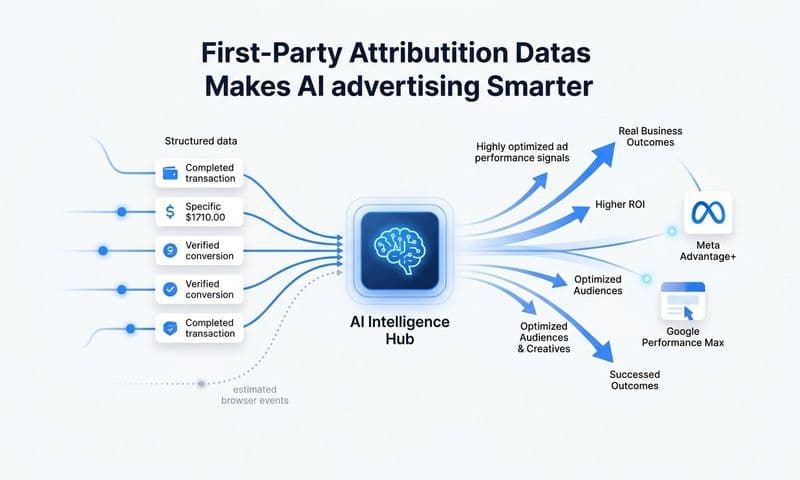
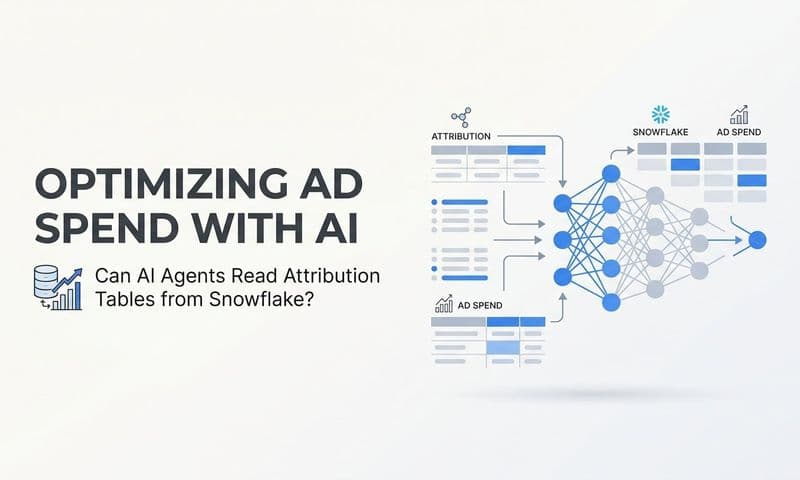
Start with unified tracking that creates a single source of truth. This means connecting your ad platforms, website analytics, and CRM data into one system that can see the complete customer journey. When Facebook, Google, and your CRM all feed data into a central attribution platform, you can finally see how touchpoints across channels work together to drive conversions.
Unified tracking solves the over-counting problem by deduplicating conversions across platforms. Instead of each platform independently claiming credit, a central system determines which touchpoints actually occurred and assigns credit according to your chosen attribution model. This gives you accurate conversion counts and reliable performance metrics for each channel. Implementing the right marketing attribution platforms for revenue tracking is essential for this unified approach.
The implementation typically involves connecting your ad platforms through their APIs, implementing tracking on your website that captures all visitor interactions, and integrating your CRM so conversion data flows back into the attribution system. This infrastructure lets you track customers from their first ad click through to closed deals, regardless of how many channels they interact with along the way.
Choose attribution windows that match your sales cycle. An attribution window defines how long after a touchpoint you'll give that touchpoint credit for a conversion. If you use a seven-day window, a Facebook ad click only gets credit if the conversion happens within seven days. Choose too short a window and you'll miss conversions that your marketing influenced. Choose too long a window and you'll credit touchpoints that had nothing to do with the final purchase decision.
Ecommerce businesses with impulse purchases might use short windows—perhaps seven days for click-through attribution. Customers who want your product typically buy quickly, so longer windows would artificially inflate attribution to older touchpoints that didn't really influence the decision.
B2B companies with multi-month sales cycles need much longer windows—often 30, 60, or even 90 days. Enterprise deals involve multiple stakeholders, lengthy evaluation processes, and numerous touchpoints over weeks or months. A short attribution window would systematically undervalue top-of-funnel marketing that starts these lengthy journeys. For B2B-specific guidance, review B2B marketing attribution 101 to understand the unique requirements.
Many businesses use different attribution windows for different conversion types. You might use a 7-day window for newsletter signups (a quick decision) but a 30-day window for product purchases (which require more consideration). Matching windows to actual customer behavior ensures your attribution reflects reality rather than arbitrary timeframes.
Implement server-side tracking to capture what client-side methods miss. Traditional pixel-based tracking happens in the user's browser, making it vulnerable to ad blockers, privacy settings, and browser restrictions. Server-side tracking moves data collection to your server, capturing conversion events that browser-based methods would miss.
When a conversion happens, your server sends the event data directly to your attribution platform and ad platforms, bypassing browser limitations entirely. This approach captures more complete data, especially from privacy-conscious users and mobile traffic where traditional tracking struggles.
Server-side tracking also enables better data quality. You can enrich conversion events with additional information from your CRM—like customer lifetime value or deal size—that wouldn't be available through browser-based tracking alone. This enriched data helps ad platforms optimize more effectively and gives you deeper attribution insights.
The combination of unified tracking, appropriate attribution windows, and server-side implementation creates an attribution foundation that actually works in today's privacy-focused environment. This infrastructure captures reliable data and processes it according to models that reflect your business reality.
Turning Attribution Data Into Budget Decisions
Attribution data only matters if it changes how you allocate your marketing budget. Here's how to translate attribution insights into concrete budget decisions that improve ROI.
Identify which channels drive assisted conversions versus closing conversions. Some channels excel at introducing new prospects but rarely get the last click before conversion. Other channels are great at closing deals but terrible at generating new awareness. Understanding these roles prevents you from cutting channels that seem ineffective in last-click attribution but actually play crucial roles earlier in the journey.
Look at your attribution reports to see where each channel appears in customer journeys. If Facebook ads frequently show up as the first touchpoint but rarely as the last, Facebook is primarily an awareness and acquisition channel. If branded search consistently appears as the final touchpoint, it's a closing channel that captures demand created elsewhere. Mastering channel attribution in digital marketing revenue tracking helps you understand these dynamics.
This insight changes budget allocation significantly. You might discover that cutting Facebook would reduce your overall conversion volume even though it has a high cost-per-last-click-conversion. Those Facebook ads are creating the awareness that eventually converts through other channels. Without understanding assisted conversions, you'd make the wrong budget decision.
Calculate true cost-per-acquisition by channel using attributed revenue. Platform-reported CPA numbers are often misleading because they use platform-specific attribution that over-counts conversions. Your true CPA requires dividing your actual spend by the conversions that attribution properly assigns to each channel.
If you spent $10,000 on Google Ads and Google reports 200 conversions, the platform-reported CPA is $50. But if your attribution system shows that only 120 of those conversions should actually be attributed to Google (because the other 80 were influenced more heavily by other channels), your true CPA is $83. This accurate number should drive your budget decisions, not the inflated platform metric.
The same calculation applies to revenue attribution. Instead of just counting conversions, attribute the actual revenue value to each channel based on the touchpoints that influenced each sale. This reveals which channels drive high-value customers versus which ones generate cheap conversions that don't contribute much revenue. Understanding cross-channel attribution marketing ROI is essential for accurate performance measurement.
Some channels might have higher CPAs but drive customers with much higher lifetime value. Attribution data that includes revenue lets you see these patterns and invest accordingly. You might happily pay more per acquisition for a channel that consistently brings in high-value customers.
Use attribution insights to reallocate budget from underperforming channels to high-impact ones. Once you understand true performance, budget reallocation becomes straightforward. Channels with strong attributed ROI deserve more investment. Channels that look good in platform metrics but show weak performance in proper attribution should get less budget.
Start with small shifts rather than dramatic changes. Move 10-15% of budget from underperforming channels to high-performers and monitor the results. Attribution models aren't perfect, so you want to validate that the insights hold up when you actually change spending patterns. If the reallocation improves overall performance, continue shifting budget. If results don't match expectations, reassess your attribution model or channel strategy.
Pay attention to how channels work together. Sometimes reducing spend on one channel hurts performance in another because they work synergistically. Your attribution data should reveal these relationships—if certain channel combinations consistently appear together in converting journeys, maintain investment in both rather than cutting one.
The goal isn't to find the single best channel and put all your budget there. Diversified channel strategies often outperform concentrated ones because they reach customers at different stages and contexts. Attribution helps you find the right balance—investing more in high-performers while maintaining presence across channels that play important supporting roles.
Making Attribution Work for Your Marketing Strategy
Marketing mix attribution transforms how you understand and optimize your marketing performance. By connecting the dots between every touchpoint and final conversions, attribution reveals which channels truly deserve credit and which ones are riding on the coattails of other marketing efforts.
The key steps are straightforward but require commitment. Build unified tracking that captures the complete customer journey across all channels. Choose attribution models and windows that match your actual sales cycle and business priorities. Implement server-side tracking to maintain data quality despite privacy restrictions. Then use those insights to continuously optimize budget allocation based on true performance rather than platform-reported metrics.
Remember that attribution isn't about achieving perfect accuracy—it's about developing directionally correct insights that improve decision-making. Even imperfect attribution data is vastly better than relying on last-click metrics or platform-specific reporting that systematically distorts performance. The goal is to move from guessing which channels work to making data-driven decisions backed by comprehensive journey analysis. Selecting the best marketing attribution tools for your needs accelerates this transformation.
Most marketers discover that their intuitions about channel performance were partially wrong. Channels they thought were underperforming were actually crucial for assisted conversions. Channels that looked amazing in platform dashboards were taking credit for conversions driven by other marketing efforts. These revelations only come from proper attribution that sees the full picture.
As you implement attribution, expect to iterate on your approach. Your first attribution model might not perfectly reflect your business reality. Your initial attribution windows might need adjustment as you learn more about your actual customer journeys. This iteration is normal and valuable—each refinement makes your attribution more accurate and your budget decisions more confident.
The marketing landscape will continue evolving. Privacy restrictions will likely expand. New channels will emerge. Customer journeys will become even more complex. But the fundamental need for attribution remains constant: marketers need to understand which efforts drive results so they can invest wisely and scale effectively.
Ready to elevate your marketing game with precision and confidence? Discover how Cometly's AI-driven recommendations can transform your ad strategy—Get your free demo today and start capturing every touchpoint to maximize your conversions.