
Running a dropshipping business means juggling multiple ad platforms, suppliers, and customer touchpoints. Without proper marketing tracking, you're essentially flying blind, spending money on ads without knowing which ones actually drive sales.
The challenge is real: dropshipping margins are often tight, and every dollar spent on ineffective advertising cuts directly into your profits.
Think about it. You're running Facebook ads, Google Shopping campaigns, maybe some TikTok or influencer partnerships. Each platform reports different numbers. Facebook says you made 50 sales. Google says 35. Your Shopify dashboard shows 62. Which one is right? More importantly, which campaigns should you scale and which should you kill?
This guide walks you through setting up comprehensive marketing tracking for your dropshipping business, from connecting your ad platforms to analyzing which campaigns generate real revenue. By the end, you'll have a tracking system that shows you exactly where your sales come from, helping you scale winning campaigns and cut the ones that drain your budget.
Whether you're running Facebook ads, Google Shopping campaigns, or influencer partnerships, these steps will help you build the attribution foundation your dropshipping business needs to grow profitably.
Step 1: Map Your Customer Journey and Identify Key Conversion Points
Before installing a single tracking pixel, you need to understand how customers actually move through your dropshipping funnel. This isn't about theory. It's about documenting the real path from ad click to purchase confirmation.
Start by walking through your own customer experience. Click one of your ads. What happens next? Do they land on a product page or a collection page? Do they watch a video? Read reviews? Add to cart immediately or browse multiple products first?
Document every touchpoint. Your typical journey might look like this: ad click, product page view, add to cart, view cart, initiate checkout, enter shipping info, complete purchase. Each of these moments is a conversion point you need to track.
Critical Conversion Events for Dropshipping: Your tracking system needs to capture specific events that matter for your business model. Add to cart tells you which products generate interest. Initiate checkout shows serious buying intent. Purchase is obvious. But don't stop there.
Track post-purchase actions too. Email confirmations, shipping notifications, delivery confirmations. These matter because dropshipping has longer fulfillment times than traditional e-commerce. A customer who waits three weeks for a product behaves differently than one who gets it in two days. Understanding conversion tracking for dropshipping helps you capture these critical moments.
Here's where dropshipping gets tricky: your customer journey is often longer and more fragmented than standard e-commerce. Someone might see your ad on Monday, think about it, come back via Google search on Wednesday, then finally purchase on Friday after seeing a retargeting ad. If you only track last-click, you'll think that retargeting ad deserves all the credit.
Create a simple tracking plan document. Use a spreadsheet. List each platform you advertise on: Facebook, Google, TikTok, whatever you use. For each platform, write down the conversion events you need to track and the data points that matter.
Your tracking plan should include: platform name, conversion events to track, attribution window you'll use, and specific metrics you need like revenue, order value, product SKU. This document becomes your blueprint for the technical setup in the next steps.
Don't overcomplicate this. Focus on the events that directly impact your business decisions. If you never use "view content" data to optimize campaigns, don't waste time tracking it. Prioritize the conversion points that help you answer the question: which campaigns make money?
Step 2: Install Tracking Pixels and Server-Side Tracking on Your Store
Now you're ready to implement the technical foundation. This step involves installing tracking pixels from your ad platforms and setting up server-side tracking to capture the data that browser-based pixels miss.
Start with the basics. If you're on Shopify, navigate to your Online Store settings and find the Facebook Pixel section. Install your Meta Pixel by pasting your Pixel ID. For Google Ads, you'll add the conversion tracking tag to your checkout confirmation page. TikTok Pixel follows a similar process.
Most dropshippers stop here. That's a mistake.
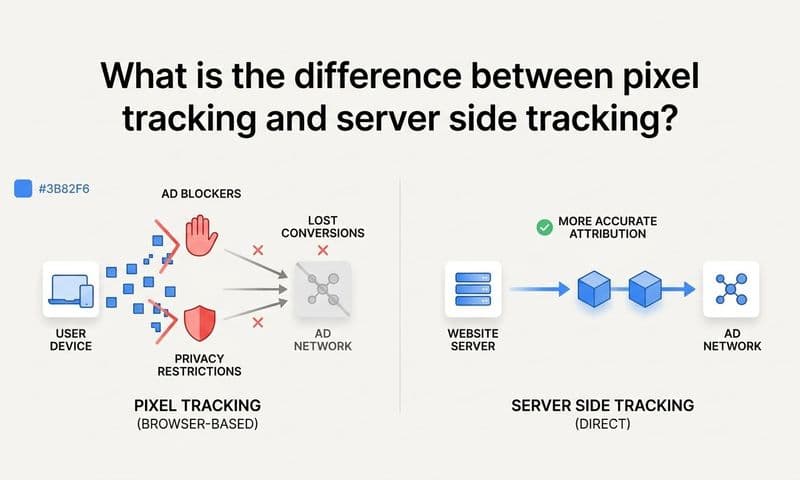
Browser-based pixels have a fundamental problem: they only work when they can run in the customer's browser. Ad blockers prevent them from firing. iOS privacy updates limit their effectiveness. Safari's Intelligent Tracking Prevention blocks third-party cookies after seven days.
The result? You're missing conversions. Not a few. Often 20-30% or more of your actual sales never get reported back to your ad platforms.
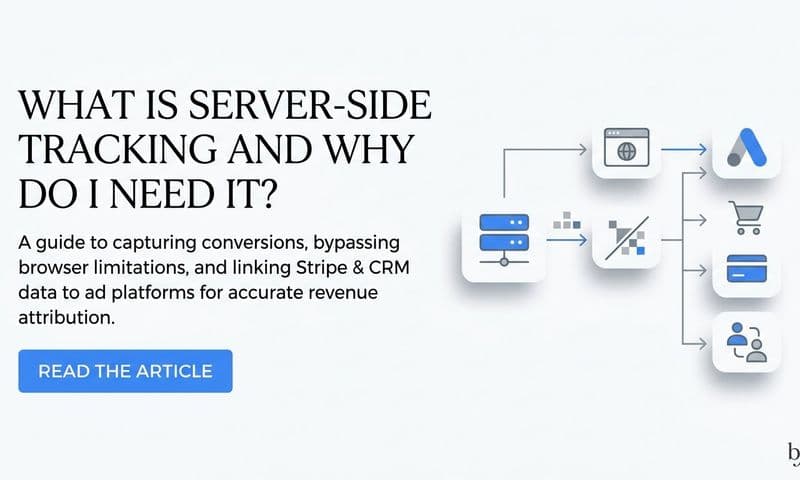
Why Server-Side Tracking Matters:Server-side tracking sends conversion data directly from your server to the ad platforms, bypassing browser limitations entirely. When a customer completes a purchase, your server tells Facebook, Google, and TikTok about it, whether or not the browser pixel fired.
Setting up server-side tracking used to require developer help. Now platforms like Shopify offer built-in solutions, and attribution tools provide integrations that handle the technical complexity for you.
For Shopify stores, enable Enhanced Conversions in your Google Ads settings and use the Conversions API for Meta. These send hashed customer data like email addresses from your server to match conversions that pixels missed.
If you're on WooCommerce or another platform, you'll need to use a tag management system or attribution platform that supports server-side tracking. The setup involves creating a server container, configuring your conversion events, and testing the data flow.
Testing is critical. Install the Meta Pixel Helper browser extension and the Google Tag Assistant. Visit your store, add a product to cart, and complete a test purchase. Check that each pixel fires correctly at each step.
Look for the events in your platform dashboards. Facebook Events Manager should show your test purchase within minutes. Google Ads conversions typically appear within a few hours. If events aren't showing up, troubleshoot before moving forward.
Common issues include incorrect pixel placement, missing parameters in your conversion events, or conflicts with your theme's code. Fix these now. Accurate tracking starts with properly installed pixels and server-side integrations.
Step 3: Connect Your Ad Platforms to a Central Attribution System
Managing data in separate platform dashboards creates chaos. Facebook says one thing. Google says another. TikTok reports different numbers entirely. You're left guessing which platform is actually driving results.
This happens because each platform uses different attribution windows, different conversion counting methods, and different ways of handling cross-device journeys. Facebook might claim credit for a sale that Google also claims. Both platforms show the conversion, so your total reported sales exceed your actual sales.
The solution is connecting all your ad accounts to a unified attribution platform that becomes your single source of truth. Instead of logging into five different dashboards, you see all your campaign performance in one place with consistent methodology. Implementing cross-platform tracking for dropshipping eliminates this confusion.
For a deeper dive, see our guide to AI ad generator for dropshipping.
Start by choosing an attribution platform that integrates with your ad channels and e-commerce platform. Connect your Facebook Ads account by authorizing API access. Do the same for Google Ads, TikTok Ads, and any other platforms you use.
The platform will start pulling campaign data, ad spend, and conversion events from each source. But here's the critical part: you need consistent tracking across all campaigns through proper UTM parameters.
UTM Parameter Strategy: UTM parameters are the tags you add to your ad URLs that identify the source, medium, and campaign name. They look like this: ?utm_source=facebook&utm_medium=cpc&utm_campaign=summer_sale
Create a UTM naming convention and stick to it religiously. Use consistent values for each platform. Always use "facebook" not sometimes "facebook" and sometimes "fb". Always use "cpc" for paid ads, not mixing "cpc" and "paid" randomly.
Your attribution platform uses these UTM parameters to properly categorize traffic and attribute conversions. Inconsistent UTMs create messy data that's impossible to analyze accurately. A marketing campaign tracking spreadsheet can help you maintain consistency across all your campaigns.
Set up UTM templates for each platform. When you create a new Facebook campaign, use your standard Facebook UTM structure. Same for Google, TikTok, and other channels. This consistency makes your data clean and actionable.
After connecting your platforms, verify data flows correctly. Check that ad spend numbers match what each platform reports. Confirm that conversion events are being captured. Look for any discrepancies that might indicate connection issues.
Give the system 24-48 hours to populate with data, then review your unified dashboard. You should see all your campaigns from all platforms in one view, with consistent metrics and attribution methodology applied across everything.
Step 4: Link Your Shopify or E-commerce Platform for Revenue Tracking
Tracking conversions is good. Tracking revenue is better. Your attribution system needs to pull actual order data from your store to calculate true return on ad spend, not just conversion counts.
Connect your Shopify store to your attribution platform through the available integration. This typically involves installing an app from the Shopify App Store or authorizing API access through your attribution platform's settings.
Once connected, the platform pulls order data including order value, product SKUs, customer information, and timestamps. This data gets matched to the traffic source that drove each sale, showing you exactly how much revenue each campaign generates. Platforms that offer accurate revenue tracking make this process seamless.
Order Value Tracking Setup: Configure your integration to capture the full order value including product cost, shipping, and taxes. Some attribution platforms let you exclude shipping and taxes to show product revenue only. Choose the method that matches how you calculate profitability.
For dropshipping, you want to track gross revenue but also understand your costs. If you're paying $20 for a product you sell for $50, your actual margin is $30 before ad spend. Configure your system to show both revenue and profit margins when possible.
Product-level tracking reveals which items perform best from each channel. Maybe your Facebook ads sell product A really well, but Google Shopping drives more sales of product B. This insight helps you allocate budget to the right campaigns for each product.
Set up product-level tracking by ensuring your integration passes SKU or product ID with each conversion. Your attribution platform should show performance broken down by product, letting you see ROAS by item, not just overall campaign ROAS.
Handle refunds and chargebacks properly in your tracking. Dropshipping often has higher refund rates than traditional e-commerce due to longer shipping times and product quality variability. If you don't account for refunds, your ROAS calculations will be artificially inflated.
Configure your integration to automatically update when refunds occur. Some platforms do this in real-time. Others update daily. Either way, your attribution data should reflect actual revenue after refunds, not just initial order value.
Chargebacks are trickier because they often happen weeks after the purchase. Set up a process to manually adjust your data or use a platform that syncs with your payment processor to capture chargeback data automatically.
Test the integration by placing a test order. Verify it appears in your attribution platform with the correct revenue amount, product information, and attribution to the right traffic source. Then process a test refund and confirm it updates your data accordingly.
Step 5: Configure Multi-Touch Attribution to See the Full Picture
Last-click attribution gives all the credit to the final touchpoint before purchase. For dropshipping businesses running multiple campaigns simultaneously, this creates a distorted view of what's actually working.
Here's what happens: A customer sees your Facebook ad for a product. They're interested but not ready to buy. Three days later, they Google your product name and click your Google Shopping ad. They purchase. Last-click attribution says Google drove that sale. Facebook gets zero credit.
But Facebook introduced the customer to your product. Without that initial exposure, the Google search never happens. Last-click undervalues your top-of-funnel campaigns and overvalues bottom-of-funnel activities.
Multi-touch attribution distributes credit across all the touchpoints in the customer journey. The Facebook ad gets partial credit. The Google ad gets partial credit. You see the full picture of how your marketing works together. A comprehensive multi-touch attribution platform handles this complexity automatically.
Choosing Your Attribution Model: Different attribution models distribute credit differently. Linear attribution splits credit equally across all touchpoints. Time-decay gives more credit to recent touchpoints. Position-based gives more credit to the first and last touchpoints.
For dropshipping, consider your typical customer journey length. If most customers purchase within 24 hours of first exposure, simpler models work fine. If your consideration period spans days or weeks, time-decay or position-based models provide better insights.
Set up attribution windows that match your business reality. A seven-day click window and one-day view window is common, but dropshipping products with higher price points might need longer windows to capture the full journey.
Configure your attribution platform to use your chosen model. Most platforms let you switch between models to compare results. Start with one model, let it run for a few weeks, then compare it to other models to see how credit distribution changes.
The goal isn't finding the "perfect" attribution model. It's finding one that helps you make better decisions. If a model shows you that your Facebook prospecting campaigns assist more sales than last-click suggested, that's actionable insight worth acting on.
Compare different attribution models side by side. Look at how your campaign performance changes under each model. You might discover that campaigns you thought were underperforming actually play a crucial role in your customer journey. Understanding attribution tracking for dropshipping helps you interpret these differences correctly.
Use these insights to adjust your budget allocation. If multi-touch attribution reveals that your top-of-funnel campaigns drive significant assisted conversions, maintain or increase their budgets even if their last-click ROAS looks mediocre.
Step 6: Set Up Automated Reporting and Optimization Alerts
Your tracking system is live. Data is flowing. Now you need systems to turn that data into action without manually checking dashboards every hour.
Create automated reports that deliver key metrics to your inbox daily and weekly. Your daily report should show yesterday's performance: total ad spend, revenue, ROAS, and conversion counts by platform. Keep it simple and scannable.
Weekly reports can go deeper. Include campaign-level performance, product-level breakdowns, and week-over-week comparisons. This helps you spot trends and identify campaigns that need attention. A solid marketing performance tracking system automates this entire process.
Profitability Alerts: Configure alerts that notify you when campaigns drop below your profitability thresholds. If your minimum acceptable ROAS is 2.5x and a campaign falls to 2.0x, you want to know immediately, not three days later after burning more budget.
Set up alerts for significant changes too. If a campaign that normally spends $200 daily suddenly spends $500, you need to investigate. Maybe the budget was accidentally changed. Maybe bidding went haywire. Either way, catch it fast.
Build a dashboard view that shows your most important metrics at a glance. For dropshipping, this typically includes: total daily spend, total revenue, overall ROAS, top performing campaigns, worst performing campaigns, and product performance.
Your dashboard should answer the question "How's the business doing?" within 10 seconds of looking at it. If you need to click through multiple screens or do mental math, simplify it.
Use AI-powered recommendations to identify scaling opportunities and budget waste. Modern attribution platforms analyze your data and suggest which campaigns to scale, which to pause, and where to reallocate budget for maximum impact. Explore tracking ROI for performance marketing to understand how these recommendations translate to profitability.
These recommendations aren't magic. They're pattern recognition based on your performance data. A campaign that's been consistently profitable at $100 daily spend might perform well at $150. An ad set that's losing money for three straight days should probably be paused.
Review AI recommendations daily but apply your own judgment. The AI doesn't know about upcoming product launches, seasonal trends in your niche, or strategic reasons to keep certain campaigns running. Use recommendations as input, not commandments.
Your Tracking Foundation Is Complete
With these six steps complete, your dropshipping business now has a tracking system that reveals exactly which marketing efforts drive revenue. You can confidently scale campaigns that perform, cut spending on underperformers, and make data-driven decisions instead of guessing.
Let's verify your setup is solid. Run through this quick checklist: customer journey mapped with all conversion points identified, pixels installed and server-side tracking active, all ad platforms connected to central attribution, store linked with revenue and product data flowing, multi-touch attribution configured for your business model, and automated reports running with optimization alerts set.
If you checked every box, you're ahead of most dropshipping businesses. Many operate with fragmented tracking, making decisions based on incomplete data. You've built a foundation that shows the complete picture.
The next step is patience. Let your tracking run for at least two weeks to gather meaningful data. You need enough conversions and enough customer journeys to identify real patterns versus random noise.
During these two weeks, resist the urge to make major changes. Let the data accumulate. Watch how different attribution models tell different stories. Notice which campaigns show strong assisted conversions even if their last-click performance looks weak.
After two weeks, start optimizing based on what you've learned. Scale the campaigns your multi-touch attribution reveals as true performers. Reduce budget on campaigns that look good in platform dashboards but don't drive real revenue in your attribution system.
Your margins will thank you. Every dollar you stop wasting on ineffective campaigns is a dollar you can reinvest in proven winners or keep as profit. In dropshipping, where margins are tight, this efficiency makes the difference between struggling and scaling.
Ready to elevate your marketing game with precision and confidence? Discover how Cometly's AI-driven recommendations can transform your ad strategy. Get your free demo today and start capturing every touchpoint to maximize your conversions.