Picture this: a prospect sees your Facebook ad on Monday and scrolls past. On Wednesday, they stumble across your blog post through an organic search and spend five minutes reading. Friday, they open your email but don't click. The following week, they search Google, see your retargeting ad, and convert. Your CRM shows a new customer. Your Google Ads dashboard claims full credit. Your Facebook dashboard claims full credit too. And your email platform is quietly logging that open as a meaningful engagement.
Sound familiar? This is the daily reality for most digital marketers. The customer journey is rarely a straight line, yet most attribution setups treat it like one. Someone clicks, someone buys, done. The problem is that single-touch models are essentially lying to you, not out of malice, but because they were never designed to handle the complexity of modern multi-channel marketing.
Multi-touch attribution is the framework built to solve this. Instead of handing all the credit to one interaction, it distributes credit across every touchpoint that influenced the conversion. The result is a far more accurate picture of what your marketing is actually doing, which channels build awareness, which ones nurture, and which ones close. In this article, you will get a clear breakdown of how multi-touch attribution works, the most common models and when to use each, the pitfalls that can quietly corrupt your data, and a practical path to putting it all into action.
Why Single-Touch Models Leave Marketers in the Dark
Before diving into multi-touch attribution, it helps to understand exactly what single-touch models get wrong. There are two dominant versions: first-click and last-click attribution. Both are simple to implement, easy to understand, and deeply misleading in practice.
First-click attribution gives 100% of the credit to the very first touchpoint a customer interacted with. The logic is that the first interaction created awareness and started the journey. Last-click attribution, which has historically been the default in Google Ads and many analytics platforms, gives 100% of the credit to the final touchpoint before conversion. The logic here is that the last interaction sealed the deal.
Both perspectives contain a grain of truth. The first touch does matter. The last touch does matter. The problem is that neither model acknowledges anything that happened in between, and in modern customer journeys, that middle ground is often where the real persuasion happens. For a deeper dive into how these approaches differ, explore the difference between single-source and multi-touch attribution models.
Think about what gets lost. A prospect might discover your brand through a display ad, read three blog posts, watch a YouTube video, receive a nurture email, and then finally convert after clicking a branded search ad. Under last-click attribution, your entire content marketing and email program gets zero credit. Under first-click, your bottom-of-funnel paid search efforts look worthless. In both cases, you are making budget decisions based on an incomplete and distorted picture.
The real-world consequences compound over time. Marketers running last-click models tend to over-invest in branded search and retargeting because those channels always appear at the end of the journey. Meanwhile, the awareness-stage channels that are actually feeding the top of the funnel get starved of budget because they never show up as converters. You end up with a situation where you are cutting the very channels that are driving the customers who eventually convert through your "winning" channel.
This is the core problem multi-touch attribution was designed to address. Instead of asking "which single touchpoint gets the credit," it asks "how much credit should each touchpoint receive based on its role in the journey?" That shift in framing changes everything about how you evaluate and invest in your marketing channels.
The Core Mechanics: How Multi-Touch Attribution Distributes Credit
At its most fundamental level, multi-touch attribution is a methodology that assigns fractional credit to multiple marketing touchpoints along the customer journey. Rather than one channel receiving 100% of the conversion value, that value is divided across every interaction that contributed to the outcome.
The way that credit is divided depends on the model you choose, but the underlying data infrastructure is consistent across all approaches. To make multi-touch attribution work, you need three things working together: cross-platform tracking that captures interactions across all your channels, identity resolution that connects those interactions to a single customer record, and conversion data that ties the final outcome back to business results in your CRM. Understanding how multi-touch attribution works at a technical level is essential before selecting a model.
Let's walk through a concrete example. Imagine a B2B prospect named Alex. Alex first encounters your brand through a LinkedIn ad, which gets tracked as a paid social impression and click. Three days later, Alex visits your blog through an organic search and reads a comparison article. A week after that, Alex opens a nurture email and clicks through to a product page. A few days later, Alex sees a retargeting ad on Facebook, clicks it, and books a demo. The demo converts to a closed deal in your CRM.
In a last-click world, Facebook retargeting gets all the credit. In a multi-touch world, each of those four interactions receives a portion of the credit based on whatever model you are using. The LinkedIn ad that started the journey gets recognized. The blog post that built trust gets recognized. The email that re-engaged Alex gets recognized. The retargeting ad that closed the loop gets recognized. Now you can actually evaluate whether each of those channels is earning its place in the budget.
The data requirements here are worth emphasizing because this is where many attribution setups break down. Capturing Alex's journey accurately requires that your tracking is consistent across platforms, that you can stitch together Alex's sessions across devices and channels, and that the eventual CRM conversion is connected back to those earlier digital touchpoints. If any link in that chain is broken, you end up with partial journeys and skewed credit distribution.
This is why cross-platform tracking infrastructure matters so much. Relying on each ad platform's native reporting means you are seeing siloed data, not a unified journey. A proper multi-touch attribution setup pulls all of that data into a single view, resolves identity across sessions and devices, and then applies your chosen model to distribute credit accurately. Without that foundation, even the best attribution model is working with incomplete information.
Breaking Down the Most Common Multi-Touch Models
Once you have the data infrastructure in place, you need to choose how credit gets distributed. There is no single "correct" model. Each one tells a slightly different story, and the right choice depends on your sales cycle, your team's goals, and what decisions you are trying to make with the data.
Here are the most widely used multi-touch models and how they work in practice.
Linear Attribution: This model distributes credit equally across every touchpoint in the journey. If there were five interactions before a conversion, each one receives 20% of the credit. It is the most democratic approach and is useful when you genuinely want to understand the full scope of your marketing ecosystem. The downside is that it treats a brief display ad impression the same as a high-intent product page visit, which may not reflect the actual influence of each interaction.
Time-Decay Attribution: This model gives more credit to touchpoints that occurred closer to the conversion, with credit diminishing the further back you go in the journey. The logic is that the interactions nearest to the decision point had the most influence. Time-decay works well for short sales cycles, like e-commerce purchases, where the recency of an interaction is a reasonable proxy for its impact. It is less useful for long B2B sales cycles where early-stage touches may have been highly influential even if they happened months ago.
U-Shaped (Position-Based) Attribution: This model gives the most credit to the first and last touchpoints, typically 40% each, with the remaining 20% split among any interactions in between. The reasoning is that the first touch created awareness and the last touch drove conversion, so both deserve disproportionate recognition. This is a solid general-purpose model for teams that want to balance top-of-funnel and bottom-of-funnel insights without fully abandoning the simplicity of first and last touch logic. For a comprehensive walkthrough of each model type, see this guide on multi-touch attribution models explained.
W-Shaped Attribution: The W-shaped model is particularly popular in B2B marketing because it acknowledges three critical milestones in the journey: the first touch, the lead creation event, and the opportunity creation event. Each of these three points typically receives around 30% of the credit, with the remaining 10% distributed across other touchpoints. If your sales process has distinct stages where a prospect moves from anonymous visitor to known lead to qualified opportunity, this model maps well to how your team actually thinks about the funnel. Teams focused on B2B can benefit from exploring multi-touch B2B attribution strategies in more depth.
Algorithmic or Data-Driven Attribution: This is the most sophisticated approach and represents the next evolution beyond rule-based models. Instead of applying a fixed formula, algorithmic attribution uses machine learning to analyze your actual conversion data and determine how much influence each touchpoint had based on patterns in the data. It is not constrained by assumptions about which interactions matter most. It learns from your specific customer journeys. The trade-off is that it requires a meaningful volume of conversion data to produce reliable outputs. For teams with sufficient data, it tends to be the most accurate reflection of true channel contribution.
The practical guidance here is to start with a model that matches your sales cycle and business context, then compare models side by side over time. Seeing how credit shifts between a linear model and a W-shaped model can reveal assumptions you did not know you were making about your funnel.
Common Pitfalls That Undermine Your Attribution Data
Even with the right model selected, multi-touch attribution is only as good as the data feeding it. And there are several forces in the current marketing landscape that actively work against data completeness. Understanding these pitfalls is essential before you trust any attribution output.
The most significant challenge in recent years has been the erosion of browser-based tracking. Apple's App Tracking Transparency framework significantly reduced the ability to track users across apps on iOS devices. Combined with the ongoing deprecation of third-party cookies in major browsers, the traditional pixel-based tracking that most attribution setups relied on has become increasingly unreliable. If a meaningful portion of your audience is on iOS or using privacy-focused browsers, you may be missing a substantial chunk of touchpoints entirely, which means your attribution data has blind spots you cannot see.
Cross-device fragmentation compounds the problem. A prospect might see your ad on their phone, research on their laptop, and convert on a tablet. Without robust identity resolution, those three sessions look like three different anonymous users. This is one of the core reasons why multiple touchpoint attribution complexity continues to challenge even experienced marketing teams.
Another major pitfall is relying solely on platform-reported data. Meta, Google, TikTok, and LinkedIn each use their own attribution windows and methodologies. Each platform is incentivized to show its own value in the best possible light. The result is that when you add up the conversions each platform claims, the total often far exceeds your actual number of conversions. This is not a bug; it is a natural consequence of overlapping attribution windows and different counting methods. If you are making budget decisions based on platform dashboards alone, you are likely over-crediting multiple channels simultaneously.
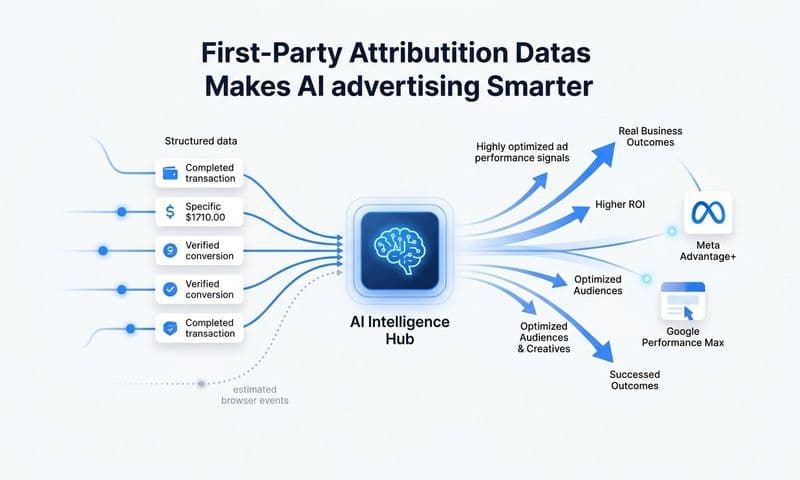
The solution to both of these challenges points in the same direction: server-side tracking and unified first-party data collection. Server-side tracking works by sending conversion data directly from your server rather than relying on a browser-based pixel. It bypasses many of the limitations imposed by iOS privacy changes and cookie restrictions because it does not depend on the browser to pass information. The result is more complete, more accurate conversion data that is far less susceptible to the gaps that plague client-side tracking.
When your attribution data is built on a server-side foundation with unified cross-platform collection, the models you apply on top of it are working with a much more complete picture of the actual customer journey. That completeness is what makes the attribution output trustworthy enough to drive real budget decisions.
Putting Multi-Touch Attribution Into Action
Understanding multi-touch attribution conceptually is one thing. Getting it working in your actual marketing stack is another. Here is a practical sequence for building out a functioning multi-touch attribution setup.
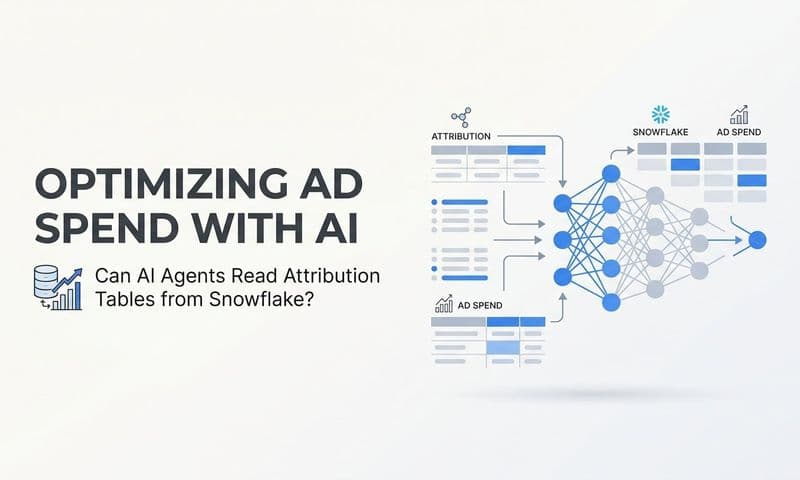
The first step is connecting your ad platforms. Every channel where you run paid media needs to be integrated into your attribution system so that click and impression data flows into a single place. This typically means connecting Google Ads, Meta, LinkedIn, TikTok, and any other active channels through API integrations rather than relying on manual exports or platform dashboards.
The second step is integrating your CRM. This is the piece that transforms attribution from a traffic analysis exercise into a revenue measurement tool. When your CRM data connects to your attribution system, you can tie actual deal values and customer outcomes back to the touchpoints that preceded them. Without CRM integration, you are measuring clicks and form fills. With it, you are measuring revenue. For a step-by-step walkthrough, check out this guide on how to use multi-touch attribution models effectively.
The third step is implementing server-side tracking. As discussed, this is your defense against the tracking gaps created by privacy changes and browser limitations. Implementing server-side event collection ensures that your conversion data is as complete as possible before you apply any attribution model to it.
The fourth step is choosing your initial attribution model and beginning to compare. Start with the model that best fits your sales cycle, then run it alongside one or two alternatives. Seeing how credit distribution shifts between models is genuinely illuminating and will surface assumptions in your current reporting that you may not have realized you were making.
Here is where it gets particularly powerful: once you have accurate attribution data flowing, you can feed that data back to the ad platforms themselves. This process, often called conversion API integration or server-side event syncing, sends enriched, conversion-ready event data back to Meta, Google, and other platforms. Their algorithms use this data to improve targeting and bidding. You are not just measuring better; you are actively making the ad platforms smarter about who to show your ads to. The compounding effect of this loop, better data leading to better targeting leading to better conversions leading to better data, is one of the most underappreciated benefits of a proper attribution setup.
AI-powered attribution tools take this a step further by surfacing recommendations directly from your data. Rather than spending hours analyzing attribution reports, you get clear signals about which campaigns are outperforming, which channels are quietly assisting conversions without getting last-click credit, and where budget reallocation would likely improve overall return. Evaluating the right multi-touch attribution solutions for your stack is a critical part of this process.
Smarter Budget Decisions Through Full-Journey Visibility
The ultimate payoff of multi-touch attribution is not better reports. It is better decisions. Specifically, it transforms how you allocate budget by revealing the channels that assist conversions even when they rarely receive last-click credit.
Think about content marketing. In a last-click world, blog posts almost never get conversion credit because they are rarely the final touchpoint before a purchase. But in a multi-touch model, you can see that prospects who read your content are significantly more likely to convert later through other channels. The content is doing real work; it just was not visible in your previous attribution setup. With that visibility, you can make a rational case for investing in content rather than cutting it because it "doesn't drive conversions." Understanding multi-touch attribution marketing principles helps teams connect these insights to actual spend decisions.
The same logic applies to brand awareness campaigns, social media, and top-of-funnel paid media. These channels rarely close deals on their own. They start journeys. Multi-touch attribution lets you see and measure that role, which means you can invest in them with confidence rather than treating them as unaccountable spend.
This shift also moves your team away from vanity metrics. Instead of optimizing for clicks and impressions, you are optimizing for revenue contribution. Every dollar you spend gets evaluated against its actual impact on business outcomes, not just its ability to generate surface-level engagement. Teams exploring how attribution compares to broader measurement approaches may also want to read about marketing mix modeling vs multi-touch attribution to understand the full landscape.
A practical starting point is to run your current data through two or three different attribution models simultaneously and compare the results. Pay attention to which channels gain credit under multi-touch models that they were not receiving under last-click. Those channels are almost certainly undervalued in your current budget allocation. That comparison alone can change how you think about your entire marketing mix.
The Full Picture Changes Everything
Multi-touch attribution is not a reporting upgrade. It is a fundamental shift in how you understand your marketing. When you can see every touchpoint that contributed to a conversion, from the first ad that sparked awareness to the email that re-engaged a prospect to the search ad that closed the deal, you stop making decisions based on incomplete information.
The marketers who scale profitably are not necessarily the ones with the biggest budgets. They are the ones who understand which parts of their marketing are actually working and invest accordingly. Multi-touch attribution is what makes that understanding possible.
Every touchpoint plays a role. Some start journeys. Some build trust. Some close deals. A good attribution setup gives each of them the recognition they deserve, and gives you the clarity to act on what the data is telling you.
If you are ready to stop guessing and start seeing the full customer journey, Cometly's attribution platform connects your ad platforms, CRM, and website into a unified view with multi-touch models, server-side tracking, and AI-powered recommendations built in. Get your free demo today and see exactly which touchpoints are driving your revenue, with your own data.