You're spending thousands on Facebook ads, Google campaigns, and LinkedIn promotions. Traffic is flowing. Clicks are happening. Your dashboard shows activity everywhere. But when you sit down to answer the one question that actually matters—"Which of these campaigns is making us money?"—you hit a wall.
This isn't just frustrating. It's expensive.
Every day without clear answers means budget flowing to underperforming channels while your best opportunities get underfunded. You're flying blind, making decisions based on incomplete data, platform-specific metrics that don't talk to each other, and gut feelings that cost real money when they're wrong.
Online marketing analytics changes this. It's the system that connects every click, every touchpoint, and every conversion back to the campaigns that generated them. It shows you exactly which ads drive leads, which channels generate revenue, and where your next dollar should go.
By the end of this guide, you'll understand how to implement analytics that reveal your true marketing performance—not just surface-level activity, but the revenue-connected insights that let you scale with confidence. Let's start with what actually matters.
Beyond Vanity Metrics: What Online Marketing Analytics Actually Measures
Online marketing analytics is the practice of collecting, measuring, and analyzing data from all your digital marketing channels to understand performance and optimize spend. It's not about tracking everything—it's about tracking what connects to revenue.
The difference matters more than most marketers realize.
Vanity metrics look impressive in reports but tell you nothing about business impact. A campaign with 100,000 impressions sounds great until you realize it generated zero sales. A Facebook ad with a 5% click-through rate seems successful until you discover those clicks never converted. These surface-level numbers create the illusion of progress while your actual ROI remains a mystery.
Revenue-connected metrics tell a different story. Cost per acquisition shows exactly how much you're paying for each customer. Customer lifetime value reveals whether those customers are actually profitable. Return on ad spend connects every dollar spent to the revenue it generated. These metrics answer the questions that determine whether your marketing succeeds or fails.
Think of it like running a restaurant. Counting how many people walk past your door (impressions) or peek at your menu (clicks) tells you almost nothing. What matters is how many sit down, order, pay, and come back. That's the data that determines if you stay in business.
Effective online marketing analytics has four core components working together. First, data collection across every touchpoint—from initial ad click through website visits to final purchase. Second, attribution modeling that determines which interactions deserve credit for conversions. Third, cross-channel analysis that breaks down platform silos and shows how your channels work together. Fourth, actionable reporting that turns raw data into decisions you can act on immediately. Understanding marketing analytics and reporting is essential for transforming data into revenue-driving decisions.
The goal isn't to drown in data. It's to surface the specific insights that tell you where to spend more, where to cut back, and which campaigns are actually building your business. When you shift focus from vanity metrics to revenue-connected analytics, everything changes. You stop celebrating clicks that don't convert. You start identifying the channels that consistently deliver profitable customers.
The Customer Journey Problem: Why Single-Channel Data Fails
Here's what actually happens when someone becomes your customer. They see your Facebook ad on Monday morning during their coffee scroll. Interesting, but not enough to act. Tuesday afternoon, they search for solutions and find your blog post. They read it, explore your site, then leave. Wednesday, your retargeting ad catches them on Instagram. Thursday, they receive your email newsletter. Friday, they type your company name directly into Google and finally convert.
One customer. Five touchpoints. And here's the problem: Facebook claims that conversion. Google claims it too. Your email platform takes credit. Everyone's reporting a win, but you only made one sale.
This is why single-channel data fails. Each platform operates in its own universe, measuring its own metrics, claiming credit for conversions it may have barely influenced. Facebook Ads Manager shows you Facebook performance. Google Analytics tracks website behavior. Your email platform reports email results. None of them talk to each other. None of them show the complete picture.
The blind spots multiply fast. That customer who clicked your Facebook ad but didn't convert immediately? Facebook has no idea they came back three days later through organic search and bought. The blog visitor who read five articles before subscribing to your email list? Google Analytics sees the visits but can't connect them to the eventual sale triggered by email. The Instagram ad that introduced someone to your brand before they searched and converted through Google? Both platforms claim the conversion, and you're left counting the same sale twice.
Platform-native analytics weren't designed to solve this problem. They were built to show you how well that specific platform is performing—which makes sense for the platforms but leaves you guessing about what's actually working.
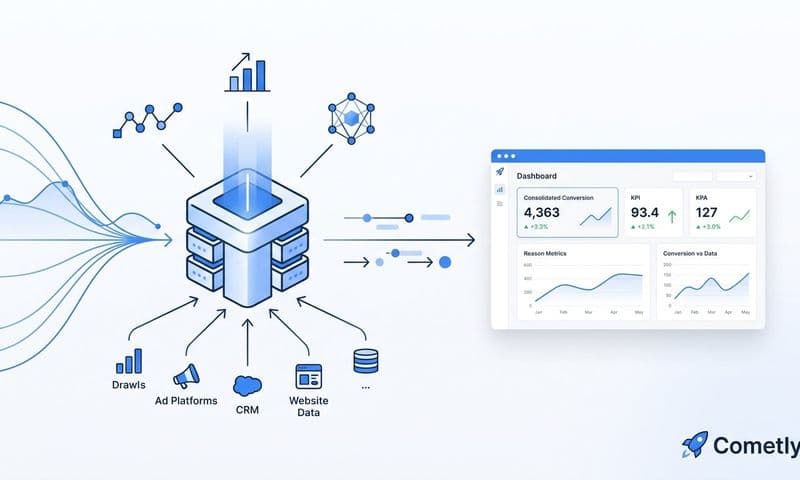
This is where unified tracking becomes essential. Instead of relying on disconnected platform dashboards, unified tracking creates a single source of truth. It captures every interaction across every channel, connects them to individual customer journeys, and shows you the complete path from first touch to final conversion. A multi-channel marketing analytics dashboard brings all this data together in one view.
The difference is stark. With platform-native analytics, you see isolated snapshots. With unified tracking, you see the movie. You understand how your Facebook ads create awareness that leads to Google searches. You see how blog content nurtures prospects who eventually convert through email. You discover that LinkedIn drives your highest-value customers even though it generates fewer total conversions than other channels.
When you connect ad platforms, website analytics, and CRM data into one system, the blind spots disappear. You stop arguing about which channel deserves credit and start understanding how they work together. You stop making decisions based on incomplete platform data and start optimizing based on actual customer behavior.
Attribution Models Explained: Choosing How to Credit Your Channels
Attribution models are the rules you use to decide which marketing touchpoints get credit for a conversion. Choose the wrong model, and you'll systematically underfund your best channels while pouring money into the ones that look good but don't actually drive results.
Let's break down how each model works and when it makes sense.
First-Touch Attribution: This model gives 100% of the credit to the very first interaction a customer had with your brand. If someone clicked a Facebook ad, then visited your site three more times through different channels before buying, Facebook gets all the credit. This model helps you understand which channels are best at creating initial awareness and introducing new prospects to your brand. It's useful when you're focused on top-of-funnel performance, but it completely ignores everything that happened after that first click—which matters a lot for longer sales cycles.
Last-Touch Attribution: The opposite approach. This gives 100% credit to the final touchpoint before conversion. If that same customer's last interaction was clicking a Google ad before purchasing, Google gets all the credit—even though Facebook, your blog, and your email campaign all played roles in the journey. Last-touch is the default in many analytics tools because it's simple, but it's often misleading. It overvalues bottom-of-funnel channels like branded search while undervaluing the awareness and nurturing channels that made the sale possible.
Linear Attribution: This model distributes credit equally across all touchpoints. If a customer interacted with five different channels before converting, each channel gets 20% of the credit. Linear attribution acknowledges that multiple touchpoints contributed to the conversion, which is more realistic than first or last-touch. The downside? It assumes every touchpoint was equally important, which rarely matches reality. The Facebook ad that introduced someone to your brand probably played a bigger role than the third blog post they read.
Time-Decay Attribution: This model gives more credit to touchpoints closer to the conversion and less credit to earlier interactions. The logic makes sense for some businesses: the interactions that happened right before someone bought were probably more influential than the awareness touchpoint from three weeks ago. Time-decay works well for businesses with clear decision windows, but it can undervalue the early touchpoints that started the entire relationship.
Data-Driven Attribution: Instead of applying a predetermined rule, data-driven attribution uses machine learning to analyze your actual conversion patterns and assign credit based on which touchpoints statistically correlate with conversions. If your data shows that customers who interact with both Facebook ads and email newsletters convert at much higher rates than those who see only one, the model adjusts credit accordingly. This is the most sophisticated approach, but it requires significant conversion volume to generate reliable patterns. Learn more about marketing attribution analytics to understand which approach fits your business.
So which model should you use? It depends on your business type and sales cycle length. If you're an e-commerce brand with quick purchase decisions, last-touch might be acceptable since the customer journey is short. If you're a B2B company with a three-month sales cycle involving multiple stakeholders, you absolutely need multi-touch attribution to understand the nurturing process that leads to closed deals.
Here's the bigger truth: multi-touch attribution isn't just about being more accurate—it's about understanding the full customer journey rather than oversimplifying credit to a single touchpoint. When you see how your channels work together, you make fundamentally different decisions. You stop cutting the awareness channels that don't get last-touch credit but actually introduce your best customers. You start investing in the nurturing touchpoints that move prospects toward conversion even though they don't get credit in simpler models. Understanding the attribution challenges in marketing analytics helps you navigate these complexities.
The goal isn't to find the "perfect" attribution model. It's to choose a model sophisticated enough to match your actual customer journey and inform smarter budget decisions.
Building Your Analytics Stack: Essential Tools and Integrations
Getting accurate marketing analytics requires more than installing Google Analytics and hoping for the best. You need a complete stack of tools and integrations working together to capture, connect, and analyze data across your entire marketing ecosystem.
Let's start with the foundation: tracking pixels. These small pieces of code on your website capture visitor behavior and send data back to your analytics platforms and ad networks. Facebook Pixel, Google Ads tracking, LinkedIn Insight Tag—each one monitors how people interact with your site after clicking ads from that platform. They're essential, but they're also increasingly limited by browser privacy restrictions and ad blockers.
This is where server-side tracking has become critical. Instead of relying on browser-based pixels that can be blocked or restricted, server-side tracking sends data directly from your server to analytics platforms and ad networks. When iOS 14.5 and similar privacy updates disrupted traditional pixel tracking, server-side tracking became the solution that maintains accuracy even as browser-based tracking degrades.
Think of it this way: browser-based tracking is like asking customers to carry a tracking device that they can turn off whenever they want. Server-side tracking is like your internal system recording transactions directly—it's more reliable, more accurate, and not subject to browser limitations.
The next critical component is CRM integration. This is especially important for businesses with longer sales cycles where the initial lead and the final revenue event happen weeks or months apart. When your analytics platform connects to your CRM, you can track the complete journey from ad click to lead to opportunity to closed deal. You see which marketing channels generate leads that actually close, not just leads that fill out forms. The difference in insights is massive.
Your analytics stack also needs a centralized dashboard that unifies data from all these sources. This is where platforms like Cometly come in—connecting your ad platforms, website, and CRM into one view so you can analyze performance across channels without jumping between disconnected tools. When everything flows into one system, you can compare true apples-to-apples performance and make decisions based on complete data rather than fragmented platform reports. Explore the best online marketing analytics tools to find the right fit for your needs.
But here's a component many marketers overlook: feeding conversion data back to ad platforms. Modern ad algorithms from Meta, Google, and other networks use machine learning to optimize targeting and bidding. The more accurate conversion data you feed them, the better they perform. Conversion APIs like Meta's CAPI and Google's Enhanced Conversions allow you to send server-side conversion data back to these platforms, improving their targeting accuracy and reducing wasted spend on audiences that don't convert.
This creates a powerful feedback loop. Your analytics platform captures accurate conversion data through server-side tracking. That data flows back to your ad platforms. Their algorithms learn which audiences and placements drive real conversions. Your campaign performance improves. Your analytics capture even better data. The cycle continues.
Building this stack isn't about buying every tool available. It's about connecting the essential components—tracking, attribution, CRM integration, unified dashboards, and conversion sync—into a system that shows you complete, accurate data about what's actually driving revenue.
From Data to Decisions: Turning Analytics Into Action
Data without action is just expensive noise. The real value of online marketing analytics comes when you turn insights into decisions that improve performance and increase revenue.
Start with identifying your high-performing campaigns. With proper analytics showing true attribution, you can see which specific ads, audiences, and channels consistently drive conversions at profitable costs. This isn't about which campaigns get the most clicks or impressions—it's about which ones generate revenue at acceptable customer acquisition costs.
Once you identify these winners, scale them with confidence. Increase budget to the campaigns that are working. Expand to similar audiences. Test variations of your winning ad creative. The key word here is confidence—when you know exactly which campaigns drive revenue, you can scale aggressively without the nagging worry that you're wasting money.
The flip side matters just as much: finding underperforming channels and reallocating budget. Maybe your LinkedIn campaigns generate impressive engagement metrics but rarely convert to sales. Maybe that expensive display network is driving traffic that bounces immediately. Without proper analytics, you keep funding these channels because the platform dashboards show activity. With proper analytics, you see they're not contributing to revenue, and you can confidently cut them or dramatically reduce spend.
This process of identifying winners and cutting losers should happen continuously, not quarterly. Real-time marketing analytics enables faster optimization cycles. Instead of waiting until the end of the month to review campaign performance, you can spot trends within days and adjust accordingly. A campaign that's underperforming gets paused before it burns through thousands more dollars. A winning variation gets scaled before the opportunity window closes.
Let's talk about budget reallocation specifically. Say your analytics reveal that Facebook campaigns drive 40% of your conversions but you're only allocating 25% of your budget there, while Google campaigns get 40% of budget but drive only 20% of conversions. That's a clear signal to shift spend from Google to Facebook. Without unified analytics showing true attribution, you'd never spot this imbalance because each platform's native dashboard would report its own metrics without context.
Another powerful use case: understanding which channels work together. Your analytics might show that customers who interact with both Instagram ads and email newsletters convert at three times the rate of those who see only one touchpoint. That insight changes your strategy—instead of thinking about Instagram and email as separate channels competing for budget, you start thinking about how to get prospects into both channels because the combination drives results.
The pattern here is clear: analytics inform strategy, strategy drives action, action improves results. But this only works when your analytics are accurate, complete, and accessible in real time. Platform-native dashboards can't deliver this because they don't see the full picture. Unified marketing analytics platforms can—they connect all your data sources, apply proper attribution, and surface the insights that matter most for revenue growth. Discover how to leverage analytics for marketing strategy to maximize your results.
The marketers winning today aren't necessarily the ones with the biggest budgets. They're the ones who can answer "what's working?" with precision and adjust their strategy accordingly. That's the competitive advantage of turning analytics into action.
Your Analytics Implementation Roadmap
Let's bring this together into a clear path forward. Implementing effective online marketing analytics doesn't happen overnight, but it follows a logical sequence of steps that builds toward complete visibility into your marketing performance.
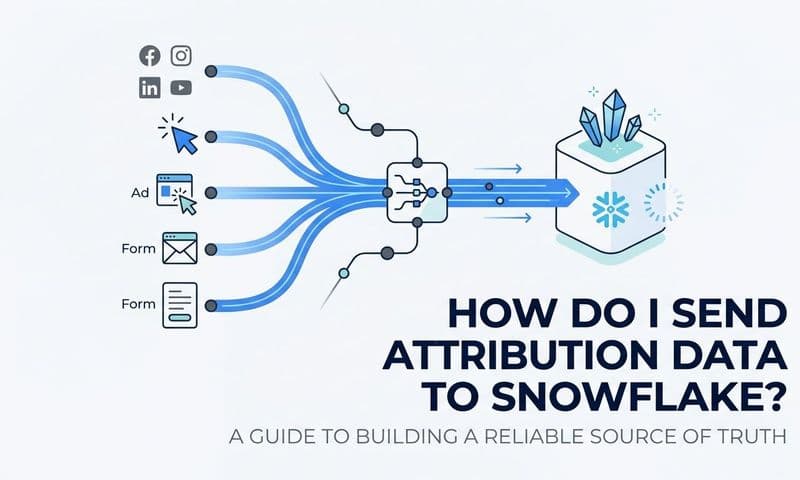
Step one: unify your data sources. Connect your ad platforms, website analytics, and CRM into a centralized system that captures the complete customer journey. This means implementing proper tracking across all touchpoints—not just installing pixels, but ensuring server-side tracking is in place to maintain accuracy as browser-based tracking becomes less reliable. Every channel should feed data into your unified analytics platform so you're working from one source of truth instead of reconciling conflicting reports.
Step two: implement proper attribution modeling. Choose an attribution approach that matches your business reality. If you have a short sales cycle, simpler models might work. If you have a longer, more complex customer journey involving multiple touchpoints, you need multi-touch attribution that shows how your channels work together. The key is moving beyond last-touch attribution that oversimplifies credit and misrepresents which channels actually drive revenue. Understanding the difference between marketing attribution software vs traditional analytics can help you make the right choice.
Step three: establish regular analysis routines. Analytics only create value when you actually look at them and act on insights. Set up weekly reviews of campaign performance. Create dashboards that surface your most important metrics—cost per acquisition, return on ad spend, conversion rates by channel. Make data review a consistent habit rather than something that happens when you remember or when someone asks for a report.
Step four: create feedback loops with your ad platforms. Implement conversion APIs that send accurate conversion data back to Meta, Google, and other ad networks. This improves their algorithmic targeting and optimization, which improves your campaign performance, which generates better data, which improves targeting further. This feedback loop is one of the most powerful but underutilized aspects of modern marketing analytics.
The competitive advantage here is real. While your competitors are making decisions based on gut feelings and incomplete platform data, you're operating with complete visibility into what's actually driving revenue. You know which campaigns to scale, which to cut, and where your next dollar should go. You're not guessing—you're making data-driven decisions with confidence.
This is the difference between hoping your marketing works and knowing it works. Between spending money and wondering if it's effective, versus investing money and tracking exact returns. Between feeling like you're flying blind and having complete clarity about your marketing performance.
Take a moment to audit your current analytics setup. Can you confidently answer which specific campaigns drove revenue last month? Do you know how your channels work together, or are you looking at isolated platform reports? Can you track a customer's complete journey from first click to final purchase? If you're seeing gaps, you're not alone—but those gaps are costing you money and limiting your ability to scale profitably.
Making Analytics Your Competitive Edge
Online marketing analytics is no longer optional for marketers who want to scale profitably. The brands winning today are the ones who can confidently answer "what's actually driving our revenue?" while their competitors are still arguing about which platform deserves credit for conversions they can't even accurately track.
The shift from vanity metrics to revenue-connected analytics changes everything. You stop celebrating clicks that don't convert. You stop funding channels that look busy but don't drive business results. You start making decisions based on complete data that shows the entire customer journey and reveals which investments actually pay off.
This isn't about buying more tools or drowning in more data. It's about implementing the right analytics infrastructure—unified tracking, proper attribution, CRM integration, and real-time dashboards—that gives you complete visibility into your marketing performance. When you can see the full picture, you make fundamentally better decisions about where to invest, where to cut back, and how to scale the campaigns that are working. Explore the future of marketing analytics to stay ahead of emerging trends.
The marketers who master this have an enormous advantage. They're not guessing which campaigns to scale—they know. They're not wondering if their marketing budget is well-spent—they can prove it. They're not hoping their new campaign will work—they have the data to predict performance based on what's worked before.
Ready to elevate your marketing game with precision and confidence? Discover how Cometly's AI-driven recommendations can transform your ad strategy—Get your free demo today and start capturing every touchpoint to maximize your conversions.