You open your Meta Ads Manager and see 247 conversions. Then you check Google Ads: 189 conversions from the same time period. Your CRM tells a different story entirely: only 142 actual customers came through paid channels. Three dashboards, three completely different numbers. Which one do you trust? Which one do you use to make budget decisions?
This isn't a hypothetical scenario. It's the daily reality for marketers running paid campaigns across multiple platforms. The numbers don't match because tracking isn't capturing the full picture. And when your data is wrong, every decision built on that data becomes a gamble.
Paid ads tracking accuracy determines whether you're scaling winners or pouring budget into campaigns that look good on paper but don't actually drive revenue. It's the difference between confidently increasing spend and second-guessing every optimization. The challenge has only intensified as privacy restrictions tighten and customer journeys grow more complex across devices and platforms.
Understanding why your tracking is inaccurate and how to fix it isn't just a technical exercise. It's about building a foundation of reliable data that lets you make smarter decisions, optimize with confidence, and prove the real value of your marketing efforts.
The Hidden Gap Between Reported and Real Conversions
Tracking accuracy measures how closely the conversions your ad platforms report match the actual business results you generate. When Meta says you got 200 conversions but your payment processor shows 150 purchases, that gap represents a fundamental disconnect between what platforms see and what actually happened.
Platform-reported conversions often differ from real revenue because they're measuring different things. Ad platforms track pixel fires and attributed clicks within their attribution windows. Your business tracks actual transactions, completed sales cycles, and money in the bank. These two measurement systems operate independently, and the space between them is where paid advertising tracking gaps break down.
The technical causes run deeper than most marketers realize. Cookie-based tracking relies on small files stored in a user's browser to connect ad clicks with later conversions. But cookies have limitations. They don't work across devices. When someone clicks your ad on their phone during lunch and purchases on their laptop that evening, traditional tracking sees two separate, unconnected users.
Attribution windows create another layer of complexity. Platforms typically use 7-day click or 1-day view windows to decide which ad gets credit for a conversion. If your sales cycle extends beyond these windows, conversions happen outside the platform's view. The sale occurred, but the ad platform never knew about it. Understanding attribution window best practices can help minimize these blind spots.
Then there's the privacy revolution that changed everything. Apple's iOS updates introduced App Tracking Transparency, requiring apps to ask permission before tracking users across other apps and websites. Most users decline. Safari's Intelligent Tracking Prevention actively blocks third-party cookies and limits first-party cookie lifespans to seven days. Firefox and other browsers have followed suit with similar restrictions.
These privacy changes widened the tracking gap dramatically. Before iOS 14.5, Meta could track a significant portion of mobile conversions through the Facebook app. After the update, that visibility dropped substantially for advertisers who didn't implement workarounds. The same ad that previously showed clear attribution now appears to have generated nothing, even though the conversion happened.
Browser restrictions compound the problem. When cookies are blocked or deleted, the connection between ad click and conversion disappears. The platform loses the thread. Your customer completes their purchase, but the ad platform can't see it, can't attribute it, and can't optimize toward more customers like them.
This isn't a minor technical glitch. It's a systematic erosion of the data foundation that ad platforms and marketers rely on to make decisions. The gap between what platforms report and what actually converts has become a chasm, and most tracking setups aren't equipped to bridge it.
How Inaccurate Tracking Sabotages Your Ad Spend
Poor tracking doesn't just give you wrong numbers. It actively sabotages your advertising by creating a distorted view of what's working. When you can't accurately see which campaigns drive real results, you make decisions based on incomplete information. You scale campaigns that look profitable but aren't. You cut budgets from campaigns that appear to underperform but actually drive your best customers.
Picture this common scenario: Campaign A shows 150 conversions in your ad platform at a cost per conversion of $25. Campaign B shows 80 conversions at $45 each. The obvious move is to shift budget from B to A. But if your tracking only captures 60% of Campaign B's actual conversions because those customers have longer consideration periods or use multiple devices, you just cut funding from your most profitable campaign.
The consequences multiply when ad platform algorithms enter the picture. Meta, Google, and other platforms use machine learning to optimize your campaigns automatically. They identify patterns in who converts and find more people like them. But they can only optimize based on the conversion data they receive.
When tracking is incomplete, you're feeding these algorithms bad information. The platform sees that certain audiences, placements, or creative variations drove conversions, but it's only seeing a fraction of the actual conversions. The algorithm optimizes toward the partial picture, creating a feedback loop of inefficiency.
Think of it like teaching someone to fish but only showing them half the fish they catch. They'll develop strategies based on incomplete results, missing the patterns that actually lead to success. Ad platforms do the same thing when conversion tracking has gaps. This is why tracking paid ads performance accurately is essential for algorithm optimization.
The compounding effect is where this really hurts. A 20% tracking error doesn't just mean you're 20% off in your reporting. It means your optimization decisions are based on skewed data, which leads to misallocated budget, which generates more skewed data, which informs worse decisions. Over weeks and months, small tracking errors accumulate into significant budget waste.
Consider a monthly ad budget of $50,000. If tracking inaccuracy causes you to misallocate just 15% of that budget toward underperforming campaigns while underfunding actual winners, you're wasting $7,500 every month. Over a year, that's $90,000 in lost efficiency. The real cost is even higher when you factor in the opportunity cost of the additional revenue you could have generated with accurate data.
Inaccurate tracking also makes it nearly impossible to test and learn effectively. You run creative tests, audience experiments, and bidding strategy changes, but the results you see don't reflect reality. You declare winners that aren't actually winners. You abandon strategies that could have worked. Your entire optimization process becomes unreliable.
Server-Side Tracking: The Foundation of Accurate Data
Browser-based tracking places a pixel on your website that fires when someone converts. This pixel is a piece of JavaScript code that runs in the user's browser and sends conversion data to the ad platform. It works when everything goes right: cookies are enabled, the user hasn't blocked tracking, the page loads completely, and the conversion happens on the same device and browser as the original ad click.
Server-side tracking takes a fundamentally different approach. Instead of relying on the user's browser to report conversions, your server sends conversion data directly to ad platforms. When someone completes a purchase or submits a lead form, your backend systems capture that event and transmit it to Meta, Google, or other platforms through their server-to-server APIs.
This architectural difference makes server-side tracking resistant to the privacy restrictions that cripple browser-based pixels. Cookie blockers can't interfere because there are no cookies involved in the server-to-server communication. iOS privacy settings don't matter because the data transmission happens entirely outside the user's device. Browser restrictions are irrelevant because browsers aren't part of the process.
Server-side tracking captures conversions that client-side pixels miss entirely. When someone clicks your ad on their phone but converts on their desktop three days later, browser-based tracking loses the connection. Server-side tracking can maintain it by matching the conversion to the original click using persistent identifiers stored in your database rather than temporary cookies.
The same applies to users who have aggressive privacy settings or ad blockers installed. Their browser might block your pixel from firing, but when they complete a purchase, your server still records the transaction. That conversion data can still be sent to ad platforms, giving them visibility they wouldn't otherwise have. This is especially critical when tracking paid ads after iOS updates.
Implementing server-side tracking requires some technical infrastructure. You need a server environment that can receive conversion events from your website or app and forward them to ad platform APIs. This typically involves setting up server-side tag managers or custom integration code that runs on your backend.
You'll also need to handle user identification carefully. Server-side tracking relies on matching conversion events to the original ad clicks. This usually involves capturing and storing click IDs or other identifiers when users first arrive from ads, then including those identifiers when you send conversion data back to platforms.
Privacy compliance remains important even with server-side tracking. You're still collecting and transmitting user data, so you need proper consent mechanisms and clear privacy policies. The difference is that you're doing it in a way that doesn't depend on browser cookies or client-side tracking technologies that are increasingly blocked.
The technical requirements might sound complex, but the payoff is substantial. Server-side tracking provides a more complete and accurate view of your conversions, which directly translates to better optimization and more efficient ad spend. It's the foundation that makes everything else work better.
Connecting Your CRM to Close the Attribution Loop
Ad platforms see clicks and immediate conversions. Your CRM sees the entire customer journey from first touch to closed deal. Connecting these two systems is essential for understanding which campaigns actually drive revenue, especially when sales cycles extend beyond standard attribution windows.
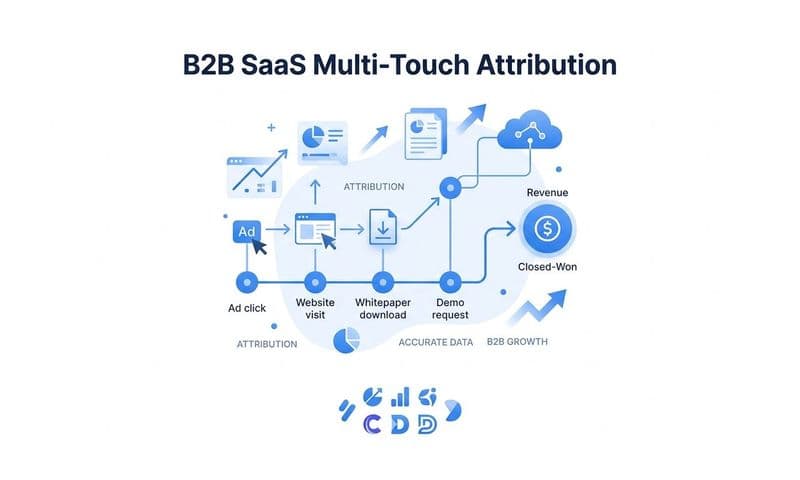
Think about a B2B software company running LinkedIn ads. Someone clicks an ad, downloads a whitepaper, and becomes a lead. From LinkedIn's perspective, that's a successful conversion. But the real value emerges over the next 60 days as that lead goes through demos, proposal reviews, and negotiations before becoming a $50,000 annual contract. Without CRM integration, you'd optimize based on lead volume without knowing which campaigns drive actual deals.
CRM integration reveals true campaign performance by connecting offline conversions and sales data back to the original marketing touchpoints. When a lead converts to a customer in your CRM, that information can flow back to your attribution system and even to ad platforms through conversion sync. Suddenly you're not just tracking leads—you're tracking which campaigns generate revenue. Understanding offline conversion tracking for online ads is crucial for businesses with longer sales cycles.
The difference between tracking leads versus tracking revenue is fundamental. Lead-based optimization tells you which campaigns generate interest. Revenue-based optimization tells you which campaigns generate profit. A campaign might produce fewer leads but higher-value customers. Without CRM data, you'd never know.
This matters even for businesses with shorter sales cycles. An e-commerce store might see immediate purchases, but repeat purchase value and customer lifetime value often differ significantly across acquisition channels. CRM integration lets you track which campaigns bring one-time buyers versus loyal customers who purchase repeatedly over months or years.
Implementing CRM integration typically involves connecting your CRM platform to your attribution system through APIs or native integrations. When deals close or customers reach certain milestones in your CRM, those events trigger updates to the attribution data. The original ad click that started the journey gets credited with the final revenue outcome.
This closed-loop attribution changes how you evaluate campaign performance. Instead of making decisions based on cost per lead, you can optimize based on cost per customer or customer acquisition cost relative to lifetime value. You can see that the campaign with the highest lead volume might not be the one with the best customer quality.
The clarity this provides is transformative. You know with confidence which channels, campaigns, and creative variations drive not just activity but actual business results. You can allocate budget based on revenue impact rather than vanity metrics. You can prove marketing's contribution to the bottom line with data that connects directly to sales outcomes.
Feeding Better Data Back to Ad Platforms
Conversion sync is the practice of sending verified, enriched conversion events from your systems back to ad platforms. This isn't just about reporting what happened. It's about giving platform algorithms better signals to optimize campaigns and find high-value audiences.
Ad platforms use conversion data to train their machine learning models. When Meta's algorithm sees that certain types of users convert, it looks for more people with similar characteristics. The quality and completeness of the conversion data you provide directly impacts how well the algorithm can identify and target your best potential customers.
Here's where it gets powerful. When you combine server-side tracking with CRM integration, you can send back conversion events that include actual revenue values, customer quality indicators, and outcomes that happened well after the original click. Instead of just telling Meta that someone converted, you're telling Meta that someone became a $5,000 customer who's still active six months later. This is how ad tracking tools help you scale ads using accurate data.
This enriched data helps platform algorithms make smarter decisions. They can optimize not just for conversions but for high-value conversions. They can identify the difference between users who are likely to become one-time buyers versus repeat customers. They can find audiences that match your best customers rather than just anyone who converts.
The impact on targeting becomes clear when you consider how lookalike audiences work. Meta creates lookalike audiences by analyzing the characteristics of your existing converters and finding similar users. If your conversion data only includes the 60% of conversions that browser-based tracking captured, the lookalike audience is based on an incomplete picture. When you send back complete conversion data through server-side tracking and CRM integration, the lookalike audience reflects your actual customer base.
Conversion sync also improves campaign optimization in real-time. Platforms can see which ads, placements, and audiences are driving the conversions you care about most. They can automatically shift budget toward what's working and away from what isn't, but only if they have accurate data to work with.
The feedback loop between better data and better performance is direct. More accurate conversion data leads to better optimization decisions by platform algorithms. Better optimization leads to improved ROAS and more efficient ad spend. Higher efficiency means you can scale campaigns with confidence, knowing the platform is optimizing toward real results rather than partial data.
This is why tracking accuracy isn't just about reporting. It's about giving the systems that manage your campaigns the information they need to perform at their best. When you feed platforms complete, accurate conversion data, they become significantly better at spending your budget efficiently.
Building a Tracking System You Can Trust
Improving paid ads tracking accuracy starts with understanding what you're currently capturing and what you're missing. An audit of your existing tracking setup reveals the gaps between platform-reported conversions and actual business outcomes.
Compare conversion counts across your ad platforms, analytics tools, and revenue systems for the same time period. If Meta reports 200 conversions but your payment processor shows 180 transactions, you have a 10% tracking gap. If Google Ads shows 150 conversions but your CRM only attributes 100 deals to paid search, you need to understand why 50 conversions aren't connecting. Addressing attribution reporting issues is the first step toward reliable data.
Look at where the discrepancies are largest. Do mobile conversions show bigger gaps than desktop? Are certain campaigns or traffic sources particularly hard to track? Do conversions that happen more than a few days after the click tend to disappear from platform reporting? These patterns tell you where your tracking is breaking down.
A reliable tracking infrastructure has three core components working together. Server-side tracking provides the foundation by capturing conversions that browser-based pixels miss. CRM integration closes the loop by connecting initial clicks to final revenue outcomes. Unified attribution brings all this data together in one place where you can analyze the complete customer journey across all touchpoints.
Think of it as a three-layer system. The bottom layer is server-side tracking that captures conversion events accurately regardless of browser restrictions or cross-device journeys. The middle layer is CRM integration that adds business context and revenue data to those conversions. The top layer is unified attribution that connects everything back to the marketing touchpoints that started the journey. Choosing the right tracking software for paid ads makes implementing this architecture significantly easier.
When these components work together, you get a complete picture. You see which ads drove which clicks, which clicks became which leads, which leads turned into which customers, and which customers generated which revenue. The entire path from ad impression to closed deal becomes visible and measurable.
Validating that your tracking improvements are working requires before-and-after comparisons. Measure your current tracking gap, implement improvements, then measure again after a few weeks. You should see the discrepancy between platform-reported conversions and actual outcomes shrink as your tracking becomes more accurate.
Monitor key indicators of tracking health over time. What percentage of your conversions are being captured by ad platforms? How many conversions are you sending back through conversion sync? How closely do your attribution reports match your actual revenue data? These metrics tell you whether your tracking infrastructure is performing reliably.
Building trust in your tracking data is an ongoing process. As platforms change, privacy restrictions evolve, and customer behaviors shift, your tracking setup needs to adapt. Regular audits and continuous validation ensure your data remains accurate and your optimization decisions stay grounded in reality.
Making Tracking Accuracy Your Competitive Advantage
Paid ads tracking accuracy isn't a technical nice-to-have. It's a competitive necessity that determines whether you're making decisions based on reality or fiction. When your competitors are optimizing campaigns on incomplete data while you're working with complete visibility, you gain an edge that compounds over time.
The components we've covered—server-side tracking, CRM integration, and conversion sync—work together to create a tracking system that captures what's actually happening rather than just what browsers and cookies can see. This foundation of accurate data transforms everything that comes after it. Your optimization decisions become smarter. Your budget allocation becomes more efficient. Your ability to scale winning campaigns becomes confident rather than cautious.
The marketers who win in an increasingly privacy-focused digital landscape are the ones who build tracking infrastructure that works despite the restrictions. They're not waiting for platforms to solve the problem. They're implementing solutions that give them complete visibility into campaign performance regardless of cookie blockers, iOS updates, or browser restrictions.
Your tracking accuracy directly impacts your bottom line. Every percentage point of improvement in tracking means better data for optimization, which means more efficient ad spend, which means more revenue from the same budget. The investment in building reliable tracking infrastructure pays for itself many times over in improved campaign performance.
Ready to elevate your marketing game with precision and confidence? Discover how Cometly's AI-driven recommendations can transform your ad strategy—Get your free demo today and start capturing every touchpoint to maximize your conversions.