Your Meta campaigns are running. Google Ads is spending. But when you pull up your attribution reports, something feels off. Conversions that should be there aren't showing up. The customer journey looks fragmented. Your top-performing campaigns from last year suddenly appear to be underperforming, yet revenue is still coming in. You're left wondering: what am I missing?
You're not imagining it. Over the past few years, a wave of privacy updates from Apple, Google, and major browser vendors has fundamentally broken the tracking infrastructure that digital advertising relied on for decades. What once gave you clear visibility into which ads drove conversions now leaves gaps, misattributed data, and incomplete customer journeys.
This isn't a temporary glitch you can wait out. Privacy-first tracking is the new reality of digital marketing. The good news? Forward-thinking teams are already adapting their attribution strategies to work with these changes rather than against them. This guide will walk you through what changed, why your ad data no longer tells the full story, and how to build a tracking strategy that actually works in 2026.
The Privacy Shift That Changed Digital Advertising Forever
In April 2021, Apple launched App Tracking Transparency (ATT) with iOS 14.5, requiring apps to ask users for explicit permission before tracking them across other companies' apps and websites. For the first time, users saw a clear prompt asking if they wanted to allow tracking. Many said no.
The impact on platforms like Meta was immediate. Without the ability to track users across apps and websites, Facebook and Instagram lost visibility into which ad clicks led to conversions. The 28-day attribution window that advertisers relied on became far less reliable. Campaign optimization algorithms that depended on conversion data suddenly had less signal to work with. Understanding the full scope of iOS privacy updates affecting ad tracking is essential for any modern marketer.
But Apple wasn't alone in this shift. Google announced Privacy Sandbox in 2019, signaling the eventual end of third-party cookies in Chrome. While the timeline has shifted multiple times, the direction is clear: third-party cookies are being phased out. Chrome still holds the majority of browser market share, which means this change affects how most of the internet tracks users.
Safari users have been living in a cookie-restricted world even longer. Apple introduced Intelligent Tracking Prevention (ITP) in 2017, which limits how long cookies can persist and blocks many forms of cross-site tracking. Each ITP update has tightened restrictions further, making it harder for advertisers to track Safari users across websites. The ongoing browser privacy features breaking tracking have created significant challenges for attribution.
Firefox followed a similar path with Enhanced Tracking Protection, blocking third-party tracking cookies by default. Between Safari and Firefox, a significant portion of web traffic already operates without the cross-site tracking that digital advertising was built on.
These aren't isolated changes from individual companies. They represent a coordinated industry shift toward user privacy. Regulations like GDPR in Europe and CCPA in California have pushed the entire tech industry to give users more control over their data. What we're seeing is the technical implementation of that principle.
The result? The tracking infrastructure that powered digital advertising for the past two decades is fundamentally broken. Marketers can no longer assume they'll see every conversion, track every touchpoint, or follow users across devices and platforms. The question isn't whether this will affect your campaigns. It's how you'll adapt.
Why Your Ad Platform Data No Longer Tells the Full Story
When you log into Meta Ads Manager or Google Ads, you're looking at what those platforms can see. And increasingly, what they can see is incomplete.
Here's the problem: ad platforms attribute conversions based on the data they can track. When someone clicks your Facebook ad on their iPhone, then later converts on their laptop using Safari, that connection often gets lost. The platform can't connect the initial click to the final conversion because privacy restrictions block the tracking mechanisms that would normally link those events.
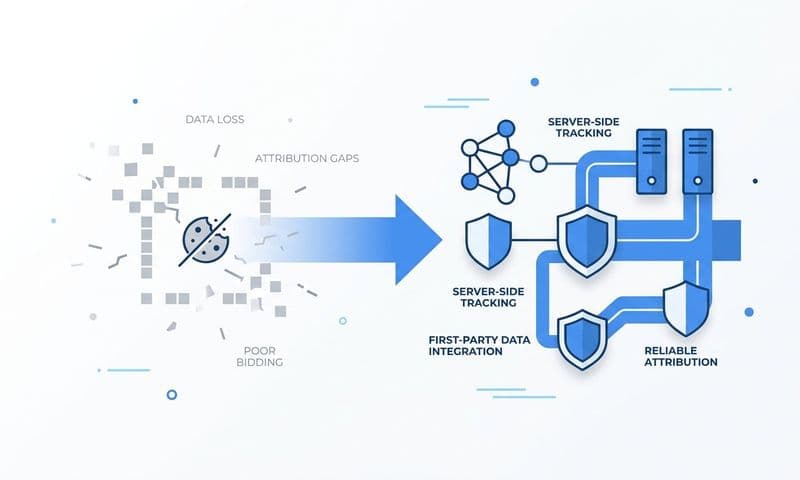
This creates what's known as the attribution gap. Conversions are happening, but platforms can't see them. So they either under-report results (making good campaigns look mediocre) or rely on statistical modeling to fill in the blanks (which introduces uncertainty). Neither scenario gives you the clear, accurate data you need to make confident budget decisions. Many marketers are experiencing conversion tracking broken after privacy updates without realizing the full extent of the problem.
The cross-device tracking challenge makes this worse. Your customer might see your ad on mobile, research on tablet, and purchase on desktop. In the past, cookies and device graphs could connect those dots. Now, with privacy restrictions blocking cross-device tracking, each interaction looks isolated. Platforms see three separate users instead of one customer journey.
Cross-channel tracking faces similar blind spots. Someone might click your Google ad, later see your Facebook retargeting campaign, then convert through an email link. Which channel gets credit? Without comprehensive tracking, each platform claims the conversion for itself. You end up with inflated attribution numbers that don't match your actual revenue.
But here's what really matters: this incomplete data doesn't just affect your reporting. It affects your ad platform's ability to optimize campaigns. Facebook's algorithm learns from conversion data to find similar users and improve targeting. Google's Smart Bidding uses conversion signals to adjust bids in real time. When these platforms lose visibility into conversions, their algorithms have less signal to work with.
The downstream effect is real. Campaigns that once scaled smoothly now struggle to find new customers. Lookalike audiences become less effective because the platform has fewer confirmed conversions to model from. Automated bidding strategies make suboptimal decisions because they're working with partial data.
You're not just losing reporting accuracy. You're losing the optimization power that made these platforms effective in the first place.
Real Impact on Campaign Performance and Budget Decisions
Incomplete data doesn't just create reporting headaches. It leads to bad decisions that waste ad spend and limit growth.
When your attribution data is fragmented, you can't confidently identify which campaigns actually drive revenue. That top-of-funnel awareness campaign might be generating conversions that your tracking can't see. Meanwhile, your retargeting campaign gets full credit because it's the last click before purchase, even though it's just capturing demand that other channels created. Understanding ad tracking data discrepancy causes helps you identify where your reporting goes wrong.
This leads to misallocated budgets. You scale the campaigns that look good in platform dashboards while cutting spend on channels that are actually working but don't show clear attribution. Over time, this compounds. You're optimizing toward incomplete data, which means you're optimizing in the wrong direction.
The challenge gets worse when you need to prove marketing ROI to leadership. Your CFO wants to know: for every dollar we spend on ads, how much revenue do we generate? In the past, you could pull that number from your platform dashboards with reasonable confidence. Now, those numbers don't add up.
Platform-reported conversions don't match your CRM data. Google says one thing, Meta says another, and your actual revenue is somewhere in between. When you try to calculate true ROAS, you're working with fragmented information that makes it impossible to give a straight answer. Many teams are losing attribution data due to privacy updates and struggling to demonstrate marketing value.
This creates a trust problem. Leadership starts questioning whether marketing is actually driving growth or just taking credit for sales that would have happened anyway. Budget discussions become contentious because you can't prove the full value of your campaigns with the data you have.
The ROAS calculations in platform dashboards are particularly misleading now. They're based on the conversions the platform can see, not the conversions that actually happened. If Meta can only track 60% of your conversions due to privacy restrictions, the ROAS it shows you is artificially low. But you don't know if it's 60%, 70%, or 50%. You just know the number isn't right.
Smart marketers have started to recognize this. They're looking beyond platform dashboards to understand true performance. But without the right tracking infrastructure in place, that's nearly impossible. You need a way to capture the full customer journey, connect ad clicks to actual revenue, and measure performance across all channels with data you can trust.
Server-Side Tracking: The Foundation of Privacy-Resilient Attribution
The tracking methods that privacy updates broke all had one thing in common: they relied on the user's browser. Cookies, pixels, and JavaScript tracking all operate client-side, meaning they depend on what the browser allows. When browsers started blocking third-party cookies and limiting tracking, client-side methods stopped working.
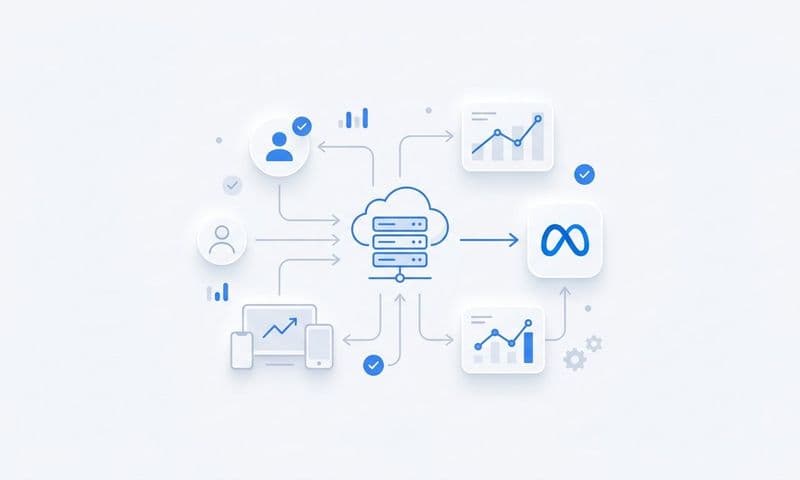
Server-side tracking takes a fundamentally different approach. Instead of relying on the user's browser to track and report events, data flows directly from your server to your analytics and attribution platforms. The user's browser never needs to load third-party tracking scripts or set cross-site cookies. Learning why server-side tracking is more accurate reveals the technical advantages of this approach.
Here's why this matters: browser-based privacy restrictions can't block what they never see. When tracking happens server-to-server, Safari's Intelligent Tracking Prevention and cookie blockers become irrelevant. The data flows through infrastructure you control, using first-party connections that privacy tools don't interfere with.
This is where first-party data becomes essential. First-party data means information you collect directly from your customers with their consent. When someone fills out a form on your website, makes a purchase, or signs up for your email list, they're giving you data directly. That data belongs to you, and you can use it to understand their journey without relying on third-party tracking. Implementing first-party data tracking for ads is now a fundamental requirement for accurate attribution.
Server-side tracking lets you connect this first-party data to advertising outcomes. When someone clicks your Facebook ad, you can capture that click on your server. When they later convert, you record that conversion on your server too. Because both events are logged server-side using first-party data, you can connect them reliably, even if the user switched devices or cleared their cookies.
The key is connecting ad clicks to CRM events and revenue. Your CRM knows which customers generated revenue and how much. Your server-side tracking knows which ads those customers clicked before converting. By linking these data sources, you get accurate attribution that shows which campaigns actually drive revenue, not just which ones get last-click credit.
This approach survives privacy restrictions because it doesn't depend on cross-site tracking or third-party cookies. You're tracking user actions on your own properties, with data you collect directly, through infrastructure you control. Privacy regulations like GDPR and CCPA actually encourage this model because it gives users more transparency and control over their data.
But server-side tracking isn't just about surviving privacy updates. It's about getting better data. Client-side tracking misses conversions when users have ad blockers, when JavaScript fails to load, or when browsers restrict cookie access. Server-side tracking captures these events reliably because it doesn't depend on the user's browser cooperating.
The result is more complete, more accurate attribution data. You see conversions that client-side tracking would miss. You can connect customer journeys across devices and sessions. And you can measure true marketing performance even as privacy restrictions continue to tighten.
Building an Attribution Strategy That Works in a Privacy-First World
Single-touch attribution models were always oversimplified, but they worked well enough when you could track most conversions. Now that privacy updates create gaps in your data, relying on last-click or first-click attribution is actively misleading. You need multi-touch attribution that captures the full customer journey using first-party data.
Multi-touch attribution assigns value to every touchpoint in the customer journey, not just the last click. When someone sees your Facebook ad, clicks your Google search ad, and converts through an email campaign, all three channels played a role. Multi-touch models recognize this and distribute credit accordingly. Following attribution tracking best practices ensures you capture the complete picture.
The key is having the data infrastructure to track these touchpoints accurately. With server-side tracking and first-party data collection, you can see when the same customer interacts with multiple campaigns across different channels and devices. You're not relying on cookies that expire or tracking that breaks when users switch browsers. You're connecting touchpoints using data you own.
But accurate attribution isn't just about understanding what happened. It's about improving future performance. This is where feeding enriched conversion data back to ad platforms becomes crucial.
When you send detailed conversion data to Meta or Google, their algorithms use it to optimize targeting and bidding. The more accurate and complete your conversion data, the better these platforms can find similar customers and adjust bids in real time. This is how you overcome the signal loss from privacy updates.
Think of it this way: privacy restrictions limit what ad platforms can track on their own. But they don't prevent you from telling platforms what happened. When someone converts, you can send that conversion event back to Meta or Google with additional context like purchase value, customer lifetime value, or specific product categories. This enriched data gives platform algorithms the signal they need to optimize effectively.
This process is sometimes called conversion API or server-side conversion tracking. It's different from traditional pixel-based tracking because data flows from your server to the ad platform's server, bypassing browser restrictions. You're essentially rebuilding the feedback loop that privacy updates broke, but using first-party data and server-side infrastructure that respects user privacy. Exploring privacy-compliant conversion tracking methods helps you implement this correctly.
AI becomes particularly valuable when platform data is incomplete. Even with server-side tracking, you'll still have some attribution uncertainty. Different attribution models will give you different answers about which channels deserve credit. AI can analyze patterns across all your marketing data to identify which campaigns consistently correlate with revenue, even when direct attribution is unclear.
AI can also surface insights that manual analysis would miss. Which ad creatives perform best for different customer segments? Which channels work together synergistically? Which campaigns are truly driving new customer acquisition versus just capturing existing demand? These questions become harder to answer when your data is fragmented, but AI can find patterns in the noise.
The goal is to build a feedback loop: capture complete customer journey data with server-side tracking, analyze it with multi-touch attribution and AI, use those insights to optimize campaigns, and feed enriched conversion data back to ad platforms to improve their algorithms. This creates a system that gets smarter over time, even as privacy restrictions continue to evolve.
Your Action Plan for Accurate Ad Tracking in 2026
Start by auditing your current tracking setup. Log into your ad platforms and compare reported conversions to actual revenue in your CRM or analytics system. If the numbers don't match, you have an attribution gap. Check how much traffic comes from iOS devices and Safari browsers, as these are most affected by privacy restrictions. Look for drops in conversion tracking that coincide with major privacy updates.
Next, evaluate your data infrastructure. Are you still relying primarily on client-side tracking through browser pixels? Do you have server-side tracking implemented? Can you connect ad clicks to CRM conversions and actual revenue? If the answer to these questions is no, you're operating with incomplete data. Understanding tracking pixel limitations after privacy updates helps clarify why traditional methods fall short.
Prioritizing first-party data collection should be your next move. Every form submission, purchase, email signup, and customer interaction is a data point you own. Make sure you're capturing these events reliably and storing them in a way that lets you connect them to marketing touchpoints. This becomes the foundation for accurate attribution when third-party tracking fails.
Implementing server-side tracking is no longer optional for serious marketers. Whether you build it yourself or use a platform that handles it for you, you need tracking infrastructure that operates independently of browser restrictions. This means capturing ad clicks server-side, recording conversions server-side, and connecting the two using first-party identifiers.
When evaluating attribution tools, look for platforms that specifically address modern privacy challenges. Can they track conversions when cookies are blocked? Do they offer server-side tracking out of the box? Can they connect data across multiple ad platforms and your CRM? Do they provide multi-touch attribution models that capture the full customer journey? The best software for tracking marketing attribution in 2026 addresses all these requirements.
Also consider whether the platform can send enriched conversion data back to ad platforms. This conversion sync capability is crucial for maintaining ad platform performance when their native tracking is limited. You want a solution that not only shows you accurate attribution but also helps your campaigns optimize better by feeding platforms the conversion data they're missing.
Finally, plan for ongoing adaptation. Privacy regulations and tracking restrictions will continue to evolve. The attribution strategy that works today might need adjustments next year. Choose tools and approaches that are built for a privacy-first world rather than trying to preserve old tracking methods that are increasingly unreliable.
Moving Forward: Thriving in the Privacy-First Era
Privacy updates aren't a temporary disruption you can wait out. They represent a permanent shift in how digital advertising operates. The tracking infrastructure that powered the industry for two decades is gone, and it's not coming back.
But this isn't the end of effective digital marketing. It's a transition to more sustainable, privacy-respecting methods that give you better data in the long run. Marketers who adapt with first-party data strategies and server-side tracking will gain a significant competitive advantage over those still relying on broken client-side tracking.
The teams winning right now are the ones who stopped trying to recreate the old tracking methods and instead built new infrastructure designed for privacy-first tracking. They're capturing complete customer journeys with first-party data. They're using server-side tracking to maintain accuracy despite browser restrictions. They're feeding enriched conversion data back to ad platforms to keep algorithms optimized.
Most importantly, they're making confident budget decisions based on accurate attribution data. They know which campaigns drive revenue, which channels work together, and how to scale effectively. They're not guessing or relying on platform dashboards that tell incomplete stories.
You can build this capability too. The technology exists. The strategies are proven. What's required is commitment to doing attribution right in a privacy-first world rather than clinging to methods that no longer work.
Ready to elevate your marketing game with precision and confidence? Discover how Cometly's AI-driven recommendations can transform your ad strategy. Get your free demo today and start capturing every touchpoint to maximize your conversions.