Your attribution dashboard is showing gaps. Your conversion data doesn't match what you're seeing in your CRM. Ad platforms are optimizing on incomplete information, driving up costs while performance drops. If this sounds familiar, you're experiencing the ripple effects of third-party cookies disappearing from the web.
The tracking infrastructure that powered digital marketing for two decades is collapsing. Safari killed third-party cookies in 2020. Firefox followed suit. Chrome's Privacy Sandbox rolled out through 2024 and 2025, fundamentally changing how browsers handle cross-site data. By 2026, the old playbook for tracking customer journeys across the web is obsolete.
This isn't just a technical shift. It's a complete rethinking of how marketers understand which campaigns drive revenue. The good news? Better alternatives exist. Server-side tracking, first-party data infrastructure, and modern attribution platforms can deliver more accurate insights than cookies ever provided. But only if you understand what's replacing third-party cookies and how to adapt your strategy accordingly.
The Privacy Shift That Changed Everything
Third-party cookies didn't die overnight. They were systematically dismantled by a combination of browser vendors, regulatory bodies, and shifting consumer expectations around data privacy.
Apple fired the first major shot in 2017 with Intelligent Tracking Prevention in Safari, progressively restricting how long third-party cookies could persist. By 2020, Safari blocked them entirely by default. Firefox implemented Enhanced Tracking Protection around the same time, cutting off cross-site cookie access for the majority of its user base.
These weren't arbitrary decisions. They reflected growing consumer awareness about online tracking and mounting regulatory pressure. GDPR in Europe and CCPA in California established new standards for data collection consent. Consumers started asking harder questions about who was tracking them and why.
Google initially announced plans to phase out third-party cookies in Chrome by 2022. That timeline shifted multiple times as the advertising industry scrambled to develop alternatives. Through 2023 and 2024, Google tested Privacy Sandbox APIs with limited user groups. By 2025, the transition accelerated significantly, and understanding the third-party cookie deprecation impact became essential for every marketer.
The fundamental change isn't just about cookies. It's about moving from a web where any site could track users across the entire internet to one where cross-site data sharing requires explicit frameworks, user consent, or alternative technical approaches.
For marketers, this created an immediate crisis. Traditional pixel-based tracking that relied on third-party cookies to connect ad clicks to website conversions stopped working reliably. Attribution models built on cross-site user identification began showing massive data gaps. The customer journey that used to be visible from first touch to final conversion became fragmented and incomplete.
This wasn't a problem marketers could ignore or work around with minor adjustments. The entire foundation of digital attribution needed rebuilding.
What's Actually Replacing Third-Party Cookies
The industry didn't wait for a single replacement to emerge. Instead, multiple approaches developed in parallel, each addressing different aspects of what third-party cookies used to provide.
Google's Privacy Sandbox APIs: Google developed a suite of browser-based APIs designed to enable advertising use cases while preserving user privacy. The Topics API categorizes users into interest groups based on browsing history, but does so locally in the browser without sharing detailed tracking data. Instead of knowing exactly which sites someone visited, advertisers receive broad interest categories like "fitness" or "travel."
The Attribution Reporting API provides conversion measurement without cross-site identifiers. It allows advertisers to understand that an ad led to a conversion without tracking the specific user across sites. The data is aggregated and includes privacy protections like noise injection to prevent individual user identification.
The Protected Audience API (formerly FLEDGE) handles remarketing by conducting ad auctions locally in the browser. Your browser remembers which sites you visited and which products you viewed, but that information never leaves your device in an identifiable form.
These APIs represent a fundamental rethinking of how advertising technology works. Instead of tracking users across the web, they move the intelligence into the browser itself, sharing only aggregated or anonymized signals back to advertisers.
First-Party Data Infrastructure: The most reliable alternative to third-party cookies is data you collect directly from your own customers. When someone creates an account, makes a purchase, or signs up for your newsletter, you have a first-party relationship that doesn't depend on browser cookies or cross-site tracking. Understanding first-party vs third-party cookies is crucial for building this foundation.
Forward-thinking companies are building robust first-party data strategies that connect every customer touchpoint. This means tracking authenticated user behavior on your website, capturing CRM interactions, logging support conversations, and linking all of it to a unified customer profile.
The challenge is connecting this first-party data back to advertising platforms in a way that maintains attribution accuracy and improves campaign optimization.
Contextual Targeting Returns: Before behavioral tracking dominated digital advertising, contextual targeting was the standard approach. Show running shoe ads on running blogs. Display financial service ads on business news sites. The content someone is currently viewing provides strong signals about their interests without requiring any cross-site tracking.
Modern contextual targeting uses natural language processing and machine learning to understand page content at a sophisticated level. It's no longer just matching keywords, but understanding semantic meaning and user intent based on the immediate context.
Cohort-Based Approaches: Rather than targeting individuals, cohort-based methods group users with similar characteristics or behaviors. Google's now-deprecated FLoC (Federated Learning of Cohorts) was an early attempt at this. While FLoC itself didn't survive privacy scrutiny, the concept of targeting groups rather than individuals continues to influence new approaches.
The reality is that no single technology replaces everything third-party cookies did. Marketers need a combination of approaches, and the specific mix depends on your business model, customer relationships, and technical capabilities.
Why Server-Side Tracking Changes Everything
While browser-based alternatives try to balance privacy and functionality within increasing restrictions, server-side tracking takes a completely different approach. It bypasses browser-level limitations entirely by moving data collection and transmission to your own infrastructure.
Here's how it works: Instead of relying on JavaScript pixels that run in a user's browser and set cookies, server-side tracking captures user interactions on your server. When someone clicks an ad or completes a conversion, that event data is sent from your server directly to ad platforms, analytics tools, and attribution systems through server-to-server connections.
This matters because browsers can't block what they can't see. Safari's Intelligent Tracking Prevention, Firefox's Enhanced Tracking Protection, and Chrome's Privacy Sandbox all operate at the browser level. They restrict what client-side JavaScript can do, how long cookies can persist, and what data can be shared across domains.
Server-side tracking operates outside this entire framework. Your server communicates directly with Meta's Conversions API, Google's server-side tagging, and other platforms through authenticated API connections. No browser restrictions apply. This is why many marketers are exploring ad tracking without third-party cookies through server-side methods.
The data quality difference is substantial. Browser-based tracking loses events to ad blockers, fails when users clear cookies, and struggles with iOS tracking limitations. Server-side tracking captures every event that reaches your server, providing a complete record of customer interactions.
This completeness transforms attribution accuracy. When you can see the full customer journey from first ad click through every website interaction to final conversion, you understand which campaigns actually drive revenue. You're not guessing based on incomplete browser data or relying on probabilistic models to fill gaps.
Server-side tracking also enables better ad platform optimization. When you send enriched conversion data back to Meta or Google, including customer lifetime value, product categories, and detailed event parameters, their algorithms can optimize more effectively. You're feeding the machine learning systems better data, which leads to better targeting and lower acquisition costs.
The technical implementation requires more setup than dropping a JavaScript pixel on your site. You need server infrastructure to handle the data transmission, proper event mapping to ensure consistency, and integration with your existing marketing stack. But the payoff in data accuracy and campaign performance makes it worthwhile.
For marketers serious about maintaining attribution accuracy in a post-cookie world, server-side tracking isn't optional. It's the foundation of a modern measurement strategy.
Building First-Party Data Systems That Drive Results
Third-party cookies allowed marketers to be lazy about data collection. You could track users across the web without building direct relationships or maintaining your own data infrastructure. Those days are over.
The new competitive advantage belongs to companies that collect, organize, and activate first-party data effectively. This means creating systems that capture every customer interaction and connect it to a unified profile.
Start with authenticated tracking: When users log into your website, mobile app, or customer portal, you have a persistent identifier that doesn't depend on cookies. Build your tracking infrastructure around these authenticated sessions. Use customer IDs to connect website behavior to CRM records, purchase history, and support interactions.
Even for users who aren't logged in, you can encourage account creation through value exchanges. Offer personalized recommendations, saved preferences, or exclusive content in exchange for registration. Each new account expands your first-party data foundation. A comprehensive first-party data collection guide can help you implement these strategies effectively.
Connect your CRM to everything: Your CRM contains the most valuable data you own: customer contact information, purchase history, lifetime value, and engagement patterns. But this data only becomes powerful when you connect it to your marketing channels.
Modern attribution platforms ingest CRM data and match it to ad clicks, website sessions, and conversion events. This connection lets you see which marketing channels attract your highest-value customers, not just which ones generate the most clicks.
When someone fills out a lead form, downloads a resource, or makes a purchase, that event should flow into your CRM immediately. Then that enriched data should flow back to your ad platforms to improve targeting and optimization.
Implement conversion APIs properly: Meta's Conversions API, Google's Enhanced Conversions, and similar tools from other platforms allow you to send conversion data directly from your server. But sending basic conversion events isn't enough.
Enrich those events with first-party data. Include customer email (hashed for privacy), phone number, address, and any other identifiers you've collected. Add custom parameters like product category, order value, customer segment, and predicted lifetime value.
This enriched data helps ad platforms match conversions to the right users even when browser tracking fails. It also provides the detailed signals algorithms need to find more customers like your best ones. Learn more about first-party data activation to maximize these opportunities.
Create a single source of truth: Data scattered across Google Analytics, your ad platforms, CRM, and email marketing tool creates confusion and missed opportunities. Build infrastructure that consolidates all marketing data into a unified view.
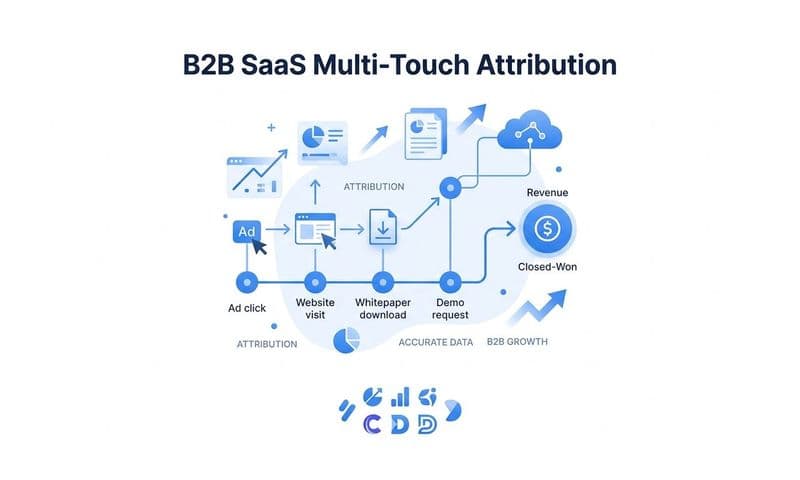
This doesn't mean replacing all your tools with a single platform. It means implementing systems that connect your tools and create consistent customer profiles across them. When the same person clicks a Facebook ad, visits your website, and later converts through a Google search, you need to see that as one customer journey, not three disconnected events.
Attribution platforms that specialize in connecting these data sources provide this unified view. They track users from first touch to conversion, attribute revenue to the right campaigns, and feed optimized data back to ad platforms.
Building robust first-party data infrastructure takes time and technical effort. But it's the only way to maintain attribution accuracy and campaign performance as browser-based tracking continues to deteriorate.
How to Evaluate Cookie Replacement Solutions
The market is flooded with vendors claiming to solve the post-cookie attribution challenge. Some deliver on their promises. Many don't. Here's how to separate solutions that actually work from those that will leave you with the same data gaps you're trying to fix.
Data accuracy and completeness: The fundamental question is whether a solution captures the full customer journey or just fragments of it. Ask vendors to demonstrate exactly how they track users across touchpoints. Request case studies showing data match rates between their system and ground truth conversion data.
Red flag: Solutions that rely primarily on browser-based tracking or third-party data partnerships. If the core methodology depends on mechanisms that browsers are actively blocking, it's a temporary fix at best.
Green flag: Platforms that use server-side tracking, first-party data integration, and direct API connections to ad platforms. These approaches work regardless of browser restrictions. Reviewing the best third-party cookie deprecation solutions can help you identify the right vendors.
For a deeper dive into this space, see our guide to cookie deprecation solutions.
Cross-platform coverage: Your customers don't live on a single ad platform. They see your Facebook ads, search for you on Google, click email links, and visit from organic social. Your attribution solution needs to track all of these touchpoints and connect them to conversions.
Ask vendors which platforms they integrate with and how those integrations work. Can they track Meta, Google, TikTok, LinkedIn, and your other channels in a single system? Do they capture offline conversions from your CRM? Can they attribute revenue to organic channels like email and social?
Partial coverage creates blind spots in your attribution data. You end up optimizing the channels you can measure while neglecting ones that might drive significant value.
Real-time capabilities: Attribution data from last week doesn't help you make decisions today. Marketing moves too fast for delayed reporting. You need to see campaign performance in real time so you can shift budget, pause underperforming ads, and scale winners immediately.
Ask about data latency. How long between when a conversion happens and when it appears in the attribution dashboard? Hours? Minutes? Real-time platforms update as events occur, giving you current performance data.
Questions that reveal vendor quality: When evaluating solutions, ask these specific questions. The answers will tell you whether you're dealing with a sophisticated platform or marketing hype.
"How do you handle iOS 14+ tracking limitations?" Weak answer: "We use probabilistic modeling." Strong answer: "We use server-side tracking and Conversions API to capture iOS conversions that browser-based tracking misses."
"What happens when users clear cookies or use private browsing?" Weak answer: "We do our best to track them." Strong answer: "We use server-side identifiers and first-party data matching, so browser-level cookie deletion doesn't affect our tracking." This is a key consideration when tracking users without third-party cookies.
"How do you attribute conversions that happen across multiple devices?" Weak answer: "We use device graphs." Strong answer: "We match users through authenticated login data and CRM integration, creating unified profiles across devices."
"Can you send enriched conversion data back to ad platforms?" This is crucial. If a platform only measures attribution but doesn't feed better data back to Meta and Google, you're missing half the value. The best solutions both track attribution accurately and improve ad platform optimization.
Red flags that indicate obsolescence: Avoid solutions that depend on workarounds that browsers are actively closing. If a vendor talks primarily about "cookieless tracking" through browser fingerprinting or other identification techniques, they're building on sand. Browsers are cracking down on all forms of cross-site tracking, not just cookies.
Be skeptical of platforms that promise "100% attribution accuracy" or claim they can track everything third-party cookies used to track. The privacy landscape has fundamentally changed. Honest vendors acknowledge the limitations and explain how they work within new constraints.
The right solution combines server-side tracking, first-party data infrastructure, and direct ad platform integrations to provide the most complete attribution picture possible in 2026's privacy-first environment.
Your Action Plan for Post-Cookie Attribution
Understanding what's replacing third-party cookies is one thing. Actually transitioning your marketing infrastructure is another. Here's how to move from theory to implementation without losing attribution accuracy during the transition.
Audit your current tracking dependencies: Start by documenting exactly how your attribution currently works. Which tools rely on third-party cookies? Where are you already experiencing data gaps? What percentage of conversions are you capturing versus missing?
Run a simple test: Check your attribution data against your actual revenue. If your analytics shows 100 conversions but your CRM shows 150 customers, you have a 33% data gap. That's revenue you're generating but can't attribute to specific marketing efforts. If you're struggling with this, you may be experiencing issues where cookie-based tracking is not working anymore.
Identify which browsers and devices show the worst tracking performance. Safari and iOS users are likely severely underreported in browser-based attribution. These gaps show you where server-side tracking will have the biggest immediate impact.
Implement server-side tracking first: This is your foundation. Before adding new attribution models or testing Privacy Sandbox APIs, get server-side event tracking in place. Start with your most important conversion events: purchases, lead submissions, sign-ups.
Set up Meta's Conversions API and Google's server-side tagging. Configure them to send the same events your browser pixels send, but from your server. Run both in parallel initially so you can compare data quality.
You'll likely see server-side tracking capture 20-40% more conversions than browser-based tracking alone, especially from iOS users and people using ad blockers. Understanding how to track conversions without third-party cookies is essential for this transition.
Build your first-party data infrastructure: While implementing server-side tracking, start consolidating your customer data. Connect your CRM to your attribution platform. Ensure every conversion event includes first-party identifiers like email and phone number (properly hashed).
Create processes for enriching conversion data with customer value signals. When someone converts, tag them with their predicted lifetime value, product category interest, and customer segment. This enriched data improves both attribution accuracy and ad platform optimization.
Create a transition timeline: Don't try to overhaul everything simultaneously. A phased approach maintains attribution continuity while you upgrade your infrastructure.
Month 1: Implement server-side tracking for top conversion events. Month 2: Expand server-side tracking to all meaningful customer interactions. Month 3: Integrate CRM data and begin feeding enriched conversions back to ad platforms. Month 4: Evaluate attribution accuracy improvements and optimize based on new data.
This timeline keeps your marketing running while you build better measurement infrastructure underneath it.
Leverage modern attribution platforms: Trying to build all of this yourself means months of development work and ongoing maintenance. Modern attribution platforms handle the technical complexity so you can focus on marketing strategy.
The right platform captures every touchpoint through server-side tracking, connects CRM and ad platform data into unified customer profiles, and feeds optimized conversion events back to improve campaign performance. It provides the multi-touch attribution view you need to make confident budget decisions.
Look for platforms that specialize in post-cookie attribution. They've already solved the technical challenges of tracking across browsers, devices, and platforms in a privacy-first environment.
The Future Is Actually Brighter Than the Past
The death of third-party cookies isn't the end of marketing attribution. It's the end of relying on a broken system that was never designed for privacy, never worked reliably across all browsers, and left massive gaps in customer journey data.
What's replacing third-party cookies is actually better. Server-side tracking captures more conversions with higher accuracy. First-party data infrastructure creates deeper customer understanding. Modern attribution platforms connect every touchpoint from first ad click to final purchase and beyond.
Marketers who embrace this transition now gain a significant competitive advantage. While others scramble to patch together cookie-dependent tracking, you'll have infrastructure that captures complete customer journeys, feeds better data to ad platforms, and provides clear attribution for every marketing dollar spent.
The key is moving quickly. Every day you rely on deteriorating browser-based tracking is a day of incomplete data and missed optimization opportunities. Every conversion you can't attribute is budget you can't confidently allocate.
The tools exist to thrive in a cookieless world. Server-side tracking, first-party data strategies, and AI-powered attribution platforms provide everything you need to track performance accurately and scale campaigns confidently.
Ready to elevate your marketing game with precision and confidence? Discover how Cometly's AI-driven recommendations can transform your ad strategy—Get your free demo today and start capturing every touchpoint to maximize your conversions.