
Your Facebook ads dashboard shows 50 conversions. Your Google Analytics shows 35. Your CRM shows 42 deals closed. Which number is real? If you're still relying on third-party cookies to track your ad performance, the answer is probably "none of them." Safari and Firefox have been blocking third-party cookies by default for years now, and Chrome's Privacy Sandbox has fundamentally changed how browser tracking works. The result? Massive blind spots in your attribution data, wasted ad spend on campaigns that look like they're underperforming, and a growing gap between what your ads actually deliver and what your tracking reports.
Here's the reality: if you're running paid campaigns in 2026 without a cookieless tracking strategy, you're flying blind through at least 40-50% of your customer journeys. But here's the better news—tracking without third-party cookies isn't just a workaround for privacy restrictions. It's actually more accurate than the old methods.
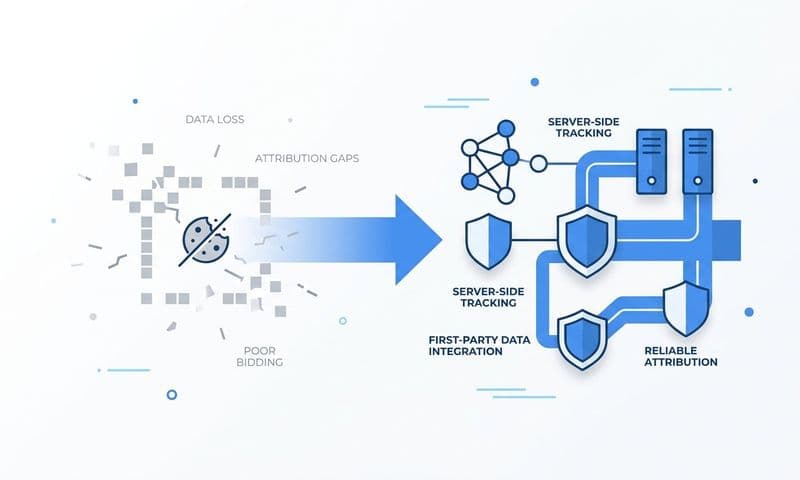
Server-side tracking captures conversions that browser-based pixels miss entirely. First-party data strategies give you persistent customer identifiers that survive across sessions and devices. CRM integration connects ad clicks to actual revenue, not just form submissions. When implemented correctly, cookieless tracking delivers clearer attribution, better match rates, and more reliable data for optimizing your campaigns.
This guide walks you through the complete implementation process. You'll audit your current setup to identify exactly where you're losing data, implement server-side tracking that bypasses browser restrictions entirely, build a first-party data strategy that captures every touchpoint, connect your CRM for full-funnel visibility, configure conversion sync to feed better data back to your ad platforms, and validate everything to ensure accuracy. By the end, you'll have a tracking system that works across all browsers, respects user privacy, and gives you the confidence to scale your best-performing campaigns.
Step 1: Audit Your Current Tracking Setup and Identify Cookie Dependencies
Before you can fix your tracking, you need to understand exactly what's broken. Open your website in Safari right now—not Chrome, Safari—and run through a complete conversion flow. Submit a form, make a test purchase, trigger whatever conversion events matter to your business. Then check your analytics and ad platforms. Chances are, many of those conversions didn't register at all.
This is your baseline reality. Safari's Intelligent Tracking Prevention (ITP) blocks third-party cookies by default and severely limits first-party cookies set by JavaScript. Firefox's Enhanced Tracking Protection does the same. Together, these browsers represent roughly 30-40% of web traffic, meaning nearly half your potential conversions are invisible to traditional tracking pixels.
Start by documenting every tracking pixel and tag currently on your site. Your Facebook Pixel, Google Ads tag, LinkedIn Insight Tag, TikTok Pixel—list them all. For each one, identify which conversion events it tracks: page views, form submissions, purchases, custom events. Then test each event in both Safari and Firefox with tracking protection enabled. Use your browser's developer tools to watch network requests and see which tracking calls actually fire. If you're experiencing issues with your Meta tracking, our guide on Facebook Ads tracking pixel issues covers the most common problems and solutions.
The gaps you discover here are critical. If your Facebook Pixel isn't firing purchase events in Safari, you're not just missing attribution data—you're also not feeding Facebook's algorithm the conversion information it needs to optimize your campaigns. The platform thinks your ads aren't working when they actually are, so it shifts budget away from winning campaigns and toward ones that happen to convert more Chrome users.
Create a spreadsheet with three columns: tracking element, cookie dependency level (high/medium/low), and business impact. Your Facebook Pixel tracking purchases? High dependency, high impact—fix this first. A retargeting pixel for a small test campaign? Lower priority. This prioritized list becomes your implementation roadmap.
Pay special attention to your attribution model. If you're using last-click attribution through Google Analytics, you're missing every touchpoint that happened before the final browser session. A customer might see your Facebook ad on their iPhone (Safari), click through and browse your site, then return three days later on their laptop (Chrome) and convert. Traditional cookie-based tracking attributes that sale to direct traffic or organic search, completely ignoring the Facebook ad that started the journey. Document these attribution gaps—they're costing you more than you think. Understanding the various attribution tracking methods available will help you choose the right approach for your business.
Step 2: Implement Server-Side Tracking as Your Foundation
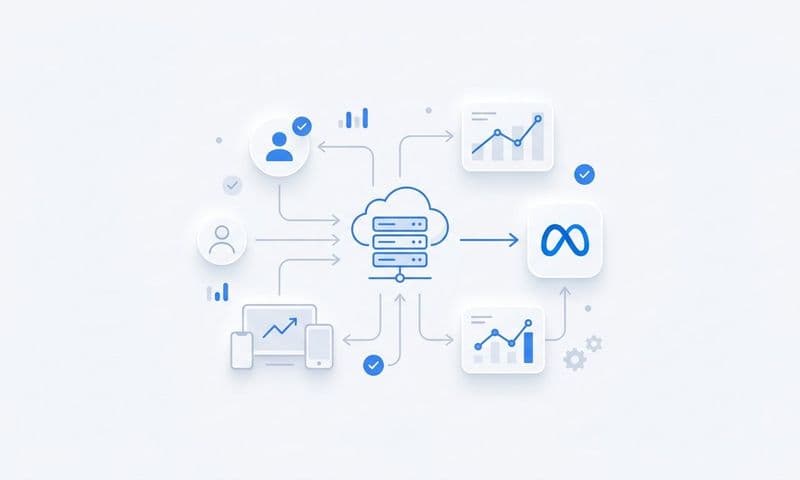
Server-side tracking is the single most important shift you'll make in your cookieless strategy. Instead of relying on browser-based pixels that can be blocked, deleted, or restricted, server-side tracking sends conversion data directly from your server to ad platforms. The browser never enters the equation, which means tracking restrictions don't apply. For a deeper comparison of approaches, see our analysis of Google Analytics vs server-side tracking.
Meta's Conversions API (CAPI) is the most critical implementation for most marketers. When someone converts on your site, your server sends that conversion event directly to Meta's servers with all the relevant data: timestamp, conversion value, customer information, and most importantly, the fbclid (Facebook Click ID) that connects this conversion back to the original ad click. Because this happens server-to-server, Safari's tracking prevention can't interfere.
Setting up CAPI requires three components: a way to capture the fbclid when users click your ads, a server environment that can send events to Meta's API, and a process for matching conversions to the correct user. If you're using a platform like Shopify or WordPress, plugins and integrations can handle much of this automatically. For custom implementations, you'll need to work with your development team to build the server-side connection.
The technical process looks like this: when a user clicks your Facebook ad, capture the fbclid parameter from the URL and store it—either in a first-party cookie (which Safari allows) or in your database tied to that user's session. When they convert, your server retrieves that fbclid and sends a conversion event to Meta's API along with event details like purchase value, product IDs, and hashed customer information (email, phone number). Meta matches this server-side event with the original ad click and attributes the conversion correctly. This is essential for accurate Facebook attribution tracking.
Google Ads requires a similar approach through Enhanced Conversions. This feature allows you to send hashed customer data (email address, phone number, name and address) along with conversion events. Google matches this information to signed-in Google users and attributes conversions even when cookies aren't available. Implementation typically involves modifying your Google Ads tag to include customer data at the moment of conversion, or sending conversion data through Google's API.
Once your server-side connections are configured, test them thoroughly. Use Meta's Events Manager to verify that server events are firing and matching with browser events. Check the "Event Match Quality" score—this indicates how well Meta can match your server events to actual users. Higher scores (above 6.0) mean better attribution. If your score is low, you're likely missing key identifiers like email or phone number in your server events.
The beauty of server-side tracking is redundancy. You can run both browser-based pixels and server-side tracking simultaneously. Meta's system automatically deduplicates events, so you won't double-count conversions. This gives you the best of both worlds: browser pixels capture what they can, and server-side tracking fills in the gaps where cookies fail.
Step 3: Build Your First-Party Data Collection Strategy
Server-side tracking only works if you have data to send. This is where first-party data collection becomes essential. You need to capture identifying information at every touchpoint and store it in a way that persists across sessions, browsers, and devices. Our comprehensive guide on first-party data tracking setup walks through this process in detail.
Start with UTM parameters and click IDs. Every ad platform appends parameters to your landing page URLs when users click ads: fbclid for Facebook, gclid for Google Ads, ttclid for TikTok. These identifiers are your connection between ad clicks and conversions. Capture them immediately when users land on your site and store them in a first-party cookie or your database. Don't rely on JavaScript to grab them later—by then, they might be gone.
Create a unified customer identifier that follows users through their entire journey. When someone fills out a form, subscribes to your email list, or creates an account, you're collecting email addresses or phone numbers. Hash these identifiers and use them as persistent IDs in your tracking system. When that same person returns to your site later—even from a different device or browser—you can recognize them and connect their new activity to their previous sessions.
Your data collection strategy should capture three types of information: traffic source data (UTM parameters, click IDs, referrer information), behavioral data (pages viewed, products browsed, actions taken), and identity data (email, phone, customer ID). Store all of this in your own database, not just in third-party tools. This gives you complete control and ensures you're not dependent on external platforms that might change their policies or pricing. Understanding what first-party data tracking entails will help you build a more resilient system.
Privacy compliance is non-negotiable. GDPR and CCPA require explicit consent before collecting personal data. Implement a consent management platform that clearly explains what data you're collecting and why. Only capture and use data for users who have given consent. The good news is that first-party data collection—where users voluntarily provide information to interact with your business—generally has higher consent rates than invisible third-party tracking.
Think about progressive data collection. You don't need every piece of information upfront. Capture the email address when someone downloads a lead magnet, add their phone number when they request a demo, collect their company information when they start a trial. Each interaction adds more data to their profile, giving you richer attribution and better ad targeting over time.
The key difference between first-party and third-party data is ownership and persistence. Third-party cookies are set by external domains and can be blocked or deleted easily. First-party cookies are set by your domain and are much more durable. More importantly, data stored in your own database never expires unless you delete it. A customer who converted six months ago can still be connected to the Facebook ad they clicked if you've stored that relationship in your system.
Step 4: Connect Your CRM to Track the Complete Customer Journey
Your ad platforms show clicks and website conversions, but your actual revenue happens in your CRM. Someone fills out a form (tracked as a conversion), becomes a lead (logged in your CRM), moves through your sales pipeline (CRM stages), and eventually closes as a customer (revenue recorded in CRM). If your tracking system only sees the form submission, you're missing the most important part of the story.
CRM integration is what transforms ad tracking from "we got 50 leads" to "we generated $125,000 in revenue from these specific campaigns." This level of visibility changes everything about how you optimize your ad spend. You stop optimizing for lead volume and start optimizing for revenue. You discover that the campaign generating fewer leads actually produces higher-value customers who close faster. Effective customer attribution tracking requires this connection between ad platforms and your revenue data.
The technical implementation requires mapping ad touchpoints to CRM events. When a lead enters your CRM, it should include all the attribution data you captured: which ad they clicked, which campaign and ad set it came from, what landing page they visited, and the timestamp of their first interaction. Most modern CRMs (Salesforce, HubSpot, Pipedrive) have fields for tracking source information. Use them.
Set up bi-directional data sync between your tracking system and your CRM. When a lead converts on your website, send their information to your CRM along with attribution data. When that lead progresses through your pipeline—becomes an opportunity, has a demo call, receives a proposal—send those events back to your tracking system. This creates a complete timeline of the customer journey from first click to closed deal. Our guide on customer journey tracking tools compares the best options for this integration.
Offline conversion tracking is where this really pays off. Many businesses have significant sales activity that happens outside the browser: phone calls, in-person meetings, contracts signed via DocuSign. Traditional web analytics can't see any of this. But if your CRM is connected to your tracking system, you can attribute these offline conversions back to the original ad click. When a deal closes in your CRM, send that revenue event to Facebook and Google along with the click ID you stored when they first visited your site. Now your ad platforms know which campaigns are driving actual revenue, not just form fills.
The match rate challenge becomes critical here. To attribute a CRM conversion back to an ad click, you need a reliable way to connect them. Email address is the most common identifier—the same email captured in your lead form exists in your CRM. Hash the email address and send it with your server-side conversion events. Ad platforms can match this hashed email to their user database and attribute the conversion correctly.
This level of integration reveals patterns you couldn't see before. You might discover that LinkedIn ads generate fewer leads but those leads convert to customers at three times the rate of Facebook leads. Or that certain ad campaigns attract customers who buy immediately while others attract customers who take months to close but spend significantly more. This intelligence transforms your media buying strategy from guesswork to data-driven decision making.
We compare the leading options in our media buying optimization tool roundup.
Step 5: Configure Conversion Sync to Feed Better Data to Ad Platforms
Ad platform algorithms are only as smart as the data you feed them. When you're missing conversions due to tracking limitations, the algorithm doesn't know which ads are actually working. It makes optimization decisions based on incomplete information, shifting budget toward campaigns that happen to convert more Chrome users while starving campaigns that perform well with Safari users.
Conversion sync solves this by sending enriched, accurate conversion data back to your ad platforms. This isn't just about reporting—it's about optimization. When Facebook's algorithm knows that a specific ad generated 10 high-value conversions instead of the 4 conversions its pixel tracked, it can optimize delivery toward similar audiences. When Google Ads sees the complete revenue data from your CRM instead of just form submissions, it can maximize conversion value, not just conversion volume. Learn more about best practices for tracking conversions accurately to maximize your data quality.
Start by configuring your conversion events with revenue values. Don't just send "Purchase" events—send "Purchase" events with the actual transaction amount. Don't just send "Lead" events—send "Lead" events with the estimated customer value based on your historical data. This gives ad platforms the information they need to optimize for value, not just volume.
Customer data parameters significantly improve match rates. When sending conversion events to Meta via CAPI, include as many data parameters as possible: email address, phone number, first name, last name, city, state, zip code, country. All of this information should be hashed before sending (Meta provides specific hashing requirements). The more parameters you include, the better Meta can match your conversion to the actual user who clicked your ad.
The technical implementation typically involves three components: capturing customer data at the point of conversion, hashing that data according to platform requirements, and sending it along with conversion events via server-side API calls. Many marketing attribution platforms handle this automatically, but if you're building a custom solution, you'll need to implement proper data handling and security measures.
Monitor your match rates religiously. In Meta's Events Manager, check the percentage of server events that successfully match to users. Match rates above 70% are good, above 80% are excellent. If your match rates are low, you're likely missing key identifiers. Add more customer data parameters to your conversion events. Make sure email addresses are captured and included. Verify that you're hashing data correctly according to platform specifications.
Conversion sync also enables more sophisticated campaign strategies. With accurate, complete conversion data flowing back to ad platforms, you can use automated bidding strategies like Target ROAS (Return on Ad Spend) or Maximize Conversion Value. These strategies require reliable conversion data to work effectively. Without proper tracking, they optimize based on incomplete information and often underperform. With conversion sync in place, automated bidding becomes one of your most powerful optimization tools.
Step 6: Validate Your Tracking and Compare Against Platform Data
Implementation is only valuable if it actually works. The final step is thorough validation to ensure your cookieless tracking setup is capturing conversions accurately across all browsers and scenarios. This isn't a one-time check—it's an ongoing process that catches issues before they impact your data quality.
Run test conversions in every major browser: Chrome, Safari, Firefox, and Edge. For each browser, complete a full conversion flow from ad click to purchase or lead submission. Use different scenarios: logged-in users, guest checkout, mobile browsers, incognito mode. Each scenario can reveal different tracking issues. Check your analytics dashboard, ad platform conversion reports, and CRM to verify that all test conversions were captured and attributed correctly. Understanding cross-device user tracking challenges and solutions will help you identify potential gaps in your validation process.
Compare your attribution data with ad platform reported conversions. There will always be some discrepancy—different attribution windows, different counting methodologies—but major gaps indicate problems. If Facebook reports 100 conversions and your tracking system shows 60, something is broken. If your tracking shows 120 conversions and Facebook shows 80, you're capturing conversions that the pixel missed, which is exactly what cookieless tracking should do.
Pay attention to browser-specific patterns. If your Safari conversion tracking matches Chrome closely, your server-side implementation is working. If Safari shows significantly fewer conversions, you're still dependent on browser-based tracking that's being blocked. Break down your conversion data by browser in your analytics platform. Safari and Firefox conversions should represent roughly 30-40% of your total conversions. If they're significantly lower, you have tracking gaps to address.
Set up automated monitoring to catch tracking issues early. Create alerts for sudden drops in conversion volume, significant changes in match rates, or discrepancies between your tracking system and ad platform reports. Many issues—a broken API connection, an expired access token, a change in your website code—can cause tracking to fail silently. Automated monitoring ensures you discover and fix these problems quickly rather than losing weeks of attribution data. Implementing real-time data tracking can help you catch these issues faster.
Document your validation process and run it regularly—at least monthly, ideally weekly. Technology changes constantly. Browsers update their privacy protections, ad platforms modify their APIs, your website code evolves. Each change can potentially break your tracking. Regular validation ensures your system remains accurate over time. Create a simple checklist: test conversions in each browser, verify server-side events are firing, check match rates, compare platform data, review attribution reports. Run through this checklist consistently.
The validation process often reveals opportunities for improvement. Maybe your match rates are good but could be better with additional customer data parameters. Maybe certain conversion events are tracking well while others have gaps. Use these insights to continuously refine your implementation. Cookieless tracking isn't a set-it-and-forget-it solution—it's an evolving system that improves as you optimize it.
Your Cookieless Tracking System Is Now Live
You've built a complete ad tracking system that works without third-party cookies. Your audit revealed exactly where you were losing data. Server-side tracking now bypasses browser restrictions entirely. First-party data flows into your own database, creating persistent customer identifiers. Your CRM connects ad clicks to actual revenue. Conversion sync feeds accurate, enriched data back to ad platforms. And your validation process ensures everything stays accurate over time.
This isn't just about compliance with privacy regulations—it's about competitive advantage. The marketers who have already implemented cookieless tracking are seeing data that their competitors miss. They're attributing conversions that browser-based pixels can't detect. They're feeding ad platform algorithms better information, which drives better optimization and lower costs per conversion. They're making budget decisions based on actual revenue data, not just lead counts.
The gap between those who have adapted and those still relying on third-party cookies will only widen. As privacy protections continue to strengthen and browser restrictions become more aggressive, traditional tracking will become increasingly unreliable. The time to implement these changes is now, while you can still compare your new system against your old tracking and verify improvements.
Start with the audit. Open Safari right now and run through a conversion on your site. Watch what doesn't track. That missing data represents real conversions you're not seeing and real budget you're misallocating. Every day you wait is another day of blind spots in your attribution data. Every campaign you run without proper tracking is money spent without knowing what's actually working.
The implementation might feel complex, but you don't have to build everything at once. Start with server-side tracking for your highest-volume ad platform—probably Meta or Google. Get that working, validate it, then expand to other platforms. Add CRM integration next, then optimize your conversion sync and match rates. Each step delivers immediate value while building toward the complete system.
Ready to elevate your marketing game with precision and confidence? Discover how Cometly's AI-driven recommendations can transform your ad strategy—Get your free demo today and start capturing every touchpoint to maximize your conversions.