You launch a product on Instagram. The ad performs well—clicks, engagement, plenty of interest. Then you check Google Analytics and see conversions coming from "direct" traffic. Your email platform claims credit for half those sales. Meta's dashboard shows a different revenue number than Shopify. And somehow, you're spending more but understanding less about what's actually working.
This is the reality for most ecommerce brands running multi channel campaigns. Your customers don't follow a straight line from ad to purchase. They see your Instagram ad during their morning scroll, Google your brand name at lunch, abandon their cart, get an email reminder, and finally convert three days later on mobile. Every platform claims the win. None of them show you the full story.
The result? You're making budget decisions based on incomplete data, potentially cutting channels that actually drive revenue while doubling down on ones that just happen to be last in line. Unified tracking for multi channel ecommerce solves this by connecting every customer touchpoint to actual revenue, giving you a complete view of what's really driving sales. Let's break down how it works and why it matters for scaling profitably.
Why Ecommerce Customer Journeys Break Traditional Tracking
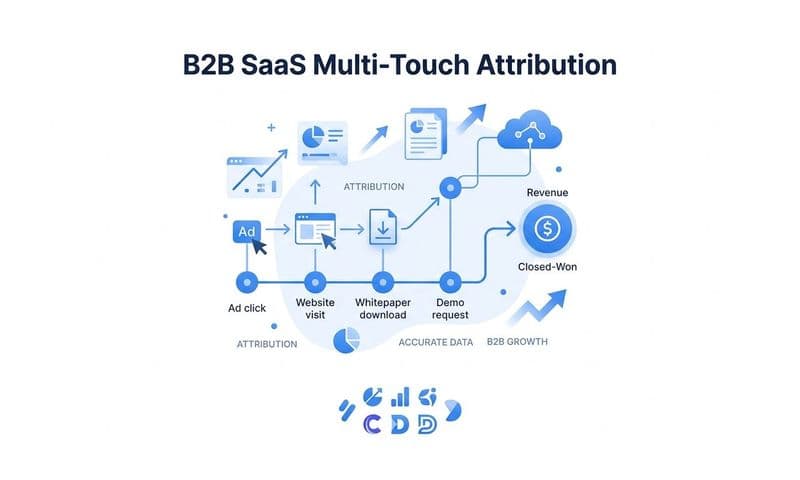
The average ecommerce customer interacts with six to eight touchpoints before making a purchase. They might discover your brand through a Facebook ad, research reviews on Google, check your Instagram profile, visit your site directly, receive an email, and finally convert through a retargeting ad. Each of these interactions happens across different devices, browsers, and sessions.
Traditional tracking tools weren't built for this complexity. Meta's pixel only sees the Facebook and Instagram touchpoints. Google Analytics captures website visits but often can't connect them back to specific ads. Your email platform takes credit for any purchase that happens after someone clicks a newsletter link, regardless of what actually influenced the decision.
The math doesn't add up because everyone's counting the same conversion. If you add up the revenue each platform reports, you'll often see 150% to 200% of your actual sales. This isn't just an accounting problem. It's a strategic disaster. You're potentially investing heavily in channels that look effective because they're good at being last-click, while starving the channels that actually introduce customers to your brand.
Then iOS privacy changes made everything worse. When Apple introduced App Tracking Transparency, it didn't just limit ad targeting. It broke the connection between ad impressions and conversions. A customer could click your Facebook ad on their iPhone, convert on their laptop an hour later, and Facebook would never know the sale happened. Understanding these multi channel tracking problems is the first step toward solving them.
Cookie deprecation compounds the issue. As browsers phase out third-party cookies, the traditional pixels and tags that track cross-site behavior stop working. A visitor who browses your site after clicking a Google ad, leaves, then returns directly to purchase becomes "direct traffic" in your analytics. The Google ad that initiated the journey gets zero credit.
This fragmentation creates blind spots in your data. You can't see which channels work together to drive conversions. You don't know if your Facebook ads are actually closing sales or just retargeting people who already discovered you through organic search. You're flying blind, making million-dollar budget decisions based on incomplete information.
The brands that win in multi channel ecommerce aren't the ones with the biggest budgets. They're the ones who can accurately track customer journeys across every touchpoint and use that data to optimize their entire marketing ecosystem. That's where unified tracking becomes non-negotiable.
How Multi Channel Tracking Actually Works
Server-side tracking fundamentally changes how you capture customer data. Instead of relying on browser-based pixels that can be blocked by ad blockers, privacy settings, or cookie restrictions, server-side tracking solutions for ecommerce capture events directly from your ecommerce platform. When someone makes a purchase, your server sends that conversion data to your analytics and ad platforms directly.
Think of it like this: browser-based tracking is like trying to follow someone through a crowded mall by watching security cameras. You lose them when they go into certain stores, the footage gets grainy, and sometimes cameras just stop working. Server-side tracking is like having a GPS tracker. You see every move, regardless of the environment.
The technical implementation connects your ecommerce platform (Shopify, WooCommerce, BigCommerce) to a tracking server that sits between your store and your marketing tools. When a customer completes an action—adds to cart, initiates checkout, makes a purchase—your server captures that event with complete accuracy and forwards it to Meta, Google, your analytics platform, and your CRM.
But capturing events is only half the equation. The real power comes from persistent identification. This is how tracking systems tie anonymous website visitors to eventual purchases, even across multiple sessions and devices.
Here's how it works: When someone first visits your site, the tracking system assigns them a unique identifier. As they browse, that identifier stays with them. If they click an email link, the system knows it's the same person. If they return days later and make a purchase, the system connects that sale back to their entire journey—the Instagram ad they clicked last week, the Google search they did yesterday, the email they opened this morning.
First-party data collection makes this possible while respecting privacy. Instead of relying on third-party cookies that follow users across the web, you're collecting data about behavior on your own properties. When customers create accounts, sign up for emails, or make purchases, you're building a database of information they've willingly shared with you.
The closed-loop integration is where everything comes together. Your tracking system doesn't just collect data—it shares it back with your ad platforms in a way that improves their performance. When you send accurate conversion data to Meta and Google, including details like purchase value, product categories, and customer lifetime value, their algorithms get smarter about finding similar customers.
This creates a feedback loop. Better data leads to better ad targeting. Better targeting leads to more qualified traffic. More qualified traffic leads to more conversions. More conversions feed more data back to the platforms. The system gets more effective over time instead of degrading as privacy restrictions tighten.
The infrastructure also solves the attribution puzzle by creating a single source of truth. Instead of having five different platforms each claiming credit for the same sale, you have one system that sees the entire customer journey and can intelligently distribute credit based on actual influence rather than arbitrary last-click rules.
Choosing the Right Attribution Model for Your Store
Attribution models are the rules that determine which touchpoints get credit for a conversion. The model you choose shapes how you interpret your data and where you invest your budget. Get it wrong, and you'll optimize for the wrong metrics.
First-touch attribution gives all credit to the channel that introduced the customer to your brand. If someone discovers you through a Facebook ad, researches on Google, and converts through email, Facebook gets 100% of the credit. This model is useful when you're focused on customer acquisition and want to understand which channels are best at generating new interest.
The downside? It completely ignores the channels that nurture consideration and close sales. Your email campaigns and retargeting ads might be doing the heavy lifting, but they'll look worthless in a first-touch model. You might cut budgets from channels that are actually essential to your conversion funnel.
Last-touch attribution does the opposite, giving all credit to the final interaction before purchase. If that same customer journey ends with an email click, email gets 100% of the credit. This model is common because it's simple and aligns with how many platforms report conversions by default.
But last-touch creates its own blind spots. Retargeting ads and email campaigns will always look amazing because they're naturally positioned at the end of the funnel. Meanwhile, the top-of-funnel channels that introduced customers to your brand appear ineffective. You might slash Facebook budgets because "it doesn't drive conversions," not realizing it's filling your retargeting pools with qualified prospects.
Multi-touch attribution distributes credit across all touchpoints in the customer journey. Linear models give equal credit to every interaction. Time-decay models give more credit to touchpoints closer to the conversion. Position-based models emphasize both the first and last touch while giving some credit to middle interactions. Implementing proper attribution modeling for multi channel campaigns reveals insights that single-touch models completely miss.
These models reveal channel interactions that single-touch models miss. You might discover that customers who see both Facebook ads and Google search ads convert at three times the rate of those who only see one channel. This insight could justify increasing budgets on both channels simultaneously rather than trying to pick a "winner."
Data-driven attribution takes this further by analyzing your actual conversion paths to assign credit based on statistical impact. Instead of using arbitrary rules like "give 40% to first touch and 40% to last touch," the algorithm looks at thousands of customer journeys and calculates which touchpoints actually increase conversion probability.
For example, it might discover that customers who interact with Instagram ads are 60% more likely to convert when they also receive an email, but only 20% more likely when they also see a Google search ad. The model adjusts credit accordingly, giving you a more accurate picture of channel value.
Matching your attribution model to your business goals is critical. If you're a new brand focused on customer acquisition, first-touch attribution helps you identify which channels are best at generating awareness. If you're optimizing an established funnel, multi-touch or data-driven models reveal how channels work together. If you're primarily focused on direct response and quick conversions, last-touch might be sufficient.
Most sophisticated ecommerce brands don't rely on a single model. They compare multiple attribution views to understand different aspects of their marketing performance. The key is using attribution to ask better questions about your data, not to find one "true" answer.
Building Your Multi Channel Tracking Stack
Your tracking infrastructure needs to connect every tool in your marketing ecosystem. Start with your ecommerce platform—this is the source of truth for all conversion data. Whether you're on Shopify, WooCommerce, BigCommerce, or another platform, your tracking system needs direct integration to capture purchases, cart additions, and checkout events in real time.
Ad platform integrations come next. You need to send conversion data to Meta, Google, TikTok, and any other platforms where you run campaigns. But this isn't just about reporting what happened. You're feeding data back to their optimization algorithms so they can find more customers like the ones who actually bought. Proper conversion tracking for multiple ad platforms ensures each channel receives accurate data.
The quality of data you send matters enormously. Sending basic "purchase" events helps, but sending enriched events with customer lifetime value, product categories, and margin data helps even more. When Meta knows that a certain type of customer tends to make repeat purchases worth $500 over six months, it can optimize for those high-value customers instead of just optimizing for any purchase.
CRM integration closes the loop between marketing and sales. If you're using Klaviyo, HubSpot, or another CRM, your tracking system should sync customer data bidirectionally. Marketing interactions flow into the CRM to inform email campaigns and customer segmentation. Purchase data and customer lifetime value flow back to your ad platforms to improve targeting.
Analytics tools provide the reporting layer. Whether you use Google Analytics, a dedicated attribution platform, or custom dashboards, you need a place to analyze cross-channel performance and visualize customer journeys. The key is ensuring your analytics tool receives the same accurate, server-side data as your ad platforms—no discrepancies, no gaps.
UTM parameters are the connective tissue that makes all this work. These are the tags you add to campaign URLs to identify traffic sources. But UTM strategies often become a mess as campaigns scale. You end up with inconsistent naming, duplicate parameters, and tracking chaos.
Build a standardized UTM structure from the start. Define consistent naming conventions for sources (facebook, google, email), mediums (social, cpc, email), and campaigns. Use a spreadsheet or URL builder to enforce consistency. When everyone on your team follows the same structure, your data stays clean as you scale. Following best practices for multi channel campaign analysis prevents these common mistakes.
The parameters you track should align with how you analyze performance. At minimum, track source, medium, and campaign. Add content and term parameters when you need to differentiate between ad variations or keywords. Include custom parameters for things like audience segments or promotion codes when relevant.
Conversion event setup goes beyond purchases. Track micro-conversions that indicate buying intent: add-to-cart events, checkout initiations, email signups, product page views for high-value items. These events help ad platforms optimize for users who are likely to convert, even if they don't purchase immediately.
Define events that matter for your specific business model. If you sell subscription products, track trial signups and conversion to paid. If you have a high consideration purchase cycle, track engagement events like video views or review page visits. The goal is giving ad platforms enough signal to optimize effectively, even when conversion volume is low.
Using Unified Data to Scale Profitable Channels
When you can see complete customer journeys, ROAS calculations change dramatically. That Facebook campaign showing a 2x ROAS in Meta's dashboard might actually be 4x when you account for customers who clicked the ad, didn't convert immediately, but came back through organic search or email and purchased. Or it might be 1.5x when you remove the conversions that were actually driven by other channels.
Unified tracking reveals true channel performance by connecting every touchpoint to revenue. You stop making decisions based on platform-reported numbers that are inflated by double-counting and attribution manipulation. Instead, you see which channels actually initiate customer relationships, which ones assist conversions, and which ones close sales. Implementing attribution tracking for ecommerce gives you this complete visibility.
This clarity transforms budget allocation. You might discover that Google search ads have a mediocre last-click ROAS but an excellent first-touch ROAS—they're bringing in new customers who convert through other channels later. That insight could justify increasing Google budgets even though the platform's own reporting suggests otherwise.
Or you might find that email has a fantastic last-click ROAS but rarely initiates new customer relationships. Email is essential for converting existing prospects, but it won't scale your business alone. You need top-of-funnel channels feeding it qualified leads.
The real power comes from feeding accurate conversion data back to ad platforms. When Meta and Google receive complete, enriched conversion data through server-side tracking, their machine learning algorithms get dramatically better at finding high-value customers. They're not optimizing for any purchase anymore. They're optimizing for the purchases that actually came from their platform, with all the context about customer value and behavior.
This creates a compounding advantage. Better data leads to better targeting. Better targeting leads to higher conversion rates. Higher conversion rates generate more data. The feedback loop accelerates over time, giving you an edge over competitors who are still working with fragmented, inaccurate data.
Budget reallocation becomes strategic rather than reactive. Instead of moving money based on this month's last-click conversions, you're investing based on channel roles in your customer acquisition system. You might maintain strong top-of-funnel spend on channels that introduce new customers, even if they don't close sales directly. You balance that with retargeting and email budgets that convert the awareness you've built. Exploring the best multi channel tracking platforms helps you find the right solution for your specific needs.
The goal isn't finding the single best channel. It's building a marketing ecosystem where channels work together, each playing its role in moving customers from awareness to purchase. Unified tracking shows you how those pieces fit together and where to invest for maximum total return.
Putting It All Together: Your Tracking Action Plan
Start with server-side tracking as your foundation. This is the infrastructure that makes everything else possible. Choose a platform that integrates with your ecommerce system and can send data to all your marketing tools. Get it implemented correctly—test that events are firing, data is accurate, and conversions are being captured even when pixels fail.
Layer in attribution modeling once your data collection is solid. Begin with simple multi-touch models to understand how channels interact. As you gather more data, experiment with data-driven attribution to get statistically valid credit distribution. Compare multiple attribution views to develop a complete picture of channel performance.
Use these insights to optimize your marketing spend strategically. Identify channels that work together to drive conversions and invest in those combinations. Feed enriched conversion data back to ad platforms so their algorithms can find more high-value customers. Test budget shifts based on true ROAS rather than platform-reported numbers.
The transformation from fragmented tracking to unified attribution isn't just about better reporting. It's about turning ecommerce marketing from educated guesswork into a data-driven growth engine. When you can see which channels actually drive revenue, which ones work together, and which ones deserve more investment, you stop wasting budget on vanity metrics and start scaling profitably.
Accurate multi channel tracking connects every customer touchpoint to actual revenue. It shows you the complete journey from first impression to purchase and beyond. It feeds better data to ad platforms so they optimize for real results. And it gives you the confidence to make budget decisions that compound your growth instead of just chasing last-click conversions.
Ready to elevate your marketing game with precision and confidence? Discover how Cometly's AI-driven recommendations can transform your ad strategy—Get your free demo today and start capturing every touchpoint to maximize your conversions.