
Your customer sees an Instagram ad on their phone during their morning commute. Later that day, they visit your website on their laptop to browse products. The next weekend, they walk into your physical store and make a purchase. Three touchpoints, one customer journey—but in your analytics dashboard, these look like three completely different people.
This is the reality for most retailers today. Customers move fluidly between channels, but your tracking systems don't. The result? You're making budget decisions based on incomplete data, crediting the wrong channels for conversions, and missing opportunities to optimize campaigns that are actually driving revenue.
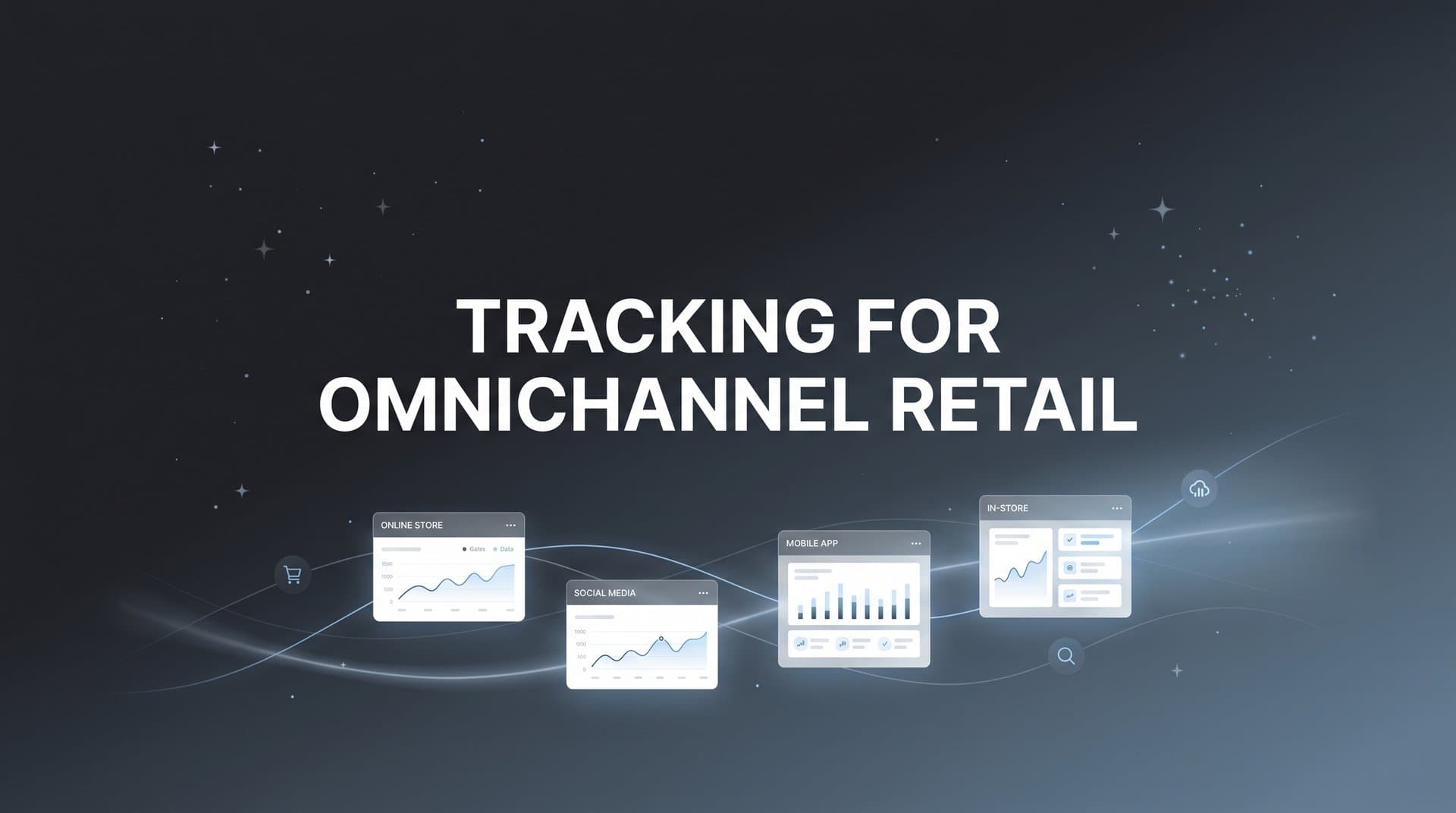
Tracking for omnichannel retail solves this problem by connecting every customer touchpoint into a single, unified view. It shows you the real path from first ad impression to final purchase, whether that sale happens on mobile, desktop, or at the cash register. This guide will walk you through how modern tracking systems work, why they matter for your bottom line, and how to build a tracking infrastructure that reveals what's actually driving conversions across your entire retail ecosystem.
Why Channel Silos Are Costing You More Than You Think
Most retail brands track each channel separately. Google Analytics shows website traffic. Your ad platforms report clicks and conversions. Your point-of-sale system records in-store purchases. Your email platform tracks opens and clicks. Each tool provides valuable data, but none of them talk to each other.
This creates a fundamental problem: you're optimizing each channel in isolation without understanding how they work together. That Instagram ad might not generate direct online sales, but it could be driving significant foot traffic to your stores. Your Google Shopping campaigns might look expensive based on last-click attribution, but they could be the critical research touchpoint that leads to in-store purchases days later.
The gap between siloed data and actual customer behavior has always been challenging, but recent changes have made it worse. Cookie deprecation means you can't track users across websites like you used to. iOS privacy updates have made mobile tracking more complex. Browser restrictions limit how long you can track someone after they click your ad.
These aren't just technical annoyances. They have real business consequences. When you can't connect touchpoints, you misallocate budget. You might cut spending on channels that are actually driving revenue because they don't get credit in your last-click model. You might pour money into channels that look good on paper but aren't contributing to your actual business goals.
The cost shows up in your attribution blind spots. That "direct traffic" in Google Analytics? Much of it is probably coming from your paid campaigns, but the tracking broke somewhere along the way. Those customers who "just found you" likely interacted with multiple marketing touchpoints before converting. Without proper ad tracking for multi-channel retailers, you're flying blind, making optimization decisions based on guesswork rather than data.
The Building Blocks of a Unified Tracking System
Building effective omnichannel tracking starts with understanding the three core components that work together to create a complete view of your customer journey: data collection, identity resolution, and event standardization.
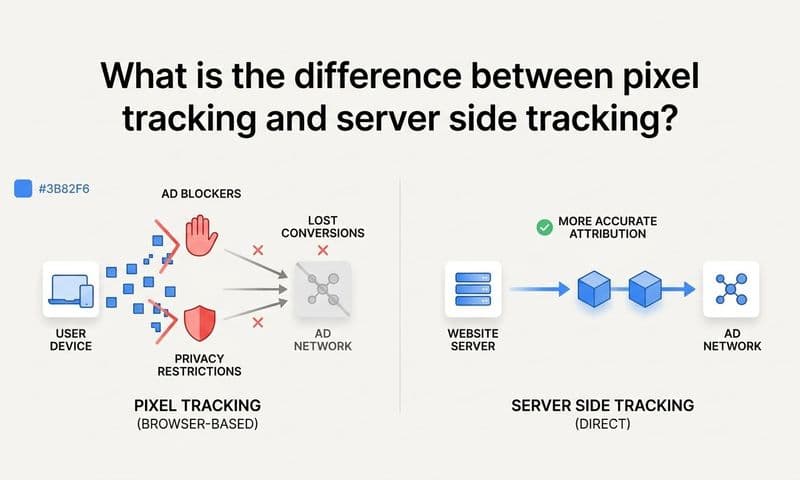
First-Party Data Collection: This is your foundation. You need to capture interaction data directly from your owned channels rather than relying solely on third-party cookies or platform pixels. Website pixels track page views and clicks, but server-side tracking captures the same events from your server, making the data more reliable and less vulnerable to ad blockers or browser restrictions.
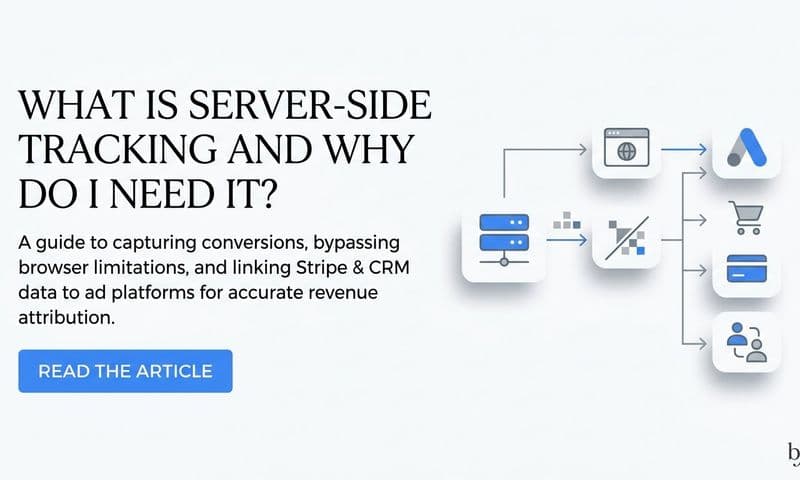
Server-side tracking has become essential in the privacy-first era. When someone visits your site, their browser might block or delete cookies, but server-side events still get recorded. This means you capture a more complete picture of website activity. The data flows from your server directly to your analytics platform and ad networks, bypassing browser limitations entirely.
CRM integration is the other critical piece of data collection. Your CRM holds the most valuable information: customer names, email addresses, purchase history, and lifetime value. When you connect your CRM to your tracking system, you can tie anonymous website sessions to actual customer records. This transforms vague visitor data into actionable insights about who's engaging with your brand and what they're worth.
Identity Resolution: This is where the magic happens. Identity resolution is the process of connecting the dots between anonymous sessions and known customers across multiple devices and channels. When someone browses your site on mobile, then returns on desktop, then visits your store, identity resolution recognizes this as one person, not three separate visitors.
The process typically works through a combination of deterministic and probabilistic matching. Deterministic matching uses concrete identifiers like email addresses or customer IDs. When someone logs into your site or makes a purchase, you can definitively link that session to their customer record. Probabilistic matching uses signals like IP addresses, device fingerprints, and behavioral patterns to make educated guesses about which sessions belong to the same person.
Modern identity resolution systems continuously update as they gather more information. An anonymous mobile session might get connected to a known customer when that person later logs in on desktop. This retroactive linking means you can build increasingly accurate customer journey maps over time.
Event Mapping and Standardization: Different systems track events in different ways. Your ecommerce platform calls it a "purchase." Your POS system calls it a "sale." Your ad platforms each have their own conversion event names. Event mapping creates a common language across all these systems.
You define standard events that matter to your business: product views, add to cart, purchase, store visit, email signup. Then you map how each system reports these events. When your Shopify store records a purchase, your tracking system translates that into a standardized "purchase" event. When your in-store POS system processes a transaction, it also becomes a standardized "purchase" event. Now you can analyze all purchases together, regardless of where they happened.
This standardization extends to the data associated with each event. Purchase events should always include product IDs, revenue amounts, and customer identifiers in the same format. This consistency makes it possible to analyze patterns, compare channels, and feed accurate data back to your ad platforms for optimization. Implementing first-party data tracking for ads ensures you maintain this data quality across all touchpoints.
Bridging the Online-to-Offline Tracking Gap
The hardest tracking challenge in retail is connecting digital advertising to physical store visits and purchases. Someone clicks your Facebook ad, but buys in-store three days later. How do you know the ad drove that sale?
Several methods exist for bridging this gap, each with different implementation requirements and accuracy levels. The key is choosing approaches that fit your retail operations and customer experience.
Loyalty Programs and Customer Matching: This is often the most reliable method. When customers join your loyalty program, they provide their email address or phone number. You can then match in-store purchases (linked to their loyalty account) back to their online advertising interactions (linked to the same email or phone number in your ad platform's customer list).
The process works like this: you upload your customer list to platforms like Meta and Google. When someone in that list sees or clicks your ad, the platform records it. When that same person makes an in-store purchase using their loyalty card, your POS system captures it. Your attribution platform matches the two events together using the email address as the common identifier. Now you know which ads are driving in-store revenue.
The limitation is that this only works for loyalty members. If a significant portion of your in-store sales happen without loyalty identification, you'll have blind spots. But for retailers with strong loyalty programs, this method provides highly accurate attribution data.
QR Codes and Unique Discount Codes: These create a direct connection between digital ads and in-store purchases. Include a unique QR code or discount code in your ads. When customers use them in-store, you can definitively attribute that sale to the specific campaign.
This approach works well for promotional campaigns where offering a discount makes sense. The tracking is simple and accurate. The downside is that it only captures conversions where customers actually use the code. Many people might see your ad, visit your store, and buy without remembering or bothering to use the discount code. You'll undercount the true impact of your advertising.
CRM Matching and Server-Side Tracking: This is where modern tracking systems show their real power. Server-side tracking captures more complete data about website visitors, including those who would normally be missed by browser-based pixels. When you combine this with CRM matching, you can connect online ad interactions to offline purchases even when they happen days or weeks apart.
Here's how it works in practice: someone clicks your Google ad and visits your website. Server-side tracking captures this visit along with the Google click ID, even if their browser blocks cookies. Later, they visit your store and make a purchase. When they provide their email address at checkout (for receipts or loyalty), your POS system records it. Your tracking platform matches the email address from the in-store purchase to the same email address in your CRM, which was previously linked to the website session. The connection is made: this in-store sale was influenced by that Google ad.
This method requires more sophisticated infrastructure, but it captures attribution data that simpler methods miss. You're not relying on customers to remember discount codes or use loyalty cards. You're matching based on identity data that flows through your normal business processes.
Building a Unified View: The most effective approach combines multiple methods. Use loyalty programs for your regular customers, QR codes for specific promotional campaigns, and CRM matching as your baseline attribution method. Together, these create a comprehensive view of which ads and channels are driving foot traffic and in-store revenue. For businesses with multiple storefronts, attribution tracking for multi-location businesses becomes essential for understanding regional performance differences.
The goal isn't perfect attribution for every single sale. That's impossible. The goal is to capture enough attribution data to make informed decisions about where to allocate your advertising budget. If you can accurately attribute 60-70% of your in-store sales to marketing touchpoints, you have far better insight than the 0% attribution most retailers are working with today.
Choosing Attribution Models That Match Your Retail Reality
Once you're capturing omnichannel data, you need to decide how to distribute credit for conversions across multiple touchpoints. This is where attribution modeling comes in. Different models tell different stories about what's working in your marketing mix.
Last-Click Attribution: This is the simplest model and the default in most analytics platforms. The last touchpoint before conversion gets 100% of the credit. If someone clicks a Google ad and immediately purchases, that Google ad gets full credit for the sale.
Last-click works well when your sales cycle is short and simple. If most customers discover your brand and buy in a single session, last-click gives you a clear picture of what's driving conversions. It's also useful for measuring direct response campaigns where you're specifically trying to drive immediate purchases.
The problem with last-click in omnichannel retail is that it ignores everything that happened before the final click. That customer might have seen your Instagram ad last week, clicked a Facebook retargeting ad three days ago, and searched for your brand name before clicking the Google ad that gets the credit. Last-click makes it look like Google is your hero channel when really it's just capturing demand that your other channels created.
First-Click Attribution: This model gives all credit to the first touchpoint in the customer journey. It answers the question: what initially brought this customer into our ecosystem?
First-click is valuable for understanding awareness and discovery. It helps you identify which channels are good at introducing new customers to your brand. If you're focused on customer acquisition and want to know which campaigns are bringing in new prospects, first-click provides useful insights.
The limitation is that it ignores everything that happens after that initial interaction. A customer might discover you through an Instagram ad but need multiple retargeting touches and email campaigns before they're ready to buy. First-click gives Instagram all the credit while ignoring the nurturing that actually closed the sale.
Multi-Touch Attribution: These models distribute credit across multiple touchpoints in the customer journey. Linear attribution gives equal credit to every touchpoint. Time-decay attribution gives more credit to recent interactions. Position-based attribution emphasizes the first and last touchpoints while giving some credit to middle interactions.
Multi-touch models provide a more nuanced view of how channels work together. You can see that Instagram drives awareness, Google captures search intent, and email nurtures consideration. Each channel plays a role, and each gets appropriate credit. Understanding marketing attribution for omnichannel retail helps you select the right model for your specific business needs.
For omnichannel retail with longer consideration cycles, multi-touch attribution often provides the most actionable insights. Customers typically interact with multiple channels before buying. Multi-touch models help you understand the full journey and optimize each stage appropriately.
The challenge with multi-touch attribution is choosing which model to use and how to interpret the results. Different models can lead to different conclusions about which channels are most valuable. The key is to pick a model that aligns with your business goals and stick with it for consistent measurement over time.
AI-Powered Attribution: Modern attribution platforms use machine learning to analyze patterns across thousands of customer journeys and determine which touchpoints actually influence conversions. Instead of applying a predetermined rule (like "last click gets credit"), AI attribution looks at what happens in successful customer journeys versus unsuccessful ones.
AI can surface insights that rule-based models miss. It might discover that customers who see a certain combination of touchpoints are far more likely to convert, or that certain channels are particularly effective at moving customers from awareness to consideration. These insights help you optimize your channel mix and budget allocation based on what actually drives results.
For complex omnichannel retail journeys with many possible paths to purchase, AI attribution provides clarity that simpler models can't match. It helps you understand not just which channels get credit, but how different channels work together to drive conversions.
From Data to Decisions: Optimizing Ad Spend with Omnichannel Insights
Tracking data is only valuable if you use it to make better decisions. The real power of omnichannel tracking shows up when you translate unified customer journey data into smarter budget allocation and campaign optimization.
Identifying True Performance Across Channels: With complete tracking in place, you can finally see which channels and campaigns are actually driving revenue. Compare performance not just on clicks or website conversions, but on total revenue including in-store sales. You might discover that channels you thought were underperforming are actually your biggest revenue drivers once you account for offline conversions.
This often reveals surprising insights. Display ads might generate few direct online purchases but drive significant in-store traffic. Instagram might look expensive on a last-click basis but be incredibly effective at starting customer journeys that lead to high-value purchases. Email might not get credit for many "last clicks" but be essential for nurturing customers through the consideration phase. Implementing cross-platform tracking for retail helps you uncover these hidden performance patterns.
Use these insights to rebalance your budget toward channels that drive real business results, not just the ones that look good in limited tracking data. If you discover that YouTube ads are driving 30% of your in-store revenue but only getting 10% of your budget, you have a clear optimization opportunity.
Feeding Better Data to Ad Platform Algorithms: Modern ad platforms like Meta and Google use machine learning to optimize your campaigns automatically. But their algorithms are only as good as the conversion data you feed them. If you're only sending online purchase events to Meta, its algorithm optimizes for online purchases. It doesn't know about the in-store sales it's driving.
When you feed enriched conversion data back to ad platforms, you dramatically improve their optimization capability. Send both online and offline conversions to Meta. Include purchase values so the algorithm can optimize for revenue, not just conversion volume. Pass back customer lifetime value data so platforms can find more high-value customers.
This creates a powerful feedback loop. Your attribution platform captures conversions across all channels. It sends that complete conversion data to your ad platforms. The ad platform algorithms use this richer data to find better audiences and optimize delivery. Campaign performance improves. You capture even more conversions. The cycle continues.
The improvement can be substantial. When ad platforms can see the full picture of what drives conversions, they make better automated decisions about who to show ads to, when to show them, and how much to bid. You're essentially upgrading the intelligence of your campaign optimization.
Scaling with Confidence: One of the biggest challenges in paid advertising is knowing when to scale. Should you increase budget on a campaign that's performing well? How much can you scale before returns diminish?
Omnichannel tracking gives you the confidence to scale because you can see the complete revenue picture. When you know a campaign is driving both online and offline sales, you can calculate true ROAS and make informed decisions about budget increases. You're not guessing whether a campaign is profitable. You're seeing the full revenue it generates across all channels.
This visibility also helps you identify which campaigns have room to scale versus which are already at peak efficiency. A campaign might be performing well at current spend levels but show diminishing returns when you test budget increases. Another campaign might have untapped potential that only becomes visible when you can see its full impact on offline conversions. Using ad performance tracking across platforms gives you the complete picture needed for confident scaling decisions.
Use your unified data to test budget allocation changes systematically. Increase spend on high-performing campaigns while monitoring total revenue impact. Cut budget from campaigns that don't drive meaningful results even when you account for all touchpoints. Make these decisions based on complete data, not partial visibility.
Building Your Tracking Infrastructure: A Step-by-Step Approach
Step 1: Audit Your Current Tracking: Start by documenting what you're tracking today and where the gaps are. List all your marketing channels and conversion points. Map out your current tracking setup for each one. Identify where you have blind spots.
Common gaps include: no connection between online ads and in-store sales, limited cross-device tracking, missing server-side tracking, no CRM integration with ad platforms, incomplete event tracking on your website, and lack of standardized conversion definitions across systems.
This audit gives you a baseline and helps prioritize what to fix first. Focus on the gaps that represent the most revenue or the biggest optimization opportunities.
Step 2: Implement Server-Side Tracking: Browser-based tracking alone isn't enough anymore. Set up server-side tracking to capture events that browser pixels miss. This requires technical implementation but provides significantly more reliable data.
Server-side tracking works by sending event data from your web server to your analytics and advertising platforms, rather than relying on JavaScript code in the user's browser. This bypasses ad blockers, cookie restrictions, and browser privacy features that interfere with traditional tracking. A dedicated first-party data tracking platform can simplify this implementation significantly.
Start with your most important conversion events: purchases, add to cart, and lead submissions. Implement server-side tracking for these events first, then expand to other interactions as your infrastructure matures.
Step 3: Integrate Your CRM: Connect your CRM system to your tracking platform and ad networks. This enables identity resolution and offline conversion tracking. Upload your customer lists to ad platforms so they can match ad interactions to known customers.
Set up automated data flows so new customers and updated information sync regularly. When someone makes a purchase in-store or updates their information, that data should flow into your tracking system and ad platforms without manual intervention.
This integration is critical for connecting online advertising to offline conversions. It's the bridge that makes omnichannel attribution possible.
Step 4: Standardize Event Definitions: Create a data specification that defines exactly what each conversion event means and what data should be included. Document this clearly and ensure all systems follow the same definitions.
For example, define "purchase" as any completed transaction, whether online or in-store, with required fields including: transaction ID, revenue amount, product IDs, customer identifier, and timestamp. Then configure all your systems (ecommerce platform, POS, mobile app) to send purchase events in this standardized format.
Standardization takes upfront effort but pays dividends in data quality and analysis capability. When events are defined consistently, you can trust your reports and make confident decisions. For retailers running campaigns across multiple channels, conversion tracking for multi-channel retailers provides a framework for this standardization.
Step 5: Test and Validate: Don't assume your tracking is working correctly. Test it systematically. Make test purchases through different channels. Click test ads and verify the data flows through correctly. Check that conversions are being recorded and attributed properly.
Common implementation issues include: events firing multiple times, missing data fields, incorrect attribution of test conversions, and delays in data syncing between systems. Catch these problems in testing before they corrupt your production data.
Set up ongoing monitoring to alert you when tracking breaks. If conversion volume suddenly drops or data stops flowing from a particular source, you want to know immediately, not weeks later when you're analyzing campaign performance.
Avoiding Common Pitfalls: Many retailers make predictable mistakes when implementing omnichannel tracking. Don't try to build everything at once. Start with core functionality and expand over time. Don't ignore data quality issues. Bad data is worse than no data because it leads to wrong decisions. Don't forget about data privacy and compliance. Make sure your tracking implementation respects customer privacy and follows regulations like GDPR.
Also, don't expect perfect attribution. Some customer journeys will remain unmeasurable. The goal is to capture enough data to make better decisions, not to track every single interaction with 100% accuracy.
Measuring Success: Track these metrics to evaluate your omnichannel tracking implementation: attribution coverage (what percentage of conversions can you attribute to marketing touchpoints), data accuracy (how often tracked events match reality), cross-device match rate (how many customer journeys can you connect across devices), and revenue visibility (what percentage of total revenue you can see in your attribution platform).
As these metrics improve, you should see corresponding improvements in campaign performance and ROAS. Better tracking leads to better optimization, which leads to better results.
Your Next Steps Toward Complete Revenue Visibility
Tracking for omnichannel retail isn't just a technical upgrade. It's a fundamental shift in how you understand your marketing performance and make budget decisions. When you can see the complete customer journey from first ad impression to final purchase across all channels, you stop guessing and start optimizing based on what actually drives revenue.
The retailers who invest in unified tracking gain a significant competitive advantage. They know which campaigns are working. They can feed better data to ad platform algorithms. They scale confidently because they see the full picture. Meanwhile, competitors stuck with siloed channel data continue to misallocate budgets and miss optimization opportunities.
Start by auditing your current tracking setup. Identify your biggest blind spots. Then prioritize implementations that will give you the most valuable insights. For most retailers, that means connecting online advertising to in-store conversions and implementing server-side tracking to capture more complete data.
The technical implementation requires effort, but the payoff is substantial. Better tracking means better optimization. Better optimization means higher ROAS. Higher ROAS means more profitable growth. It's that straightforward.
Ready to elevate your marketing game with precision and confidence? Discover how Cometly's AI-driven recommendations can transform your ad strategy—Get your free demo today and start capturing every touchpoint to maximize your conversions.