
You check your Facebook Ads Manager and see 10 conversions from yesterday's campaign. Not bad. Then you open your CRM and count 25 actual sales that came from Facebook traffic in the same period. Wait—what?
This isn't a glitch in your CRM. It's not a tracking error on your end. It's underreported conversions, and it's happening in nearly every Facebook ad account right now.
Since Apple's iOS 14.5 update introduced App Tracking Transparency in 2021, the gap between what Facebook can see and what's actually happening has grown into a canyon. Facebook Ads Manager shows you a fraction of your real results, and that incomplete picture is costing you money. When you can't see the full impact of your campaigns, you make budget decisions based on bad data. You pause winners. You scale losers. You leave revenue on the table.
This is both a measurement problem and a strategic problem. The good news? It's solvable. In this guide, we'll break down exactly why Facebook misses so many conversions, how to identify the gap in your own account, and the practical solutions that give you an accurate view of what's really working. Let's fix your data.
The Hidden Gap Between Facebook Data and Real Results
Underreported conversions are the difference between what Facebook Ads Manager displays and the actual conversions happening from your Facebook traffic. It's the invisible gap between perceived performance and reality.
Here's the core mechanism: Facebook can only report conversions it can track and attribute. When someone clicks your ad, Facebook's pixel fires on your website to track their behavior. If they convert, the pixel sends that data back to Facebook, and it shows up in your Ads Manager dashboard. Simple enough.
But what happens when the pixel doesn't fire? What if the browser blocks it? What if the user opted out of tracking? What if they converted on a different device three days later, outside your attribution window?
Those conversions still happened. Your business still made the sale. But Facebook never saw them, so they don't appear in your reporting. From Facebook's perspective, those conversions don't exist.
This creates what we call the attribution gap—the space between what Facebook reports and what actually occurred. And this gap isn't small. Many advertisers discover their actual conversion numbers are 40% to 60% higher than what Facebook shows. Some see even wider gaps depending on their customer journey length and target audience's privacy settings.
Why does this matter so much? Because Facebook's algorithm optimizes based on the data it receives. When it only sees half your conversions, it's making decisions with half the information. It doesn't know which ads are truly winning. It can't build accurate lookalike audiences. It struggles to identify the right people to target next.
And you? You're making budget decisions based on incomplete metrics. You might kill a campaign that's actually driving significant revenue because Facebook's reporting makes it look like a loser. Or you might scale a campaign that appears successful in Ads Manager but is actually underperforming when you look at the full picture.
The attribution gap isn't just a reporting inconvenience. It's a strategic blindspot that affects every decision you make about your Facebook advertising. Understanding it is the first step to fixing it.
Why Facebook Misses So Many Conversions
The underreporting problem didn't appear overnight. It's the result of multiple privacy changes that have fundamentally altered how tracking works across the digital advertising ecosystem. Let's break down each factor.
iOS App Tracking Transparency: When Apple released iOS 14.5 in April 2021, everything changed. The App Tracking Transparency (ATT) framework requires apps to ask users for permission before tracking their activity across other companies' apps and websites. Most users opted out.
This means Facebook can no longer follow iOS users across different apps and websites the way it used to. When someone sees your ad on Instagram, clicks through to your website, and converts, Facebook often can't connect those dots anymore if they're using an iPhone and opted out of tracking. The conversion happened, but Facebook's visibility is blocked. Understanding post-iOS 14 Facebook advertising strategies is essential for navigating this landscape.
Browser Privacy Features: It's not just iOS. Safari's Intelligent Tracking Prevention (ITP) has been limiting third-party cookies since 2017, with increasingly aggressive updates. Firefox's Enhanced Tracking Protection (ETP) blocks known trackers by default. Even Chrome, which has historically been more permissive, is phasing out third-party cookies.
These browser-level protections prevent Facebook's pixel from setting persistent cookies or tracking users across different websites. When your pixel can't fire properly, conversions go unreported. The user converted, but the browser blocked the tracking mechanism that would have told Facebook about it.
Shortened Attribution Windows: Facebook used to offer a 28-day click attribution window, meaning they'd count conversions that happened up to 28 days after someone clicked your ad. After the iOS 14.5 update, this was reduced to a 7-day click window and a 1-day view window.
If your customer journey takes longer than seven days—and many B2B sales cycles, high-consideration purchases, and complex products do—Facebook won't attribute those conversions even if it could technically track them. The conversion falls outside the window, so it doesn't count in your reporting.
This particularly impacts businesses with longer sales cycles. A software company might nurture leads for weeks before they convert to a paid plan. An e-commerce brand selling furniture might see customers research for days or weeks before purchasing. Facebook's shortened windows miss these delayed conversions entirely.
Cross-Device Conversion Challenges: People don't live on a single device anymore. Someone might see your ad on their iPhone during their morning commute, research on their iPad in the evening, and finally purchase on their laptop the next day.
Facebook used to be pretty good at connecting these cross-device journeys through logged-in user data. But with ATT and browser restrictions limiting their ability to track users across devices and platforms, many of these cross-device conversions now go unattributed. Facebook sees the ad click on mobile but never connects it to the desktop conversion.
Ad Blockers and VPNs: A growing number of users run ad blockers or VPNs that prevent tracking scripts from loading at all. When someone uses an ad blocker, your Facebook pixel might never fire, even on a browser and device that would otherwise allow it.
VPNs mask user IP addresses and locations, making it harder for Facebook to identify and track individual users. These tools are increasingly common, especially among privacy-conscious users and professionals in certain industries.
The result of all these factors combined? Facebook is operating with partial visibility. It's trying to optimize your campaigns and report your results while seeing only a fraction of what's actually happening. That's why the gap exists, and why it's so significant.
How to Identify Your True Conversion Gap
You can't fix what you can't measure. Before implementing solutions, you need to understand the size of your attribution gap. Here's how to calculate it.
Compare Facebook Data Against Your Source of Truth: Your CRM, e-commerce backend, or sales database is your source of truth. It knows every actual conversion that happened, regardless of whether Facebook tracked it.
Pull a report from Facebook Ads Manager for a specific time period—say, the last 30 days. Note the total number of conversions Facebook reported. Then pull the same data from your CRM or backend system, filtering for conversions that came from Facebook traffic specifically.
The difference between these two numbers is your attribution gap. If Facebook shows 100 conversions but your CRM shows 160 conversions from Facebook traffic, you have a 60% underreporting rate. Facebook is only seeing 62.5% of your actual results.
Use UTM Parameters for Secondary Tracking: UTM parameters are tags you add to your ad URLs that help analytics platforms identify traffic sources. They look like this: yoursite.com/product?utm_source=facebook&utm_medium=cpc&utm_campaign=spring_sale
When you use consistent UTM parameters on all your Facebook ads, Google Analytics (or your analytics platform of choice) can track conversions from Facebook traffic independently of Facebook's pixel. This creates a secondary data layer that often captures conversions Facebook missed. Be aware that Google Analytics vs Facebook analytics discrepancy is common and expected.
Set up conversion tracking in Google Analytics for your key actions—purchases, leads, sign-ups, whatever matters for your business. Then compare the conversions Google Analytics attributes to Facebook against what Facebook Ads Manager reports. The GA number will typically be higher, though still not complete since GA also faces tracking limitations.
Calculate Your Underreporting Multiplier: Once you know the gap, you can create a practical multiplier for decision-making. If Facebook consistently reports 60% of your actual conversions, your multiplier is 1.67 (divide actual conversions by reported conversions: 160 ÷ 100 = 1.67).
This multiplier becomes a planning tool. When Facebook shows 50 conversions from a new campaign, you can estimate the real number is closer to 83. When you're deciding whether to scale, you're working with more realistic performance data.
Track this multiplier over time. It might change as you implement better tracking solutions, as privacy policies evolve, or as your customer mix shifts. Recalculate it monthly to maintain accuracy.
Segment by Device and Audience: Not all traffic experiences the same level of underreporting. iOS users typically have higher underreporting rates than Android users due to ATT. Desktop conversions might be more accurately tracked than mobile.
Break down your analysis by device type and see where the biggest gaps exist. This helps you understand which segments are most affected and where tracking improvements will have the biggest impact.
Understanding your attribution gap is the foundation. It tells you how serious the problem is in your specific account and gives you a baseline to measure improvement against as you implement solutions.
Server-Side Tracking: The Foundation for Accurate Data
If browser-based tracking is broken, the solution is to bypass the browser entirely. That's exactly what server-side tracking does.
Traditional Facebook pixel tracking happens in the user's browser. The pixel is a piece of JavaScript code that loads when someone visits your website. It fires events—page views, add to carts, purchases—and sends that data directly from the user's browser to Facebook's servers.
The problem? Browsers can block it. Ad blockers can stop it. Privacy settings can prevent it. The pixel is vulnerable to every privacy protection we discussed earlier.
How Server-Side Tracking Works: Server-side tracking flips this model. Instead of relying on the user's browser to send data to Facebook, your server sends the data directly. When a conversion happens, your backend system captures it and sends a conversion event to Facebook through a secure server-to-server connection.
The user's browser isn't involved in the tracking process. Ad blockers can't stop it. Safari's ITP doesn't affect it. iOS privacy settings don't block it. It's a direct line from your server to Facebook's API.
This dramatically improves data accuracy. Conversions that would have been invisible with pixel-only tracking now get reported because they're captured at the server level where browser restrictions don't apply.
Facebook's Conversions API: Facebook built the Conversions API (CAPI) specifically to enable server-side tracking. It's a tool that lets you send web events from your server directly to Facebook, creating a more reliable and privacy-compliant way to share conversion data. For a complete walkthrough, see our guide to Facebook Conversion API setup.
CAPI works alongside your Facebook pixel, not instead of it. The pixel still fires in browsers where it can, capturing client-side data. CAPI fills in the gaps by sending server-side data for conversions the pixel missed. Together, they create redundant tracking that captures far more of your actual conversion activity.
When both the pixel and CAPI send the same conversion event, Facebook deduplicates them using event IDs, so you don't double-count. But when the pixel is blocked and only CAPI fires, that conversion still gets reported. This redundancy is the key to closing the attribution gap.
Benefits Beyond Bypassing Restrictions: Server-side tracking isn't just about avoiding browser limitations. It also lets you send richer, more detailed conversion data to Facebook.
With pixel-only tracking, you're limited to what the browser knows—mostly front-end events and basic user information. With server-side tracking, you can send backend data like customer lifetime value, subscription tier, product margins, or any other business metric your server knows about.
This enriched data helps Facebook's algorithm understand the quality of conversions, not just the quantity. It can optimize for high-value customers instead of just any conversion. The result is better targeting, improved lookalike audiences, and more efficient ad delivery.
Server-side tracking is the technical foundation that makes accurate attribution possible in the post-iOS 14.5 world. It's not optional anymore—it's essential infrastructure for any serious Facebook advertiser.
Feeding Better Data Back to Facebook's Algorithm
Here's where the underreporting problem becomes truly expensive: it's not just about what you can see in your reports. It's about what Facebook's algorithm can see when it's trying to optimize your campaigns.
Facebook's ad delivery system is a machine learning algorithm. It learns from the conversion signals it receives, then uses that learning to find more people likely to convert. When you run a conversion campaign, Facebook is constantly testing different audiences, placements, and creative combinations to figure out what drives results.
Garbage In, Garbage Out: When Facebook only sees half your conversions, it's learning from incomplete data. It thinks certain audiences aren't converting when they actually are. It believes some ads are underperforming when they're crushing it. The algorithm is making optimization decisions based on false signals.
This creates a compounding problem. Incomplete conversion data leads to worse targeting decisions. Worse targeting leads to fewer visible conversions. Fewer conversions provide even less data for the algorithm to learn from. The quality of your campaigns degrades over time as the algorithm optimizes toward the wrong goals.
Think about lookalike audiences. Facebook builds them by analyzing the characteristics of your converters and finding similar people. But if Facebook only knows about 60% of your actual converters, it's building lookalikes from an incomplete and potentially skewed sample. The iOS users who opted out of tracking might have different characteristics than the Android users who didn't. Your lookalike audience is biased toward the trackable segment, missing potentially valuable audience segments entirely.
The Power of Complete Conversion Data: When you implement server-side tracking and send comprehensive conversion data back to Facebook, the algorithm suddenly has a complete picture. It can see all the conversions, not just the trackable ones. It learns the true patterns of what drives results. Learning how to sync conversions to Facebook Ads properly is critical for this process.
This improved learning translates directly into better campaign performance. Facebook can build more accurate lookalike audiences because it's analyzing your entire customer base, not just the visible fraction. It can optimize delivery more effectively because it knows which ads and placements are actually converting, even when the pixel didn't fire.
Retargeting becomes more powerful too. When Facebook knows everyone who visited your site or added to cart—not just the users it could track with the pixel—it can build larger, more complete retargeting pools. Larger pools mean more opportunities and better performance.
Conversion Quality Signals: It's not just about quantity of conversion data. The quality and richness of the data matters too. When you send server-side events, you can include additional parameters that help Facebook understand conversion value.
Send the actual purchase amount, not just that a purchase occurred. Send customer lifetime value predictions. Send product categories or subscription tiers. This context helps Facebook's algorithm optimize for valuable conversions, not just any conversion.
A customer who spends $500 is more valuable than one who spends $20, but if Facebook only knows that both "purchased," it treats them equally. When you send value data, the algorithm can prioritize finding more high-value customers. Over time, this shifts your entire customer acquisition toward better economics.
The relationship between accurate conversion data and campaign performance is direct and measurable. Better data in means better results out. This is why solving the underreporting problem isn't just about reporting accuracy—it's about unlocking better performance from your ad spend.
Building a Complete Attribution Picture
Facebook doesn't exist in a vacuum. Your customers see ads across multiple platforms, search for your brand on Google, get retargeted on different websites, and receive email campaigns. Facebook might play a role in the conversion, but it's rarely the only touchpoint.
This is where attribution models matter. They determine how you assign credit for conversions across different marketing channels and touchpoints.
Last-Click Attribution's Blind Spots: Facebook Ads Manager uses last-click attribution by default. If someone clicked your Facebook ad and converted within the attribution window, Facebook gets 100% of the credit for that conversion—even if the customer had previously seen your Google ad, visited from organic search, and received three marketing emails.
Last-click attribution systematically undervalues upper-funnel and mid-funnel touchpoints. Facebook ads that introduce people to your brand get no credit if the final conversion happens through a different channel. This makes awareness and consideration campaigns look like they're not working, even when they're essential to your overall conversion path.
The opposite problem exists too. Facebook might get credit for conversions it barely influenced. Someone who was already planning to buy, saw your brand mentioned in an article, searched for you directly, and happened to click a retargeting ad right before purchasing gives Facebook full credit under last-click attribution.
Multi-Touch Attribution: Multi-touch attribution solves this by distributing credit across all the touchpoints in a customer's journey. Different models weight touchpoints differently—linear gives equal credit to all, time-decay gives more credit to recent touchpoints, position-based emphasizes first and last touch.
When you analyze Facebook's performance through a multi-touch lens, you get a more accurate picture of its actual contribution. You might discover that Facebook is excellent at introducing new customers but weak at closing them, suggesting you should pair Facebook awareness campaigns with strong email nurture sequences. Or you might find that Facebook retargeting is the critical final push that converts customers who discovered you elsewhere.
Understanding Facebook's true role in your marketing mix helps you allocate budget more effectively across channels. You stop making decisions based on siloed platform reporting and start optimizing for total business outcomes. Using the best attribution tool for Facebook Ads makes this analysis significantly easier.
Connecting Your Data Sources: Building this complete attribution picture requires connecting multiple data sources. Your Facebook ad data, Google Analytics, CRM conversions, email platform data, and any other marketing tools need to flow into a unified system.
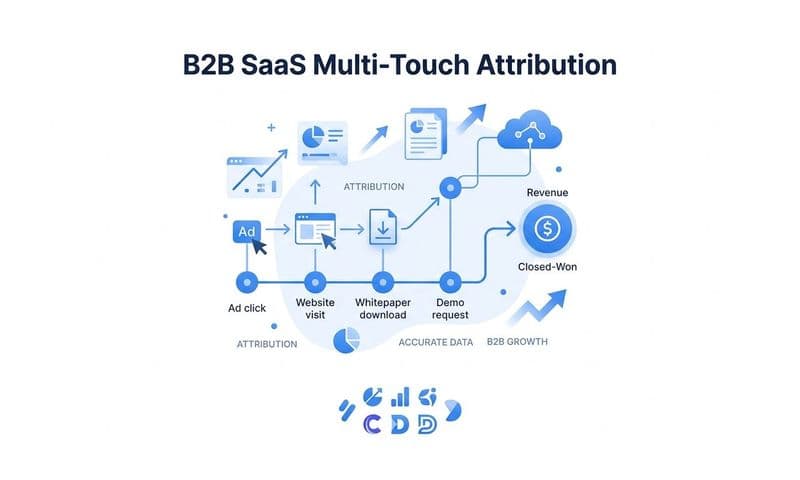
This is where marketing attribution platforms become essential. They collect data from all your marketing channels, match users across touchpoints, and apply attribution models to show you the complete customer journey. You can see exactly how Facebook ads interact with other channels to drive conversions.
Cometly captures every touchpoint—from ad clicks to CRM events—providing a complete, enriched view of every customer journey. This comprehensive tracking addresses the core underreporting problem by ensuring no conversion falls through the cracks, regardless of browser restrictions or privacy settings.
With unified attribution data, you can make confident scaling decisions. When you know Facebook's true contribution to revenue—not just what Facebook Ads Manager shows—you can allocate budget based on actual ROI rather than incomplete metrics. You can identify which campaigns genuinely drive results across the full funnel, and which ones only look good in isolated platform reporting.
The goal isn't to replace Facebook's reporting—it's to enhance it with additional context that shows the complete picture. When you combine accurate Facebook conversion tracking with multi-touch attribution, you finally have the data foundation needed to optimize your entire marketing strategy effectively.
Moving Forward With Confidence
Underreported conversions aren't a sign that Facebook ads are failing. They're a measurement problem, and measurement problems have solutions.
The gap between what Facebook reports and what's actually happening in your business is real, significant, and fixable. When you understand why it exists—privacy changes, browser restrictions, shortened attribution windows—you can take targeted action to close it.
Start by identifying your specific attribution gap. Compare Facebook's reporting against your source of truth. Calculate your underreporting rate so you understand the magnitude of the problem in your account. This baseline tells you how much revenue visibility you're currently missing.
Implement server-side tracking through Facebook's Conversions API. This is the technical foundation that bypasses browser limitations and captures conversions the pixel misses. It's not a nice-to-have anymore—it's essential infrastructure for accurate Facebook advertising in 2026.
Feed that complete conversion data back to Facebook's algorithm. Better data improves targeting, enhances lookalike audiences, and makes your campaigns more effective over time. The relationship between data quality and campaign performance is direct and measurable.
Build a unified attribution view that shows Facebook's true role in your marketing mix. Multi-touch attribution reveals how Facebook ads work together with other channels to drive conversions, helping you make smarter budget allocation decisions across your entire marketing strategy.
When you solve the underreporting problem, you gain something more valuable than accurate dashboards—you gain confidence. Confidence to scale campaigns that are actually working. Confidence to optimize based on real performance data. Confidence to make strategic decisions that drive business growth rather than guessing based on incomplete metrics.
The advertisers who solve this problem gain a competitive advantage. While others pause winning campaigns because Facebook's reporting makes them look weak, you'll be scaling with confidence. While others waste budget on campaigns that only appear successful in isolated platform reporting, you'll optimize for true business outcomes.
Ready to elevate your marketing game with precision and confidence? Discover how Cometly's AI-driven recommendations can transform your ad strategy—Get your free demo today and start capturing every touchpoint to maximize your conversions.