You're running Facebook ads, Google campaigns, and email sequences. Leads are flowing in. Revenue is happening. But when you pull up your dashboards, the story doesn't add up. Facebook claims credit for conversions that Google says came from search. Your email platform shows opens and clicks, but you can't connect them to actual purchases. And somewhere in that maze of disconnected data, you're making budget decisions based on incomplete information.
This is the reality for most marketers today. You're not flying blind exactly—you have data. Lots of it. The problem is that your data lives in silos, each platform telling you a different story about the same customer. You can't see the complete journey from first ad impression to final purchase, which means you can't confidently answer the most important question in marketing: what's actually working?
Customer journey mapping solves this problem by connecting every touchpoint a prospect has with your brand into a single, coherent view. It's not just a visual exercise or a strategy workshop deliverable—it's the foundation for data-driven marketing decisions. When you understand the complete customer journey, you stop guessing which campaigns to scale and start making decisions based on what actually drives revenue.
The Anatomy of a Modern Customer Journey
Customer journey mapping is the visual and data representation of every interaction a prospect has with your brand across all channels. It captures the full story—from the moment someone first sees your ad to the point where they become a paying customer and beyond.
Think of it like connecting the dots in a complex puzzle. Each dot represents a touchpoint: a Facebook ad click, a website visit, an email open, a demo request, a conversation with sales. When you map these touchpoints in sequence, patterns emerge. You start to see which combinations of interactions lead to conversions and which paths end in dead ends.
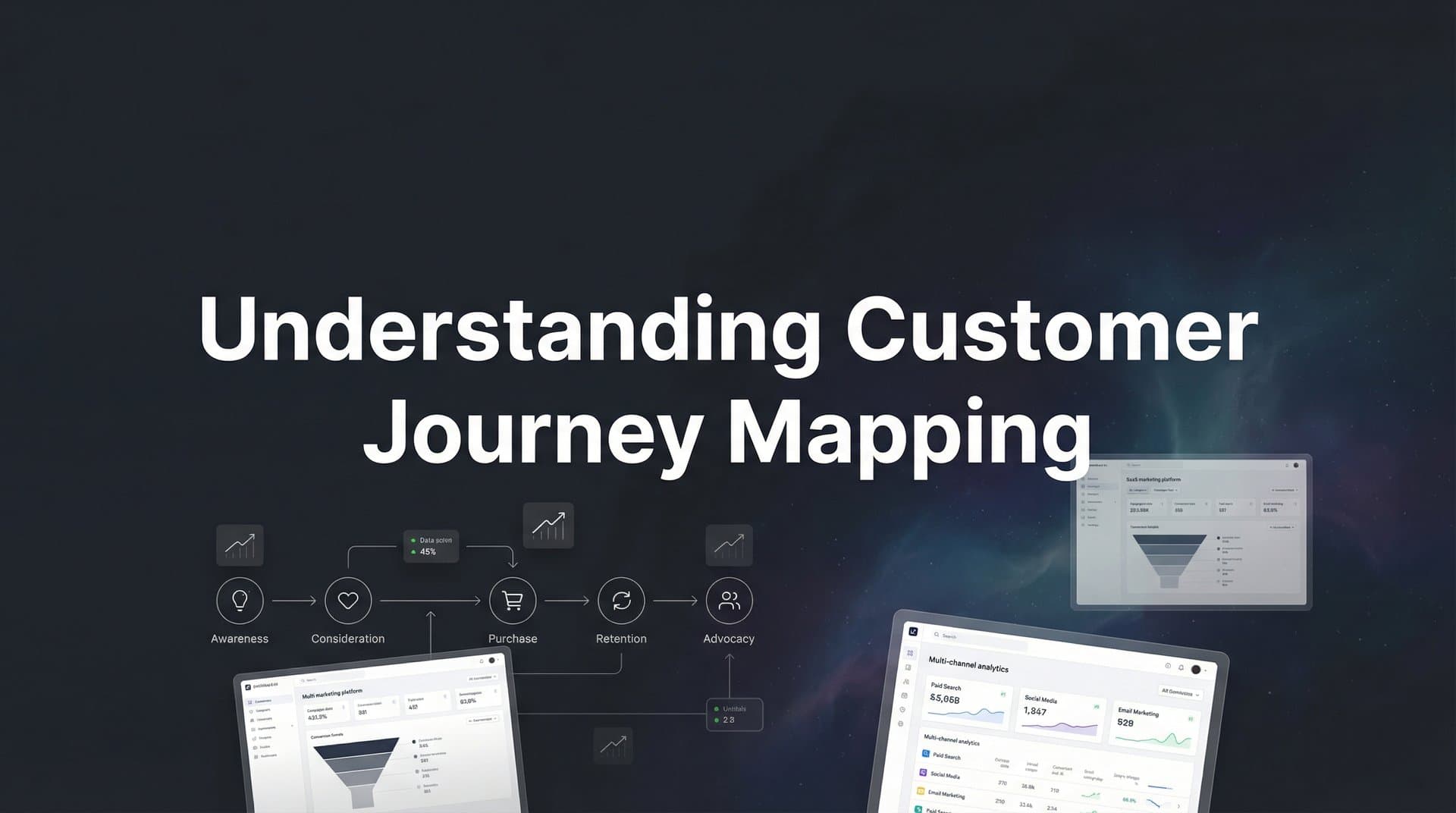
Traditional journey models break the customer path into distinct stages: awareness, consideration, decision, and post-purchase. During awareness, prospects discover your brand through ads, content, or referrals. In consideration, they're evaluating whether your solution fits their needs—visiting your website, reading reviews, comparing options. The decision stage is where they're ready to convert, influenced by final touchpoints like retargeting ads or sales conversations. Post-purchase covers everything that happens after they buy, from onboarding to retention campaigns. Understanding these customer journey stages is essential for building effective marketing strategies.
But here's where it gets complicated. Modern customer journeys don't follow neat linear paths. A prospect might see your Instagram ad on their phone during their morning commute, research your product on their laptop at work, click a retargeting ad on their tablet that evening, and finally convert on their desktop the next day. That's four devices, multiple sessions, and several days between first touch and conversion.
Layer in the reality of multi-channel marketing, and the complexity multiplies. The same person might interact with your brand through paid search, organic social, email marketing, display ads, and direct website visits—all before making a purchase decision. Each of these customer journey touchpoints plays a role in moving them forward, but traditional tracking methods struggle to connect them to the same individual.
This is why linear journey models fail in today's advertising landscape. The old funnel concept—where customers move predictably from awareness to consideration to decision—doesn't reflect how people actually make buying decisions anymore. Real journeys are messy. They loop back. They pause for weeks. They involve multiple stakeholders and countless micro-interactions across platforms you might not even be tracking.
Understanding this complexity is the first step toward building a journey map that actually reflects reality. You can't optimize what you can't see, and you can't see the full journey if you're only looking at individual platform data. The goal is to capture every meaningful touchpoint and connect them to individual customer records, creating a complete picture of how prospects move from strangers to customers.
Why Marketers Can't Afford to Fly Blind
Incomplete journey data costs you money. Real money. When you can't see the full path to conversion, you make budget decisions based on fragments of the truth—and those decisions compound over time into significant wasted spend.
Here's what happens without complete journey visibility. You look at your Facebook Ads Manager and see that a campaign generated 50 conversions. You check Google Ads and see 35 conversions from the same period. Add them up and you'd expect 85 conversions, but your actual revenue shows only 60 sales. What happened? Attribution overlap. Many of those conversions involved multiple touchpoints across both platforms, but each platform claims full credit. You're double-counting, which means you're miscalculating your true customer acquisition cost.
This leads to the first major cost of flying blind: wasted ad spend on underperforming channels. Without journey visibility, you might scale a Facebook campaign that looks profitable in isolation but actually performs poorly when you account for its role in the complete customer journey. Or you might pause a Google campaign that appears expensive but actually plays a crucial role in driving awareness that converts later through other channels.
The second cost is over-crediting last-click touchpoints. Most platform reporting defaults to last-click attribution, which gives 100% credit to the final interaction before conversion. This systematically undervalues every touchpoint that happened earlier in the journey—the awareness-stage ad that introduced your brand, the consideration-stage content that built trust, the retargeting campaign that brought them back after they left.
When you over-credit last-click touchpoints, you end up investing heavily in bottom-of-funnel tactics while starving the top and middle of your funnel. Your cost per acquisition appears to rise because you're not feeding enough new prospects into the journey. You're trying to harvest conversions without planting awareness.
Privacy changes have made this problem worse. iOS 14.5 and subsequent updates limited Facebook's ability to track conversions across apps and websites. Cookie deprecation is doing the same for web-based tracking. The result? Platform-reported data is becoming less complete, making it even harder to understand the true customer journey without first-party tracking infrastructure.
But here's the twist: these privacy changes have also created a competitive advantage for marketers who adapt. While your competitors struggle with incomplete platform data, you can build first-party journey tracking that captures the complete picture. You can use server-side tracking to maintain visibility that others have lost. You can feed better conversion data back to ad platforms, helping their algorithms optimize more effectively.
The marketers who win in this environment are the ones who know exactly which ads and channels drive revenue—not based on what Facebook or Google claims, but based on complete, accurate journey data that tracks prospects across every touchpoint. They make scaling decisions with confidence because they can see which combinations of campaigns work together to drive conversions. They prove marketing ROI because they can show leadership the complete path from ad spend to revenue.
Flying blind isn't just inefficient anymore. It's a competitive disadvantage you can't afford.
Building Your Customer Journey Map: A Step-by-Step Framework
Building an effective customer journey map starts with identifying every touchpoint where prospects interact with your brand. This means going beyond the obvious channels and capturing the complete picture of how people discover, evaluate, and ultimately choose your product or service.
Step 1: Identify All Touchpoints
Start by listing every channel where you're active and where prospects might interact with your brand. This includes paid advertising platforms—Facebook, Instagram, Google Ads, LinkedIn, TikTok, display networks. It includes organic channels like your website, blog content, social media profiles, and search engine results. It includes email marketing, SMS campaigns, and push notifications. And critically, it includes offline touchpoints and CRM events like sales calls, demo requests, webinar attendance, and customer support interactions.
The goal isn't to create an overwhelming list of every possible micro-interaction. Focus on touchpoints that represent meaningful moments in the customer journey—actions that indicate interest, intent, or progression toward a purchase decision. A website visit matters. A scroll depth of 25% on a blog post probably doesn't need individual tracking unless it's specifically relevant to your conversion path. Learning how to capture every customer touchpoint effectively is crucial for building accurate journey maps.
Don't forget post-purchase touchpoints. The customer journey doesn't end at conversion. Onboarding emails, product usage events, support tickets, and renewal behaviors all provide insights into customer satisfaction and retention—which ultimately inform how you market to similar prospects in the future.
Step 2: Connect Your Data Sources
This is where most journey mapping efforts break down. You've identified your touchpoints, but they're living in separate platforms that don't talk to each other. Facebook knows about ad clicks. Your website analytics knows about page views. Your CRM knows about sales conversations. But none of them know about the same person moving through all three systems.
Connecting these data sources means implementing tracking infrastructure that links touchpoints to individual customer records. This typically involves setting up tracking pixels or server-side tracking on your website, integrating your ad platforms with your analytics system, and connecting your CRM to capture offline conversion events.
The technical implementation matters here. Browser-based tracking using cookies has limitations—it breaks across devices, gets blocked by privacy settings, and can't track users who clear their cookies. Server-side tracking solves many of these problems by capturing data on your server before it reaches the user's browser, providing more reliable and complete journey data. Many marketers face multi-device customer tracking challenges that require sophisticated solutions to overcome.
The key is creating a unified customer identifier that follows prospects across touchpoints. This might be an email address they provide when downloading content, a phone number they submit on a form, or a unique tracking ID your system assigns and maintains across sessions. When you can connect multiple touchpoints to the same identifier, you can start seeing complete journeys instead of disconnected interactions.
Integration is crucial. Your ad platforms need to send click and impression data to your analytics system. Your website needs to capture form submissions and send them to your CRM. Your CRM needs to report conversion events back to your ad platforms so their algorithms can optimize for the outcomes you actually care about. This closed-loop system ensures that data flows in both directions—capturing journey information and feeding conversion signals back to improve targeting.
Step 3: Define Your Conversion Events and Work Backward
Start with the outcome you care about most. For most businesses, that's revenue—a completed purchase, a signed contract, a subscription renewal. But you should also define micro-conversions that represent progress toward that primary goal: demo requests, free trial signups, high-value page visits, email engagement with specific campaigns.
Once you've defined your conversion events, work backward to understand the paths that lead there. Look at customers who converted in the past month and examine every touchpoint they had with your brand before conversion. What was their first interaction? What channels did they engage with? How many touchpoints did it take? How much time elapsed between first touch and conversion?
Patterns will emerge. You might discover that customers who attend a webinar are three times more likely to convert than those who don't. You might find that prospects who click both a Facebook ad and a Google search ad in the same week have higher conversion rates than those who only engage with one channel. You might notice that the time between first touch and conversion is longer for enterprise customers than for small businesses, which should inform your nurture strategy. Understanding how to analyze customer journeys effectively turns raw data into actionable insights.
This backward analysis reveals the journey map that actually exists in your data, rather than the theoretical journey you assumed customers would take. It shows you which touchpoints matter, which channels work together, and where prospects typically drop off. And it gives you a baseline to measure against as you optimize your marketing over time.
Attribution Models: Choosing How to Credit the Journey
Attribution models determine how you distribute credit for conversions across the touchpoints in a customer journey. Choose the wrong model, and you'll systematically misunderstand which channels are driving results. Choose the right one, and you'll make smarter budget decisions that reflect the true value of each marketing touchpoint.
First-Touch Attribution gives 100% credit to the first interaction a prospect has with your brand. This model is useful when you're focused on understanding which channels are best at generating awareness and bringing new prospects into your funnel. If you're running brand awareness campaigns and want to measure their effectiveness at introducing people to your product, first-touch attribution shows you which channels are doing the heavy lifting at the top of the funnel.
The limitation? It completely ignores everything that happens after that first interaction. A prospect might click your Facebook ad, then engage with five more touchpoints over three weeks before finally converting through a Google search. First-touch attribution gives Facebook all the credit and Google none, even though Google likely played a role in closing the sale.
Last-Touch Attribution is the opposite—it gives 100% credit to the final touchpoint before conversion. This is what most ad platforms use by default because it's simple and it makes their performance look good. After all, the last click before purchase often happens within their platform, especially for retargeting campaigns.
Last-touch attribution is useful when you want to understand which channels are best at closing deals. But it systematically undervalues every touchpoint that happened earlier in the journey. That initial Facebook ad that introduced your brand? Zero credit. The email campaign that brought them back to your website? Zero credit. Only the final click matters, which leads to misallocated budgets that starve your awareness and consideration-stage marketing.
Linear Attribution distributes credit equally across all touchpoints in the journey. If a customer had five interactions with your brand before converting, each touchpoint gets 20% credit. This model recognizes that multiple channels contribute to conversions and ensures that early-stage touchpoints aren't completely ignored.
The downside is that linear attribution assumes all touchpoints are equally valuable, which usually isn't true. The ad that introduced your brand probably deserves more credit than the fourth retargeting impression they saw. The demo request likely matters more than a generic blog post visit. Linear attribution is fair, but it's not necessarily accurate.
Time-Decay Attribution gives more credit to touchpoints that happened closer to the conversion. The logic is that recent interactions have more influence on the purchase decision than things that happened weeks ago. This model works well for businesses with longer sales cycles where prospects need multiple touches to build confidence, but where recent engagement is the strongest signal of intent.
Time-decay attribution balances the extremes of first-touch and last-touch models. It acknowledges that early touchpoints matter while recognizing that recent interactions typically have more influence on whether someone converts right now.
Data-Driven Attribution uses machine learning to analyze your actual conversion data and determine how much credit each touchpoint deserves based on its statistical impact on conversion likelihood. Instead of applying a predetermined rule, data-driven models look at thousands of customer journeys and identify which touchpoints actually correlate with higher conversion rates.
This is the most sophisticated approach, but it requires significant data volume to work effectively. You need enough conversions and journey diversity for the algorithm to identify meaningful patterns. For businesses with substantial traffic and conversion volume, data-driven attribution often provides the most accurate picture of channel performance. Understanding marketing attribution and valuing the customer journey helps you select the right model for your business.
Why Multi-Touch Attribution Wins
Multi-touch attribution—any model that distributes credit across multiple touchpoints rather than giving it all to first or last touch—provides the clearest picture of campaign performance across the entire journey. It recognizes the reality that modern customer journeys involve multiple interactions across multiple channels, and that most of those interactions contribute something to the final conversion decision.
The real power comes from comparing attribution models. When you look at first-touch, last-touch, and multi-touch attribution side by side, you gain insights about which channels assist versus close conversions. A channel that looks weak in last-touch attribution but strong in first-touch might be excellent for awareness but poor for closing. That's not a failure—that's valuable information about where that channel fits in your marketing mix.
The goal isn't to find the one perfect attribution model. It's to understand how different models reveal different aspects of your marketing performance, and to use that understanding to make better decisions about where to invest your budget.
Turning Journey Insights Into Campaign Optimization
Understanding customer journeys is only valuable if you use that knowledge to improve your marketing performance. The insights you gain from journey mapping should directly inform how you allocate budget, which campaigns you scale, and how you optimize creative and targeting across channels.
Start by identifying high-performing ad creative and audiences that actually drive revenue, not just clicks or impressions. Journey data reveals which specific ads initiated journeys that led to conversions. You might discover that a particular Facebook ad creative consistently appears as the first touch in your highest-value customer journeys, even if it doesn't get credited with direct conversions in Facebook's reporting. That's a signal to create more creative in that style and potentially increase budget behind it.
Similarly, journey analysis shows you which audience segments convert at higher rates when you account for the complete path to purchase. An audience that looks expensive on a last-click basis might actually be highly profitable when you see that it generates awareness that converts later through other channels. Or you might find that certain audiences engage with multiple touchpoints but rarely convert, indicating they're not the right fit despite appearing engaged in platform metrics. Leveraging customer journey analytics helps you uncover these hidden patterns in your data.
Use journey data to optimize your channel mix. If you notice that customers who interact with both Facebook ads and Google search convert at significantly higher rates than those who only engage with one channel, that's evidence that these channels work synergistically. You might test increasing budget to both channels simultaneously rather than choosing between them. Or you might discover that certain channels primarily serve as assists—they rarely get last-click credit but frequently appear in converting journeys. These channels deserve budget even if their platform-reported ROI looks weak.
One of the most powerful applications of journey insights is feeding enriched conversion data back to ad platforms to improve their targeting algorithms. When you send complete, accurate conversion events to Facebook, Google, and other platforms—including conversions that happened offline or outside their tracking window—their machine learning systems can optimize more effectively.
This works because ad platforms use conversion data to identify patterns in who converts and when. The more accurate and complete your conversion data, the better they can find similar high-value prospects. If you're only sending conversions that happened within a 7-day click window, you're missing conversions that involved longer consideration periods. If you're only tracking online conversions and ignoring offline sales or CRM events, you're teaching the algorithm an incomplete picture of what success looks like.
Server-side conversion tracking solves many of these problems by capturing conversion events that browser-based tracking misses. When someone converts on a different device than where they clicked your ad, browser cookies can't connect them. When someone has tracking prevention enabled, pixel-based tracking fails. Server-side tracking captures these conversions and sends them to ad platforms, giving their algorithms better data to optimize against.
The result is improved targeting and more efficient ad delivery. Platforms can find more people who look like your actual customers, not just people who look like the subset of customers their limited tracking could identify. They can optimize bid strategies based on complete revenue data rather than incomplete conversion signals. And they can adjust creative delivery based on which ads actually drive valuable customer journeys.
Finally, use journey insights to make confident scaling decisions based on complete visibility rather than incomplete platform metrics. When you know that a campaign consistently appears in high-value customer journeys—even if it doesn't always get last-click credit—you can scale it confidently. When you see that certain channel combinations drive disproportionate results, you can invest in both channels rather than forcing an either-or choice based on siloed data. This approach to customer journey optimization transforms how you allocate marketing spend.
The difference between guessing and knowing is the difference between hoping your increased ad spend will work and scaling campaigns with data-backed confidence that they're driving real revenue.
Common Journey Mapping Pitfalls and How to Avoid Them
The biggest mistake marketers make with customer journey mapping is relying solely on platform-reported data that can't see across channels or track the full journey. Facebook tells you one story. Google tells you another. Your email platform has its own version. And none of them can see what happened in the other systems.
When you base decisions on platform-reported data alone, you're optimizing for what each platform can measure, not for what actually drives business results. You end up with a fragmented view of performance where the numbers don't add up and you can't confidently answer which marketing investments are working. Many teams find they can't see the full customer journey without implementing proper cross-channel tracking.
The fix is implementing cross-channel tracking infrastructure that captures the complete journey independent of what individual platforms report. This means setting up first-party tracking on your website, using server-side conversion tracking to maintain visibility across devices and privacy settings, and integrating your CRM so offline conversions get connected to the digital touchpoints that preceded them.
The second major pitfall is ignoring offline or CRM events that represent critical conversion moments. Many businesses focus exclusively on digital touchpoints—ad clicks, website visits, email opens—while overlooking that the actual conversion happens offline. A prospect might click your ad, visit your website, and then call your sales team to close the deal. If you're not tracking that phone call as a conversion and connecting it back to the ad click, you're missing a crucial piece of the journey.
This is especially problematic for businesses with longer sales cycles or high-touch sales processes. The digital journey might look like it ends with a demo request form submission, but the real conversion happens weeks later after multiple sales conversations. If you're only tracking the form submission and not the closed deal, you're optimizing for lead generation rather than revenue generation—and those aren't always the same thing.
The solution is integrating your CRM with your marketing analytics so that closed deals, contract signatures, and revenue events flow back into your journey data. This creates a closed-loop system where you can see which marketing touchpoints led to actual revenue, not just leads or form fills. Implementing proper customer journey tracking software makes this integration significantly easier.
The third pitfall is over-complicating the map. It's tempting to track every possible micro-interaction—every scroll depth, every button hover, every second spent on a page. But more data doesn't always mean better insights. In fact, too much granular data can obscure the patterns that matter.
Focus on actionable touchpoints that inform budget decisions. Track the interactions that represent meaningful progress in the customer journey or significant engagement with your brand. A demo request matters. A pricing page visit matters. An email click on a case study matters. Whether someone scrolled 47% or 53% down a blog post probably doesn't change how you allocate marketing budget.
The goal of customer journey mapping isn't to create the most comprehensive visualization possible. It's to gain visibility into which marketing touchpoints drive conversions so you can invest more in what works and cut what doesn't. Keep your map focused on the touchpoints that actually influence those decisions.
Putting It All Together
Understanding customer journey mapping transforms marketing from guesswork into data-driven decision making. When you can see the complete path from first ad impression to final purchase—and beyond—you stop flying blind. You know which campaigns to scale, which channels work together, and where your budget generates the highest return.
The journey from disconnected platform data to complete visibility isn't just a technical upgrade. It's a fundamental shift in how you approach marketing optimization. Instead of trusting what Facebook or Google claims about their performance, you have your own source of truth that shows exactly which touchpoints drive revenue. Instead of choosing between channels based on incomplete last-click data, you understand how they work together across the customer journey. Instead of guessing which campaigns to scale, you make confident decisions backed by complete attribution data.
This visibility becomes even more valuable as privacy changes continue to limit what ad platforms can track on their own. The marketers who build first-party journey tracking infrastructure now will have a competitive advantage as cookie-based tracking continues to degrade. They'll maintain the visibility others lose. They'll feed better conversion data to ad platforms, improving algorithmic optimization. And they'll prove marketing ROI with confidence because they can show leadership the complete path from ad spend to revenue.
The goal isn't just to visualize the journey—it's to use that visibility to optimize ad spend, scale winning campaigns, and prove marketing ROI. Every insight you gain from journey mapping should inform a decision. Which creative should you test more of? Which audiences should you expand? Which channels deserve more budget? Where are prospects dropping off, and how can you improve that transition?
Customer journey mapping gives you the answers. But only if you've built the tracking infrastructure to capture complete journey data in the first place. Take an honest look at your current capabilities. Can you see every touchpoint a prospect has with your brand across all channels? Can you connect those touchpoints to individual customer records? Can you track conversions that happen offline or outside platform attribution windows? Can you compare attribution models to understand which channels assist versus close?
If the answer to any of those questions is no, you're leaving money on the table. You're making budget decisions based on incomplete data. You're scaling campaigns without knowing whether they actually drive revenue or just get last-click credit for conversions that other channels generated.
Ready to elevate your marketing game with precision and confidence? Discover how Cometly's AI-driven recommendations can transform your ad strategy—Get your free demo today and start capturing every touchpoint to maximize your conversions.