UTMs, short for Urchin Tracking Modules, are simple snippets of text tacked onto the end of a URL. Their job? To help you track exactly how your marketing campaigns are performing.
Think of them like unique tracking codes on your digital invitations. They tell your analytics tools precisely where your website traffic came from, turning a fog of vague data into a crystal-clear story.
What Are UTMs and How Do They Work
Imagine sending out hundreds of invitations to a party but having no clue which ones actually brought guests through the door. That’s pretty much what marketing without UTMs feels like.
These simple additions to your links act as digital breadcrumbs, leaving a perfect trail from the moment someone clicks your ad all the way to a conversion on your site. Without them, you're just guessing whether your new Facebook campaign, your weekly newsletter, or a specific Google Ad is the real hero behind your sales.
At its core, a UTM answers a few simple but critical questions:
- Where did this visitor come from?
- How did they get here?
- Which specific campaign brought them?
This data lets you finally move past guesswork and start making decisions based on what’s actually working. Once you understand the true source of your traffic, you gain the power to calculate ROI with confidence, optimize your ad spend, and scale the channels that are printing money.
The Origin of Modern Tracking
This concept isn't exactly new. UTMs first showed up back in 2002 when Urchin Software Corporation launched its game-changing web analytics system. By 2005, Google swooped in and acquired Urchin for around $30 million, integrating its technology to create what we now know as Google Analytics. Just like that, UTMs became a foundational tool for every digital marketer on the planet.
For a deeper dive into the history, Keitaro's blog has a great write-up.
A common mistake is thinking analytics platforms automatically know the story behind every click. UTMs are the language you use to tell them that story, ensuring every dollar you spend is accounted for.
When used correctly, UTMs are non-negotiable for any serious marketer. They provide the raw data needed for effective marketing campaign tracking, transforming your analytics from a confusing jumble of numbers into a clear roadmap for growth.
Decoding The 5 Core UTM Parameters
So, what are UTMs, really? At their core, they’re just snippets of text added to the end of a URL. But their power lies in how they work together.
Think of the five UTM parameters as a team of detectives, each assigned a specific question to answer about your website traffic. When they report back together, you get the complete story of a user's journey—where they came from, how they got there, and why.
The five core parameters are utm_source, utm_medium, utm_campaign, utm_content, and utm_term. Their real magic comes from using them consistently. Bad habits here can be costly; research shows inconsistent UTMs can lead to data losses of up to 35% in campaign attribution. That’s a massive reporting gap that leads directly to wasted marketing spend.
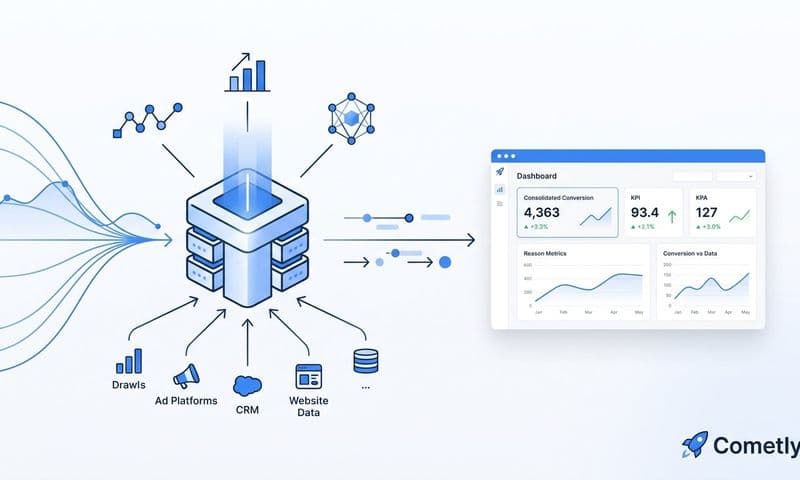
This diagram shows how UTMs turn messy, vague traffic data into a clear story you can actually act on.
 What Are UTMs and How Do They Actually Work For Tracking Campaigns?
Without UTMs, you just see a pile of clicks. With them, you get an organized narrative that tells you exactly what’s working.
The 5 Core UTM Parameters Explained
Let's break down each of the five parameters. The first three are essential for basic tracking, while the last two add extra layers of detail that are perfect for optimization.
Parameter | Purpose (The Question It Answers) | Example Values |
|---|---|---|
utm_source | Where did the traffic come from? | google, facebook, bing, activecampaign |
utm_medium | How did the traffic get here? (The channel) | cpc, social, email, organic, display |
utm_campaign | Why did the traffic come? (The specific promotion) | summer-sale-2024, new-product-launch, retargeting-q4 |
utm_term | Which keyword triggered the ad? (Paid search) | cometly pricing, marketing attribution software |
utm_content | What specific link or ad did the user click? | blue_button, video_ad_1, header_link |
By mastering these five building blocks, you can deconstruct any tagged URL and understand the complete story behind every single click.
The Three Required Parameters
At a bare minimum, your analytics platform needs three key pieces of information to make sense of your data. For effective tracking, these are non-negotiable.
- utm_source: This answers, “Where did the traffic come from?” It identifies the specific platform or website that sent the visitor your way. Examples include
google,facebook, oractivecampaign. - utm_medium: This answers, “How did the traffic get here?” It describes the general marketing channel, like
cpc(cost-per-click),email, orsocial. - utm_campaign: This answers, “Why did the traffic come?” It names the specific marketing initiative, such as
summer-sale-2024ornew-product-launch.
Let's look at an example. A link tagged with utm_source=facebook&utm_medium=social&utm_campaign=summer-sale tells you instantly that the user clicked a link from a social post on Facebook as part of your summer sale promotion. Simple, right?
By combining just these three parameters, you can finally differentiate between a visitor from a paid Google ad versus one from an organic Facebook post, even if they land on the exact same page.
The Two Optional Parameters For Deeper Insights
While the first three parameters are the foundation, the next two add powerful layers of detail. This is where you can really start to refine and optimize your campaigns.
- utm_term: This parameter answers, “Which keyword triggered the ad?” It's mainly used for paid search campaigns to track the performance of specific keywords you're bidding on. While platforms like Google Ads can auto-tag this using their own click identifiers, you can learn more about how that works in our guide explaining what GCLID is.
- utm_content: This one answers, “What specific element did the user click?” It’s a game-changer for A/B testing. For example, you can use it to distinguish between a
blue_buttonand ared_buttonin an email, or to track avideo_adversus animage_adin a social campaign.
Common Mistakes That Sabotage Your Tracking
Knowing what UTMs are is one thing. Using them correctly is a whole different ballgame—it’s what separates clean, actionable data from a useless mess. Even seasoned marketers fall into common traps that completely sabotage their tracking, leading to skewed reports and bad decisions.
The good news? These mistakes are entirely preventable with a little discipline.
 What Are UTMs and How Do They Actually Work For Tracking Campaigns?
The worst part is that the most frequent errors often feel minor. A simple slip in capitalization, for example, can fragment your data so badly that a single source looks like three different ones in your reports.
Inconsistent Naming Conventions
This is, without a doubt, the most common pitfall. Analytics tools are case-sensitive, which means utm_source=Google, utm_source=google, and utm_source=google_ads will all show up as separate sources. This splinters your data, making it nearly impossible to gauge the true performance of a channel without a ton of manual cleanup.
What Not to Do:
- Using
utm_source=Facebookfor one campaign andutm_source=facebookfor another. - Tagging one ad with
utm_campaign=Summer-Saleand the next withutm_campaign=summer_sale.
What to Do Instead:
- Create a simple, shared spreadsheet that acts as your team's UTM playbook.
- Always use lowercase for all parameters. No exceptions.
- Stick to either hyphens (
-) or underscores (_) consistently to separate words. Don't mix and match.
A single source of truth for naming conventions is non-negotiable for team collaboration. It ensures everyone speaks the same tracking language, keeping your attribution data clean and reliable from the start.
Using UTMs for Internal Links
This one is a cardinal sin of tracking. Never, ever tag links that point from one page of your website to another. When a user clicks an internally tagged link, it completely overwrites their original source data for that session.
So, that visitor who came from a pricey Google Ad? Your analytics will now show they came from an "internal-promo" campaign. Just like that, your attribution chain is broken, and the credit for that conversion goes to the wrong place.
This practice also inflates your session counts and creates a mess in your reports, making it impossible to understand where your traffic is actually coming from. You'll see a spike in self-referrals or strangely attributed traffic, which completely masks the real performance of your external campaigns. You can read more on how this messes up your data in our guide on direct traffic in Google Analytics.
Mixing Up Source and Medium
Confusing utm_source with utm_medium is another frequent mistake that turns your reports into mud. The rule is simple: the source is who sent the traffic (e.g., google, facebook), while the medium is how they sent it (e.g., cpc, social, email).
When you mix these up—like putting cpc in the source field—you make it incredibly difficult to compare channel performance. Your ability to group all paid search traffic together or analyze your social channels as a whole disappears.
Avoiding these common errors is the first and most important step toward getting data you can actually trust.
How To Build and Use UTMs for Your Campaigns
Knowing what UTMs are is one thing, but actually putting them to work is where the magic happens. Getting your first UTM-tagged URL set up is surprisingly simple, especially with a few great free tools that take the guesswork—and costly typos—out of the equation.
One of the most popular and foolproof options is Google's Campaign URL Builder. It’s a basic form where you plug in your website URL and fill in the values for the five parameters we just covered. This makes sure your final link is perfectly formatted every time, saving you from any manual errors.
Using Google’s Campaign URL Builder
Let's walk through a real-world scenario. Imagine you're launching a new product and need to track performance across three different channels: a Google Ads campaign, a Facebook ad, and a promotional email.
First, you’d head over to Google's Campaign URL Builder. From there, you just fill out the fields for your first channel.
Here’s what the builder looks like when you're creating a link for a paid Google ad.
 What Are UTMs and How Do They Actually Work For Tracking Campaigns?
As you can see, you just drop in your destination URL and define your source, medium, and campaign name. The tool automatically spits out the fully tagged URL for you to copy and paste. Simple as that.
Building UTMs for Different Channels
To keep your data clean, you need to create a unique, tagged link for each and every marketing effort. Sticking with our product launch example, here’s how you’d structure the UTMs for each of the three channels.
- Google Ads Link:
- Source:
google - Medium:
cpc - Campaign:
new-product-launch - Facebook Ad Link:
- Source:
facebook - Medium:
social - Campaign:
new-product-launch
- Source:
Did you notice how the campaign name stays the same across both links? This is a pro move. It allows you to group all the traffic related to your product launch in your analytics, giving you a crystal-clear picture of its overall performance. For a deeper dive on this channel, check out our guide on how to track Facebook ads with precision.
- Source:
activecampaign(or whatever your email provider is) - Medium:
email - Campaign:
new-product-launch
Once you have the basics down, you can start applying UTMs to more specific channels and learn how to track your email campaigns effectively.
The real power of UTMs shines when you're A/B testing creatives. By using the utm_content parameter, you can finally tell the difference between ads pointing to the same URL. For instance, using utm_content=video-ad versus utm_content=image-ad will tell you exactly which creative is driving more valuable clicks.
By following this straightforward process, you can confidently build and roll out UTMs across all your campaigns, turning your raw data into actionable insights almost immediately.
Unlocking Advanced Attribution with UTM Data
Collecting clean UTM data is just the start. The real magic happens when you turn that raw data into strategic insights. Think of your UTMs as high-quality fuel for your analytics engine—they provide the granular detail you need to move beyond simple traffic counting and into the world of marketing attribution.
This is where you start connecting the dots across the entire customer journey. Instead of just knowing a click came from Facebook, you can finally understand how that specific click contributed to a sale three weeks later. Your UTMs provide the crucial context for every single touchpoint.
The Problem with Last-Click Attribution
For years, the industry standard for measuring performance has been last-click attribution. This model is exactly what it sounds like: it gives 100% of the credit for a conversion to the very last interaction a customer had before buying. If someone clicks a Google Ad and immediately makes a purchase, Google gets all the glory.
The problem? This model is incredibly shortsighted. It completely ignores all the other valuable touchpoints that influenced the customer along the way—the initial Facebook ad they saw, the email newsletter they opened, or the blog post they read. It’s like giving all the credit for a championship win to the player who scored the final point, ignoring the rest of the team's effort that made it possible.
This flawed view leads to terrible budget decisions. You might end up cutting funds for channels that are fantastic for building awareness simply because they don't drive the final click.
Moving to Multi-Touch Attribution
To get a truly accurate picture of what's working, you need a more holistic approach. Multi-touch attribution distributes credit across multiple touchpoints in the customer's journey, acknowledging that the first interaction is often just as important as the last. This gives you a far more realistic view of what’s actually driving your revenue.
By analyzing the entire path to purchase, you can finally see how different channels work together. You might discover that your social media ads are fantastic at introducing new customers, while your email campaigns are masters at closing the deal.
This is where a dedicated attribution platform becomes a game-changer. While standard analytics tools can show you some of the data, they often struggle to connect it directly to revenue in a meaningful way, especially with the rise of modern privacy restrictions.
Why Platforms Like Cometly Are Essential
Platforms like Cometly are built to solve this exact problem. They take your detailed UTM data and combine it with powerful server-side tracking. This approach captures conversion data far more reliably, neatly sidestepping the limitations of browser-based tracking like ad-blockers and iOS privacy updates.
By connecting your ad spend directly to actual revenue, Cometly provides a clear, accurate picture of your true Return on Investment (ROI) that standard tools often miss entirely. It helps you see the complete customer journey, from the first ad impression to the final sale, and properly attributes value to each step along the way. That level of clarity is what empowers you to make smarter, data-driven decisions and confidently scale your marketing.
How Cometly Turns Your UTM Data Into Revenue
If you’re only using standard analytics platforms, you’re flying blind. Ad-blockers and privacy updates punch holes in your data, leaving you with an incomplete picture of what’s actually driving sales. This is where Cometly comes in. It takes your clean, UTM-tagged traffic and connects it directly to real-world revenue, turning your UTM data from a simple reporting metric into your most powerful strategic asset.
So, how does it work? The magic is in our server-side tracking. Instead of relying on fragile browser-based pixels that get blocked, we capture data directly from the server. This means your UTM-driven insights stay intact, so you know exactly which campaigns are making you money.
Finally See the Full Customer Journey
Cometly doesn't just collect data—it pieces it all together. The platform automatically stitches every touchpoint into a single, unified customer journey map using the information from your UTM parameters. You get a clear, chronological view of how customers bounce between channels before they finally pull out their wallets.
No more guessing which ad really drove a sale. You can see the entire sequence—from the first click on a TikTok ad to the final branded search. That’s the kind of clarity you need to confidently scale what’s working and kill what’s not.
And it gets even better. Cometly’s one-click conversion sync sends this accurate, UTM-powered conversion data back to ad platforms like Facebook and Google. This gives their algorithms a firehose of high-quality information, helping them find more of your ideal customers, faster.
We break down how this creates a powerful feedback loop in our guide to marketing attribution features. With a system like this, you’re not just tracking performance—you’re actively improving it.
Frequently Asked Questions About UTMs
Even when you have a good handle on UTMs, a few specific questions always seem to pop up once you start putting them into practice. Let's run through some of the most common ones to clear up any lingering confusion and help you get more strategic with your tracking links.
Can I Use UTMs for Organic Social Media Posts?
You absolutely can, and you should. While you don’t need them to track general organic traffic in your analytics platform, using UTMs for specific organic social media posts is a brilliant move.
Tagging a link in your Instagram bio or a special promotional post on your Facebook page lets you measure the performance of individual pieces of content. This is how you find out which organic efforts are actually driving the most engagement and sales.
What Is the Difference Between utm_term and utm_content?
Here’s the simplest way to think about it: utm_term is super specific. It was originally designed to identify the exact keyword a user typed into Google before clicking a paid search ad. It’s the direct link between a search query and a click.
utm_content, on the other hand, is much more flexible. It’s your go-to for telling apart multiple links that all point to the same URL within the same ad or email. For example, you could use it to A/B test a blue_button versus a red_button in a newsletter, or to see whether your video_ad outperforms an image_ad on social media.
Use utm_term for what the user searched for and utm_content for what the user clicked on. This simple distinction keeps your A/B testing and keyword data perfectly organized.
How Do UTMs Work with Link Shorteners Like Bitly?
They work together seamlessly, but the order you do things in is crucial. First, build your full, long URL with all the UTM parameters you want attached. A tool like Google's Campaign URL Builder is perfect for this.
Once you have that complete, tagged URL, then you paste it into your link shortener. The short link just redirects to the long version, making sure all of your valuable tracking data is captured correctly by your analytics platform when someone clicks it.
Stop guessing which ads are actually driving revenue. With Cometly, you can connect your UTM data to our powerful server-side tracking to see the full customer journey and scale your campaigns with confidence. Get a clear picture of your marketing attribution at https://www.cometly.com.