
You launch a Facebook campaign on Monday. A potential customer clicks your ad, browses your product page, then closes the tab. Two weeks later, they return through a Google search, remember your brand, and make a purchase. Does that original Facebook ad get credit for the sale?
This scenario plays out thousands of times across your campaigns, and the answer depends entirely on your attribution window settings. Get it wrong, and you'll either over-credit ads that barely influenced the sale or completely miss the touchpoints that actually drove revenue.
Attribution windows define the timeframe during which your advertising platforms connect ad interactions to conversions. They're the invisible rules determining which ads get credit, how your performance metrics look, and ultimately where you invest your budget. Understanding how they work, what the platform defaults mean for your data, and how to align them with your actual sales cycle isn't optional anymore. It's the foundation of accurate marketing measurement.
The Mechanics Behind Attribution Windows
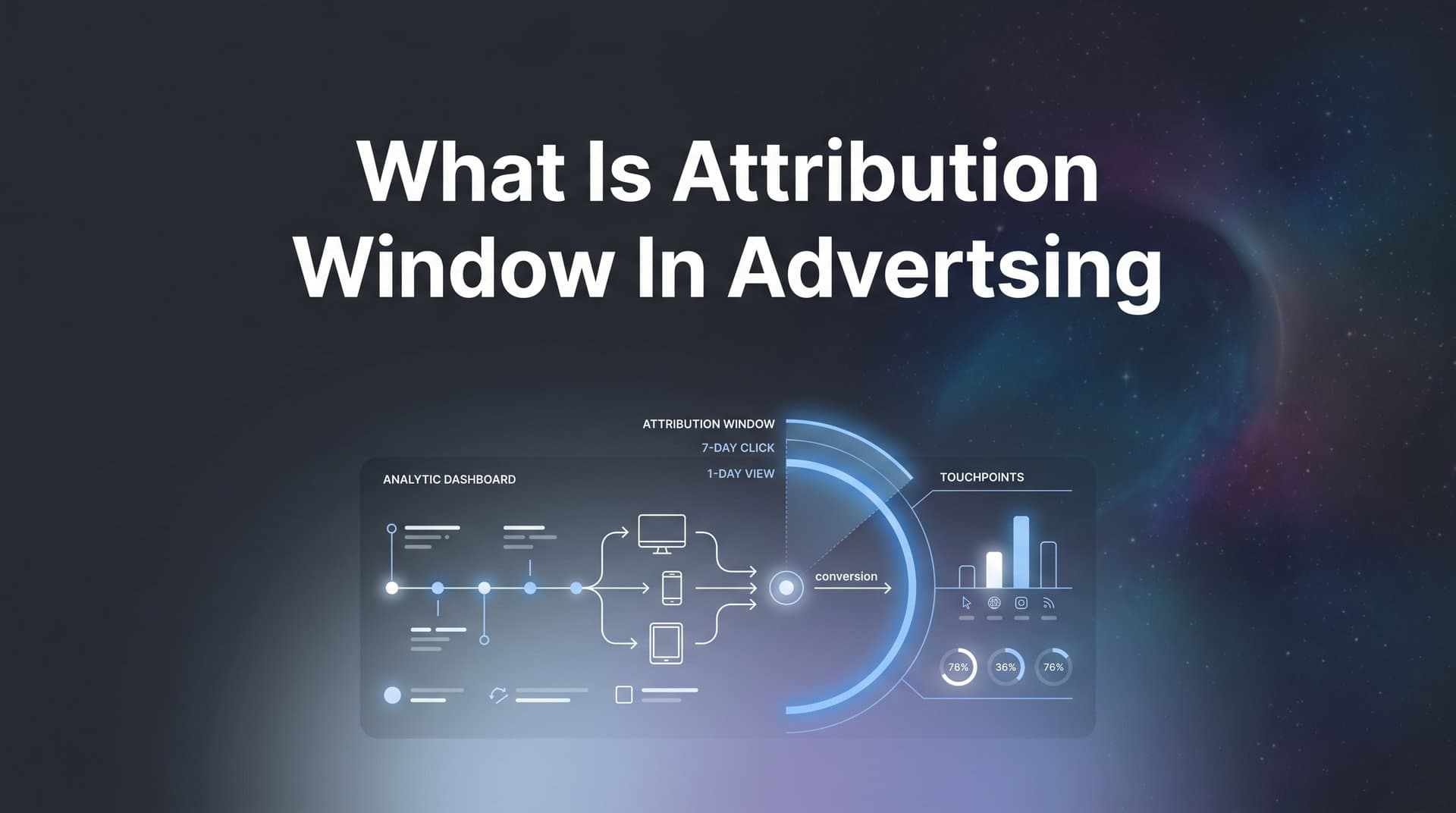
An attribution window is the set period after an ad interaction during which a conversion can be credited to that interaction. Think of it as a countdown timer that starts the moment someone engages with your ad.
When a user clicks your Facebook ad at 2:00 PM on Tuesday, the clock starts ticking. If you're using a 7-day click attribution window and that user converts at 1:00 PM the following Tuesday, the conversion gets attributed to your ad. If they convert at 3:00 PM that same Tuesday, they fall outside the window and your ad gets no credit.
The mechanism is straightforward, but the implications run deep. Every advertising platform uses these windows to decide which conversions to count toward your campaign performance. The numbers you see in your dashboard, the ROAS you report to stakeholders, the optimization decisions your ad algorithms make—all of it flows from these window settings.
There are two main types of attribution windows you need to understand. Click-through attribution windows track conversions that happen after someone clicks your ad. This is the more direct interaction, the clearer signal of intent. View-through attribution windows track conversions that occur after someone sees your ad but doesn't click it. Understanding conversion window attribution helps clarify these distinctions.
The distinction matters because these two window types typically operate on very different timeframes. A platform might give you a 7-day click window but only a 1-day view window. That means if someone sees your ad on Monday and converts on Wednesday without clicking, you get no credit, even though the same conversion would count if they had clicked the ad.
Here's where it gets interesting. The interaction timestamp is what triggers the countdown, not when the ad was created or when the campaign launched. If someone clicks your ad three times over two weeks, each click starts its own attribution window. The platform will typically credit the most recent qualifying interaction within the window.
The conversion must occur within the active window to be attributed. This creates a binary outcome: either the conversion counts toward your campaign metrics or it doesn't. There's no partial credit in standard attribution window logic, no gradual decay of attribution strength as time passes. You're either inside the window or outside it.
Platform Default Settings You Need to Know
Every advertising platform ships with default attribution window settings, and most marketers never change them. That's a problem because these defaults reflect the platform's priorities, not necessarily what's best for your business.
Meta Ads currently uses a 7-day click and 1-day view attribution window as its default. This represents a massive shift from the pre-iOS 14.5 era when Meta defaulted to 28-day click and 28-day view windows. When Apple's App Tracking Transparency framework forced changes to how platforms could track user behavior, Meta shortened its windows dramatically. Learn more about Facebook Ads attribution window settings and their evolution.
The impact was immediate and painful for many advertisers. Campaigns that appeared to generate strong ROAS under 28-day windows suddenly looked less effective under 7-day measurement. The conversions didn't disappear, but they fell outside the narrower window, making it look like performance had crashed overnight.
Google Ads takes a different approach with longer default windows that vary by campaign type. Search campaigns default to a 30-day click window, reflecting the platform's understanding that search-driven conversions often involve research and consideration time. Display campaigns also use 30-day click windows but add a 1-day view window, acknowledging that display ads often play an awareness role rather than driving immediate clicks.
YouTube campaigns within Google Ads use a 30-day click window and a 3-day view window. The longer view window recognizes that video content can have lasting brand impact even without generating immediate clicks. Shopping campaigns stick with the 30-day click standard but typically don't use view-through attribution at all.
TikTok offers advertisers more flexibility with customizable attribution windows. You can choose between 1-day, 7-day, or 28-day click windows, and 1-day or 7-day view windows. The platform defaults to 7-day click and 1-day view, similar to Meta's current standard. This flexibility lets you align measurement with your specific sales cycle, but it also means you need to actively choose rather than accepting defaults.
LinkedIn uses a 30-day click window and a 1-day view window as its default. Given LinkedIn's focus on B2B advertising where sales cycles run longer, the 30-day click window makes sense. The short view window reflects skepticism about whether simply viewing an ad in a professional feed truly influences eventual conversions.
The variation across platforms creates a measurement challenge. If you're running coordinated campaigns across Meta, Google, and LinkedIn, you're comparing performance data built on fundamentally different attribution logic. A conversion that counts on Google might fall outside Meta's window, making direct platform comparisons misleading.
How Window Length Shapes Your Performance Data
The attribution window you choose doesn't change what actually happened. Your ads either influenced purchases or they didn't. But it dramatically changes what you can see and measure.
Short attribution windows between 1 and 7 days capture immediate conversions with high confidence. When someone clicks your ad and buys within a day, there's a clear connection. Short windows reduce the noise from other marketing touchpoints and give you cleaner data about direct response performance. They work beautifully for impulse purchases and simple buying decisions.
The downside? Short windows systematically undercount conversions for anything with a longer consideration phase. If your average customer takes 10 days to convert, a 7-day window will miss a significant portion of your actual results. You'll see lower conversion counts, worse ROAS, and your optimization algorithms will have incomplete data to work with. This is one of the key attribution window problems in advertising that marketers face.
Long attribution windows from 14 to 30 days or more capture delayed conversions and better reflect extended sales cycles. They give credit to ads that planted seeds, started research processes, or introduced your brand to prospects who needed time to decide. For high-consideration purchases, longer windows provide a more complete picture of campaign impact.
But longer windows introduce their own distortions. That conversion 28 days after an ad click might have been influenced by a dozen other touchpoints in the meantime. Maybe the customer saw competitor ads, read reviews, got a recommendation from a friend, or responded to your email campaign. Crediting the original ad click ignores all that complexity.
Here's the real impact: the same campaign measured with different attribution windows can show drastically different performance. A campaign with 100 conversions in a 28-day window might show only 60 conversions in a 7-day window. Your calculated ROAS shifts from profitable to break-even just by changing the measurement timeframe. Understanding attribution window settings impact on results is crucial for accurate reporting.
This isn't just about reporting. Your ad platform algorithms optimize based on the conversions they can see within the attribution window. If you're using a short window for a product with a long sales cycle, the algorithm thinks your ads are underperforming. It will shift budget away from campaigns that are actually working, just working on a timeline the window can't capture.
The window length also affects how quickly you can evaluate campaign performance. With a 1-day window, you know by tomorrow whether today's ads drove conversions. With a 30-day window, you need to wait a full month before you have complete data. That delay in feedback makes it harder to respond quickly to what's working or what's not.
Matching Your Attribution Window to Your Sales Cycle
The right attribution window isn't the platform default or what your competitor uses. It's the window that aligns with how your actual customers actually buy.
For ecommerce brands selling impulse purchases or everyday products, shorter windows often make sense. If you're selling phone accessories, snacks, or basic apparel, most purchase decisions happen quickly. A customer sees your ad, clicks through, and either buys immediately or moves on. A 7-day click window captures the vast majority of conversions that were genuinely influenced by your ads.
The same logic applies to limited-time promotions and flash sales. When you're running a 48-hour discount campaign, a 1-day or 3-day attribution window gives you accurate data about what that specific promotion drove. Longer windows would muddy the results by including conversions that might have happened anyway. Review attribution window best practices for paid ads to optimize your promotional campaigns.
B2B and high-consideration purchases demand longer attribution windows. Enterprise software sales cycles can run 60, 90, or 120 days from first touch to closed deal. A decision-maker might see your LinkedIn ad in January, download a whitepaper in February, attend a webinar in March, and finally request a demo in April. A 7-day window would miss the entire journey.
For these longer cycles, 30-day or even 60-day attribution windows start to make sense, particularly for click-through attribution. You're not trying to claim credit for every conversion that happened to occur within the window. You're trying to capture the genuine influence your ads had on prospects who needed time to evaluate, get buy-in, and make decisions.
The best approach is analyzing your actual time-to-conversion data. Most analytics platforms can show you the distribution of how long it takes customers to convert after their first interaction. If 80% of your conversions happen within 5 days, a 7-day window captures most of what matters. If conversions are evenly spread across 30 days, you need a longer window.
Look at the data by channel too. Your Facebook ads might drive faster conversions than your LinkedIn campaigns because the audiences are at different stages of awareness. Your Google Search ads might convert immediately because people are actively looking for solutions, while your display campaigns build awareness that converts later. Different channels might warrant different attribution windows.
Consider testing the same campaign with different window settings to see how the data changes. Run a month with a 7-day window, then switch to 14-day and compare. You're not looking for which window shows better numbers. You're looking for which window gives you data that matches your business reality and helps you make better decisions.
Common Mistakes That Distort Your Attribution Data
The biggest mistake marketers make with attribution windows is never questioning the defaults. Platform settings exist for platform convenience, not your business needs. Accepting a 7-day window because that's what Meta chose means you're measuring your business through someone else's lens.
Many advertisers use different attribution windows across platforms without realizing it. They compare Facebook performance measured on a 7-day window against Google Ads measured on a 30-day window, then wonder why the numbers don't align. You're not comparing apples to apples. You're comparing completely different slices of the same reality. Understanding Google Ads attribution window issues helps avoid these comparison pitfalls.
If you run multi-platform campaigns, standardize your attribution windows across platforms wherever possible. Set Google to match Meta's 7-day window, or extend Meta to match Google's 30-day window. The goal is consistent measurement logic so you can actually compare performance and make informed budget allocation decisions.
Another common error is ignoring view-through attribution entirely. Some marketers dismiss it as inflated vanity metrics, and there's legitimate debate about how much credit a simple ad view deserves. But completely ignoring view-through means you're blind to your ads' awareness and consideration impact. You only see direct response, missing the broader funnel influence.
The opposite mistake is over-relying on view-through attribution with long windows. A 28-day view window essentially claims that anyone who saw your ad and converted within a month was influenced by that view. That's a stretch. People see hundreds of ads daily. Most have zero impact on eventual purchase decisions. Short view windows, typically 1 to 3 days, provide more credible data about genuine influence. Explore ad attribution window limitations to understand these tradeoffs.
Failing to revisit attribution window settings as your business evolves creates measurement drift. The 7-day window that worked when you sold $30 impulse products might not work when you expand into $300 considered purchases. Your sales cycle changes, your customer base shifts, but your attribution windows stay frozen in old assumptions.
Building a Clearer Picture of Your Customer Journey
Here's the fundamental limitation of attribution windows: they only work within a single platform's view of the world. Meta knows about Meta interactions. Google knows about Google interactions. Neither platform sees the full journey.
A customer might click your Google Search ad, later see your Facebook retargeting campaign, then convert after opening your email. Google's attribution window gives credit to the search ad. Facebook's window gives credit to the retargeting ad. Your email platform claims the conversion. Everyone's telling a different story because everyone's using a different window looking at a different piece of the journey.
This fragmented view makes it nearly impossible to understand what's actually driving results. You're optimizing based on incomplete data, shifting budget between channels without seeing how they work together. The customer journey is continuous, but your measurement is broken into disconnected segments. This represents one of the core attribution challenges in marketing analytics.
Tracking touchpoints across your entire marketing ecosystem requires moving beyond platform-level attribution windows. You need a centralized view that captures ad clicks, website visits, email opens, CRM interactions, and conversions in one unified timeline. This is where comprehensive attribution platforms become essential.
When you connect ad data from Meta, Google, TikTok, and LinkedIn with your website analytics and CRM events, you can see the actual sequence of touchpoints. You discover that many conversions attributed to a single channel in platform reporting actually involved multiple touches across channels. That changes how you allocate budget and evaluate performance. Learn more about multi-touch attribution in marketing to capture these complex journeys.
Server-side tracking has become increasingly important as browser-based tracking faces more restrictions. When conversion data flows directly from your server to your analytics platform without relying on cookies or pixels, you get more complete and accurate attribution data. You're not losing conversions to ad blockers, browser privacy features, or cross-device gaps.
The value of this complete visibility extends beyond just knowing which ads worked. When you understand the full customer journey, you can identify patterns. Maybe customers who see both a Facebook ad and a Google Search ad convert at higher rates than those who only see one. Maybe your LinkedIn ads rarely drive direct conversions but significantly increase the conversion rate of your Google Search traffic. These insights only emerge when you track the complete journey across all touchpoints.
Making Attribution Windows Work for Your Business
Attribution windows aren't just technical settings buried in platform dashboards. They're strategic decisions that directly shape how you measure success, where you invest budget, and how effectively your campaigns optimize.
The platform defaults exist for the platform's benefit, not yours. They're designed to make reporting easier and performance look consistent across advertisers. But your business has unique characteristics, sales cycles, and customer behaviors that generic settings can't accommodate.
Start by auditing your current attribution window settings across every platform you use. Document what each platform is set to, then compare those windows against your actual time-to-conversion data. Look for mismatches where your window is too short to capture most conversions or so long that it's crediting interactions with questionable influence.
Standardize windows across platforms wherever your sales cycle allows it. If you're running coordinated campaigns on Meta and Google, measuring them with consistent attribution logic gives you comparable data. You can finally answer the question of which platform performs better without the answer depending on which measurement timeframe you choose.
Test different window lengths and track how they affect your reported performance. The goal isn't finding the window that makes your numbers look best. It's finding the window that gives you the most accurate view of what's actually driving results. Accurate data leads to better decisions, even if the numbers are less flattering.
Remember that attribution windows are just one piece of the measurement puzzle. They work within single-platform views and can't capture the cross-channel reality of modern customer journeys. To truly understand what's driving revenue, you need comprehensive attribution that tracks every touchpoint across your entire marketing ecosystem.
Ready to elevate your marketing game with precision and confidence? Discover how Cometly's AI-driven recommendations can transform your ad strategy. Get your free demo today and start capturing every touchpoint to maximize your conversions.