You're running ads on Meta, Google, and TikTok. Your website analytics show traffic is up. Your CRM is logging leads. But when your boss asks which campaigns are actually driving revenue, you're piecing together spreadsheets and making educated guesses.
Sound familiar?
This is the paradox of modern marketing: we've never had more data, yet understanding what's working feels harder than ever. Data analytics in marketing is the practice of collecting, measuring, and analyzing your marketing data to understand performance and make confident decisions. It's the difference between hoping your campaigns work and knowing exactly what drives results.
This guide will break down how marketing analytics actually works, what types of analysis matter most, and how to build a system that connects your data to real business outcomes. No fluff, no jargon—just practical insights you can apply today.
The Building Blocks: How Marketing Data Analytics Actually Works
Marketing data analytics isn't a single tool or dashboard. It's a process that transforms scattered numbers into actionable intelligence.
The foundation starts with data collection. Every time someone clicks your ad, visits your website, fills out a form, or makes a purchase, that action generates a data point. These touchpoints happen across your ad platforms, website, email system, CRM, and checkout process. The first challenge is capturing all of this activity accurately.
Once collected, data needs processing and organization. Raw event data from Facebook Ads looks different from conversion data in your CRM. Processing means standardizing these different data formats, removing duplicates, and organizing everything so you can actually analyze it. Think of it like sorting ingredients before cooking—you need everything prepped and in the right place.
Then comes the actual analysis: looking for patterns, relationships, and trends. This is where you move from "we spent $5,000 on ads this month" to "our Google Search campaigns delivered a 4.2x return while our Facebook prospecting campaigns broke even." Analysis reveals which channels drive conversions, which audience segments respond best, and where your budget delivers the highest return.
The final step is turning analysis into actionable insights. Insights answer questions like: Should we increase budget on this campaign? Is this creative underperforming? Which attribution model shows the most accurate picture of our customer journey? Understanding how data analytics can improve marketing strategy starts with mastering this fundamental process.
Understanding the types of data involved makes this process clearer. Behavioral data tracks how people interact with your marketing: ad clicks, page views, time on site, email opens. This shows engagement but doesn't necessarily indicate purchase intent.
Transactional data captures actual business outcomes: purchases, revenue, subscriptions, qualified leads. This is the data that matters most because it connects directly to your bottom line.
Campaign data lives in your ad platforms: impressions, spend, click-through rates, cost per click. This tells you what you're paying and how people respond initially, but it doesn't tell you which campaigns drive revenue unless you connect it to transactional data.
Here's the crucial distinction: raw metrics aren't analytics. Knowing you got 10,000 impressions is a metric. Understanding that those impressions came from a cold audience that converted at 0.3% while your retargeting audience converted at 4.2% is analytics. Numbers need context, comparison, and connection to business outcomes to become useful.
Four Types of Marketing Analytics Every Team Should Know
Marketing analytics isn't one-size-fits-all. Different questions require different analytical approaches. Understanding these four types helps you apply the right analysis to the right situation.
Descriptive Analytics: What Happened?
This is where most marketers spend their time. Descriptive analytics summarizes past performance. Your monthly campaign report showing total spend, impressions, clicks, and conversions? That's descriptive analytics. It tells you what happened but not why or what to do next.
Descriptive analytics is essential for tracking progress and spotting obvious trends. When you see that website traffic increased 40% last quarter or that your email open rates dropped in January, you're using descriptive analytics. It's the foundation, but it's not enough on its own.
Diagnostic Analytics: Why Did It Happen?
This is where you dig deeper to understand causation. Why did conversion rates drop last week? Why did one ad set outperform another? Diagnostic analytics investigates the "why" behind the numbers.
Attribution analysis is a prime example of diagnostic analytics. When you examine which touchpoints in the customer journey influenced a conversion, you're doing diagnostic work. If you notice funnel drop-off at a specific stage and investigate whether it's a technical issue, messaging problem, or pricing concern, that's diagnostic analytics in action. Teams facing common attribution challenges in marketing analytics often struggle most at this diagnostic level.
This level of analysis requires connecting different data sources. You might correlate a drop in conversion rate with a website speed issue, or link improved performance to a specific audience segment or creative approach.
Predictive Analytics: What Might Happen?
Predictive analytics uses historical data to forecast future outcomes. Based on current trends, what's your projected customer acquisition cost next quarter? Which leads are most likely to convert? What's the expected lifetime value of customers from different channels?
This type of analysis helps with planning and resource allocation. If predictive models show that your current growth rate will exhaust your budget by mid-quarter, you can adjust spending proactively rather than reactively.
Predictive analytics has become more accessible through machine learning. Platforms can now identify patterns in massive datasets that humans would miss, forecasting which campaigns will likely perform best or which audience segments show the highest conversion probability. The intersection of data science and marketing analytics is where these predictive capabilities truly shine.
Prescriptive Analytics: What Should We Do?
This is the most advanced form: analytics that recommends specific actions. Instead of just showing you what happened or predicting what might happen, prescriptive analytics suggests what you should do about it.
AI-powered optimization recommendations fall into this category. A prescriptive system might analyze all your campaign data and recommend: "Increase budget 30% on Campaign A, pause Campaign B, and test this new audience segment based on patterns in your highest-value conversions." Exploring AI marketing analytics reveals how these systems are transforming decision-making.
The evolution from descriptive to prescriptive analytics represents a shift from reporting to intelligence. You move from answering "what happened?" to receiving actionable guidance on "what to do next."
Where Marketing Analytics Delivers Real Impact
Understanding the theory is one thing. Seeing where analytics actually improves results is what matters. Here's where effective data analytics changes the game.
Campaign Optimization That Goes Beyond Surface Metrics
Most ad platforms optimize for clicks or even conversions, but they don't know which conversions actually drive revenue. Analytics reveals the difference between a campaign generating lots of low-quality leads and one driving fewer but higher-value customers.
You might discover that your lowest cost-per-click campaign has the highest cost-per-acquisition when you track to actual sales. Or that a campaign with a seemingly high CPA actually delivers customers with 3x higher lifetime value. Without proper analytics connecting ad performance to revenue outcomes, you're optimizing for the wrong metrics.
Analytics also reveals creative and messaging performance at a granular level. You can identify which ad variations resonate with specific audience segments, which value propositions drive conversions, and which calls-to-action perform best at different funnel stages.
Budget Allocation Based on Real Revenue Data
This is where analytics directly impacts your bottom line. Instead of splitting budget evenly across channels or relying on platform-reported conversions, you allocate spend based on actual revenue attribution.
You might find that LinkedIn drives fewer conversions than Facebook but those LinkedIn-sourced customers have 5x higher average order value. Or that your Google Search campaigns appear expensive on a last-click basis but actually assist in 60% of your highest-value conversions when you analyze the full journey. Learning best practices for using data in marketing decisions helps teams make these budget calls with confidence.
Proper analytics shows you where to scale with confidence and where to cut spending without sacrificing results. It's the difference between spreading budget thin across every possible channel and concentrating resources where they deliver measurable return.
Customer Journey Understanding That Informs Strategy
Modern buyers rarely convert on first touch. They might see your Facebook ad, Google your brand later, read reviews, visit your website multiple times, and finally convert through an email campaign. Without analytics tracking this full journey, you're making decisions based on incomplete information.
Journey analytics reveals how different channels work together. You might discover that YouTube ads rarely drive direct conversions but significantly increase branded search volume and conversion rates on other channels. Or that customers who engage with educational content before seeing product ads convert at much higher rates. A multi-channel marketing analytics dashboard makes visualizing these cross-channel relationships much easier.
This understanding shapes your entire marketing strategy. It informs content creation, budget allocation, messaging sequencing, and channel mix. You stop thinking in isolated campaigns and start orchestrating integrated experiences.
Common Challenges That Derail Marketing Analytics
Even teams that understand the value of analytics often struggle with execution. These obstacles prevent marketers from getting the insights they need.
Data Silos Create Incomplete Pictures
Your ad platforms know about clicks and platform-reported conversions. Your website analytics tracks sessions and behavior. Your CRM holds lead and customer data. When these systems don't communicate, you're missing the connections that matter most.
You might see in Facebook Ads Manager that a campaign drove 50 conversions, but your CRM shows only 30 leads from Facebook, and your revenue data shows just 8 actual customers. Which number is right? Without integration, you're guessing.
Data silos also create inefficiency. Marketers spend hours manually exporting data from different platforms, copying it into spreadsheets, and trying to reconcile discrepancies. This manual process introduces errors and means your analysis is always backward-looking rather than real-time.
Attribution Complexity in the Privacy-First Era
iOS 14.5 and subsequent privacy updates fundamentally changed tracking. Browser-based pixels miss conversions, attribution windows shortened, and platform-reported data became less reliable. Cross-device tracking—when someone clicks an ad on mobile but converts on desktop—creates additional blind spots.
Traditional last-click attribution oversimplifies the customer journey. It gives all credit to the final touchpoint, ignoring the awareness campaigns, educational content, and retargeting that made the conversion possible. But multi-touch attribution models require sophisticated tracking and data processing that many teams lack.
The result? Marketers make decisions based on incomplete or inaccurate attribution data. They might cut campaigns that actually drive significant assisted conversions, or scale campaigns that only capture demand created by other channels.
Analysis Paralysis From Metric Overload
Modern marketing platforms provide hundreds of metrics. Impressions, reach, frequency, clicks, CTR, CPC, CPM, conversions, conversion rate, ROAS, CPA—the list goes on. Having access to all this data should be empowering, but it often creates confusion.
Teams get lost tracking vanity metrics that don't connect to business outcomes. They celebrate increased impressions while ignoring flat revenue. They optimize for clicks when conversions matter. They focus on platform-specific metrics that don't translate across channels.
Without clear focus on what actually matters—typically some combination of customer acquisition cost, return on ad spend, and customer lifetime value—analytics becomes noise rather than signal. You're drowning in data but starving for insights.
Building Your Marketing Analytics Stack
Effective analytics requires the right infrastructure. Here's what a modern marketing analytics stack looks like and why each component matters.
Data Collection: Capturing the Complete Picture
Everything starts with accurate data collection. Traditional browser-based tracking pixels have limitations in the privacy-first era. They miss conversions when users have tracking prevention enabled, can't track cross-device journeys accurately, and struggle with attribution windows.
Server-side tracking has become essential for addressing these gaps. Instead of relying solely on browser pixels, server-side tracking sends conversion data directly from your server to ad platforms and analytics tools. This bypasses browser limitations, improves accuracy, and provides more reliable data for optimization.
Your tracking needs to capture events across the entire funnel: ad clicks, website visits, form submissions, email interactions, and purchases. Each event should include relevant context—source, campaign, user identifier, timestamp, and any custom parameters that help with analysis.
Data Integration: Connecting the Dots
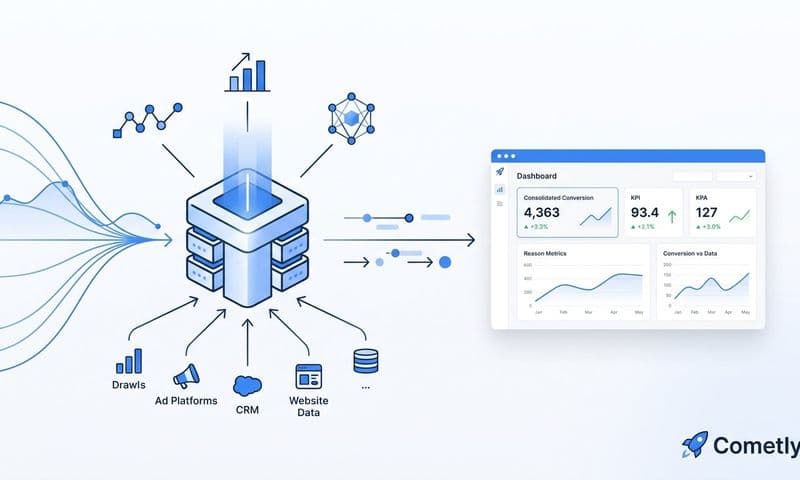
Collection is just the first step. Integration brings data from different sources into a unified view. This is where you connect ad spend from Facebook with conversions in your CRM, or link Google Analytics behavior data with actual revenue from your payment processor.
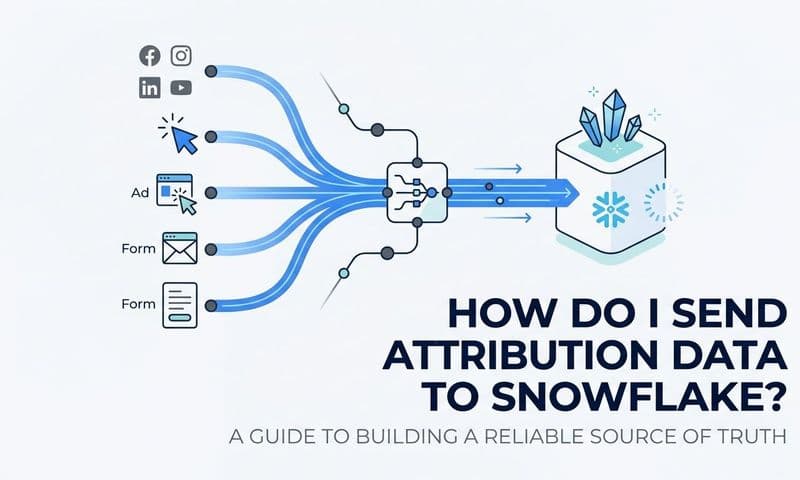
Integration can happen through direct API connections, data warehouses, or specialized attribution platforms. The goal is creating a single source of truth where you can analyze the full customer journey and accurately attribute results to marketing activities. Understanding how to setup a datalake for marketing attribution can help enterprise teams scale this integration effectively.
Without integration, you're stuck with fragmented reporting. You know what happened in each platform individually, but you can't answer questions like "What's our true ROAS across all channels?" or "Which combination of touchpoints drives our highest-value customers?"
Analysis Tools: From Data to Decisions
Once data is collected and integrated, you need tools to analyze it. This includes dashboards for visualization, attribution platforms for journey analysis, and analytics software for deeper investigation.
Attribution platforms play a critical role here. They map the customer journey across touchpoints, apply different attribution models to understand channel contribution, and connect marketing activities to revenue outcomes. This is where you move from platform-reported metrics to actual business impact. Reviewing a comparison of best marketing analytics tools can help you identify the right solution for your needs.
Modern attribution platforms increasingly incorporate AI to identify patterns and provide recommendations. Instead of just showing you what happened, they suggest what to do next: which campaigns to scale, which audiences to test, which budget allocations will likely improve performance.
The Server-Side Tracking Imperative
It's worth emphasizing why server-side tracking has become non-negotiable. Browser-based tracking now misses a significant percentage of conversions. Ad blockers, privacy settings, and cross-device behavior create blind spots that make your data unreliable.
Server-side tracking ensures you capture conversions regardless of browser limitations. It also enables you to send enriched conversion data back to ad platforms—not just that a conversion happened, but details about the customer value, purchase category, or lifetime value prediction. This richer data helps platform algorithms optimize more effectively.
Implementing server-side tracking requires technical setup, but the data accuracy improvement makes it essential for serious marketing analytics.
Putting Data Analytics Into Practice: A Starting Framework
Theory matters, but application determines results. Here's a practical framework for implementing effective marketing analytics.
Step 1: Define What Success Actually Looks Like
Start by identifying your north star metrics—the numbers that truly indicate business success. For most businesses, this centers on customer acquisition cost, return on ad spend, and customer lifetime value. These metrics connect marketing activities to revenue and profitability. Understanding the two primary goals of marketing analytics helps frame this metric selection process.
Avoid the vanity metric trap. Impressions, reach, and even clicks don't pay the bills. Focus your analytics on metrics that matter to your business outcomes. If you're running a SaaS business, that might be cost per trial signup and trial-to-paid conversion rate. For e-commerce, it's likely cost per purchase and average order value.
Document these key metrics and ensure your entire team understands what you're optimizing for. This clarity prevents the scattered focus that derails many analytics efforts.
Step 2: Ensure Your Tracking Captures the Full Journey
Audit your current tracking setup. Are you capturing all relevant touchpoints? Can you follow a customer from initial ad click through multiple website visits to final conversion? Do you know which marketing activities influenced each sale?
Implement tracking that connects the dots across platforms. This means setting up proper UTM parameters, ensuring your CRM integrates with your ad platforms, and deploying server-side tracking to capture accurate conversion data.
Test your tracking regularly. Run test conversions and verify they appear correctly across all systems. Check that attribution data flows properly and that revenue is being assigned to the right sources.
Step 3: Use Analytics to Test Hypotheses and Iterate
Effective analytics is an ongoing process, not a one-time setup. Use your data to form hypotheses, test them, and iterate based on results.
For example, if your analytics show that customers who engage with educational content convert at higher rates, test increasing budget on content promotion. If certain audience segments show higher lifetime value, test expanding reach to similar audiences. Mastering how to leverage analytics for marketing strategy turns these insights into competitive advantages.
Let data guide your scaling decisions. Don't increase budget just because a campaign is performing well—verify that performance holds at higher spend levels. Use analytics to identify constraints and opportunities before they impact results.
The goal is creating a feedback loop where analytics informs strategy, strategy drives testing, and results refine your analytics approach. This iterative process is what separates teams that grow consistently from those that plateau.
Moving From Guessing to Knowing
Data analytics in marketing isn't about collecting more data. You probably already have more data than you know what to do with. It's about connecting the right data to understand what truly drives revenue.
The shift from guessing to knowing changes everything. Instead of hoping your campaigns work, you know which ones deliver results. Instead of spreading budget evenly, you allocate resources based on actual performance. Instead of relying on platform-reported metrics, you track to real business outcomes.
Modern attribution platforms make this accessible. They handle the complexity of data integration, tracking, and analysis so you can focus on strategy and optimization. The technology exists to connect every touchpoint, understand the full customer journey, and make confident decisions based on complete data.
The question isn't whether you need better marketing analytics. It's whether you're willing to keep making decisions based on incomplete information while your competitors operate with clarity.
Take an honest look at your current setup. Can you confidently answer which campaigns drive your highest-value customers? Do you know your true return on ad spend across all channels? Can you track the complete journey from first touch to purchase?
If not, it's time to upgrade your analytics infrastructure. The difference between good marketing and great marketing often comes down to the quality of your data and your ability to act on it.
Ready to elevate your marketing game with precision and confidence? Discover how Cometly's AI-driven recommendations can transform your ad strategy—Get your free demo today and start capturing every touchpoint to maximize your conversions.