You're running campaigns across Meta, Google, TikTok, and email. A conversion comes in. Now the question hits: which touchpoint actually drove that sale? Was it the Facebook ad the customer clicked three weeks ago when they first discovered your brand? The Google search ad they engaged with while comparison shopping? Or the retargeting ad that appeared right before they finally pulled the trigger?
If you've ever stared at your ad dashboards trying to answer that question, you already understand why ad attribution matters. And if you've noticed that Meta, Google, and TikTok all seem to be claiming credit for the same conversion, you've also experienced one of the most frustrating realities of modern marketing measurement.
Ad attribution is the framework marketers use to assign credit to the touchpoints in a customer journey, from the first interaction all the way to the final conversion. Get it right, and you know exactly where to invest your budget. Get it wrong, and you're making decisions based on incomplete or misleading data. This article breaks down every major attribution model, explains when each one makes sense, and helps you build a smarter approach to measuring what actually drives revenue.
Why Giving Credit Where It's Due Changes Everything
Think of ad attribution as your marketing scorecard. Every time a customer converts, attribution answers the question: which channels, ads, and interactions deserve credit for making that happen? It maps the customer journey from first interaction to conversion and assigns value to each touchpoint along the way.
This used to be simpler. Customers would see an ad, click it, and buy. The path was short, and the credit was obvious. Today, a typical buyer might discover your brand through a TikTok video, research you on Google, read a few blog posts, click a retargeting ad on Instagram, open an email, and then finally convert after clicking a branded search ad. Each of those touchpoints played a role. Understanding attribution in digital marketing is how you figure out which ones mattered most.
The stakes have never been higher. Privacy changes have made accurate measurement significantly harder. Apple's App Tracking Transparency framework, introduced with iOS 14.5 in 2021, requires apps to request user permission before tracking across other apps and websites. Many users opt out, which reduces the conversion data available to platforms like Meta. The ongoing deprecation of third-party cookies across browsers adds another layer of complexity. The result is that platform-reported data is increasingly unreliable, and marketers who rely solely on what each ad platform tells them are often working with a distorted picture.
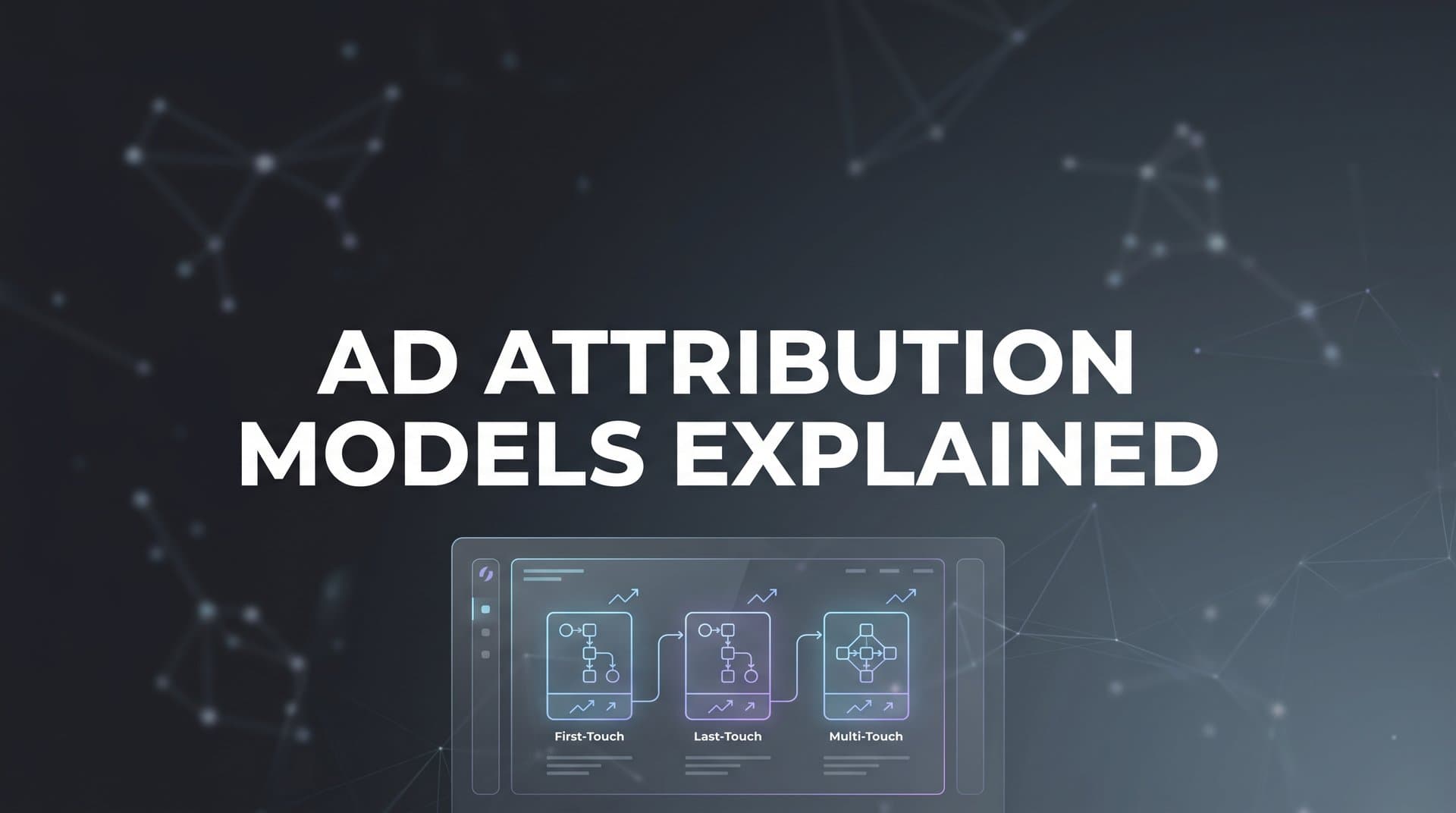
To navigate this landscape, it helps to understand that attribution models fall into two broad categories. Single-touch models assign all credit to one touchpoint, either the first or the last interaction in the journey. Multi-touch models distribute credit across multiple touchpoints, using different rules to determine how much each one deserves. Understanding the difference between single source and multi-touch attribution is the first step toward smarter measurement.
Single-Touch Models: Simple but Limited
Single-touch attribution models are exactly what they sound like: one touchpoint gets all the credit for a conversion. They're straightforward to implement and easy to understand, which makes them appealing, especially for smaller teams or simpler funnels. But that simplicity comes with significant blind spots.
First-Touch Attribution gives 100% of the credit to the very first interaction a customer had with your brand. If someone discovered you through a Facebook ad and eventually converted three weeks later after several more touchpoints, Facebook gets all the credit. This model is useful for understanding which channels are driving awareness and top-of-funnel discovery. If you're trying to figure out which platforms are introducing your brand to new audiences, first-touch data gives you a directional answer. The limitation is obvious: it completely ignores everything that happened after that first click. The nurturing emails, the retargeting campaigns, the search ads that caught the customer at the moment of decision, none of them get any recognition.
Last-Touch Attribution swings to the opposite extreme. All credit goes to the final interaction before conversion. If a customer clicked a Google search ad right before purchasing, Google gets 100% of the credit, regardless of what came before. This model is useful for understanding which channels are closing deals. If you want to know what's pushing people over the finish line, last-touch gives you a clear signal. But it has the same fundamental flaw in reverse: it ignores all the earlier touchpoints that built awareness, generated interest, and nurtured intent over time. You might end up over-investing in bottom-of-funnel channels while starving the top-of-funnel efforts that were actually filling the pipeline.
It's worth noting that Google Ads shifted its default attribution model away from last-click to data-driven attribution in 2023. This change reflects a broader industry recognition that last-touch models, while simple, often lead to poor budget decisions. For a deeper look at the most widely used approaches, explore the 5 most common ad attribution models.
So when do single-touch models still make sense? A few scenarios justify their use. If you run a very simple funnel where customers typically convert on the first or second interaction, the complexity of multi-touch attribution may not be worth the setup. Small teams with limited analytics resources might use first-touch or last-touch as a quick directional gut check. And both models can serve as useful reference points when compared alongside more sophisticated approaches, helping you understand how different attribution philosophies change your view of channel performance. The key is knowing what these models can and cannot tell you, and not letting their simplicity become a trap.
Multi-Touch Models: Seeing the Full Picture
Multi-touch attribution models distribute credit across multiple touchpoints in the customer journey. They're more complex to implement, but they reflect how customers actually behave: by interacting with your brand multiple times, across multiple channels, before making a decision. Here's how the major types of attribution models in digital marketing work.
Linear Attribution gives equal credit to every touchpoint in the journey. If a customer had five interactions before converting, each one gets 20% of the credit. This model is democratic and easy to understand. It acknowledges that every touchpoint contributed something, which is a more honest starting point than single-touch models. The downside is that it treats a brief ad impression the same as a high-intent search click, which may not reflect the actual influence of each interaction.
Time-Decay Attribution assigns more credit to touchpoints that happened closer to the conversion. The logic is that interactions near the point of decision had more influence on the final outcome. A touchpoint from yesterday matters more than one from three weeks ago. This model works well for businesses with shorter sales cycles or for products where recency of engagement is a strong signal of intent. The tradeoff is that it can undervalue the early-stage touchpoints that first introduced the customer to your brand.
U-Shaped (Position-Based) Attribution takes a different approach by giving heavier credit to the first and last touchpoints, typically 40% each, with the remaining 20% split among the middle interactions. This acknowledges that the first touch (brand discovery) and the last touch (the closing moment) are often the most significant, while still recognizing that the middle of the funnel played a role. It's a practical compromise for businesses that want to reward both awareness and conversion channels without ignoring the nurturing phase.
W-Shaped Attribution adds another milestone to the mix. In addition to weighting the first and last touch, it also gives significant credit to the touchpoint where a lead was created, typically a form fill or sign-up. This makes it particularly useful for B2B businesses where lead generation is a distinct and measurable milestone in the funnel. The three key moments each receive around 30% of the credit, with the remaining 10% distributed across other interactions.
Full-Path Attribution extends this further by also crediting the touchpoint associated with opportunity creation, making it well-suited for complex B2B sales cycles where multiple conversion milestones matter between first contact and closed revenue.
The core advantage of multi-touch models is that they reveal what single-touch models hide. They surface the mid-funnel efforts that are quietly doing important work, the email sequences, the YouTube campaigns, the organic social touchpoints that rarely get credit in a last-click world. Many marketers who switch from last-touch to a multi-touch model discover that channels they were considering cutting were actually playing a critical supporting role. For a comprehensive breakdown of these approaches, check out this guide to weighted attribution models.
Data-Driven Attribution: Letting AI Do the Math
All the models described so far share one thing in common: they use predetermined rules to assign credit. Data-driven attribution takes a fundamentally different approach. Instead of applying a fixed formula, it uses machine learning to analyze your actual conversion data and assign credit based on the statistical impact each touchpoint had on driving conversions.
Here's the intuition behind it. A data-driven model looks at the paths that led to conversions and compares them to paths that did not convert. It identifies which touchpoints appear more frequently in converting journeys and assigns them higher credit accordingly. Rather than assuming the first touch or last touch matters most, it lets the data surface which interactions actually moved the needle.
This approach has real appeal. It's tailored to your specific business and audience, not a generic rule applied universally. As your data accumulates, the model refines itself. And it can surface counterintuitive insights that a rules-based model would never reveal.
But there are meaningful tradeoffs to understand. Data-driven models require a significant volume of conversion data to work accurately. If your conversion volume is low, the model doesn't have enough signal to draw reliable conclusions, and the results can be misleading. There's also a transparency issue: these models can function as a black box. If the platform doesn't clearly explain how credit is being assigned, it's difficult to audit the outputs or understand why certain channels are being credited more than others.
The bigger concern is platform bias. When you rely on a single ad platform's data-driven attribution model, you're trusting that platform to objectively evaluate its own role in your conversions. This is exactly the challenge explored in self attribution vs third party attribution. Google's data-driven model lives inside Google Ads. Meta's lives inside Meta's ad manager. Each platform has access only to the touchpoints it can see, which means its model is inherently incomplete. And there's a structural incentive for platforms to assign credit in ways that make their own channels look more valuable.
This is why independent attribution matters. A centralized platform that pulls data from your ad accounts, CRM, and website can run attribution analysis without the blind spots or biases that come from relying on any single platform's self-reported numbers. The goal is a complete view of the customer journey, not a view filtered through one channel's perspective.
How to Choose the Right Model for Your Business
There's no universally correct attribution model. The right choice depends on the specifics of your business, your funnel, and your goals. Here's a practical framework for making that decision.
Consider your sales cycle length. Businesses with short sales cycles, where customers typically convert within a session or two, can often get useful directional insights from simpler models like last-touch or linear. Businesses with longer, more complex sales cycles where customers research for weeks or months before converting need multi-touch models to understand how the journey actually unfolds. If you're unsure whether your current approach still fits, this guide on when to switch attribution models can help.
Think about how many channels you're running. If you're only running one or two ad channels, the attribution question is simpler. The more channels you add, the more important it becomes to understand how they interact and support each other. A multi-touch model becomes essential when you're running campaigns across Meta, Google, TikTok, email, and organic simultaneously.
Factor in your data volume. Data-driven attribution requires sufficient conversion data to produce reliable results. If you're working with lower conversion volumes, a rules-based multi-touch model like U-shaped or time-decay may give you more stable and interpretable outputs.
Compare multiple models side by side. This is one of the most valuable habits you can develop as a marketer. No single model tells the complete story. Running first-touch and last-touch alongside a multi-touch model reveals how your perception of channel performance shifts depending on the lens you use. If a channel looks strong in first-touch but weak in last-touch, it's probably a powerful awareness driver that struggles to close. That insight shapes how you use it, not whether you cut it.
The most important structural decision is where your attribution data lives. Relying on each ad platform to report its own performance creates a fragmented, biased picture. Each platform sees only its own slice of the journey and often claims credit for conversions that other channels also influenced. Understanding why attribution data doesn't match across platforms is critical. A centralized, independent attribution platform that connects your ad accounts, CRM, and website data gives you a single source of truth. It tracks the full customer journey without the distortions that come from platform-reported data, and it gives you the ability to compare attribution models without switching between disconnected dashboards.
From Attribution Insight to Smarter Budget Decisions
Understanding attribution models is valuable. Putting them into action is where the real impact happens. Here's how attribution insights translate directly to budget decisions.
Imagine your multi-touch attribution data shows that a mid-funnel YouTube campaign consistently appears in the journeys of customers who eventually convert through Google Search. YouTube rarely gets last-click credit, so in a last-touch model it looks like a low-performing channel. But the multi-touch data tells a different story: customers who watched your YouTube ads were significantly more likely to search for your brand and convert later. Effective touchpoint attribution tracking reveals these hidden relationships. If you cut YouTube based on last-click data alone, you'd likely see your Google Search conversions decline as well, because you'd be removing a key step in the journey that was warming up your audience.
This is the kind of insight that changes how you allocate budget. Instead of optimizing each channel in isolation, you start managing your marketing mix as a system, where channels support and amplify each other.
Attribution also connects directly to ad platform performance through conversion data. When you feed enriched, accurate conversion signals back to platforms like Meta and Google, their algorithms can optimize targeting and bidding more effectively. This is the core idea behind conversion sync: the better the data you send back to the platform, the smarter its algorithm becomes at finding customers who are likely to convert. Server-side tracking plays a critical role here, capturing conversion events with greater accuracy than browser-based tracking, which is increasingly limited by privacy restrictions and ad blockers. Choosing the right revenue attribution tracking tools ensures you capture these signals reliably.
The attribution landscape will continue to evolve. As third-party cookies phase out and privacy regulations tighten, first-party data strategies and server-side tracking are becoming essential infrastructure for any marketer who wants accurate measurement. The businesses that invest in these capabilities now will have a significant advantage as the industry moves further in a privacy-first direction.
The Bottom Line on Attribution
Attribution models are not about finding one definitive answer to who deserves credit. They're about building a clearer, more honest view of how your marketing channels work together to drive revenue. Single-touch models give you a simplified lens that's useful for quick directional checks. Multi-touch models reveal the full complexity of how customers actually move through your funnel. Data-driven models let the data itself surface patterns that rules-based models might miss. The smartest approach uses multiple models as complementary perspectives, not competing answers.
Start by auditing your current attribution setup. Are you relying solely on what each ad platform reports? Are you using last-click by default without questioning what it might be hiding? Then explore how your channel performance looks under different attribution models. The gaps between those views are where the real insights live.
A centralized attribution platform like Cometly connects your ad platforms, CRM, and website data into a single source of truth. It tracks every touchpoint across the full customer journey, uses AI to surface actionable optimization recommendations, and feeds enriched conversion data back to Meta, Google, and other platforms so their algorithms can work more effectively on your behalf. You get multi-touch attribution, server-side tracking, and AI-powered insights without the blind spots that come from relying on platform-reported data alone.
Ready to see exactly which channels are driving your revenue? Get your free demo and start capturing every touchpoint to maximize your conversions.