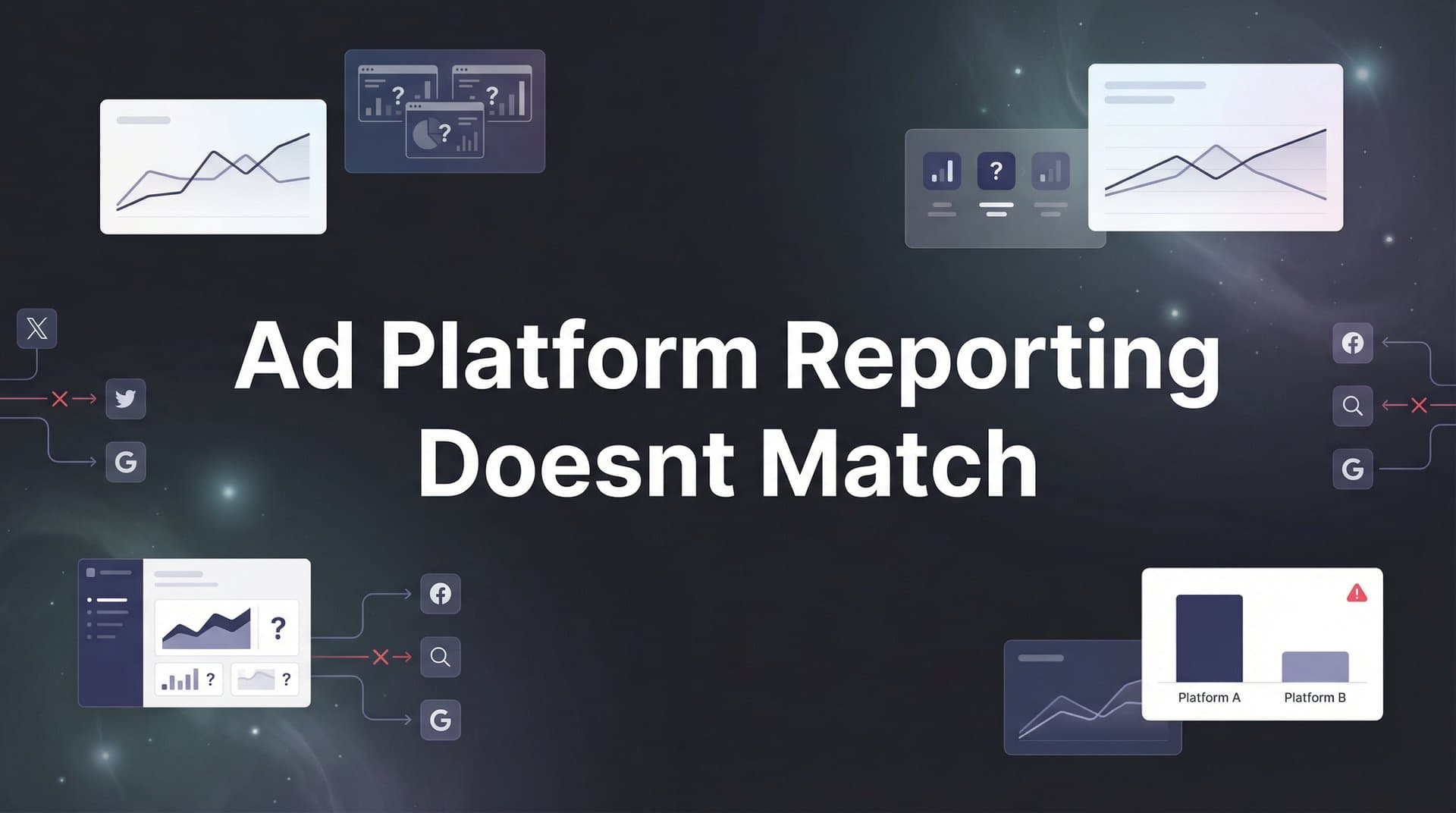
You pull up your Meta Ads dashboard and see 247 conversions this month. Feeling good, you switch tabs to Google Ads—182 conversions. Then you check your CRM, and it shows only 156 actual sales. The numbers don't just disagree slightly. They tell three completely different stories about what's working.
If you've ever stared at these mismatched reports wondering which one to believe, you're not alone. This isn't a minor annoyance—it's a fundamental problem that costs businesses real money. When you can't trust your data, you make decisions based on fiction. You scale campaigns that aren't actually profitable. You cut budgets from channels that are secretly driving revenue. You lose confidence in the very metrics that should guide your strategy.
Here's what most marketers don't realize: these discrepancies aren't bugs. They're not user errors. They're the inevitable result of how modern ad platforms track and attribute conversions. Each platform operates in its own reality, with its own rules, its own blind spots, and its own version of the truth. Understanding why this happens—and more importantly, how to fix it—is the difference between guessing and knowing what's actually driving your business forward.
The Attribution Time Warp: Why Platforms Count Conversions Differently
Think of attribution windows as invisible clocks that start ticking the moment someone interacts with your ad. The problem? Every platform sets its clock differently, and when those timers run out, conversions simply vanish from the platform's view.
Meta defaults to a 7-day click and 1-day view attribution window. That means if someone clicks your ad and converts within seven days, Meta takes credit. If they just saw your ad and convert within 24 hours without clicking, Meta still claims that conversion. Google Ads, on the other hand, typically uses a 30-day click attribution window and doesn't count view-through conversions by default. Same customer journey, completely different counting methods.
Here's where it gets messy. Let's say a potential customer clicks your Meta ad on Monday, thinks about it for a week, then clicks your Google ad the following Tuesday and makes a purchase. Meta sees this as a conversion within its 7-day window and reports it. Google also sees it as a conversion. Your actual sales? One. Your reported conversions across platforms? Two. Understanding ad platform reporting discrepancies is essential for making sense of these conflicting numbers.
The view-through attribution problem creates even stranger discrepancies. Someone scrolls past your Meta ad without clicking, browses other sites, then converts three hours later after typing your brand name directly into Google. Meta counts this as a view-through conversion because the user saw the ad within the 1-day window. Google Search might count it as a branded search conversion. Your platforms are fighting over credit for a sale that may have happened regardless of either ad.
Cross-device tracking compounds the confusion. A user sees your ad on their phone during their morning commute, researches on their tablet during lunch, and finally converts on their desktop at home that evening. Ad platforms try to connect these dots, but their ability to track across devices has become increasingly limited. What looks like three different people to the tracking systems was actually one customer taking a multi-device journey to purchase.
These attribution windows aren't just technical details—they fundamentally change which conversions get counted and when. A conversion that falls outside one platform's window but inside another's will only appear in one report. This creates the illusion that platforms are performing differently when they're actually just measuring different slices of the same reality.
The iOS Privacy Earthquake and Its Aftershocks
Apple's App Tracking Transparency update in 2021 didn't just change tracking—it broke the foundation that ad platforms had relied on for years. Before ATT, platforms could track users across apps and websites by default. After ATT, they had to ask permission. Most users said no.
The numbers tell the story. Industry estimates suggest that over 75% of iOS users decline tracking when prompted. For platforms like Meta that built their entire attribution system on pixel-based tracking, this was catastrophic. Suddenly, three-quarters of iPhone users became invisible to the tracking systems that powered conversion reporting.
Meta's response was Aggregated Event Measurement—a system that relies heavily on statistical modeling rather than actual tracking data. When the platform can't see what happened, it makes educated guesses based on patterns from users who did opt in. Your conversion reports now include a mix of real tracked conversions and modeled estimates. The platform isn't lying, but it's also not measuring—it's predicting.
This modeling approach introduces uncertainty that compounds across your entire funnel. If Meta estimates that 100 people saw your ad but only tracked 25 of them, it might model that 4 of the unseen 75 also converted based on the conversion rate of the tracked group. Those modeled conversions appear in your dashboard alongside real ones, with no way to distinguish between them. This is why real-time conversion tracking has become so valuable for marketers seeking accurate data.
Browser privacy features pile onto the problem. Safari's Intelligent Tracking Prevention limits cookie lifespans to seven days for first-party cookies and deletes third-party cookies entirely. Firefox's Enhanced Tracking Protection blocks tracking scripts by default. Brave browser goes even further, blocking ads and trackers at the network level.
The result is a fragmented tracking landscape where the data you see represents an incomplete picture. Some users are fully tracked, some are partially tracked, and some are completely invisible. Ad platforms fill the gaps with modeling, but those estimates vary based on each platform's methodology. When Google and Meta both model the same invisible user's behavior, they often reach different conclusions about whether that user converted and which ad deserves credit.
When Everyone Takes Credit: The Multi-Touch Attribution Problem
Picture a customer's journey: They click your Google Search ad after looking for a solution to their problem. Three days later, they see your Meta retargeting ad and click through to read reviews. Two days after that, they click your LinkedIn ad and finally purchase. Each platform sees its own interaction and the final conversion. Each platform reports one conversion. Your total reported conversions? Three. Your actual sales? One.
This isn't a bug—it's by design. Ad platforms operate as walled gardens, and each one optimizes for its own success. They have no incentive to share credit or acknowledge that other platforms contributed to the conversion. From Meta's perspective, the user clicked their ad and later converted, so Meta gets the credit. Google sees the same pattern and reaches the same conclusion. LinkedIn does too.
The attribution model each platform uses makes this worse. Last-click attribution gives 100% credit to the final touchpoint before conversion. First-click attribution gives everything to the initial touchpoint. Linear attribution splits credit equally across all touchpoints. Each model tells a radically different story about which channel drove the sale. A comprehensive multi-touch marketing attribution platform can help you understand how these models affect your reporting.
When you're running campaigns across multiple platforms, this creates an impossible math problem. If you add up all the conversions reported by each platform, you get a number that's often 150-200% of your actual sales. It's not that the platforms are wrong about seeing those interactions—they are. But they're all claiming full credit for conversions that involved multiple touchpoints.
This over-reporting has real consequences. You might look at your Google Ads dashboard and think, "This campaign generated 50 conversions at $30 each—fantastic ROI." But when you cross-reference with your CRM, you realize only 25 of those conversions were actual first-time customers, and 15 of them also clicked Meta ads before converting. Your actual cost per acquisition just doubled, and your Meta campaigns deserve partial credit.
The problem intensifies with retargeting. A user who clicks five different retargeting ads across three platforms before converting creates five reported conversions. Each platform's algorithm sees success and recommends spending more on retargeting. Meanwhile, your actual customer acquisition cost is climbing because you're over-investing in bottom-funnel tactics while under-investing in top-funnel channels that aren't getting proper credit.
Technical Gremlins: Tracking Setup Issues That Skew Your Data
Even if attribution windows and privacy changes didn't exist, technical implementation problems would still cause reporting discrepancies. These issues are often invisible but create significant data gaps that make platforms disagree.
Pixel firing delays are more common than most marketers realize. Your conversion pixel is supposed to fire the instant someone completes a purchase, but if your checkout page loads slowly or the pixel script is placed incorrectly, it might fire seconds later—or not at all. Users who close the browser immediately after completing their order may never trigger the pixel. Your CRM records the sale, but the ad platform never sees it.
Duplicate events create the opposite problem—phantom conversions that inflate your numbers. This happens when the same conversion pixel fires multiple times during a single transaction. Maybe your thank-you page reloads, or the user refreshes the confirmation page, or your checkout flow has multiple steps that each trigger a conversion event. Suddenly one sale generates three reported conversions.
UTM parameter inconsistencies wreak havoc on attribution. Your Google Ads campaign uses "utm_source=google" while your manual tracking uses "utm_source=Google" with a capital G. Your analytics tool sees these as two different sources. Or your team forgets to add UTM parameters to some campaigns entirely, causing those conversions to show up as direct traffic instead of paid ads. Following a proper cross-platform tracking setup guide can help you avoid these common mistakes.
Broken tracking links are surprisingly common, especially in fast-moving campaigns. Someone updates a landing page URL but forgets to update the destination URL in the ad. Or a developer implements a new checkout flow that breaks the existing pixel integration. Or a website migration moves pages to new URLs, and suddenly all your campaign links lead to 404 errors. Users might still find their way to your site and convert, but the ad platforms lose the thread connecting the ad click to the conversion.
Server-side tracking gaps create blind spots that client-side pixels can't fill. When conversions happen over the phone, through a sales team, or via offline channels, browser-based pixels never fire. Your CRM records these sales, but your ad platforms remain oblivious. This is especially problematic for B2B companies where the initial ad click leads to a demo request, followed by weeks of sales conversations before the actual deal closes. The ad platform might see the demo request, but it never learns about the closed deal that happened through your sales team.
Ad blockers and privacy extensions silently prevent pixels from firing for a growing percentage of users. These users interact with your ads, visit your site, and convert normally, but the tracking infrastructure never sees them. Your ad platforms report lower conversion numbers while your CRM shows the full picture. The gap between these numbers represents conversions that happened in the dark.
Building a Single Source of Truth for Your Marketing Data
The solution to mismatched reporting isn't trying to fix each platform's data—it's building an independent system that tracks the complete customer journey regardless of which platforms were involved. This approach shifts from trusting individual platforms to creating your own unified view of attribution.
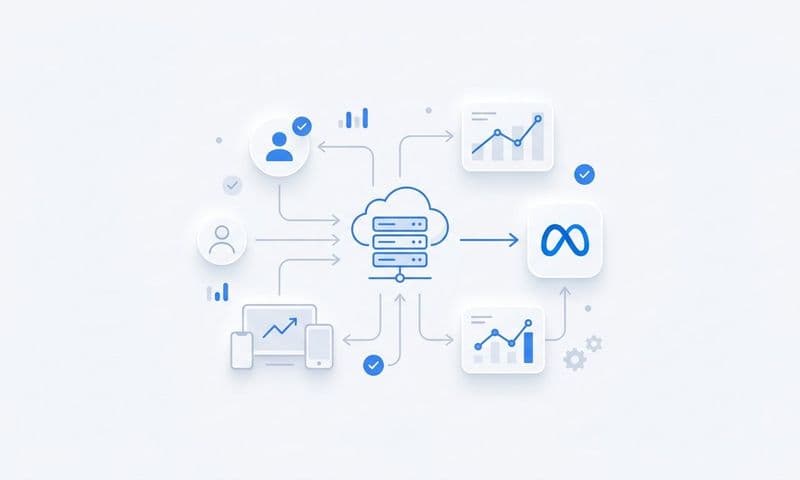
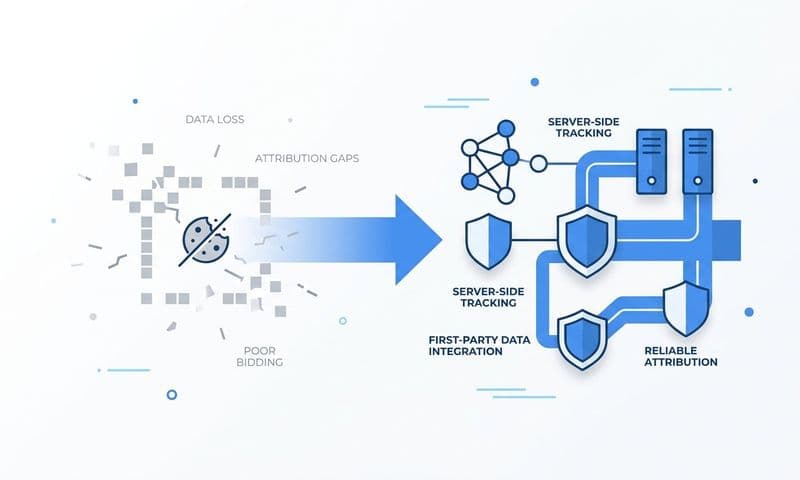
Server-side tracking forms the foundation of this approach. Instead of relying on browser-based pixels that can be blocked, delayed, or broken, server-side tracking captures conversion data at the server level. When a customer completes a purchase, your server sends that conversion event directly to your attribution platform and back to ad platforms through their APIs. This method is resilient to ad blockers, privacy extensions, and browser restrictions that cripple client-side tracking.
The advantage becomes clear when you consider the full conversion path. A user clicks your Meta ad on their iPhone, browses on their iPad later, and converts on their laptop. Client-side pixels struggle to connect these dots across devices and platforms. Server-side tracking ties everything together by matching conversion events in your database to the original ad interactions, regardless of how many devices or sessions were involved. Learning how to track cross-platform ad performance effectively starts with implementing this server-side foundation.
A unified attribution platform connects all your marketing touchpoints to actual revenue outcomes. Instead of trusting Meta's version of events or Google's perspective, you track every interaction—ad clicks, email opens, website visits, CRM events—in one system. This creates a complete timeline of each customer's journey from first touch to final conversion. You can see exactly which channels contributed at each stage and make informed decisions about budget allocation. A centralized marketing reporting platform eliminates the guesswork that comes from juggling multiple dashboards.
This unified approach reveals patterns that individual platforms miss. You might discover that Google Search ads are excellent at generating first touches but rarely close deals on their own. Meanwhile, Meta retargeting converts efficiently but only for users who already engaged with other channels. Neither platform tells you this because they only see their own piece of the puzzle. Your unified attribution shows the full picture and helps you understand how channels work together rather than competing for credit.
Feeding enriched conversion data back to ad platforms closes the loop and improves their performance. When you send server-side conversion events back to Meta and Google through their APIs, you're giving their algorithms more accurate data to optimize against. Proper ad platform API integration ensures this data flows seamlessly between your systems. This is especially powerful for conversions that happen offline or through sales teams—events that client-side pixels never captured. The ad platforms can now optimize for actual revenue instead of just tracked conversions.
The concept of a single source of truth means designating one system as the authoritative record for attribution decisions. This is typically your unified attribution platform or your CRM—whichever system has the most complete view of the customer journey and the final revenue outcome. When platform reports disagree, you reference your single source of truth to understand what actually happened. Platforms focused on marketing attribution with revenue tracking provide this clarity by connecting ad spend directly to business outcomes.
Implementation requires connecting your ad platforms, website analytics, CRM, and any other customer touchpoints to your attribution system. Modern platforms like Cometly handle these integrations automatically, pulling data from Meta, Google, LinkedIn, and other channels while connecting to your CRM to track which conversions turned into actual revenue. The platform captures every touchpoint, enriches the data with revenue information, and provides a complete view of what's driving real business outcomes.
Moving Forward with Confidence
Mismatched ad platform reporting isn't a fact of life you need to accept. It's a solvable problem that comes down to understanding the root causes and implementing the right infrastructure. Attribution window differences, privacy restrictions, multi-touch credit disputes, and technical tracking issues all contribute to the discrepancies you see every day. But none of these problems are insurmountable.
The key is recognizing that no single ad platform can give you the complete picture. Each one operates with limited visibility, its own attribution methodology, and an incentive to claim as much credit as possible. When you add up their reports, you get inflated numbers that don't match reality. When you try to reconcile them manually, you waste hours second-guessing every decision.
Accurate data is the foundation of profitable advertising. When you know exactly which campaigns drive real revenue, you can scale with confidence. When you understand how channels work together across the customer journey, you can allocate budget strategically instead of reactively. When you feed better data back to ad platform algorithms, they optimize more effectively and deliver better results. Implementing strategies to improve ad platform algorithm performance becomes much easier when your conversion data is accurate and complete.
The solution is building an independent attribution system that captures the complete customer journey, connects all touchpoints to revenue outcomes, and serves as your single source of truth. This approach eliminates the confusion of conflicting reports and gives you the clarity needed to make smart marketing decisions. Ready to elevate your marketing game with precision and confidence? Discover how Cometly's AI-driven recommendations can transform your ad strategy—Get your free demo today and start capturing every touchpoint to maximize your conversions.