You've doubled your ad budget. Your click-through rates are climbing. Dashboard metrics look promising. But when you check your bank account, the revenue isn't there. Sound familiar?
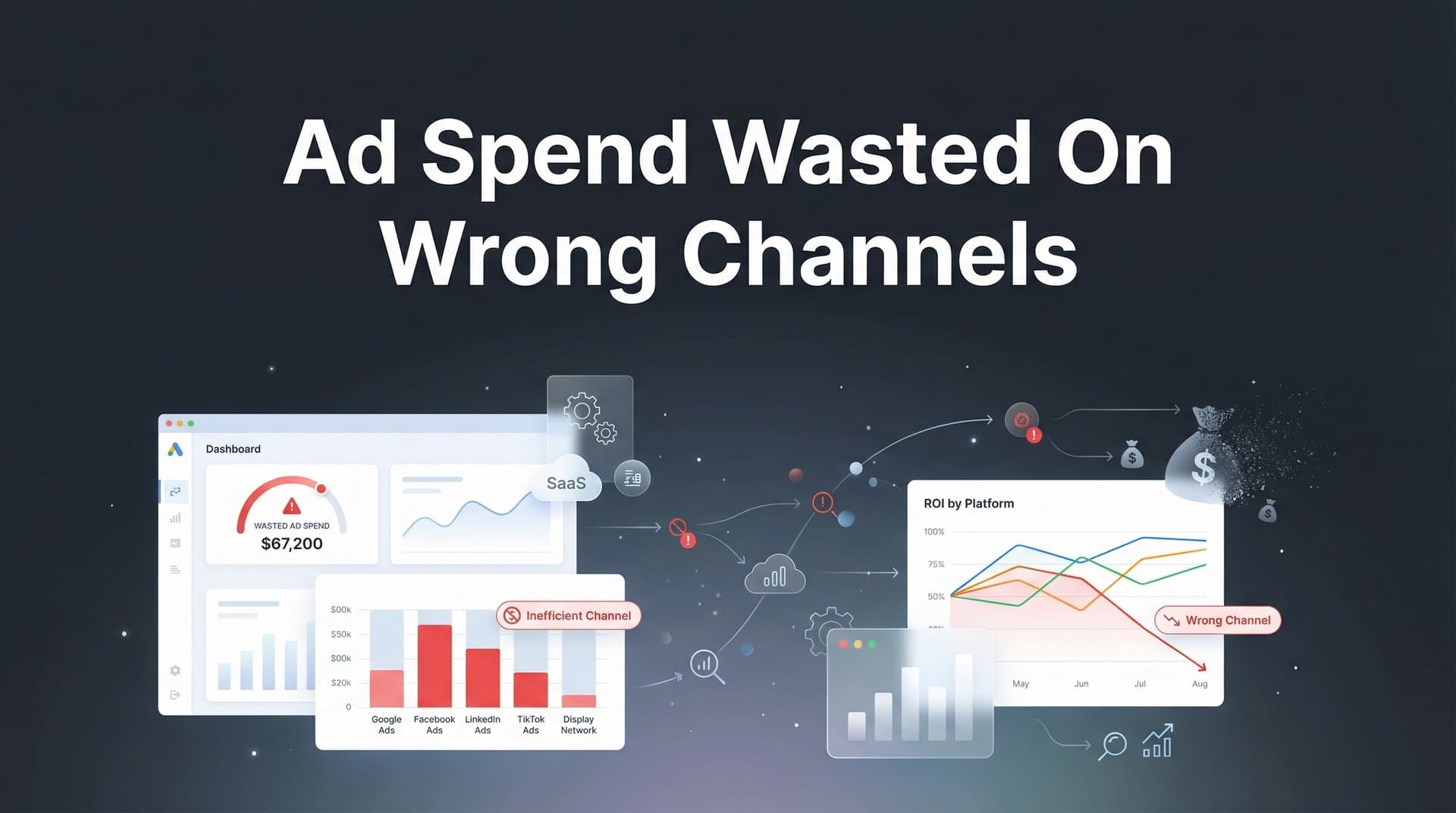
Here's the uncomfortable truth: most marketing teams are hemorrhaging budget into channels that generate impressive vanity metrics but fail to drive actual revenue. The problem isn't necessarily your creative, your targeting, or even your offer. It's that you're investing heavily in channels that don't align with where your customers actually convert.
The frustrating part? You might not even realize it's happening. Traditional tracking methods show you fragments of the story—a click here, an impression there—but they miss the complete journey your customers take before they buy. You're making budget decisions based on incomplete data, and it's costing you more than just wasted ad spend. Every dollar you pour into the wrong channel is a dollar you can't invest in the channels that actually work.
The Hidden Cost of Misallocated Marketing Budgets
Let's start by defining what we mean by "wrong channels." We're not talking about platforms that are inherently bad or ineffective. We're talking about channels that generate activity—clicks, impressions, even form fills—but don't contribute meaningfully to your bottom line.
These channels create what marketers call vanity metrics. They look good in reports. They make your engagement numbers climb. But when you trace them back to actual closed deals, they're rarely part of the equation. Understanding how to evaluate marketing channels properly is essential to avoiding this trap.
The core issue is fragmented tracking. Your Facebook Ads Manager shows conversions. Your Google Analytics shows different conversions. Your CRM shows which leads actually became customers. But these systems don't talk to each other effectively, creating massive blind spots in your understanding of channel performance.
Think of it like this: you're trying to solve a puzzle, but each platform only shows you a few pieces. Facebook claims credit for a conversion. Google claims credit for the same conversion. LinkedIn says they deserve credit too. Without a unified view, you're left guessing which channel actually influenced the sale.
This fragmentation leads to a dangerous pattern. You see strong metrics in one channel, so you increase spend. Those metrics continue to look good, so you keep investing. Meanwhile, the channels that are actually driving revenue get starved for budget because their contribution isn't properly attributed.
The compounding effect is what makes this truly costly. Every month you overspend on low-performing channels is a month you underspend on high-performers. Your competitors who've figured out their true revenue drivers are scaling the right channels while you're still trying to decode why your "winning" campaigns aren't translating to growth.
Consider the opportunity cost. If you're spending $10,000 monthly on a channel that generates clicks but rarely appears in your closed-won customer journeys, that's $120,000 annually that could have been invested in channels with proven conversion paths. Over three years, that's $360,000 in misallocated budget—and that's just one channel.
But here's what makes this even more insidious: channels with poor revenue contribution often have the most impressive surface-level metrics. They generate tons of engagement, shares, and clicks. They make your reports look stellar. Leadership sees these numbers and assumes you're winning. But the bank account tells a different story.
Why Traditional Tracking Fails to Show the Full Picture
To understand why so many marketers struggle with channel allocation, we need to talk about what broke in the tracking ecosystem over the past few years.
The iOS 14.5 update fundamentally disrupted how marketers track customer behavior. Apple's App Tracking Transparency framework gave users the ability to opt out of cross-app tracking, and the majority did. Suddenly, the pixel-based tracking that marketers relied on for years started showing massive gaps in data.
Facebook's tracking pixel, which once captured detailed user behavior across websites, now operates with significant limitations. The same goes for Google's tracking mechanisms and virtually every other platform that relied on browser-based cookies and device identifiers.
Cookie deprecation is the next wave. As browsers phase out third-party cookies, the traditional methods of tracking users across websites are becoming increasingly unreliable. Chrome's planned deprecation will affect the majority of web users, making browser-based tracking even less effective.
But there's another problem that existed even before privacy changes disrupted the landscape: self-attribution bias.
Every ad platform wants to prove its value to you. Facebook Ads Manager is incentivized to show you that Facebook drives conversions. Google Ads is incentivized to show you that Google drives conversions. Each platform uses its own attribution window and methodology, often claiming credit for conversions that other platforms also claim. This is why you might notice Google Ads showing wrong conversions in your reports.
This creates a situation where your total attributed conversions across all platforms exceed your actual conversions. If you add up what Facebook says they drove, what Google says they drove, and what LinkedIn says they drove, you might see 150 conversions. But your actual conversion count is 100. Each platform is over-attributing because they're only seeing their piece of the customer journey.
Platform-reported metrics also tend to use attribution windows that favor their own performance. A seven-day click or one-day view attribution window might capture a touchpoint that happened near the conversion, but it doesn't tell you whether that touchpoint actually influenced the decision or if the customer was already planning to buy.
The gap between click data and actual customer journey touchpoints is massive. A customer might click your Facebook ad, research your product, read reviews, click a Google ad two weeks later, visit your website directly multiple times, and then finally convert through an email campaign. Traditional last-click attribution would credit the email. Facebook's reporting might credit the initial ad click. Neither tells you the full story.
What you need is visibility into the entire journey—every touchpoint, every interaction, every channel that played a role. Without that complete picture, you're making budget decisions based on fragments of data, and those fragments are often misleading.
Red Flags That Signal You're Investing in the Wrong Channels
How do you know if you're wasting budget on channels that don't actually drive revenue? Here are the warning signs that should make you audit your channel allocation immediately.
High Engagement, Low Conversion: You're seeing impressive click-through rates, lots of website visits, and strong engagement metrics. But when you look at actual conversions—leads that turn into opportunities, opportunities that close—this channel is nowhere to be found. This is the classic vanity metric trap. The channel generates activity but not revenue.
Poor Lead Quality: The channel sends volume, but your sales team reports that leads from this source rarely qualify. They're tire-kickers, students doing research, or people who aren't a good fit for your product. High quantity with low quality is often worse than low quantity with high quality because it wastes both ad budget and sales team time.
Absent from Closed-Won Journeys: When you analyze your closed-won customers and map their journey from first touch to conversion, certain channels are conspicuously absent. If a channel consumes 20% of your budget but appears in less than 5% of your winning customer journeys, that's a massive red flag. Implementing proper wasted ad spend identification strategies can help you spot these patterns early.
Platform Reporting vs. CRM Reality: Your ad platform dashboard shows strong conversion numbers, but when you check your CRM, those conversions aren't translating to pipeline or revenue. This discrepancy often indicates that the platform is claiming credit for conversions it didn't actually influence.
Scaling Doesn't Scale Results: You increase budget in a channel by 50%, and while impressions and clicks increase proportionally, actual conversions barely move. This suggests the channel has a low ceiling for quality traffic, and additional spend is reaching less qualified audiences.
Long Time-to-Convert: Leads from this channel take significantly longer to convert than leads from other channels, if they convert at all. This might indicate that the channel attracts early-stage researchers rather than buyers who are ready to make a decision.
If you're experiencing any of these red flags, it's time to dig deeper into your attribution data. The channels consuming your budget might be generating impressive surface-level metrics while contributing little to actual revenue.
How Multi-Touch Attribution Reveals Your True Revenue Drivers
Multi-touch attribution is the antidote to the fragmented, incomplete picture that traditional tracking provides. Instead of crediting a single touchpoint for a conversion, multi-touch attribution recognizes that customers interact with multiple channels before they buy.
Here's how it works: multi-touch attribution tracks every interaction a customer has with your brand—from the first ad they click to the email they open to the direct visit they make before converting. It connects these touchpoints across platforms, creating a complete view of the customer journey. For a deeper dive, explore our guide on comprehensive multi-touch attribution and how it maps the real customer journey.
This differs fundamentally from last-click attribution, which credits only the final touchpoint before conversion. Last-click models systematically undervalue top-of-funnel channels that introduce customers to your brand and overvalue bottom-of-funnel touchpoints that happen to be the last interaction before purchase.
To implement effective multi-touch attribution, you need to connect three critical data sources: your ad platforms, your website behavior, and your CRM. When these systems communicate, you can see which ads a customer clicked, how they behaved on your website, and whether they eventually became a paying customer.
This connection is where most marketers struggle. Ad platforms operate in silos. Your website analytics capture behavior but don't always connect it back to specific ad campaigns. Your CRM knows who converted but doesn't always know which marketing touchpoints influenced them. Multi-touch attribution bridges these gaps. Learning how to track conversions across channels is the first step toward solving this problem.
Different attribution models weight touchpoints differently. First-touch attribution credits the channel that introduced the customer to your brand. Last-touch credits the final interaction. Linear attribution distributes credit evenly across all touchpoints. Time-decay gives more credit to interactions closer to conversion. U-shaped attribution emphasizes first and last touch while still crediting middle interactions.
The power isn't in choosing a single "correct" model—it's in comparing multiple models to understand how different channels contribute throughout the customer journey. A channel that looks weak in last-click attribution might be your strongest top-of-funnel driver in first-touch attribution. A channel that dominates last-click might be capturing demand that other channels created.
When you implement multi-touch attribution, patterns emerge that were invisible before. You might discover that LinkedIn ads rarely close deals directly but consistently introduce high-value prospects who later convert through other channels. You might find that customers who engage with multiple channels have significantly higher lifetime value than single-channel customers.
This complete view transforms how you make budget decisions. Instead of asking "which channel got the last click?" you can ask "which channels contribute to our highest-value customer journeys?" The answers are often dramatically different.
Practical Steps to Reallocate Budget Toward Winning Channels
Understanding the problem is one thing. Fixing it requires concrete action. Here's how to shift your budget from channels that waste spend to channels that drive revenue.
Audit Current Performance with Revenue Metrics: Stop evaluating channels based on clicks, impressions, or even lead volume. Evaluate them based on revenue contribution. Which channels appear most frequently in closed-won customer journeys? Which channels have the shortest time-to-revenue? Which channels drive customers with the highest lifetime value? These revenue-based metrics tell you where to invest. Conducting thorough advertising spend analysis is critical to this process.
Implement Server-Side Tracking: Browser-based tracking is increasingly unreliable due to privacy restrictions and cookie limitations. Server-side tracking captures conversion events on your server rather than in the user's browser, bypassing many of these limitations. This gives you more accurate data about which channels drive conversions, even when browser tracking fails.
Connect Your Full Marketing Stack: Break down the silos between your ad platforms, website analytics, and CRM. When these systems share data, you can trace the complete customer journey from first ad click to closed deal. This connection is essential for understanding true channel performance. Explore solutions for integrating multiple marketing channels to streamline this process.
Test Budget Reallocation Gradually: Don't make massive shifts overnight. Identify your top-performing channels based on revenue contribution, then gradually increase their budget by 10-20%. Monitor results closely. If performance holds or improves, continue the shift. If performance degrades, you've found the channel's capacity limit.
Use AI-Powered Recommendations: Modern attribution platforms use AI to analyze your performance data and identify scaling opportunities you might miss manually. These systems can spot patterns across thousands of customer journeys, revealing which channels, campaigns, and even specific ads contribute most to revenue. They can also flag underperformers that are consuming budget without delivering results.
Cut Ruthlessly Based on Data: When your attribution data shows a channel consistently fails to contribute to revenue, reduce or eliminate spend—even if the surface-level metrics look good. This is where most marketers hesitate because cutting a channel with strong engagement feels risky. But budget invested in proven revenue drivers always outperforms budget wasted on vanity metrics. Master eliminating wasted ad spend techniques to make these decisions with confidence.
Feed Better Data to Ad Platform Algorithms: When you implement server-side tracking and connect your CRM to your ad platforms, you can send conversion events back to Facebook, Google, and other platforms with more complete data. This helps their algorithms optimize for the conversions that actually matter to your business, not just the conversions they can see through their limited tracking.
Putting It All Together: Building a Data-Driven Channel Strategy
The shift from vanity metrics to revenue-focused decision making isn't just about better reporting. It's about fundamentally changing how you think about marketing performance.
When you have a complete view of your customer journey, you stop asking "which channel got the last click?" and start asking "which combination of channels creates the most valuable customers?" You stop optimizing for engagement and start optimizing for revenue. You stop spreading budget evenly across channels and start investing heavily in the channels that actually drive growth.
This requires real-time, unified data. Monthly reports that arrive two weeks after month-end don't cut it anymore. You need to see performance as it happens, adjust budgets dynamically, and respond to changes in channel effectiveness before they cost you significant budget. Proper ad spend ROI tracking makes this level of responsiveness possible.
The marketers who figure this out gain a massive competitive advantage. While their competitors are still debating which platform's reporting to trust, they're confidently scaling the channels that drive revenue. While others are stuck in analysis paralysis, they're making data-driven decisions that compound over time.
Think about where you are right now. Do you know with confidence which channels drive your most valuable customers? Can you trace a customer's complete journey from first interaction to closed deal? Do you have unified data that connects your ad spend to actual revenue?
If the answer to any of these questions is no, you're likely wasting budget on channels that don't deserve it while underinvesting in channels that do. The good news? This is fixable. The technology exists to connect your full marketing stack, track complete customer journeys, and make budget decisions based on revenue contribution rather than vanity metrics.
The question is whether you'll implement it before your competitors do.
Stop Guessing, Start Growing
Wasted ad spend isn't inevitable. It's a symptom of incomplete data and outdated tracking methods that can't keep up with modern privacy restrictions and complex customer journeys.
The marketers who win in this environment are the ones who connect their full customer journey—every ad click, every website visit, every CRM event—into a unified view that shows exactly which channels drive revenue. They're the ones who make budget decisions based on data rather than gut feel, who scale confidently because they know what works, and who can prove ROI to leadership with concrete numbers.
You don't have to keep pouring budget into channels that generate impressive metrics but fail to drive growth. You don't have to rely on fragmented reporting from platforms that over-attribute their own performance. You don't have to make budget decisions based on incomplete data.
Ready to elevate your marketing game with precision and confidence? Discover how Cometly's AI-driven recommendations can transform your ad strategy—Get your free demo today and start capturing every touchpoint to maximize your conversions.