Your SaaS marketing dashboard shows 500 demo requests last month. Your sales team closed 15 deals. Which campaigns actually drove those customers? If you're relying on last-click attribution from Google Ads or Meta, you're probably crediting the wrong channels entirely.
SaaS conversion tracking presents unique challenges that standard e-commerce tracking simply cannot address. Unlike single-purchase businesses, SaaS companies must track complex journeys spanning free trials, demo requests, subscription activations, upgrades, and long-term retention events.
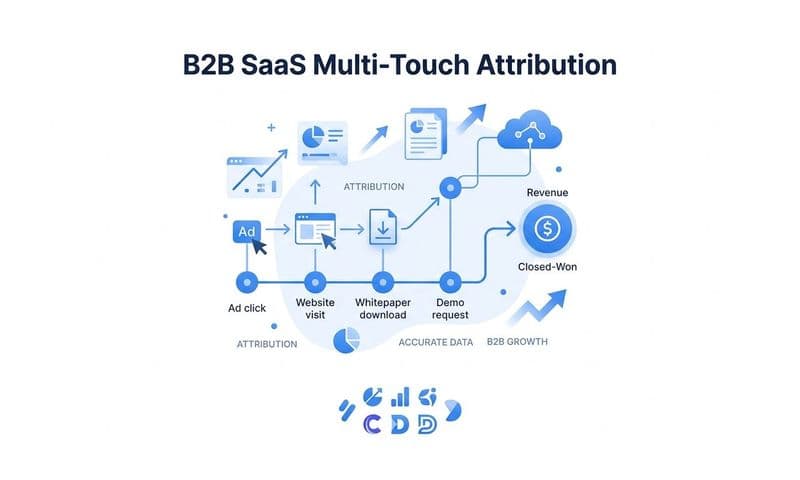
When a prospect clicks your ad today but converts to a paying customer 45 days later after multiple touchpoints, basic tracking loses the thread entirely. That LinkedIn ad that sparked initial awareness gets zero credit. The retargeting campaign that brought them back for a demo becomes invisible. The email nurture sequence that pushed them over the line never appears in your reports.
This guide walks you through implementing advanced conversion tracking specifically designed for SaaS business models. You will learn how to capture every meaningful touchpoint, connect your ad platforms to your CRM data, and build attribution that reflects your actual customer journey.
By the end, you will have a tracking system that shows exactly which campaigns drive not just leads, but qualified pipeline and revenue. No more guessing. No more crediting the last click while starving the campaigns that actually started the conversation.
Step 1: Map Your SaaS Conversion Funnel and Define Tracking Events
Before installing a single tracking pixel, you need a clear map of every conversion event worth measuring. SaaS funnels are rarely linear, and tracking only "demo requested" misses half the story.
Start by documenting every meaningful action a prospect can take. This typically includes content downloads, webinar registrations, demo requests, free trial signups, product activation milestones, paid subscription conversions, and upgrade events. Each represents a different level of intent and value.
The mistake most teams make? Treating all conversions equally. A whitepaper download and a demo request both count as "conversions" in your ad platform, but one converts to revenue at 2% while the other converts at 35%. Your tracking needs to reflect this reality.
Assign monetary values to each event based on historical data. If 30% of demo requests become customers with an average contract value of $12,000, each demo request is worth roughly $3,600. If only 5% of trial signups convert, calculate accordingly. These values let ad platforms optimize toward actual business outcomes, not just volume.
Document the typical timeframe between each stage. How long from first website visit to demo request? From demo to trial signup? From trial to paid conversion? B2B SaaS cycles often span 30 to 90 days or longer. Understanding these windows determines your attribution settings later.
Create a consistent naming convention that scales across platforms and teams. Use a structure like EventType_Action_Detail — for example, "Lead_Demo_Requested" or "Revenue_Subscription_Started". This prevents confusion when the same event appears in Meta, Google, your CRM, and your analytics platform with four different names.
Build a tracking specification document that lists every event, its assigned value, where it fires (website, application, CRM), and which platforms should receive it. Following best practices for tracking conversions accurately becomes your implementation blueprint and prevents gaps where critical events never get tracked.
The goal is a complete picture of your funnel with clear value assigned to each step. When you can tell your ad platforms "this action is worth $3,600" instead of just "someone filled out a form," their algorithms optimize toward revenue, not just clicks.
Step 2: Implement Server-Side Tracking to Capture Complete Data
Browser-based tracking is dying. iOS privacy restrictions, ad blockers, and cookie limitations mean relying solely on client-side pixels leaves massive gaps in your data. For SaaS companies tracking long conversion cycles across multiple devices, these gaps become chasms.
Server-side tracking solves this by sending conversion data directly from your application backend to ad platforms and analytics tools. When a user signs up for a trial, your server fires the event — no browser required, no ad blocker can stop it, no iOS restrictions apply.
The implementation starts with your application code. When critical events occur — trial signup, subscription activation, upgrade — your backend needs to transmit that data to your tracking infrastructure. Choosing the best server-side tracking platform typically means adding event calls to your application logic that fire alongside the actions themselves.
Set up first-party data collection that persists user identity across sessions and devices. When someone clicks your ad on mobile but signs up on desktop three days later, you need to connect those dots. Server-side tracking with proper identity resolution makes this possible.
Configure your tracking to capture both anonymous and identified events. Before someone creates an account, track their anonymous browsing with a persistent identifier. Once they provide an email or create an account, connect their anonymous history to their known identity. This creates a complete timeline from first touch to conversion.
Verify your implementation by comparing server-side events against client-side tracking during a testing period. Fire both simultaneously and check for discrepancies. Server-side should capture 100% of events that happen in your application, while client-side will show lower numbers due to blockers and restrictions. The gap reveals how much data you were losing.
The technical setup varies by platform, but the principle remains constant: move conversion tracking from the browser to your server. When your backend controls event transmission, you capture accurate data regardless of browser settings, device switches, or privacy restrictions.
For SaaS companies, this is non-negotiable. Your conversion cycle is too long and too valuable to lose 30-40% of your data to ad blockers and iOS restrictions. Server-side tracking ensures you see every conversion, attribute it correctly, and feed accurate data back to ad platforms for optimization.
The payoff is immediate. Companies that implement server-side tracking typically see their tracked conversion volume increase by 25-40% simply by capturing events that browser-based pixels missed entirely. That's not more conversions — it's finally seeing the conversions that were always there.
Step 3: Connect Your CRM to Create a Unified Customer Record
Marketing attribution that stops at "demo requested" is useless for SaaS. You need to know which campaigns drive qualified pipeline and closed revenue, not just form fills. That data lives in your CRM, not your ad platforms.
Integrating CRM events into your tracking system connects marketing touchpoints to sales outcomes. When a lead becomes an MQL, an SQL, an opportunity, or a closed deal, those events flow back into your attribution system. Suddenly you can see which campaigns drive revenue, not just which ones generate the most leads.
Start by identifying which CRM stages matter for attribution. Typical milestones include Marketing Qualified Lead, Sales Qualified Lead, Opportunity Created, and Closed Won. Some companies also track contract value, expansion revenue, and churn to measure lifetime impact.
The technical integration requires matching anonymous website visitors to known CRM contacts. When someone fills out a demo form, your tracking system needs to connect their previous anonymous browsing history to their CRM record. Understanding how customer journey software can help B2B SaaS companies scale creates a single customer timeline spanning awareness, consideration, conversion, and revenue.
Identity resolution is the critical piece. Use email as the primary identifier, but layer in additional signals — phone number, company domain, IP address — to improve match rates. When someone browses your site anonymously, then later creates an account with the same email, you need to retroactively connect their entire journey.
Set up automated, bidirectional sync between your CRM and tracking platform. When a lead progresses to SQL in your CRM, that event should flow to your attribution system within minutes, not days. When your tracking system captures a new conversion, it should create or update the CRM record automatically.
Configure your system to handle the messy reality of SaaS attribution. Multiple people from the same company might engage with your marketing. Different team members might attend demos. Your tracking needs to attribute at the account level, not just the contact level, to reflect how B2B buying actually works.
The unified customer record this creates is transformative. Instead of seeing "Campaign A generated 50 leads" you see "Campaign A generated 50 leads, 12 became SQLs, 5 became opportunities worth $180,000, and 2 closed for $60,000 in revenue." That changes which campaigns you scale.
This integration also enables closed-loop reporting back to your ad platforms. When a lead closes as a customer, send that high-value conversion event to Meta and Google. Their algorithms learn which leads actually convert to revenue and optimize accordingly. You stop generating cheap leads that never buy and start generating qualified prospects that close.
Step 4: Configure Multi-Touch Attribution Across Ad Platforms
Last-click attribution is a lie for SaaS. The LinkedIn ad that introduced your prospect to your solution gets zero credit when they convert 60 days later via a Google search. The nurture campaign that kept them engaged becomes invisible. Every channel except the final touchpoint looks like it's underperforming.
Multi-touch attribution distributes credit across the entire customer journey. Instead of giving 100% credit to the last click, it recognizes that awareness, consideration, and conversion all matter. For SaaS companies with long sales cycles and multiple touchpoints, this is the only attribution model that reflects reality.
Start by configuring extended attribution windows in your ad platforms. The default 7-day window in Meta or 30-day window in Google is far too short for B2B SaaS. Set attribution windows to match your actual sales cycle — typically 60 to 90 days minimum, sometimes longer for enterprise sales.
Choose attribution models that reflect how your customers actually buy. Linear attribution gives equal credit to every touchpoint. Position-based attribution emphasizes first and last touch while still crediting the middle. Time-decay attribution gives more credit to recent interactions. Data-driven attribution uses machine learning to weight touchpoints based on their actual impact on conversions.
For most SaaS companies, position-based or data-driven models work best. Position-based gives credit to the campaign that started the relationship and the one that closed it, while acknowledging the nurture in between. Reviewing the best marketing attribution tools for B2B SaaS companies helps you select models that learn from your actual conversion patterns to assign credit intelligently.
Configure custom conversions in each ad platform for your high-value events. Do not just track "lead generated" — track "qualified demo completed" and "closed revenue" as separate conversion events. This lets you optimize campaigns specifically toward qualified pipeline, not just lead volume.
Send enriched conversion data back to ad platforms using their Conversions API or similar tools. When someone becomes a customer, fire that conversion event with the actual deal value. When someone reaches SQL stage, send that milestone. This feedback loop trains ad platform algorithms to find more prospects who actually convert, not just more people who fill out forms.
Set up conversion tracking consistently across Meta, Google, LinkedIn, and any other platforms you use. Following a cross-platform tracking guide ensures you use the same event names, the same attribution windows, and the same conversion values. This enables apples-to-apples comparison across channels.
The result is attribution that finally makes sense. That LinkedIn campaign that looked expensive per lead suddenly shows strong ROI when you see it drives 40% of your first-touch awareness. That Google search campaign that looked amazing on last-click attribution reveals it mostly captures demand that other channels created. You optimize based on reality, not artifacts of broken attribution.
Step 5: Build Revenue Attribution Reports That Drive Decisions
Data without insights is just noise. Once your tracking infrastructure is in place, you need reports that turn attribution data into actionable decisions. The goal is not more dashboards — it is clarity on which marketing investments drive revenue.
Create a primary dashboard showing revenue attributed to each channel, campaign, and ad. This should display both first-touch attribution (which campaigns start relationships) and multi-touch attribution (which campaigns contribute throughout the journey). Understanding revenue attribution for B2B SaaS companies reveals where you are underinvesting in awareness versus conversion.
Build comparison reports that show multiple attribution models side-by-side. Look at the same data through last-click, first-click, linear, and position-based lenses. When a channel performs well in first-click but poorly in last-click, it is an awareness driver that needs continued investment even though it does not get conversion credit.
Set up cohort analysis to track how campaign performance evolves over customer lifetime. A campaign might generate leads that convert slowly but have high retention and expansion revenue. Another might drive fast conversions that churn quickly. Implementing revenue tracking for subscription businesses reveals these patterns that simple conversion reports miss.
Create funnel reports that show conversion rates between each stage for different channels and campaigns. Which campaigns drive demos that actually show up? Which trial sources activate fastest? Which lead sources have the highest SQL-to-close rate? These insights guide both budget allocation and campaign optimization.
Build custom reports for your specific business model. If you have multiple product tiers, track which campaigns drive which subscription levels. If you have usage-based pricing, connect marketing attribution to product usage patterns. If expansion revenue matters, track which acquisition sources have the highest expansion rates.
Establish a regular review cadence to act on attribution insights. Weekly reviews catch tactical opportunities — ads to pause, budgets to shift, audiences to scale. Monthly reviews identify strategic patterns — channels to expand, campaigns to test, audiences to build. Quarterly reviews inform annual planning and budget allocation.
The key is making reports actionable, not comprehensive. A dashboard with 50 metrics is useless. A dashboard with 5 metrics that directly inform budget decisions is transformative. Focus on the numbers that change how you invest, not just the numbers you can measure.
Step 6: Optimize Campaigns Using Your New Attribution Data
Attribution data is worthless if it does not change how you invest. The final step is using your new visibility to optimize campaigns, reallocate budget, and scale what actually drives revenue.
Start by identifying undervalued campaigns that drive assisted conversions. These are the campaigns that look mediocre on last-click attribution but show strong contribution in multi-touch models. They start conversations, build awareness, or nurture prospects — essential work that last-click attribution renders invisible. Increase investment in these campaigns even though they do not get direct conversion credit.
Reallocate budget based on true revenue contribution, not vanity metrics. A campaign generating 100 leads at $50 each looks efficient. A campaign generating 20 leads at $200 each looks expensive. But if the first converts at 2% and the second at 30%, the expensive campaign drives more revenue per dollar spent. Your attribution data reveals which is which.
Use AI-powered recommendations to find scaling opportunities across channels. Modern SaaS marketing analytics platforms can analyze your conversion patterns and suggest which campaigns have room to scale, which audiences to expand, and which creative approaches to test. These recommendations are based on actual conversion data, not just engagement metrics.
Test attribution-informed bid strategies in your ad platforms. Instead of optimizing for "lead" conversions, optimize for "qualified demo" or "closed revenue" conversions. Let the platform's algorithms chase the outcomes that matter, not just the actions that are easy to generate. This typically requires sending enriched conversion data back to ad platforms, which your tracking infrastructure now enables.
Measure incremental lift from your optimizations. When you reallocate budget based on attribution insights, track whether overall conversion rates and revenue improve. Leveraging attribution tracking for multiple campaigns validates whether acting on attribution data actually improves performance.
The companies that master attribution-driven optimization gain a significant competitive advantage. While competitors guess based on last-click data or gut feel, you know exactly which investments drive revenue. You scale what works, cut what does not, and compound your advantage over time.
Your Path to Attribution Clarity
Review your completed tracking setup against this implementation checklist. Conversion events mapped with values assigned. Server-side tracking active and capturing complete data. CRM integration syncing and creating unified customer records. Multi-touch attribution configured across all ad platforms. Revenue dashboards live and informing decisions.
With this foundation, you can finally see which marketing investments actually drive SaaS revenue, not just clicks or form fills. The campaigns that start conversations get credit alongside the campaigns that close deals. The channels that nurture prospects become visible, not just the ones that capture final conversions. Your optimization decisions reflect reality instead of the artifacts of broken attribution.
The companies that master this tracking gain a significant competitive advantage. They scale what works and cut what does not, while competitors guess based on incomplete data. They feed accurate conversion data back to ad platforms, training algorithms to find better prospects. They connect marketing spend to actual revenue outcomes, not just lead volume.
Start by mapping your funnel today. Document every conversion event, assign values based on historical data, and create your tracking specification. Then work through each step systematically — server-side tracking, CRM integration, multi-touch attribution, revenue dashboards, optimization.
Within weeks, you will have attribution clarity that transforms how you invest your marketing budget. You will know which campaigns drive qualified pipeline. Which channels start relationships versus which ones close them. Which audiences convert fastest and retain longest. Which creative approaches drive revenue, not just engagement.
This is not about having more data. It is about having the right data to make confident decisions. When you can connect every marketing dollar to actual revenue outcomes, you stop guessing and start scaling with precision.
Ready to elevate your marketing game with precision and confidence? Discover how Cometly's AI-driven recommendations can transform your ad strategy — Get your free demo today and start capturing every touchpoint to maximize your conversions.