Scroll through any social feed and you'll notice something: the ads that stop you aren't the polished studio productions anymore. They're the grainy phone videos, the authentic testimonials, the content that feels like it came from a real person, not a brand. For ecommerce brands, this shift toward user-generated content (UGC) has created both an opportunity and a bottleneck.
The opportunity? UGC-style ads consistently outperform traditional brand content because they feel native to the platform. The bottleneck? Creating enough UGC to test effectively has always meant sourcing creators, managing deliverables, and waiting weeks for content that might not even perform.
AI-powered UGC tools have changed this equation entirely. Ecommerce brands can now generate authentic-looking testimonial videos, product demonstrations, and social-native content at scale—without hiring creators or waiting for deliverables. For brands running paid campaigns across Meta, TikTok, and Google, this represents a massive shift: the ability to test dozens of creative variations, identify winners faster, and scale what actually drives revenue.
The brands seeing the biggest impact aren't just using AI to generate more content. They're building systematic frameworks that connect creative testing to revenue outcomes, adapting content for each platform's native feel, and iterating on winners rather than running them into the ground.
Here are seven battle-tested strategies for leveraging AI UGC specifically for ecommerce advertising—from initial creative generation through performance optimization and strategic scaling.
1. Start With Product-Focused AI Testimonial Videos
The Challenge It Solves
Traditional product ads often struggle to build trust quickly. Shoppers want to see social proof before they buy, but sourcing authentic customer testimonials takes time and coordination. You need content that builds credibility immediately while showcasing specific product benefits—and you need it at scale to test different angles and demographics.
The Strategy Explained
AI testimonial videos place your product in the hands of realistic avatars who speak directly to camera about specific benefits and use cases. The key is matching avatar demographics to your target customer segments and scripting testimonials that address real pain points your product solves.
Think of it like having an on-demand focus group of satisfied customers, each representing a different buyer persona. A skincare brand might generate testimonials from avatars representing different age groups and skin concerns. A fitness equipment company could create videos showing various body types and fitness levels using their products.
The most effective AI testimonials don't try to cover everything your product does. They focus on one specific benefit per video, making it easy to test which value propositions resonate most with your audience. For more ideas on leveraging videos for ecommerce, consider how different formats can complement your testimonial strategy.
Implementation Steps
1. Identify your top three customer segments and the primary pain point each segment experiences that your product solves.
2. Use an AI UGC platform like AdStellar to generate 3-5 testimonial videos per segment, each featuring an avatar that matches that demographic and addresses their specific pain point in 15-30 seconds.
 7 Proven AI UGC Strategies to Scale Your Ecommerce Ad Campaigns
3. Launch these videos as separate ad sets on Meta or TikTok, tracking which combinations of avatar demographics and pain points drive the highest click-through and conversion rates.
Pro Tips
Start with your best-selling product and the most common positive review themes. This gives you proven messaging to test with AI avatars. Also, keep initial testimonials under 30 seconds—social platforms reward quick hooks and concise messaging. You can always create longer versions of winners later.
2. Build a Rapid Creative Testing Framework
The Challenge It Solves
Most ecommerce brands test creative too slowly. By the time you've produced and tested three variations of an ad concept, your competitors have already found their winners and scaled. Traditional creative production creates a bottleneck that limits how many angles, hooks, and messaging approaches you can test simultaneously.
The Strategy Explained
AI UGC enables systematic creative testing at a pace that was previously impossible. Instead of testing one concept at a time, you can launch 10-15 variations simultaneously, each testing a different hook, pain point, or value proposition. This rapid testing framework helps you identify winning patterns faster and eliminates guesswork about what resonates with your audience.
The framework works by isolating variables. Keep your product and offer constant while varying the hook, the avatar, the pain point addressed, or the social proof element. This way, when something performs, you know exactly what drove the results.
Brands using this approach often discover that their assumptions about what messaging works were completely wrong. The features they thought were most important might underperform, while a benefit they barely mentioned becomes their best-performing angle. Exploring the best AI tool for UGC ads can help you scale this testing process efficiently.
Our walkthrough on how to make UGC ads with AI covers the process in detail.
Implementation Steps
1. Create a testing matrix with three variables: hook type (problem-focused, benefit-focused, or transformation-focused), avatar demographic (matching your top customer segments), and primary pain point addressed.
2. Generate 12-15 AI UGC videos that systematically test different combinations of these variables, keeping video length and product showcase consistent across all variations.
3. Launch all variations simultaneously with equal budget allocation, running for 3-5 days to gather statistically significant data before identifying your top three performers to scale.
Pro Tips
Don't get attached to your assumptions. Let the data decide what works. Also, track beyond just click-through rates—connect your ads to actual conversion data so you're scaling what drives revenue, not just engagement. Many brands find their highest-engagement ads don't convert as well as more straightforward benefit-focused content.
3. Create Platform-Native Content for Each Channel
The Challenge It Solves
Running the same creative across Meta, TikTok, and YouTube Shorts might seem efficient, but it leaves performance on the table. Each platform has its own content culture, pacing expectations, and user behavior patterns. Content that feels native to TikTok often looks out of place on Facebook, and vice versa.
The Strategy Explained
Platform-native AI UGC means adapting your content format, pacing, and style to match how users consume content on each specific channel. TikTok favors quick cuts, trending audio, and energetic pacing. Meta feeds reward slightly longer, more narrative-driven content. YouTube Shorts sits somewhere in between but benefits from clear value propositions in the first three seconds.
We compare the leading options in our AI UGC for TikTok roundup.
This doesn't mean creating entirely different campaigns for each platform. It means taking your core message and product benefits, then expressing them in ways that feel natural to each platform's environment. An AI UGC video for TikTok might feature rapid scene changes and text overlays, while the Meta version of the same concept uses a more conversational testimonial style.
The brands seeing the best cross-platform performance treat each channel as its own creative environment with distinct best practices, rather than forcing one creative approach across all platforms. Understanding how to track cross platform ad performance becomes essential when running these differentiated campaigns.
Implementation Steps
1. Analyze your top-performing organic content on each platform to identify pacing, style, and format patterns that resonate with your audience on that specific channel.
2. Generate platform-specific versions of your core AI UGC concepts: faster-paced with text overlays for TikTok, testimonial-style with clear problem-solution framing for Meta, and benefit-first hooks for YouTube Shorts.
3. Test platform-native versions against your standard cross-platform creative to quantify the performance lift from platform-specific adaptation.
Pro Tips
Pay attention to audio choices. TikTok users expect trending sounds or upbeat background music, while Meta users often watch with sound off, making text overlays and captions essential. Also, front-load your value proposition—every platform rewards fast hooks, but the specific timing varies. TikTok needs impact in the first second, while Meta gives you about three seconds to capture attention.
4. Layer AI UGC Into Your Full-Funnel Strategy
The Challenge It Solves
Many ecommerce brands use the same creative approach across all funnel stages, from cold traffic awareness campaigns through retargeting. This misses a critical opportunity: people at different stages of the buyer journey need different messaging and proof points to move forward.
The Strategy Explained
A full-funnel AI UGC strategy matches content style and messaging to where prospects are in their decision journey. Cold traffic needs education and problem identification. Warm traffic needs social proof and specific benefits. Hot traffic needs urgency and clear calls to action.
For awareness campaigns targeting cold audiences, AI UGC works best when it leads with the problem, not the product. Create content that identifies pain points and positions your product category as the solution, without heavy product focus yet. For consideration-stage audiences who've engaged with your content, shift to testimonial-style AI UGC that showcases specific benefits and use cases.
For conversion and retargeting, your AI UGC should address objections directly and create urgency. Generate videos that tackle common hesitations, showcase guarantees, or highlight limited-time offers with clear next steps. Implementing strategies to improve ecommerce conversion rates at each funnel stage amplifies the impact of your AI UGC efforts.
Implementation Steps
1. Map your customer journey into three stages: awareness (problem identification), consideration (solution evaluation), and decision (purchase readiness).
2. Create distinct AI UGC content sets for each stage—problem-focused educational content for awareness, benefit and testimonial content for consideration, and objection-handling plus urgency content for decision.
3. Structure your ad campaigns to serve the appropriate content type based on audience engagement level, using platform targeting to show consideration content only to people who've engaged with awareness content, and decision content only to website visitors or cart abandoners.
Pro Tips
Don't rush cold traffic toward purchase. Awareness-stage content should educate and build trust, not push for immediate conversion. Save your strongest offers and urgency messaging for retargeting campaigns where people already understand your product. Also, use engagement with awareness content as a signal to build custom audiences for more targeted consideration campaigns.
5. Optimize Scripts Using Customer Language Mining
The Challenge It Solves
The biggest tell that content is AI-generated isn't the visual quality—it's the language. Generic marketing speak and overly polished phrasing make AI UGC feel inauthentic, defeating the entire purpose of user-generated content style. You need scripts that sound like real customers talking about real experiences, not copywriters crafting perfect messaging.
The Strategy Explained
Customer language mining means systematically pulling authentic phrases, descriptions, and pain points from real customer communications—reviews, support tickets, social media comments, and survey responses. These become the foundation for your AI UGC scripts, ensuring the language matches how your actual customers talk about your products.
When real customers describe their experience, they use specific, conversational language. They mention unexpected benefits, describe problems in relatable ways, and express enthusiasm naturally. A customer might say "it actually worked" instead of "it delivered exceptional results." They'll mention specific situations: "perfect for my morning routine" rather than "ideal for daily use."
Mining this language gives your AI UGC scripts authenticity that scripted marketing copy can never match. The content sounds like real testimonials because it's built from real testimonial language. Leveraging marketing analytics for ecommerce brands can help you identify which customer phrases correlate with higher conversion rates.
Implementation Steps
1. Compile 50-100 positive customer reviews, support ticket resolutions, and social media comments about your products, focusing on detailed responses rather than simple star ratings.
2. Identify recurring phrases, specific benefit descriptions, and authentic problem statements that appear across multiple customer communications—these represent language patterns your target audience actually uses.
3. Build AI UGC scripts by combining these authentic customer phrases into coherent testimonials, maintaining the conversational tone and specific language while structuring them into effective video narratives.
Pro Tips
Pay special attention to how customers describe the moment they decided to buy and what specific problem they needed solved. These decision-point insights make powerful hooks. Also, don't sanitize the language too much—minor imperfections and conversational filler words like "honestly" or "actually" make AI UGC feel more authentic.
6. Scale Winners With Iteration, Not Replication
The Challenge It Solves
You've found a winning AI UGC ad that's driving strong ROAS. The natural instinct is to scale budget and run it hard. But every ad has a shelf life—creative fatigue sets in, performance drops, and what was working stops delivering. Simply replicating winning ads across more audiences or increasing spend eventually hits diminishing returns.
The Strategy Explained
Scaling through iteration means identifying what specifically makes your winning ad work, then creating variations that preserve those winning elements while testing new hooks, avatars, or angles. This approach maintains performance while building creative diversity that extends the lifespan of your winning concepts.
If an AI UGC testimonial featuring a specific pain point and avatar demographic is performing well, create iterations that keep that pain point but test different hooks, or maintain the hook while testing different avatar demographics. You're not starting from scratch—you're building on proven patterns while avoiding the creative fatigue that comes from running identical content too long.
The most successful ecommerce brands treat winning ads as templates rather than finished products. They systematically test variations to understand which elements drive performance, then create families of related content that maintain the core winning attributes while staying fresh. Using best tools for tracking ad performance helps you identify exactly when creative fatigue begins.
Implementation Steps
1. When an AI UGC ad reaches strong performance (typically 2-3x your target ROAS sustained over 5-7 days), analyze what specific elements are working—the hook type, the pain point addressed, the avatar demographic, or the pacing and format.
2. Generate 4-6 iterations that preserve the strongest performing elements while varying one or two components, such as keeping the same pain point but testing different opening hooks, or maintaining the hook while featuring different avatar demographics.
3. Launch iterations alongside your original winner with 20-30% of the original's budget, gradually shifting spend toward top-performing variations as data accumulates while retiring the original ad before performance significantly declines.
Pro Tips
Watch frequency metrics closely. When your winning ad's frequency climbs above 3-4 on Meta or your TikTok performance starts declining after 7-10 days, that's your signal to shift budget toward iterations. Also, keep a swipe file of winning elements—specific hooks, pain points, and formats that have worked—so you can quickly generate new iterations when needed.
7. Integrate AI UGC With Your Attribution Stack
The Challenge It Solves
Platform metrics tell you which AI UGC ads get clicks and engagement, but they don't tell you which ads actually drive revenue. An ad might generate strong click-through rates but attract low-quality traffic that doesn't convert. Another might have modest engagement metrics but attract high-intent buyers who generate significant revenue. Without proper attribution, you're scaling based on incomplete data.
The Strategy Explained
Integrating AI UGC with attribution tracking means connecting every creative variation to actual revenue outcomes across your entire customer journey. This goes beyond platform conversion tracking to understand which specific AI UGC styles, hooks, and messaging approaches drive not just conversions, but profitable conversions from customers who stick around.
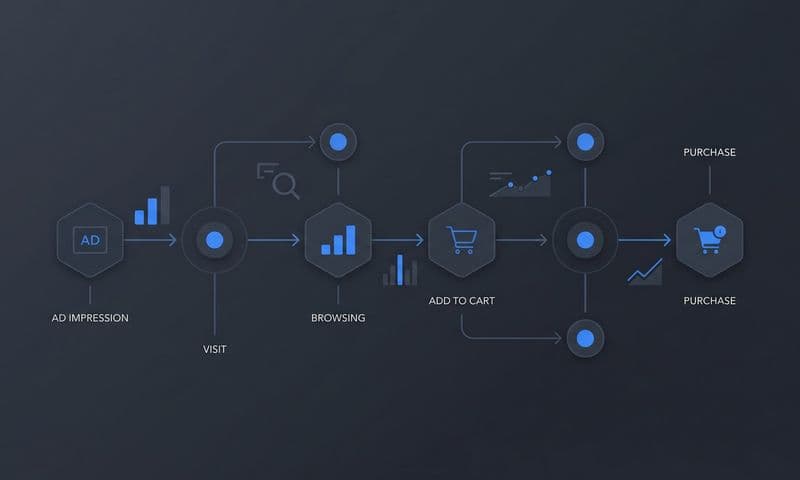
Attribution reveals patterns platform metrics miss. You might discover that AI UGC testimonials addressing a specific pain point drive lower click-through rates but significantly higher average order values. Or that certain avatar demographics attract customers with better retention rates. Implementing attribution tracking for ecommerce transforms these insights into actionable optimization strategies.
The brands seeing the strongest results from AI UGC don't just track which ads perform—they understand the complete journey from initial ad exposure through purchase and beyond, using this data to inform which creative approaches deserve more investment.
Implementation Steps
1. Implement server-side tracking and multi-touch attribution to capture the complete customer journey beyond what platform pixels can track, ensuring you're seeing the full impact of your AI UGC across all touchpoints.
2. Tag each AI UGC variation with specific creative attributes in your tracking system—hook type, pain point addressed, avatar demographic, and content format—so you can analyze performance patterns across these variables rather than just individual ads.
3. Build reporting that connects creative attributes to revenue metrics including ROAS, average order value, and customer lifetime value, then use these insights to guide which AI UGC styles and approaches to scale versus which to retire.
Pro Tips
Look beyond first-touch attribution. AI UGC often plays an assist role in the customer journey, introducing prospects to your brand before they convert through other channels. Multi-touch attribution reveals this contribution. Also, segment attribution data by customer value—understanding which AI UGC attracts high-value customers versus one-time buyers should heavily influence your scaling decisions.
Putting Your AI UGC Strategy Into Action
The ecommerce brands seeing the strongest results from AI UGC share a common approach: they combine high-volume creative generation with systematic testing and precise attribution tracking. They're not just making more ads—they're building frameworks that identify what works and scale it strategically.
Start with product-focused testimonial videos and a rapid testing framework. Generate 10-15 variations this week that test different hooks, pain points, and avatar demographics. Launch them with equal budget allocation and let the data guide your next moves.
As you identify winning patterns, adapt your content for each platform's native style and layer it across your full funnel. Use customer language mining to make your scripts more authentic, then scale winners through iteration rather than replication to avoid creative fatigue.
The critical piece many brands miss is connecting creative performance to actual revenue outcomes. Platform metrics show engagement, but attribution reveals which AI UGC drives profitable growth. Understanding this distinction transforms AI UGC from a content production tool into a strategic advantage.
The opportunity is clear: AI UGC removes the production bottleneck that has always limited creative testing. The brands that win will be those who use this capability not just to make more content, but to systematically discover what resonates with their audience and scale it with confidence.
Ready to elevate your marketing game with precision and confidence? Discover how Cometly's AI-driven recommendations can transform your ad strategy—Get your free demo today and start capturing every touchpoint to maximize your conversions.