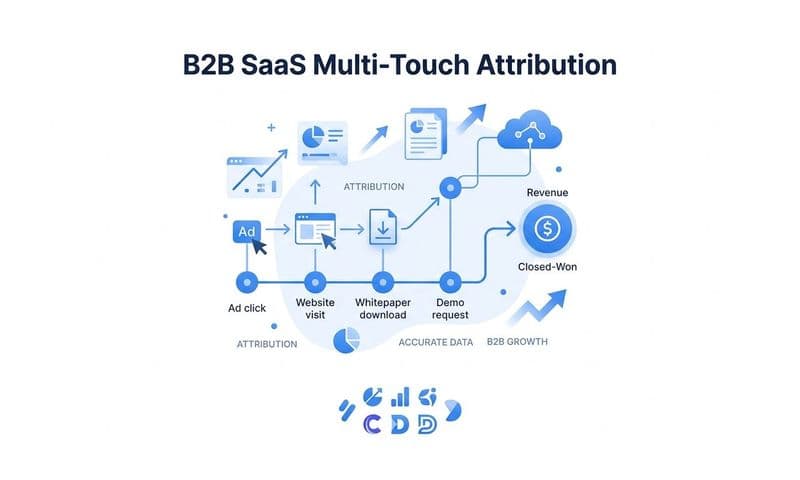

Most marketers celebrate when they see conversions roll in, but they're only seeing half the story. That final click before someone converts? It's usually the last touchpoint in a journey that started weeks earlier with a social ad, an email, or a blog post they stumbled across. These assisted conversions—the touchpoints that influenced the sale but didn't get the final credit—often drive more revenue than the channels showing up in your last-click reports.
Without tracking assisted conversions, you're making budget decisions based on incomplete data. You might be cutting spend on the Facebook campaign that introduces prospects to your brand because it "doesn't convert," while pouring money into retargeting ads that only work because that earlier touchpoint did the heavy lifting. You're essentially rewarding the closer while ignoring the entire sales team that warmed up the lead.
The good news? Setting up assisted conversion tracking isn't as complex as it sounds. This guide walks you through the entire process, from auditing your current setup to building reports that show which touchpoints truly drive results. You'll learn how to configure your analytics tools, connect your marketing channels, and create a system that reveals the full customer journey.
By the end, you'll have a complete framework for understanding which campaigns fill your pipeline, which ones nurture prospects through consideration, and which ones close the deal. More importantly, you'll be able to make smarter budget decisions based on actual contribution to revenue, not just who happened to be there at the finish line.
Step 1: Audit Your Current Tracking Setup and Identify Gaps
Before you can track assisted conversions effectively, you need to understand what you're already capturing and where the blind spots exist. Start by opening Google Analytics and reviewing your current conversion tracking. Navigate to the Conversions section and check which goals are configured. Are you tracking all meaningful conversion actions, or just the obvious ones like purchases and form submissions?
Next, check your ad platforms individually. Log into Meta Ads Manager, Google Ads, and any other platforms you're running campaigns on. Review the conversion events each platform is tracking. You'll often find inconsistencies: Google might be tracking newsletter signups while Meta isn't, or your LinkedIn campaigns might have no conversion tracking configured at all.
Now comes the critical part: mapping a real customer journey to see what data actually exists. Pick a recent conversion from your CRM and try to trace it backward. Can you see the initial touchpoint that introduced them to your brand? What about the middle interactions—the email they opened, the retargeting ad they clicked, the blog post they read? If you can't reconstruct this journey with your current data, you've found your gaps.
Document everything in a tracking audit spreadsheet. List every marketing channel you're running (paid social, search ads, email, content, organic social, referral partners) and note whether each one has proper tracking configured. Be honest about what's missing. Common blind spots include cross-device journeys where someone discovers you on mobile but converts on desktop, offline conversions that happen through phone calls or in-person meetings, and dark social traffic from messaging apps and private shares.
Create a prioritized list of integration needs. Which channels drive the most traffic but have the weakest tracking? Which ones are expensive enough that better attribution would significantly impact budget decisions? These become your implementation priorities for the next steps.
To verify this step worked, try this test: Pick three recent conversions and attempt to map their complete journey from first touch to conversion. If you can only see the last click for all three, your current setup needs significant improvement. If you can see multiple touchpoints but they're scattered across different platforms with no unified view, you need better integration. The goal is to identify exactly what's missing before you start building.
Step 2: Define Your Conversion Events and Attribution Windows
Not all conversions deserve equal credit, and not all touchpoints should be measured within the same timeframe. This step is about creating a clear framework for what you'll track and how you'll measure it. Start by listing every conversion action that matters to your business. The obvious ones are purchases, demo requests, and trial signups. But don't stop there.
Micro-conversions often predict future revenue even when they don't immediately generate it. Someone who downloads your guide, watches a product video, or adds items to their cart is showing buying intent. These actions assist the final conversion, and they deserve to be tracked. For each conversion event, assign a value that reflects its contribution to revenue. If 20% of guide downloads eventually become customers with an average value of $5,000, that download is worth $1,000 in assisted conversion value.
Now set your attribution windows based on your actual sales cycle. This is the lookback period during which touchpoints receive credit for influencing a conversion. If your typical customer converts within 7 days of first discovering you, a 7-day window makes sense. But if you're selling enterprise software with a 90-day sales cycle, you need a longer window to capture all the touchpoints that mattered.
The mistake many marketers make is using default attribution windows (usually 7 or 30 days) without considering their specific buying journey. Check your CRM data to find the average time from first contact to closed deal. Add a buffer of 20-30% to account for prospects who take longer, and that's your attribution window.
Choose at least two attribution models to run in parallel. Last-click attribution shows you which channels close deals. First-click attribution reveals which channels introduce new prospects. Multi-touch models like linear (equal credit to all touchpoints) or time-decay (more credit to recent touchpoints) show the full journey. You need multiple perspectives because no single model tells the complete story. For SaaS businesses specifically, advanced conversion tracking becomes essential for capturing these complex journeys.
Document all of this in a conversion tracking reference guide that your entire team can access. Include the name of each conversion event, its assigned value, the attribution window, and which platforms should be tracking it. This becomes your source of truth when questions arise about why certain channels are getting credit.
To verify this step, review your documented conversion events with someone from sales or customer success. Ask them: "Does this list capture everything that indicates buying intent?" If they mention behaviors you haven't included, add them. The goal is a comprehensive list that reflects real customer behavior, not just the actions that are easy to track.
Step 3: Implement Cross-Platform Tracking Infrastructure
Here's where theory meets implementation. You need tracking infrastructure that captures data across every channel and device, even when browser-based pixels fail. Start with server-side tracking, which sends conversion data directly from your server to ad platforms instead of relying on browser cookies. This bypasses ad blockers, cookie restrictions, and iOS privacy limitations that cause traditional pixel tracking to miss 30-40% of conversions.
If you're using Google Analytics 4, configure server-side tagging through Google Tag Manager. This requires some technical setup, but it dramatically improves data accuracy. For ad platforms like Meta and Google Ads, implement their server-side conversion APIs. Meta's Conversions API and Google's Enhanced Conversions send hashed customer data (email, phone) directly from your server, allowing platforms to match conversions even when pixels don't fire. Understanding the server-side conversion tracking benefits helps justify the implementation effort to stakeholders.
Next, standardize your UTM parameters across every campaign and channel. Create a UTM naming convention document that everyone follows. Use consistent values for utm_source (the platform), utm_medium (the channel type), and utm_campaign (the specific campaign). Inconsistent UTMs are one of the biggest causes of attribution failures. If one team member uses "facebook" while another uses "fb" or "Facebook," your data gets fragmented.
Connect your ad platforms to a central analytics hub. If you're using Google Analytics, link your Google Ads account directly. Import cost data from Meta, LinkedIn, and other platforms so you can calculate ROAS in one place. The goal is a unified view where you can see all channels side by side with consistent metrics. A cross-platform conversion tracking solution eliminates the manual work of stitching data together from multiple sources.
Now integrate your CRM data, because some of your most valuable conversions don't happen on your website. When someone requests a demo, fills out a contact form, or calls your sales team, that conversion data needs to flow back to your marketing analytics. Set up automated syncs between your CRM (Salesforce, HubSpot, Pipedrive) and your analytics platform. Tag CRM conversions with the original marketing source so you can track which campaigns drove that lead.
For offline conversions that happen through phone calls or in-person meetings, implement call tracking that attributes phone conversions back to the marketing source. Tools like CallRail or WhatConverts capture which campaign drove each call, then send that data to your analytics platform. Learn more about offline conversion tracking for online ads to ensure you're capturing these valuable touchpoints.
To verify this step worked, run a multi-device, multi-channel test. On your phone, click a Facebook ad and browse your site without converting. Later, on your desktop, search for your brand on Google, click the ad, and complete a conversion. Check your analytics: Can you see both touchpoints in the conversion path? If you only see the final Google click, your cross-device tracking needs improvement. If you see both touchpoints connected to the same user journey, your infrastructure is working.
Step 4: Configure Multi-Touch Attribution Reports
Now that you're capturing data across channels, you need reports that actually show assisted conversions alongside last-click data. In Google Analytics 4, navigate to Advertising > Attribution > Model comparison. This report lets you compare how different attribution models credit your channels. Set up a comparison between Last Click, First Click, and Data-Driven attribution to see how credit shifts.
Pay special attention to the "Assisted Conversions" metric in Google Analytics. Go to Conversions > Multi-Channel Funnels > Assisted Conversions. This report shows how many conversions each channel assisted versus how many it directly completed. A high assisted-to-last-click ratio means that channel is valuable for awareness and consideration, even if it doesn't close deals.
Create custom channel groupings that reflect how you actually organize your marketing. Default groupings often lump too many sources together. Separate paid social by platform (Meta, LinkedIn, TikTok), break out branded versus non-branded search, and distinguish between promotional emails and nurture sequences. Granular groupings reveal which specific tactics assist conversions.
Build conversion path reports that visualize common customer journeys. In Google Analytics, the Top Conversion Paths report shows the sequence of channels users interacted with before converting. You might discover that your typical path is: Organic Social > Paid Search > Email > Direct. This tells you that social introduces prospects, search captures intent, and email nurtures them to conversion. Each touchpoint deserves credit. If you're managing multiple brands or clients, explore best conversion tracking for multiple ad accounts to maintain consistency across all properties.
Set up automated alerts for significant changes in assisted conversion patterns. If a channel that normally assists 100 conversions per month suddenly drops to 20, something broke. Maybe a tracking parameter got removed, or a campaign paused unexpectedly. Configure alerts in Google Analytics or your analytics platform to notify you when key metrics change by more than 20-30%.
Create a weekly dashboard that shows assisted conversion value alongside direct conversion value for each channel. This becomes your decision-making tool. When you see that Facebook drives $10,000 in last-click revenue but $40,000 in assisted revenue, you realize its true contribution is 5x what last-click attribution suggested.
To verify this step, generate a report showing the same conversion credited across different attribution models. Pick a recent conversion and check how much credit it receives under Last Click (100% to final touchpoint), First Click (100% to initial touchpoint), and Linear (distributed across all touchpoints). If you see the credit distributed differently across models, your multi-touch attribution is working correctly.
Step 5: Analyze Assisted Conversion Data and Optimize Spend
Data without action is just noise. Now you need to turn your assisted conversion insights into budget decisions that improve performance. Start by comparing assisted conversion value against direct conversion value for each channel. Create a spreadsheet with columns for Channel, Direct Conversions, Direct Revenue, Assisted Conversions, and Assisted Revenue. Sort by total contribution (direct plus assisted) rather than direct alone.
You'll likely find channels that look weak on last-click metrics but are powerhouses when you include assisted conversions. Content marketing and organic social often fall into this category. They rarely get final-click credit, but they introduce prospects who later convert through other channels. If you've been considering cutting content spend because it "doesn't drive conversions," the assisted data might tell a different story. Understanding why conversion tracking numbers are wrong helps you interpret these discrepancies correctly.
Calculate true ROAS by including assisted conversion contributions. Traditional ROAS divides revenue by spend using only last-click conversions. Assisted ROAS adds the assisted conversion value to get a complete picture. A channel with a 2x last-click ROAS might actually deliver 5x ROAS when you include assists. This changes whether you scale it or cut it.
Identify undervalued channels that deserve more budget. Look for channels with high assisted-to-last-click ratios and strong total contribution. These are your pipeline builders. They might not close deals directly, but they fill the top of your funnel with qualified prospects who convert later. Increasing spend here often has a multiplier effect because you're feeding more prospects into the entire journey.
Reallocate budget based on full-funnel performance. If your analysis shows that LinkedIn assists 3x more conversions than it directly drives, it deserves more investment. If branded search gets all the last-click credit but only works because other channels built awareness, it might not need the aggressive bids you've been paying. Run the math on what a 20% budget shift from overvalued to undervalued channels would do to total conversions. Following best practices for tracking conversions accurately ensures your optimization decisions are based on reliable data.
Start with a controlled test rather than massive changes. Pick two channels: one that's undervalued based on assisted conversions, and one that's overvalued. Shift 15-20% of budget from the overvalued channel to the undervalued one. Run this test for at least one full attribution window (if your window is 30 days, run the test for 30 days). Measure the impact on total conversions, not just the conversions those specific channels drive.
The key insight here is that channels work together. When you increase spend on top-of-funnel channels that assist conversions, you often see bottom-funnel channels perform better because they have more qualified prospects to work with. When you cut spend on awareness channels because they don't show last-click conversions, your retargeting and branded search performance eventually suffers because the pipeline dries up.
To verify this step worked, document your baseline metrics before making any changes. Record total conversions, total revenue, and cost per conversion across all channels. After your test period, compare these metrics. If total conversions increased or cost per conversion decreased while maintaining revenue, your optimization worked. If metrics stayed flat or worsened, you either need a longer test period or your hypothesis about which channels to shift budget toward needs refinement.
Putting It All Together
You now have a complete assisted conversion tracking system that reveals the full picture of your marketing performance. Let's confirm your setup is solid with a quick checklist. Your current tracking has been audited and gaps documented, showing you exactly what you were missing before. Conversion events are defined with appropriate attribution windows that match your actual sales cycle, not arbitrary defaults. Cross-platform tracking infrastructure is implemented with server-side capabilities that capture data even when browser pixels fail.
Multi-touch attribution reports are configured and running, giving you multiple perspectives on channel performance. Initial analysis is completed with specific optimization opportunities identified based on real data, not assumptions. If you can check all these boxes, you're ahead of 90% of marketers who are still making budget decisions based on last-click attribution alone.
The next step is to make this a regular practice, not a one-time project. Review your assisted conversion data weekly and adjust your budget allocation based on true channel value. Look for patterns in your conversion paths to understand which channel combinations work best together. Test budget shifts systematically and measure their impact on total conversions, not just individual channel metrics.
Watch for changes in assisted conversion patterns that signal problems or opportunities. If a channel's assisted conversions drop suddenly, investigate whether tracking broke or performance actually declined. If a new channel starts showing strong assisted conversion value, consider scaling it before competitors discover the same opportunity.
Remember that attribution is never perfect, but it's infinitely better than ignoring the problem. Even if your multi-touch attribution model doesn't capture every nuance of the customer journey, it gives you a more accurate view than last-click attribution ever could. Use it to guide decisions, not to create false precision.
Platforms like Cometly can automate much of this process by connecting your ad platforms, CRM, and website to track every touchpoint and provide AI-powered recommendations for scaling what works. Instead of manually building reports and calculating assisted conversion value, you get a unified dashboard that shows true channel contribution with AI Chat to answer questions about your data in plain English. The platform captures every touchpoint from ad clicks to CRM events, giving AI a complete view of each customer journey to identify which campaigns actually drive revenue.
Ready to elevate your marketing game with precision and confidence? Discover how Cometly's AI-driven recommendations can transform your ad strategy. Get your free demo today and start capturing every touchpoint to maximize your conversions.