You're spending thousands on ads every month. Meta says you got 150 conversions. Google claims 120. Your CRM shows 80 actual customers. Which number is real? This is the attribution puzzle every marketer faces—and why attribution data analysis matters more than your ad spend itself.
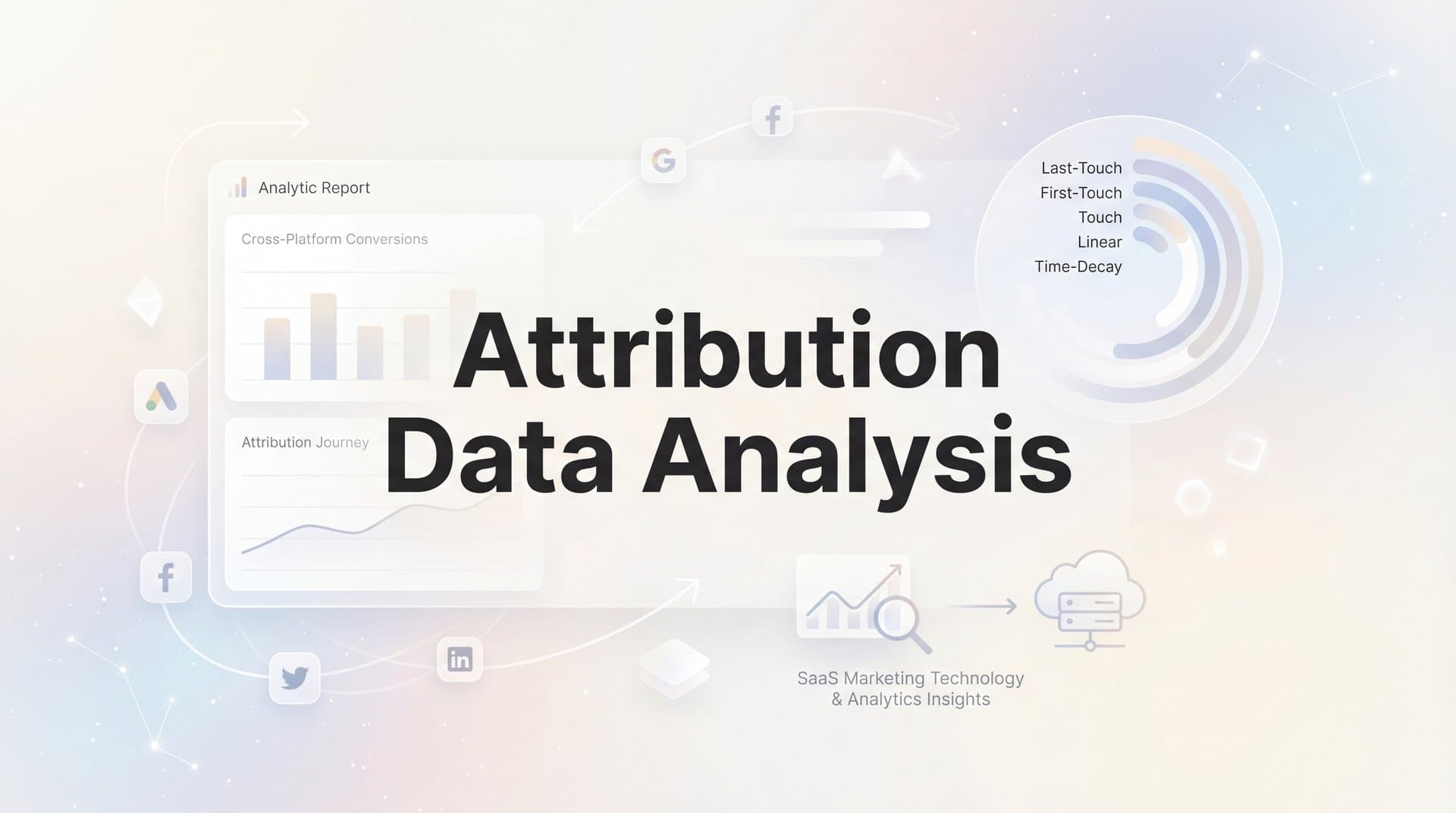
Attribution data analysis is the process of examining how different marketing touchpoints contribute to conversions and revenue. It's not just about counting clicks or impressions. It's about understanding the complete journey your customers take before they convert, and which interactions actually influenced their decision.
Without proper analysis, you're making budget decisions based on incomplete information. You might be doubling down on channels that look good in isolation but barely contribute to actual revenue. Or worse, you could be cutting budget from channels that play crucial supporting roles in your conversion path.
This guide walks you through the complete process of analyzing your attribution data, from verifying your tracking setup to making confident budget decisions. You'll learn how to move beyond surface-level platform metrics and build a true picture of what's driving results.
Whether you're managing campaigns across Meta, Google, TikTok, or a mix of channels, these steps will help you replace guesswork with data-driven confidence. Let's start with the foundation that makes accurate attribution analysis possible.
Step 1: Audit Your Current Tracking Setup
Before you can analyze attribution data, you need to trust that the data you're collecting is complete and accurate. Think of this like checking your measuring tools before starting a construction project—if your ruler is off by an inch, everything you build will be wrong.
Start by verifying that all conversion events are firing correctly across your website and landing pages. Open your browser's developer console and trigger a test conversion. You should see events firing to your ad platforms, analytics tools, and any attribution software you're using. If you're missing events on key pages, you're missing pieces of the customer journey.
Next, confirm your ad platform pixels, CRM integrations, and server-side tracking are connected and passing data properly. Many marketers discover during this audit that their Meta pixel stopped firing after a website update three months ago, or that their CRM integration is only capturing form submissions but missing other conversion types.
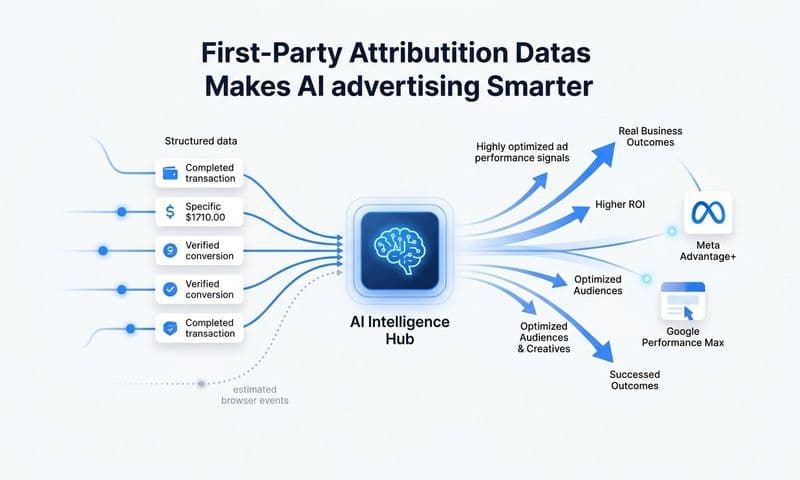
Pay special attention to server-side tracking implementation. Browser-based tracking faces increasing limitations due to privacy changes and ad blockers. Server-side tracking sends conversion data directly from your server to ad platforms, bypassing these restrictions and providing more reliable data. If you're still relying solely on browser pixels, you're likely missing a significant portion of your conversions—a common cause of losing attribution data.
Document what data you're currently capturing versus what you need for complete analysis. Create a spreadsheet listing every conversion type, every touchpoint you want to track, and whether you're successfully capturing it. Common gaps include missing UTM parameters on certain campaigns, untracked phone calls or chat conversations, and disconnects between your ad platforms and CRM.
Look for discrepancies between what your ad platforms report and what your CRM or analytics show. If Meta reports 200 conversions but your CRM only shows 150 new leads from that same period, you have a tracking problem that needs solving before you can trust your attribution analysis. Learn how to identify and resolve these issues in our guide on how to fix attribution discrepancies in data.
This audit isn't glamorous work, but it's essential. Analyzing attribution data built on faulty tracking is like trying to navigate with a broken compass—you'll end up making confident decisions that take you in the wrong direction.
Step 2: Define Your Conversion Goals and KPIs
Not all conversions are created equal. A newsletter signup and a $10,000 purchase both count as conversions, but treating them the same in your analysis will lead to terrible decisions. This step is about establishing what actually matters for your business.
Start by identifying which conversions matter most for your specific goals. If you're a B2B SaaS company, demo requests and trial signups likely matter more than ebook downloads. If you're running an e-commerce store, completed purchases trump email signups. List your conversion types in order of business value.
Here's where most marketers make a critical mistake: they track conversion counts without tracking conversion values. A channel that drives 50 conversions worth $500 each is far more valuable than one driving 100 conversions worth $100 each, but you won't see this difference if you're only counting conversions.
Set up proper conversion values in your tracking. For e-commerce, this means passing actual purchase amounts. For lead generation, assign values based on historical close rates and average deal sizes. If leads from Google typically close at 20% with an average value of $5,000, each Google lead is worth approximately $1,000 in your attribution analysis. Platforms focused on marketing attribution platforms revenue tracking can automate this process.
Align your attribution analysis goals with current business objectives. Are you in growth mode trying to scale quickly? Focus on total revenue and acceptable cost-per-acquisition thresholds. Working on improving efficiency? Prioritize return on ad spend and conversion rates. Testing new channels? Look at early-stage engagement metrics alongside conversions.
Create a hierarchy of conversion events from micro-conversions to final revenue. This might look like: page view → content engagement → email signup → demo request → qualified opportunity → closed deal. Understanding this funnel helps you analyze how different touchpoints contribute at different stages.
Document your target metrics clearly. What's your acceptable cost per lead? What ROAS do you need to hit profitability? What conversion rate should you expect from qualified traffic? These benchmarks give you reference points when analyzing attribution data—you'll know immediately when a channel is underperforming or when you've found something worth scaling.
Step 3: Select and Compare Attribution Models
Here's where attribution analysis gets interesting. The same customer journey can tell completely different stories depending on which attribution model you use. Understanding these models and comparing them reveals insights that single-model analysis misses entirely.
First-touch attribution gives all credit to the initial touchpoint that brought someone into your funnel. This model favors top-of-funnel channels like content marketing, social media, and display advertising. It answers the question: "What made them aware of us?"
Last-touch attribution does the opposite—it gives all credit to the final touchpoint before conversion. This model makes bottom-funnel tactics like branded search and retargeting look incredibly effective. It answers: "What closed the deal?"
Linear attribution spreads credit evenly across all touchpoints in the journey. If someone had five interactions before converting, each gets 20% of the credit. This model recognizes that multiple touchpoints contribute, but it assumes they all contribute equally—which is rarely true.
Data-driven attribution uses algorithmic analysis to assign credit based on how different touchpoint combinations actually correlate with conversions. It's more sophisticated but requires significant conversion volume to work effectively. Most platforms need at least a few hundred conversions per month to build reliable data-driven models.
The real power comes from comparing these models side by side. Run your attribution data through at least two different models and look for significant differences in how credit gets distributed. You'll often find that awareness channels like Facebook prospecting get massive credit in first-touch but almost none in last-touch, while branded search dominates last-touch but barely registers in first-touch.
These discrepancies reveal the roles different channels play in your funnel. A channel that gets high first-touch credit but low last-touch credit is an awareness driver—it introduces people to your brand but doesn't directly close sales. A channel with high last-touch but low first-touch credit is a conversion catalyst—it pushes ready-to-buy prospects over the finish line but doesn't generate new interest.
Neither role is better or worse—they're different and both potentially valuable. The mistake is using only last-touch attribution and then wondering why your awareness channels look ineffective, or using only first-touch and questioning why your retargeting campaigns seem unnecessary. For a deeper dive, explore our guide on understanding the difference between single source attribution and multi-touch attribution models.
Choose a primary attribution model that best reflects your actual sales cycle and customer journey length. For impulse purchases with short consideration periods, last-touch might be sufficient. For complex B2B sales with months-long cycles and multiple stakeholders, multi-touch attribution models for data provide much more accurate pictures.
But don't stop with just one model. Keep comparing models regularly to spot channels that get under-credited in your primary model. This comparison often reveals hidden opportunities—channels you might have cut because they looked ineffective in last-touch attribution but actually play crucial roles in starting customer journeys.
Step 4: Segment Your Data for Deeper Insights
Looking at attribution data in aggregate is like judging a restaurant by its average dish—you miss the standout winners and the dishes dragging down the overall experience. Segmentation is where you find the actionable insights hiding in your data.
Start by breaking down attribution data by channel, campaign, ad set, and individual creative. You might find that Facebook as a channel looks mediocre overall, but one specific campaign is crushing it while three others are burning budget. Or that Google Search performs well in aggregate, but branded search carries the entire channel while non-branded barely breaks even.
Drill down to creative-level analysis when possible. The same targeting and placement can produce wildly different results depending on the ad creative. You might discover that video ads drive awareness touchpoints effectively but static images convert better as last-touch, or that certain messaging angles resonate with high-value customers while others attract tire-kickers.
Analyze performance across different customer segments. Look at how attribution patterns differ for new versus returning customers, high-value versus low-value conversions, and different demographic or geographic segments. You'll often find that certain channels excel at acquiring specific customer types but underperform with others. Implementing customer attribution tracking makes this segmentation much easier.
Segment by time periods to identify patterns and trends. Compare attribution data month-over-month, day-of-week, and even hour-of-day when you have sufficient volume. Many businesses discover that their attribution patterns change significantly during different seasons, or that certain channels work better on specific days.
Device type segmentation reveals important insights in today's multi-device customer journeys. Someone might discover your brand on mobile, research on desktop, and convert on tablet. Understanding these cross-device patterns helps you optimize for the complete journey rather than individual touchpoints.
Look for patterns in high-value conversions versus lower-value ones. Often, your most valuable customers take different paths than average customers. They might require more touchpoints, engage with different content types, or come from different initial sources. Identifying these patterns helps you attract more high-value customers.
Pay special attention to touchpoint combinations that most frequently lead to conversions. You might discover that customers who engage with both Facebook ads and email marketing convert at 3x the rate of those who only see one or the other. These synergies are invisible in channel-level analysis but become obvious when you segment by touchpoint combinations.
Create custom segments based on your specific business questions. If you're wondering whether your podcast sponsorships are working, create a segment of customers who had podcast-attributed touchpoints and analyze their complete journeys. If you're testing a new landing page, segment by landing page version and compare attribution patterns.
Step 5: Identify Performance Patterns and Anomalies
Now that you've segmented your data, it's time to become a detective. You're looking for patterns that reveal how your marketing actually works and anomalies that signal problems or opportunities.
Start by spotting channels that consistently assist conversions but rarely get last-click credit. These are your unsung heroes—the touchpoints that introduce customers to your brand or keep you top-of-mind during consideration, even though they don't get credit in last-touch models. Cutting budget from these channels often causes delayed revenue drops that seem mysterious until you realize you've eliminated a crucial step in your funnel.
Identify campaigns with high touchpoint frequency but low conversion rates. If you're seeing the same people 10+ times before they convert—or worse, seeing them repeatedly without any conversions—you might be dealing with frequency fatigue or targeting people who will never convert. This is potential budget waste hiding in your data.
Look for the opposite pattern too: channels with low touchpoint frequency but high conversion rates. These efficient converters might deserve more budget, or they might be bottom-funnel channels that only work because other channels are doing the heavy lifting of awareness and consideration.
Recognize seasonal patterns and day-of-week trends in your attribution data. Many businesses discover that certain channels work better on specific days, or that their customer journey length changes during busy seasons versus slow periods. These patterns help you optimize timing and budget allocation throughout the year.
Calculate your average time-to-conversion and use it as a benchmark. If your typical customer journey takes 14 days from first touch to conversion, but you're judging campaign performance after just 5 days, you're making decisions on incomplete data. Understanding conversion lag helps you avoid premature optimization.
Flag data anomalies that might indicate tracking issues rather than true performance problems. If a channel that normally drives 50 conversions per week suddenly shows zero conversions but traffic hasn't changed, you probably have a tracking problem, not a performance problem. Similarly, if conversions spike 500% overnight with no corresponding change in spend or traffic, investigate before celebrating.
Watch for discrepancies between ad platform reporting and your attribution analysis. If Facebook's dashboard shows 200 conversions but your attribution analysis only credits Facebook with 150, dig into why. It might be attribution window differences, duplicate counting, or actual tracking gaps. Understanding these discrepancies helps you trust your data. For Facebook-specific issues, check out our guide on Facebook attribution tracking.
Identify outlier campaigns that significantly outperform or underperform expectations. When you find a winner, analyze what makes it different—the audience, the creative, the offer, the landing page. When you find a loser, figure out whether it's fundamentally flawed or just needs optimization. Not every insight needs to be complex—sometimes you just find that one campaign is working and three aren't.
Step 6: Turn Insights Into Budget Allocation Decisions
Analysis without action is just expensive spreadsheet maintenance. This final step is where attribution data analysis pays off—when you use insights to make smarter budget decisions that improve overall marketing performance.
Start by calculating true cost-per-acquisition using multi-touch attribution data, not platform-reported numbers. When you account for all the touchpoints that contributed to a conversion, your actual cost per acquisition is often higher than what individual platforms report. This reality check prevents you from scaling campaigns that look profitable in isolation but are actually losing money when you account for the complete customer journey.
Identify opportunities to shift budget from over-credited channels to under-credited ones. If your attribution analysis shows that Facebook prospecting consistently starts customer journeys that Google Search later closes, but you're allocating 70% of budget to Google and 30% to Facebook, you might be starving the channel that's actually driving awareness. Test reallocating budget to better match actual contribution.
Build a testing framework to validate attribution insights with incremental budget changes. Don't make massive shifts based on attribution analysis alone—test your hypotheses. Increase budget to an under-credited channel by 20% for two weeks and monitor whether overall conversions increase. If they do, you've validated the insight. If they don't, you've learned something important about how your channels actually interact.
Create decision rules based on your attribution patterns. For example: "Channels that contribute to more than 30% of first-touch attribution but less than 10% of last-touch get awareness budgets with longer-term ROI expectations." Or: "Campaigns with more than 8 average touchpoints before conversion get evaluated on 30-day windows, not 7-day windows." These rules help you make consistent decisions as you scale.
Use attribution data to optimize beyond just budget allocation. Adjust your creative strategy based on which messages work best at different touchpoints. Refine your audience targeting by identifying which segments show the most efficient attribution patterns. Improve your landing pages by analyzing which ones appear most frequently in high-value customer journeys. Understanding how to use data analytics in marketing extends far beyond attribution alone.
Establish a feedback loop where attribution data continuously informs campaign optimization. Set a regular cadence—weekly, biweekly, or monthly depending on your volume—to review attribution data and make adjustments. Marketing isn't static, and neither should your attribution analysis be. Customer behavior changes, competitive dynamics shift, and platform algorithms evolve. Regular analysis helps you stay ahead of these changes.
Document your decisions and their outcomes. When you shift budget based on attribution insights, record what you changed, why you changed it, and what happened as a result. Over time, this documentation builds institutional knowledge about what works for your specific business and helps you avoid repeating mistakes.
Remember that attribution analysis is about optimization, not perfection. You're not trying to achieve flawless attribution—you're trying to make better decisions than you would without the analysis. Even imperfect attribution data that helps you allocate budget 10% more effectively can significantly impact your bottom line.
Your Attribution Analysis Framework
Attribution data analysis transforms from overwhelming to actionable when you follow a consistent framework. Use this checklist every time you analyze your data: Confirm all tracking is firing correctly and capturing complete customer journeys. Define clear conversion goals with actual values, not just counts. Compare at least two attribution models to understand how credit distribution changes. Segment data by channel, campaign, audience, and time period to find hidden insights. Document performance patterns and flag anomalies that might signal tracking issues. Translate findings into specific budget actions and test your hypotheses before making major changes.
Start with your highest-spend campaigns and apply these steps systematically. You don't need to analyze everything at once—focus on the areas where better decisions will have the biggest impact. As you build experience with attribution analysis, you'll develop intuition for where to look and what questions to ask. A well-designed data analysis dashboard can streamline this entire process.
Attribution data analysis isn't a one-time project. It's an ongoing practice that compounds in value as you build historical context and refine your approach. The patterns you identify this month inform your decisions next month. The tests you run this quarter provide benchmarks for next quarter. Over time, you develop a deep understanding of how your marketing actually works—not how you hope it works or how platforms want you to believe it works.
The marketers who win in today's multi-channel environment aren't the ones with the biggest budgets. They're the ones who understand their attribution data well enough to make confident decisions about where every dollar should go. They know which channels start customer journeys, which ones nurture consideration, and which ones close sales. They optimize for the complete journey, not individual touchpoints.
Ready to elevate your marketing game with precision and confidence? Discover how Cometly's AI-driven recommendations can transform your ad strategy—Get your free demo today and start capturing every touchpoint to maximize your conversions.