
Your sales team just closed a $75,000 deal. Celebration time, right? But when you check your analytics dashboard, it shows the conversion source as "direct traffic." The reality? That customer clicked a LinkedIn ad three months ago, downloaded two whitepapers, attended a webinar, revisited your site through a Google search, watched a case study video via retargeting, and finally requested a demo after seeing your brand mentioned in an industry newsletter. Your analytics captured almost none of it.
This isn't just a reporting inconvenience. When individual deals are worth tens or hundreds of thousands of dollars, misattributing even a handful of conversions means you're making budget decisions in the dark. You might be scaling the wrong channels, cutting budget from your best performers, or completely missing the touchpoints that actually drive revenue.
Attribution for high ticket products solves this problem by connecting every interaction across extended buyer journeys to reveal what actually drives conversions. It's the difference between guessing which marketing efforts matter and knowing with certainty where your revenue comes from.
Why Standard Attribution Breaks Down for Premium Offerings
Most attribution systems were built for e-commerce impulse purchases, not complex B2B sales or premium services. The default tracking windows tell the story: Google Ads uses a 30-day click window and 1-day view window. Meta defaults to 7-day click and 1-day view. These windows work fine when someone buys a $40 product within a week of seeing an ad.
They completely fail when your average sales cycle runs 60, 90, or 180 days.
Think about what actually happens in a high-ticket purchase journey. A prospect sees your LinkedIn ad in January, visits your site but doesn't convert. They return via organic search in February to read case studies. In March, they attend a webinar. April brings a demo request, followed by weeks of internal discussions, stakeholder meetings, and proposal reviews. The deal closes in May.
Standard attribution windows miss most of this journey. That January LinkedIn ad that started everything? Completely invisible to your analytics because it happened outside the tracking window. The February organic visit, the March webinar, the retargeting ads that kept your brand top-of-mind during the consideration phase? All lost to attribution decay. Understanding attribution window performance becomes critical for capturing these extended journeys.
The complexity multiplies when multiple decision-makers enter the picture. Your initial contact might be a marketing director who discovers you through a Facebook ad. But the CFO who needs to approve the budget might find you through a Google search. The CEO who makes the final call might learn about you from a referral or industry publication. Each stakeholder follows their own research path, creating a web of touchpoints that single-touch attribution models can't capture.
High-value purchases also involve fundamentally different research behavior than impulse buys. Prospects don't just click an ad and convert. They consume extensive content across multiple channels: they download whitepapers, watch demo videos, read comparison guides, attend webinars, request consultations, and revisit your site dozens of times before making a decision.
Each of these interactions represents a critical moment in the buyer journey, but standard analytics platforms treat them as disconnected events. Your prospect downloads a whitepaper on Monday, watches a case study video on Wednesday, and requests a demo on Friday. Most analytics systems see three separate visitors, not one progressing prospect. The attribution breaks, and you lose visibility into what's actually working.
Privacy changes have made this problem worse. iOS tracking restrictions and browser cookie limitations mean that browser-based tracking now misses significant portions of the customer journey. A prospect who interacts with your brand across multiple devices and browsers becomes fragmented in your data, creating even more attribution blind spots.
The Multi-Touch Attribution Models That Actually Work
Single-touch attribution assigns all credit to one touchpoint—either the first interaction or the last one before conversion. For high-ticket products with complex buyer journeys, this approach is like trying to understand a movie by watching only the first or last scene. You miss the entire story that actually drove the outcome.
Multi-touch attribution distributes credit across the multiple touchpoints that influence a conversion. The question becomes: how do you distribute that credit fairly and accurately? Exploring multi-touch attribution models for data helps clarify which approach fits your business.
Linear attribution gives equal credit to every touchpoint in the journey. If a customer had ten interactions before converting, each interaction receives 10% of the credit. This model works well when you believe every touchpoint contributes equally to the decision, but it often undervalues the touchpoints that actually move prospects closer to purchase.
Time-decay attribution weights recent interactions more heavily than earlier ones. The logic makes sense for many high-ticket sales: the demo request that happened last week probably influenced the decision more than the blog post they read three months ago. Time-decay models typically increase credit exponentially as you approach the conversion date, with the final touchpoint receiving the most credit.
This model captures an important reality of long sales cycles: not all touchpoints are created equal, and proximity to the conversion often indicates influence. However, it can undervalue the initial touchpoints that created awareness and started the journey in the first place.
Position-based attribution (also called U-shaped attribution) addresses this by emphasizing both the first and last touchpoints while still crediting the middle journey. A common distribution gives 40% credit to the first interaction, 40% to the last interaction, and distributes the remaining 20% across all middle touchpoints.
For many high-ticket businesses, this model most accurately reflects buyer behavior. The first touchpoint matters because it creates awareness and initiates the journey. The last touchpoint matters because it often represents the final nudge that drives action. And the middle touchpoints matter because they nurture the relationship and build trust throughout the consideration phase.
Data-driven attribution takes a different approach entirely. Instead of applying predetermined rules, it uses machine learning to analyze your actual conversion data and determine which touchpoints historically correlate most strongly with conversions. This model can reveal surprising patterns in your buyer journeys that rule-based models might miss. A comprehensive comparison of attribution models for marketers can help you evaluate which approach delivers the best insights.
The catch? Data-driven attribution requires substantial conversion volume to produce reliable results. Machine learning algorithms need sufficient data points to identify meaningful patterns. For businesses closing 10-20 high-ticket deals per month, you might not have enough conversions for data-driven models to work effectively.
In those cases, position-based or time-decay models typically provide the most actionable insights. The key is choosing an attribution model for your business that matches your specific sales cycle characteristics. If your sales cycle is relatively short (30-45 days) and follows predictable patterns, time-decay might work well. If you have longer cycles with clear awareness and decision phases, position-based attribution often provides better visibility.
Many sophisticated marketers don't choose just one model. They compare multiple attribution models side-by-side to understand how different weighting approaches affect channel performance. This comparative view reveals which channels consistently drive value regardless of the attribution model used—and which channels only look good under specific attribution assumptions.
Connecting Ad Platforms to CRM: The Missing Link
Here's where most high-ticket attribution strategies fall apart: your ad platforms report conversions, but those conversions don't always turn into revenue. Meta might show 50 leads generated this month. Google Ads might report 30 conversions. But when you check your CRM, only 15 of those leads are qualified, and only 3 have closed into actual deals.
This disconnect happens because ad platforms optimize for the conversion events they can see—form submissions, demo requests, content downloads—but they can't see what happens afterward. They don't know which leads got qualified, which moved through your pipeline, and which actually closed into revenue.
The result? Your ad algorithms optimize for generating leads, not generating revenue. You might be driving plenty of top-of-funnel activity while the actual quality of those leads steadily declines. By the time you realize the problem, you've already wasted significant budget on channels that generate activity but not results.
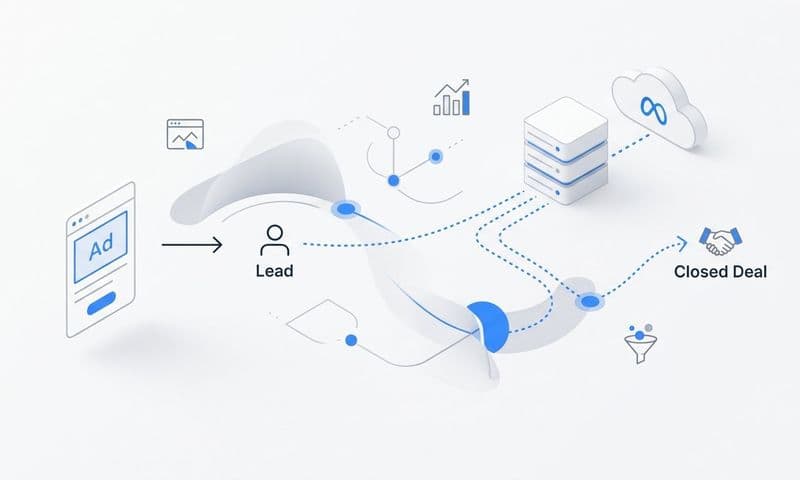
Connecting your CRM to your attribution system solves this by creating a feedback loop between marketing activity and revenue outcomes. When a lead moves through your pipeline stages—from Marketing Qualified Lead to Sales Qualified Lead to Opportunity to Closed Won—that data flows back into your attribution system. Implementing marketing attribution platforms with revenue tracking makes this connection seamless.
Now you can see which marketing touchpoints actually drive revenue, not just which ones drive form submissions. That LinkedIn ad campaign that generates fewer leads than Facebook might actually drive 3x more revenue per lead. That Google Search campaign that looks expensive on a cost-per-lead basis might have the highest close rate in your entire marketing mix.
This visibility transforms budget decisions. Instead of allocating spend based on cost per lead or platform-reported ROAS, you can optimize based on actual attributed revenue. You identify the channels that attract high-intent prospects who actually close, and you scale those channels aggressively.
Server-side tracking becomes essential in this integration. Browser-based tracking increasingly fails due to privacy restrictions, ad blockers, and cookie limitations. A prospect might interact with your brand across multiple sessions and devices, but browser-based tracking sees fragmented, disconnected visits rather than a coherent journey.
Server-side tracking captures conversion events on your server rather than relying on browser pixels. When someone submits a form, requests a demo, or takes any conversion action, your server records that event and sends it to your attribution platform. This approach maintains data continuity even when browser-based tracking fails.
The real power comes from syncing CRM pipeline stages back to ad platforms. When a lead closes into revenue, you can send that conversion event back to Meta, Google, and other platforms. This teaches their algorithms what a valuable conversion actually looks like, enabling them to optimize for revenue outcomes rather than just lead generation.
Many platforms now support value-based optimization, where you can pass the actual deal value back to the ad platform. A $10,000 deal and a $100,000 deal both count as one conversion, but they're not equally valuable. Value-based optimization helps algorithms prioritize the campaigns and audiences that drive higher-value conversions.
Tracking the Full Journey: From First Click to Closed Deal
High-ticket buyer journeys don't follow neat, linear paths. They loop back, jump between channels, and include dozens of micro-interactions that traditional analytics systems miss entirely. Capturing the full journey requires treating every interaction as a potential attribution waypoint.
Start by identifying the micro-conversions that matter in your sales process. These aren't just form submissions and demo requests. They're content downloads, video views, webinar registrations, pricing page visits, case study reads, and any other interaction that indicates growing interest and intent.
Each micro-conversion represents a moment where a prospect chose to engage more deeply with your brand. Someone who watches a 20-minute product demo video is showing significantly more intent than someone who bounced after 10 seconds on your homepage. Someone who downloads a comparison guide is actively evaluating solutions. Someone who visits your pricing page three times is approaching a decision.
These signals matter because they reveal the progression of buyer intent throughout the journey. When you track them as attribution waypoints, you can see which marketing touchpoints move prospects from awareness to consideration to decision. You identify the content that actually educates and persuades, not just the content that generates clicks.
The challenge is maintaining identity across this extended journey. A prospect might click your LinkedIn ad on their phone during their morning commute, read a blog post on their work laptop that afternoon, watch a webinar from their home computer that evening, and request a demo on their tablet a week later.
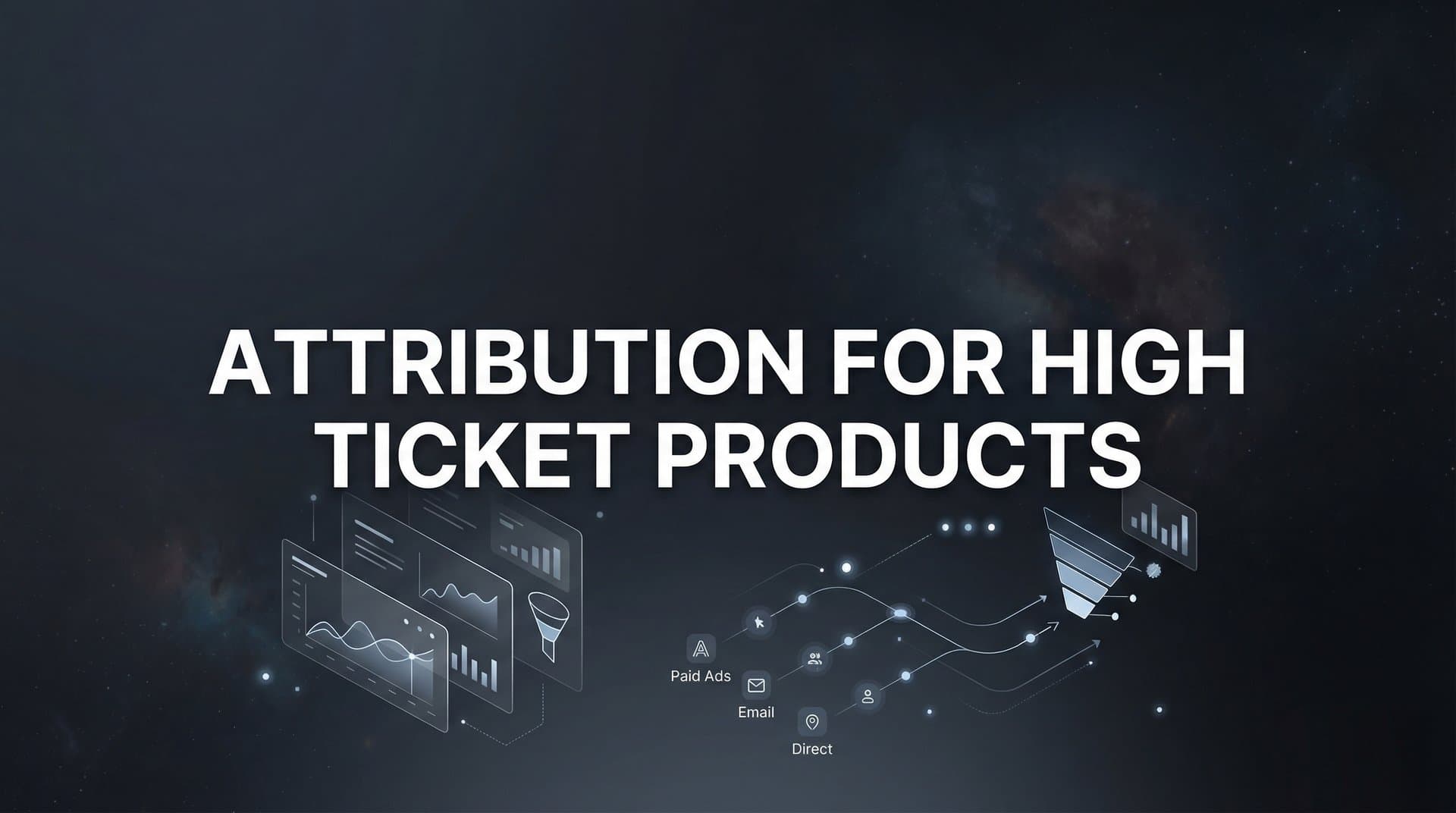
Most analytics systems see four different visitors. Accurate attribution requires connecting these interactions into a single, unified customer timeline. This typically involves multiple identification methods working together: email addresses captured through form submissions, CRM contact records, device fingerprinting, and cross-device identity graphs. A cross-platform attribution tool becomes essential for stitching together these fragmented journeys.
When someone submits a form with their email address, that becomes a persistent identifier that connects their future sessions to their past activity. If they return to your site later—even from a different device or browser—you can recognize them and continue building their journey timeline.
CRM integration reinforces this identity resolution. When your sales team logs calls, emails, and meetings in your CRM, those interactions become part of the attribution timeline alongside digital touchpoints. You see the complete picture: the marketing touchpoints that generated awareness, the content that built interest, the sales interactions that moved the deal forward, and the final touchpoints that closed the conversion. Building unified dashboards for marketing and sales attribution gives your entire team visibility into this complete journey.
This unified timeline reveals patterns that isolated channel data can't show. You might discover that prospects who attend webinars close 40% faster than those who don't. Or that case study downloads in the middle of the journey strongly predict eventual conversion. Or that prospects who engage with retargeting ads during their consideration phase have significantly higher close rates.
These insights become the foundation for journey optimization. You identify the most effective paths to purchase and engineer your marketing to guide more prospects down those paths. You recognize the touchpoints that accelerate deals and invest more in creating those experiences. You spot the bottlenecks where prospects get stuck and create content or offers that move them forward.
Making Data-Driven Budget Decisions with Accurate Attribution
Accurate attribution fundamentally changes how you allocate marketing budget. Instead of relying on platform-reported metrics that only show part of the picture, you can make decisions based on attributed revenue across the entire customer journey.
The first insight typically surprises marketers: the channels that initiate high-value journeys often differ from the channels that close them. Your LinkedIn ads might excel at generating initial awareness among your target audience, but Google Search might be where prospects return when they're ready to make a decision. Your content marketing might create the educational foundation that builds trust, but retargeting might provide the final nudge that drives demo requests.
Single-touch attribution misses this entirely. If you only credit the last click, you'll overvalue bottom-of-funnel channels and underinvest in the awareness and consideration touchpoints that actually start and nurture high-value journeys. If you only credit the first click, you'll overvalue top-of-funnel channels while underinvesting in the touchpoints that actually close deals.
Multi-touch attribution reveals the role each channel plays throughout the journey. You can see which channels excel at generating qualified leads, which channels nurture prospects through consideration, and which channels drive final conversions. This visibility enables you to build a balanced marketing mix that supports prospects at every stage. Understanding multi-channel attribution for ROI helps you quantify the value of each channel in your mix.
The budget reallocation that follows often looks dramatically different from platform-reported ROAS. A channel that shows a 2x ROAS in its own dashboard might actually drive 5x attributed revenue when you account for its role in multi-touch journeys. Another channel that looks mediocre on a last-click basis might be your most valuable awareness channel, starting journeys that eventually convert through other touchpoints.
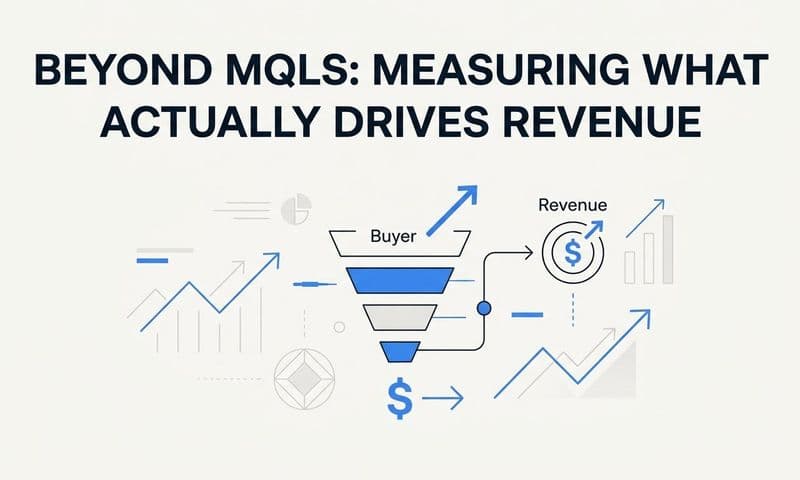
This is where attribution for high ticket products becomes a competitive advantage. While your competitors make budget decisions based on incomplete platform data, you're optimizing based on actual revenue attribution. You scale the channels that truly drive pipeline and revenue. You cut spend from channels that generate vanity metrics but don't contribute to real business outcomes.
The compounding value of accurate attribution data grows over time. Each month of data makes your attribution models more accurate. You identify more patterns in high-value buyer journeys. You recognize seasonal trends and buying cycles. You understand how different customer segments engage with your marketing differently.
This accumulated intelligence enables increasingly sophisticated optimization. You might discover that enterprise deals follow fundamentally different journeys than mid-market deals, requiring different marketing approaches. Companies focused on revenue attribution for B2B SaaS often find that deal size significantly impacts the optimal attribution approach. You might find that certain industries respond better to specific content types or channels. You might identify the optimal frequency and timing for touchpoints throughout the journey.
These insights inform not just budget allocation but entire marketing strategies. You create content specifically designed to move prospects from awareness to consideration. You build retargeting sequences that reinforce key messages at critical decision points. You time your sales outreach based on digital engagement signals that indicate readiness to buy.
The businesses that excel at attribution for high ticket products don't just track better—they market smarter. They understand their buyer journeys at a granular level and engineer marketing experiences that guide prospects efficiently from initial awareness to closed deals. They make every marketing dollar work harder because they know exactly which investments drive real revenue.
Your Path to Revenue-Driven Attribution
Attribution for high ticket products isn't a nice-to-have reporting feature. It's the foundation of profitable scaling. Every month you operate without accurate attribution is a month of budget decisions made in the dark, channels misunderstood, and revenue opportunities missed.
The businesses winning in high-ticket markets have moved beyond platform-reported metrics to true revenue attribution. They track every touchpoint across extended buyer journeys. They connect marketing activity to CRM pipeline stages and closed deals. They make budget decisions based on attributed revenue, not vanity metrics.
The compounding value is real. Your first month of accurate attribution data provides initial insights. By month three, you're identifying clear patterns in high-value buyer journeys. By month six, you're making confident budget reallocations that drive measurable revenue growth. By month twelve, your attribution intelligence becomes a competitive moat that's difficult for competitors to replicate.
Ready to elevate your marketing game with precision and confidence? Discover how Cometly's AI-driven recommendations can transform your ad strategy. Cometly connects your ad platforms, CRM, and website tracking to capture every touchpoint across your customer journey—from first click to closed deal. Our server-side tracking maintains data continuity even when browser-based tracking fails, and our multi-touch attribution models reveal exactly which marketing investments drive real revenue. Get your free demo today and start capturing every touchpoint to maximize your conversions.