You've just launched campaigns across Meta, Google, and TikTok. Three weeks later, you're staring at your dashboard trying to figure out which channel deserves more budget. Google Ads shows 200 conversions. Meta claims 180. Your analytics platform reports 150 total. They can't all be right—but which one is telling you the truth?
This isn't a data error. It's an attribution problem.
Attribution models determine how credit for conversions gets distributed across your marketing touchpoints. Choose the wrong model, and you'll pour budget into channels that look like heroes but are actually just showing up at the finish line. Choose the right one, and you'll finally understand which campaigns are doing the heavy lifting throughout your customer journey.
The challenge? There's no universal "correct" attribution model. A B2B SaaS company with a 90-day sales cycle needs a completely different approach than an ecommerce brand selling impulse purchases. Your channel mix, sales cycle length, and campaign objectives all factor into this decision.
This guide walks you through a systematic process for choosing an attribution model that matches your business reality. You'll learn how to map your customer journey, evaluate your options, and implement a model that gives you actionable insights instead of confusing noise. By the end, you'll have a clear framework for making this decision with confidence—and a plan for reassessing as your marketing evolves.
Step 1: Map Your Customer Journey and Sales Cycle Length
Before you can choose an attribution model, you need to understand what you're actually trying to measure. Start by documenting how customers move from first awareness to final purchase.
Pull conversion data from the past 90 days and trace backward. How many touchpoints do customers typically encounter before converting? Look at your analytics platform and identify the average number of sessions, ad interactions, and channel exposures per converting customer.
For some businesses, this journey is straightforward. Someone searches for "running shoes," clicks your Google ad, and buys within the same session. One touchpoint. Simple.
For others, it's a marathon. A prospect sees your LinkedIn ad, visits your site but doesn't convert. Three days later, they click a retargeting ad on Meta. A week after that, they Google your brand name and finally purchase. Three touchpoints across multiple channels and sessions.
Next, calculate your average sales cycle length. This is the time between first interaction and conversion. Pull this data directly from your CRM or analytics platform by looking at the "days to conversion" metric.
Same-day conversions suggest impulse purchases or high-intent searches. Multi-week or multi-month cycles indicate consideration purchases where customers research, compare, and evaluate before committing.
Now map which channels appear at different stages. Does paid social typically introduce new customers to your brand? Does organic search capture people already aware of you? Do email campaigns close deals that started elsewhere?
Document this in a simple framework: Awareness channels (where people first discover you), consideration channels (where they research and evaluate), and decision channels (where they convert). Understanding marketing channel attribution modeling helps you categorize these touchpoints effectively.
Why this matters: If your average customer journey involves one touchpoint and converts same-day, a simple last-click model might work fine. But if customers interact with five touchpoints over three weeks, last-click attribution will give all credit to the final touchpoint—completely ignoring the channels that introduced them to your brand and kept them engaged throughout their journey.
The complexity of your customer journey should directly inform the complexity of your attribution model. Simple journeys can use simple models. Complex journeys demand multi-touch attribution.
Step 2: Evaluate Your Current Channel Mix and Campaign Objectives
List every active marketing channel you're running right now. Include paid search, paid social, display ads, email, organic social, SEO, affiliate marketing, and any other channels receiving budget or effort.
For each channel, identify its primary role in your marketing strategy. Is it designed to generate immediate conversions, or is it building awareness for future conversions?
This distinction is critical. Upper-funnel campaigns on platforms like TikTok or YouTube often introduce your brand to cold audiences who won't convert immediately. If you're using a last-click attribution model, these channels will look like they're failing—because they're not designed to close deals on first touch.
Review your current reporting and identify channels that might be undervalued or overvalued. Look for patterns like these: A channel shows high traffic and engagement but low conversions in your last-click report. This channel might be doing important awareness work that's not getting credit. A channel shows high conversions but low engagement metrics. This channel might be getting credit for conversions that other channels initiated.
Now match your campaign objectives to attribution requirements. Different business models need different approaches.
Ecommerce brands with short sales cycles and direct-response campaigns can often use simpler attribution models. The path from ad click to purchase is relatively straightforward. If you're running an online store, explore attribution model ecommerce marketing strategies tailored to your business type.
B2B companies with long sales cycles and multiple decision-makers need multi-touch attribution. A conversion might happen three months after the first touchpoint, with dozens of interactions in between—sales calls, email nurture sequences, webinar attendance, and content downloads. For these businesses, revenue attribution for B2B SaaS companies provides the depth of insight needed.
Lead generation businesses fall somewhere in between. If you're capturing leads that convert to customers weeks or months later, you need attribution that connects ad clicks to CRM outcomes, not just form submissions. A dedicated attribution platform for lead generation can bridge this gap.
Consider how your current attribution approach might be distorting budget decisions. If you're running brand awareness campaigns but using last-click attribution, you're probably underfunding the channels that introduce customers to your brand. If you're using first-click attribution, you might be overfunding top-of-funnel channels while starving the remarketing campaigns that actually close deals.
Document which channels are primarily awareness-focused versus conversion-focused. This will guide your model selection in the next step.
Step 3: Understand Your Attribution Model Options and Their Trade-offs
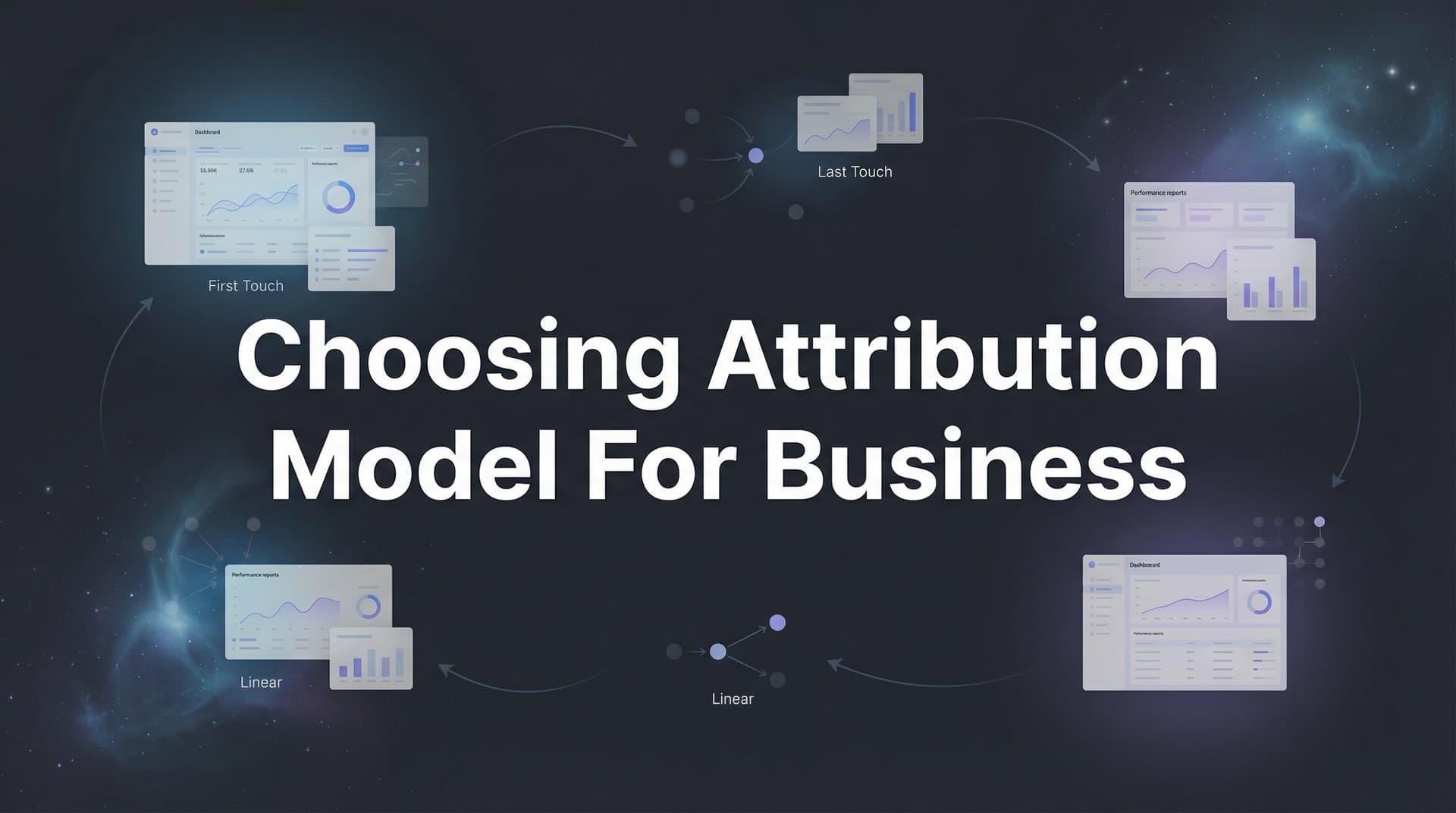
Attribution models fall into three main categories, each with distinct strengths and limitations.
Single-Touch Models: These assign 100% of conversion credit to one touchpoint—either the first or the last.
Last-click attribution gives all credit to the final interaction before conversion. If someone clicks a Google search ad and immediately purchases, that ad gets full credit. This model is simple to understand and aligns with how many ad platforms report conversions by default.
The limitation? It completely ignores the journey that led to that final click. If a customer discovered your brand through a Meta ad, engaged with your content via email, and then searched for your brand name on Google, last-click gives Google 100% credit while Meta and email get zero.
First-click attribution does the opposite—it credits the initial touchpoint that introduced the customer to your brand. This model values awareness and discovery.
The limitation? It ignores everything that happened after that first touch. The remarketing campaigns, nurture emails, and consideration-stage content that actually convinced someone to buy get no credit. Understanding the difference between single source attribution and multi-touch attribution models clarifies when each approach makes sense.
When single-touch models work: Short sales cycles with minimal touchpoints. Businesses where the first or last interaction genuinely drives the decision. Teams that need simple reporting without complex analysis.
Multi-Touch Models: These distribute credit across multiple touchpoints using predetermined rules.
Linear attribution splits credit equally across all touchpoints. If a customer had five interactions before converting, each gets 20% credit. This model acknowledges that multiple channels contribute to conversions. Many teams use linear model marketing attribution software for this balanced approach.
Time-decay attribution gives more credit to touchpoints closer to the conversion. The logic: recent interactions have more influence on the final decision than early awareness touches.
Position-based attribution (also called U-shaped) assigns 40% credit to the first touch, 40% to the last touch, and splits the remaining 20% among middle interactions. This model values both discovery and conversion while acknowledging the middle of the journey.
The limitation of rule-based multi-touch models? They apply the same formula to every conversion, regardless of whether that formula accurately reflects how your customers actually behave. For a deeper dive, review this multi-touch attribution models guide.
Data-Driven Attribution: This approach uses machine learning algorithms to assign credit based on actual conversion patterns in your data.
Instead of predetermined rules, the algorithm analyzes thousands of converting and non-converting paths to determine which touchpoints actually increase conversion probability. If your data shows that customers who interact with both paid social and email convert at higher rates than those who see only one channel, the model assigns credit accordingly.
The limitation? It requires substantial conversion volume to work effectively—typically hundreds of conversions per month minimum. It's also more complex to explain to stakeholders who want to understand exactly how credit is assigned.
The core trade-off across all models: Simpler models are easier to understand and act on, but they may hide critical insights about which channels are actually driving value. Complex models provide more accurate attribution but require more sophisticated analysis to translate into action.
Step 4: Assess Your Data Infrastructure and Tracking Capabilities
Even the most sophisticated attribution model is useless if your tracking infrastructure can't capture accurate data. Before committing to a model, audit your current setup.
Start with cross-device and cross-session tracking. Can you follow a user who clicks your ad on mobile, visits your site later on desktop, and converts the next day? If your tracking breaks when users switch devices or clear cookies, your attribution data will be incomplete regardless of which model you choose.
Check how your system handles iOS privacy restrictions. Since iOS 14.5, Safari's Intelligent Tracking Prevention and App Tracking Transparency have limited cookie-based tracking. If you're relying solely on pixel-based tracking, you're missing significant portions of your customer journey.
This is where server-side tracking becomes critical. Instead of relying on browser cookies that can be blocked or deleted, server-side tracking sends conversion data directly from your server to ad platforms and analytics tools. This approach captures more complete data and improves attribution accuracy.
Evaluate whether you're capturing offline conversions and CRM events. If customers convert through phone calls, in-store visits, or sales team interactions, those conversions need to flow back into your attribution system. Otherwise, you're only seeing part of the picture. Learn more about marketing attribution for phone calls tracking to close this gap.
For B2B businesses especially, CRM integration is non-negotiable. You need to connect ad clicks and website sessions to actual closed deals in your CRM. If you're only tracking form submissions without tying them to revenue, you can't accurately attribute marketing value.
Test your current tracking by running a simple audit. Click your own ads from different devices and browsers. Clear cookies and return to your site. See if your analytics platform correctly tracks these interactions as part of a single user journey.
If you discover gaps in your tracking, address them before implementing a new attribution model. Accurate attribution requires accurate data. A sophisticated multi-touch model built on incomplete tracking will give you confidently wrong insights.
Step 5: Run a Parallel Comparison Test
Don't commit to an attribution model based on theory. Test it with your actual data.
Set up reporting that shows 2-3 attribution models simultaneously. Most analytics platforms and attribution tools allow you to view the same conversion data through different attribution lenses. Configure your dashboard to display last-click, first-click, and at least one multi-touch model side by side. A thorough comparison of attribution models for marketers can guide your testing framework.
Run this parallel comparison for 30-60 days minimum. You need enough data to see meaningful patterns, not just day-to-day noise.
During this period, document how each model values your channels differently. Create a spreadsheet that shows conversions attributed to each channel under each model.
Look for significant discrepancies. If Google Ads shows 200 conversions under last-click but only 50 under first-click, it's primarily a conversion-stage channel. If Meta shows 50 conversions under last-click but 180 under first-click, it's primarily an awareness channel.
Compare these attribution results against what you observe qualitatively about channel performance. Do the numbers align with what your team knows about how customers actually discover and evaluate your product?
For example, if your sales team consistently reports that customers mention finding you through LinkedIn, but last-click attribution gives LinkedIn minimal credit, that's a signal that last-click is hiding LinkedIn's true value.
Pay attention to which model surfaces actionable insights versus which creates confusion. The best attribution model isn't necessarily the most sophisticated one—it's the one that helps you make better budget allocation decisions.
If a multi-touch model shows that five channels each contribute 20% to conversions, but you can't figure out how to act on that information, it's not useful. If a position-based model clearly shows which channels drive awareness and which drive conversions, enabling you to optimize each for its role, that's actionable.
Document specific insights from each model. Which one helped you identify an undervalued channel? Which one revealed that a "high-performing" channel was actually just getting credit for work other channels did?
This testing phase isn't about finding the "correct" model—it's about finding the model that gives you the clearest picture of where to invest your next marketing dollar.
Step 6: Implement Your Chosen Model and Establish Review Cycles
Once you've selected an attribution model based on your testing, configure your attribution platform to use it as your primary reporting view. This becomes the single source of truth for performance analysis and budget decisions.
Set up dashboards that make this attribution data immediately actionable. Your daily reporting should show channel performance through your chosen attribution lens, not default platform metrics that might contradict your attribution model. Consider implementing unified dashboards for marketing and sales attribution to align your entire team.
If you're using position-based attribution, create dashboards that separate awareness-stage performance from conversion-stage performance. If you're using time-decay, highlight recent touchpoint performance while still tracking earlier interactions.
Train your team on how to interpret the new attribution data. If you're switching from last-click to multi-touch attribution, channel performance numbers will change—sometimes dramatically. Make sure everyone understands why the numbers shifted and what they now represent.
Build attribution insights into your optimization workflow. When you're deciding where to allocate budget, reference your attribution model. When you're evaluating campaign performance, use attributed conversions rather than platform-reported conversions.
Schedule quarterly attribution model reviews. Your customer journey and channel mix will evolve over time, and your attribution model should evolve with them.
During these reviews, ask: Has our sales cycle length changed? Are we running new channels that weren't part of our original analysis? Are we seeing patterns that suggest our current model is over-crediting or under-crediting certain touchpoints?
Plan for testing alternative models when you make significant strategy changes. If you launch a major brand awareness campaign after previously focusing only on direct response, your attribution needs might shift. If you expand into new channels or markets, reassess whether your current model still provides accurate insights.
Document your attribution methodology and share it with stakeholders. When executives ask why channel performance numbers differ from what ad platforms report, you should be able to explain your attribution approach and why it provides a more accurate view of marketing value.
Remember that attribution modeling is a tool for better decision-making, not an exact science. The goal isn't perfect precision—it's reducing uncertainty enough to confidently allocate budget toward channels that actually drive business results.
Putting It All Together
Choosing an attribution model isn't a one-time decision—it's an ongoing commitment to understanding your marketing performance accurately. The model that works for your business today might need adjustment as your channel mix evolves, your sales cycle changes, or new tracking capabilities become available.
Start by mapping your customer journey and documenting your sales cycle length. This foundation determines whether you need a simple single-touch model or a more sophisticated multi-touch approach. Then evaluate your channel mix and campaign objectives to understand which channels play awareness roles versus conversion roles.
Understand your options—single-touch models for simplicity, multi-touch models for distributed credit, and data-driven attribution for algorithmic precision. Assess your data infrastructure to ensure you can actually capture the data your chosen model requires. Run parallel comparison tests before committing, and establish regular review cycles after implementation.
Here's your quick implementation checklist: ✓ Customer journey mapped with typical touchpoint count documented ✓ Sales cycle length calculated from your conversion data ✓ Channel roles defined as awareness, consideration, or conversion-focused ✓ Data infrastructure verified for cross-device tracking and CRM integration ✓ 30-60 day comparison test completed across multiple models ✓ Quarterly review schedule established for ongoing optimization.
With the right attribution model in place, you'll finally see which campaigns deserve more budget and which ones are getting credit they haven't earned. You'll stop making decisions based on incomplete last-click data and start optimizing based on the full customer journey.
The difference between guessing and knowing where your revenue comes from is the difference between wasting budget and scaling profitably. Attribution modeling gives you that clarity.
Ready to elevate your marketing game with precision and confidence? Discover how Cometly's AI-driven recommendations can transform your ad strategy—Get your free demo today and start capturing every touchpoint to maximize your conversions.