You've just launched a mobile app campaign across Meta, Google, TikTok, and Apple Search Ads. A user sees your video ad on Instagram, later searches for your app on Google, clicks a retargeting ad on TikTok, and finally installs from the App Store three days later. Which channel gets credit for that install? More importantly, which one actually influenced the decision to download?
This is the daily reality for mobile marketers. Users don't follow neat, linear paths from ad to install. They bounce between platforms, switch devices, and take their time deciding. Yet most attribution systems only capture fragments of this journey—crediting the last click, missing cross-device interactions, or worse, counting installs that never lead to actual revenue.
Mobile app attribution solves this puzzle by connecting every touchpoint from first impression to in-app purchase. It's the difference between knowing an install happened and understanding which marketing efforts actually drive valuable users. The challenge? Privacy changes from Apple and Google have fundamentally disrupted how mobile attribution works, forcing marketers to rethink their entire tracking infrastructure.
This guide breaks down how modern mobile app attribution actually works in a privacy-first world. You'll learn why traditional tracking methods fail for mobile campaigns, how to implement attribution that respects user privacy while maintaining accuracy, and how to move beyond vanity metrics to measure what truly matters: revenue and long-term user value.
The Mobile Attribution Challenge: Why App Campaigns Are Different
Mobile app campaigns operate in a fundamentally different environment than web marketing. When someone clicks your Facebook ad and lands on your website, tracking that journey is relatively straightforward. But mobile introduces layers of complexity that break traditional attribution models.
The app store sits between your ad and the actual install. A user clicks your ad, gets redirected to the App Store or Google Play, browses reviews, maybe leaves and comes back later, then finally downloads. That gap creates an attribution blind spot—you know someone clicked your ad, and you know someone installed your app, but connecting those two events with certainty becomes challenging.
Cross-device behavior amplifies this problem. Users might see your ad on their tablet while browsing social media, search for your app on their phone during their commute, and install it later that evening. Without deterministic identifiers linking these interactions, attribution systems struggle to piece together the complete journey. Understanding how app marketing attribution works is essential for navigating these complexities.
Then came the privacy revolution. Apple's App Tracking Transparency framework, introduced with iOS 14.5, fundamentally changed mobile attribution by requiring explicit user consent for cross-app tracking. The impact was immediate and significant—most users opt out of tracking when given the choice, making device-level attribution far more difficult.
Before ATT, Mobile Measurement Partners relied heavily on the Identifier for Advertisers (IDFA), which provided a consistent way to track users across apps and attribute installs to specific ad interactions. With IDFA access now gated behind user consent, marketers lost their primary method for deterministic attribution on iOS devices.
Apple's solution, SKAdNetwork (SKAN), offers privacy-preserving attribution but comes with strict limitations. It provides aggregated, delayed data rather than user-level insights. You'll know that your campaign drove installs, but detailed information about individual user journeys gets obscured to protect privacy. Google is following a similar path with their Privacy Sandbox initiative for Android, signaling that these changes represent the new normal rather than a temporary disruption.
The cost of inadequate attribution extends beyond missing data—it directly impacts your budget allocation. Without accurate attribution, you might pour money into channels that appear to drive installs but actually capture users who would have converted anyway. Meanwhile, the awareness campaigns that actually introduced users to your app get zero credit because they're not the last touchpoint before install.
This creates a dangerous cycle: you optimize toward channels that game last-click attribution, cut budget from upper-funnel campaigns that don't show immediate returns, and wonder why your cost per install keeps rising while user quality declines. Breaking this cycle requires attribution that captures the full journey, not just the final step.
The Mobile Attribution Flow: From Ad Click to In-App Revenue
Understanding how mobile app attribution tracking actually works starts with following the data flow from the moment someone sees your ad to when they make their first in-app purchase. This journey involves multiple systems communicating in real-time to piece together the complete story.
When a user clicks your ad, the ad platform generates a click ID and redirects them to the app store. At this point, your Mobile Measurement Partner (MMP) or attribution platform captures that click event along with metadata: which campaign, ad set, creative, and timestamp. This click gets stored with a limited lifespan—typically seven days—creating your attribution window.
The user then enters the app store environment, which operates as a black box from an attribution perspective. You can't track what happens inside the App Store or Google Play. The user might read reviews, check screenshots, compare your app to competitors, or leave and return multiple times. This intermediary step is unique to mobile and creates the attribution gap that doesn't exist in web marketing.
When the user finally installs your app and opens it for the first time, your attribution SDK fires. This SDK, integrated into your app code, communicates with your attribution platform to match this new install against stored click data. The matching logic depends on what identifiers are available—deterministic matching when possible, probabilistic methods when necessary.
Here's where attribution windows become critical. Your platform checks: did this device click any of our tracked ads within the lookback window? For clicks, seven days is standard. For view-through attribution (when someone saw but didn't click your ad), windows are much shorter—typically 24 hours—because the connection between seeing an ad and installing days later becomes increasingly uncertain.
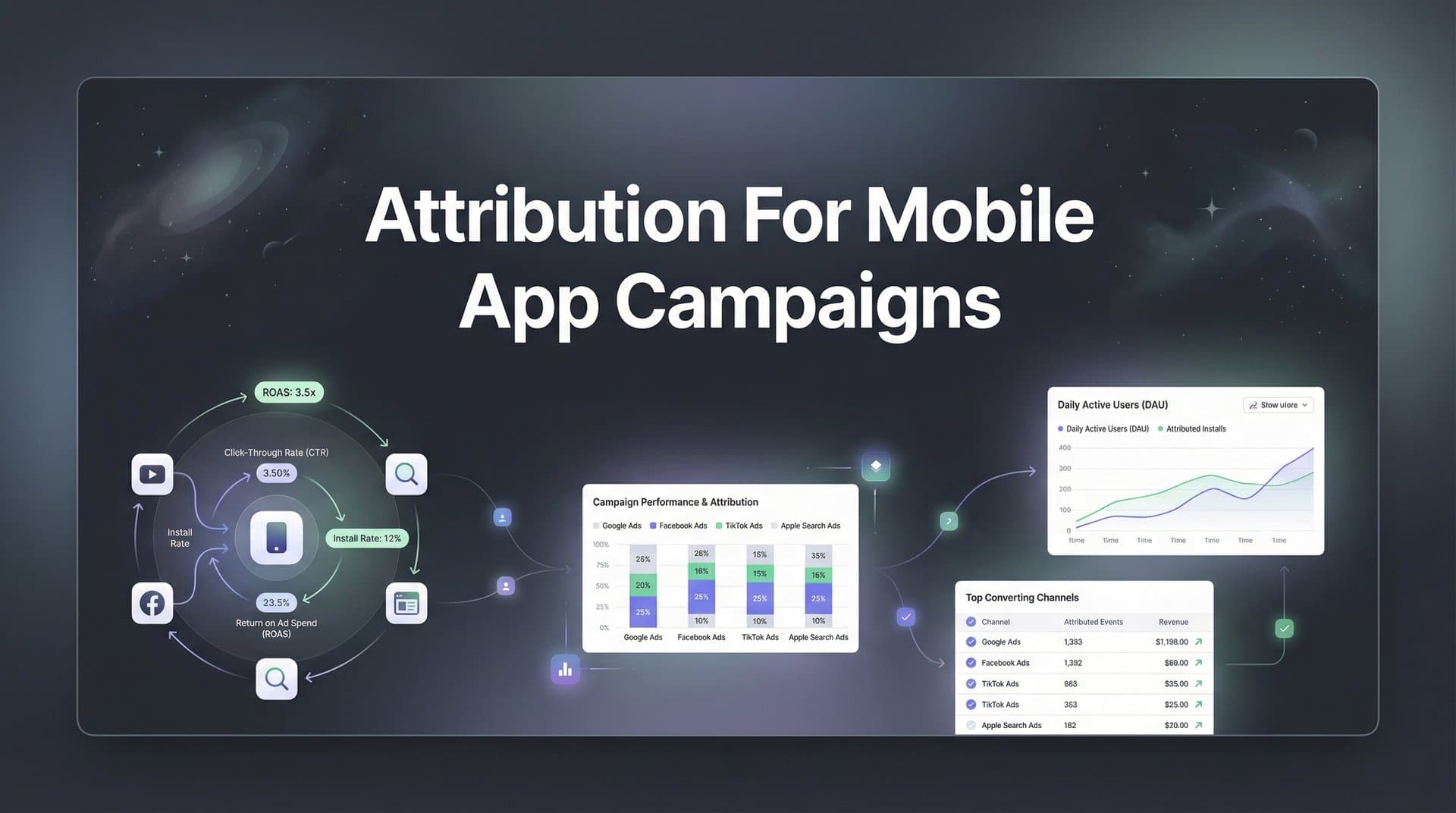
Post-install tracking is where mobile attribution proves its real value. The SDK continues monitoring in-app events: account creation, tutorial completion, first purchase, subscription start. These events flow back to your attribution platform, connecting revenue and engagement to the original marketing touchpoint. This is how you move from knowing which ad drove an install to understanding which campaigns drive valuable users.
Deep linking adds another layer of sophistication to this flow. When implemented correctly, deep links carry campaign parameters through the app store and into your app, enabling you to deliver personalized onboarding based on which ad the user clicked. Someone who clicked an ad promoting your premium subscription feature can land directly on that feature's page rather than a generic welcome screen.
But deep linking serves attribution purposes beyond user experience. It creates a more reliable connection between pre-install touchpoints and post-install behavior, especially valuable in privacy-limited environments where other matching methods struggle. The campaign parameters embedded in the deep link provide deterministic attribution data that doesn't rely on device identifiers.
Server-side tracking enhances this entire flow by moving attribution logic from client-side SDKs to secure server environments. Instead of relying solely on device-level data that users can block or privacy frameworks can limit, server-to-server communication between your attribution platform and ad networks provides a more reliable foundation for tracking conversions while respecting user privacy preferences.
Choosing Your Attribution Model: Last-Touch vs. Multi-Touch for Mobile
The attribution model you choose fundamentally shapes which marketing channels receive credit—and therefore budget. For mobile app campaigns, this decision carries extra weight because the path to install often involves multiple touchpoints across different platforms and days.
Last-touch attribution remains the most common model, primarily because it's simple and matches how many ad platforms report conversions by default. The last ad clicked before install gets 100% of the credit. For direct response campaigns with short consideration cycles—think utility apps or games with impulse download behavior—last-touch often provides sufficient insight. Users see an ad, click it, install immediately, and the attribution story is straightforward.
But last-touch creates systematic bias against awareness and consideration-stage marketing. Your YouTube video campaign that introduced thousands of users to your app gets zero credit if those users later search for your app by name and click a branded search ad before installing. The search ad captures the conversion despite the video campaign doing the heavy lifting of creating demand.
Multi-touch attribution addresses this by distributing credit across multiple touchpoints in the user journey. A user who saw your TikTok ad, later clicked your Meta retargeting campaign, and finally installed after clicking an Apple Search Ad would see all three touchpoints receive partial credit. The specific distribution depends on your chosen multi-touch model. Implementing a multi-touch marketing attribution platform can help you capture this complete picture.
Linear attribution splits credit evenly across all touchpoints. If three ads touched a user before install, each gets one-third credit. This model works well when you're testing new channels and want to understand the full ecosystem of touchpoints without making assumptions about which matter most. The downside? It treats a brief ad view the same as a click that directly preceded install, which may not reflect reality.
Time-decay attribution gives more credit to touchpoints closer to the conversion, operating on the logic that recent interactions influenced the decision more than earlier ones. This model makes sense for apps with longer consideration cycles—financial services apps, productivity tools, or subscription-based products where users research before committing.
Position-based attribution (also called U-shaped) assigns 40% credit to the first touchpoint that introduced the user to your app, 40% to the last touchpoint before install, and distributes the remaining 20% among middle interactions. This model acknowledges that both discovery and conversion moments matter more than mid-funnel touches. Understanding the comparison of attribution models for marketers helps you select the right approach for your campaigns.
Your app's revenue model should guide your attribution model choice. For subscription apps where user quality and long-term retention matter more than install volume, multi-touch attribution helps identify which channels drive users who actually convert to paying subscribers, not just free trial sign-ups. You might discover that podcast ads drive fewer installs than Facebook campaigns but produce subscribers with 3x higher lifetime value.
In-app purchase models benefit from attribution that tracks beyond the install to actual purchase events. A game might find that influencer marketing drives players who spend heavily on in-game items, while display ads drive volume but low monetization. Without multi-touch attribution connecting these revenue events back to all influencing touchpoints, you'd miss this insight.
Ad-supported apps face a different calculation. Revenue comes from user engagement and ad views rather than direct purchases, making metrics like session frequency and retention windows more important than immediate conversion. Multi-touch attribution helps identify which acquisition channels drive users who actually stick around and engage, versus those who install and immediately churn.
Unifying Mobile Data Across Your Marketing Stack
Mobile app data doesn't exist in isolation—your users don't either. They interact with your brand across mobile web, desktop, email, and your app. Yet most attribution systems treat mobile app campaigns as a separate universe, creating blind spots that distort your understanding of what's actually driving results.
Consider a user who discovers your app through a desktop Facebook ad, visits your website to learn more, receives a retargeting email, and finally installs your app after clicking a mobile ad days later. If your mobile attribution platform only sees the final mobile ad click, you're missing the full story. The desktop ad and email campaign get zero credit despite playing crucial roles in the journey.
This siloed approach leads to budget allocation mistakes. You might cut spending on desktop campaigns because they don't show direct app installs in your mobile attribution dashboard, not realizing they're driving awareness that converts through other channels. Meanwhile, your last-click mobile retargeting campaigns appear highly effective while actually just capturing demand created elsewhere.
Connecting mobile attribution to your CRM reveals even more valuable insights. A user might install your app, create an account, but not convert to a paid subscription until weeks later after interacting with your email nurture sequence and speaking with your sales team. If your attribution system only tracks the initial install, you're missing the revenue attribution story entirely. Leveraging customer journey mapping tools for marketers helps visualize these complex paths.
Server-side tracking provides the foundation for unified attribution across your entire marketing stack. Instead of relying on client-side cookies and device identifiers that break across environments, server-side architecture creates a persistent user identity that spans mobile app, mobile web, and desktop interactions.
Here's how it works: when a user interacts with your brand across any channel, those events get sent to a central server rather than tracked solely through device-level identifiers. Your server becomes the source of truth, matching interactions based on deterministic identifiers when available (email address, user ID after login) and probabilistic signals when necessary. This approach maintains attribution accuracy even as privacy frameworks limit client-side tracking capabilities.
The privacy benefits of server-side tracking align with regulatory requirements and platform policies. You're not circumventing user privacy choices—you're building a tracking infrastructure that works with privacy frameworks rather than against them. Events flow through secure server connections rather than relying on third-party cookies or device fingerprinting methods that privacy regulations increasingly restrict.
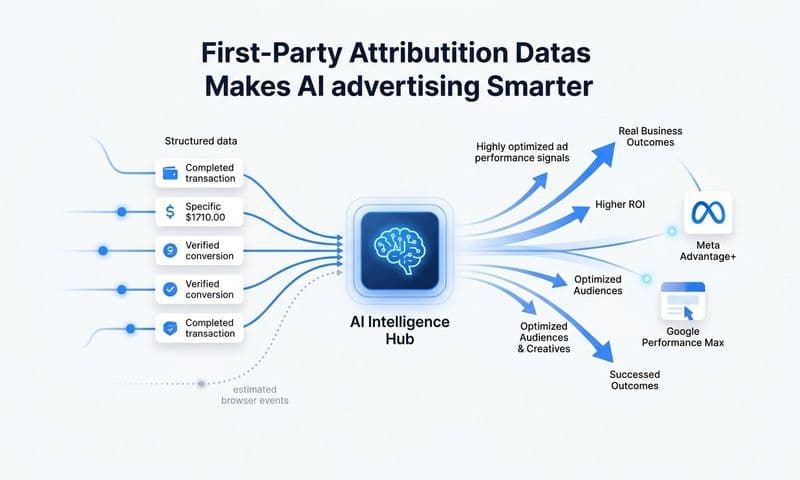
Feeding enriched conversion data back to ad platforms creates a powerful optimization loop. When your attribution system unifies mobile and web data, you can send more complete conversion signals to Meta, Google, and other platforms. Instead of just reporting that an install happened, you can send signals about which installs led to account creation, purchases, or subscription starts.
This enriched data dramatically improves how ad platform algorithms optimize your campaigns. Meta's algorithm learns faster when it receives signals about high-value conversions rather than just install volume. Your campaigns shift toward finding users who actually generate revenue, not just those who download and delete. The result: lower customer acquisition costs and higher return on ad spend as platforms optimize toward your actual business goals. A robust cross platform attribution tool makes this unified approach possible.
From Installs to Revenue: Measuring What Actually Matters
Install counts make terrible success metrics. An app with 100,000 installs and 95% week-one churn is failing, not succeeding. Yet many mobile marketers still optimize campaigns toward install volume because it's the easiest metric to track and the one ad platforms default to reporting.
The shift to revenue-focused attribution starts with tracking the complete user journey beyond the install event. Your attribution system needs to capture activation milestones: did the user complete onboarding? Create an account? Enable notifications? Connect payment information? These early signals predict long-term value far better than the install itself.
Tracking first purchase events transforms your attribution from vanity metrics to business metrics. You can now compare channels not by install volume but by cost per paying customer. A channel driving 1,000 installs at $2 each looks efficient until you discover only 10 users made purchases, resulting in a $200 customer acquisition cost. Meanwhile, a channel with 100 installs at $5 each but 20 purchasers delivers $25 CAC—far more efficient despite appearing expensive at the install level.
Cohort-based analysis reveals how user value evolves over time and varies by acquisition source. Users acquired through influencer campaigns might show lower day-one purchase rates but higher 90-day retention and lifetime value compared to users from display ads. Without cohort tracking that follows users over time and segments by acquisition channel, you'd miss this insight and potentially cut a valuable channel based on short-term metrics.
Lifetime value (LTV) attribution connects long-term revenue back to the original marketing touchpoint. For subscription apps, this means tracking not just the initial subscription but renewals, upgrades, and total revenue over the customer relationship. Your attribution platform needs to maintain the connection between acquisition source and ongoing revenue, updating LTV calculations as users continue generating value. Implementing marketing attribution platforms with revenue tracking capabilities is essential for this analysis.
Return on ad spend (ROAS) becomes meaningful only when calculated against actual revenue rather than proxy metrics. A campaign with 5x ROAS based on install volume tells you nothing about profitability. A campaign with 3x ROAS based on subscription revenue within 30 days provides actionable insight. The lower ROAS might actually represent better performance if those users stick around and generate revenue for years.
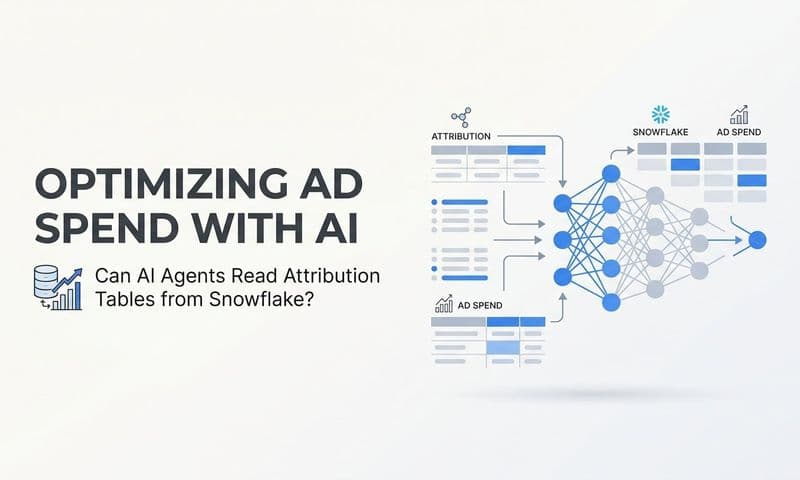
AI-powered insights help identify patterns in user quality across campaigns that manual analysis would miss. Machine learning algorithms can analyze thousands of variables—ad creative elements, audience targeting parameters, time of day, device type, and more—to predict which campaign configurations drive high-value users versus install volume.
These AI recommendations move beyond simple correlation to identify causal relationships. Instead of just noting that video ads drive higher LTV, AI analysis might reveal that video ads featuring specific product benefits attract users who convert to annual subscriptions at 2x the rate of users from other creative types. This specificity enables precise optimization rather than broad generalizations. Exploring data science for marketing attribution can help you leverage these advanced analytical capabilities.
The key is connecting your attribution platform's AI capabilities to your complete data set—not just install events but post-install behavior, revenue events, and engagement metrics. AI trained on install data alone will optimize for installs. AI trained on the full funnel from acquisition through retention and revenue will optimize for business outcomes.
Moving to revenue attribution requires patience. You won't see complete LTV data on day one of a campaign—it takes time for users to generate revenue and demonstrate retention patterns. But this delay makes the shift even more critical. If you wait 90 days to evaluate campaign performance based on revenue metrics, you've already spent three months optimizing toward the wrong goal. Build revenue tracking into your attribution from the start, even if the data takes time to mature.
Building Attribution That Scales With Privacy-First Marketing
Mobile app attribution has evolved from a tracking problem to a strategic advantage. The marketers who thrive in the privacy-first era aren't those who find workarounds to track users despite their preferences—they're the ones who build attribution systems that work with privacy frameworks while delivering better insights than ever before.
The shift from device-level tracking to server-side attribution isn't a limitation to work around. It's an opportunity to build infrastructure that unifies your entire marketing stack, connects mobile app data with web and CRM insights, and feeds enriched conversion signals back to ad platforms for better optimization. This approach respects user privacy while providing more complete attribution than the fragmented, device-dependent systems it replaces.
Effective attribution for mobile app campaigns means moving beyond the install as your success metric. Track the full journey from first impression through activation, purchase, and retention. Measure channels by the revenue and lifetime value they deliver, not just the install volume they generate. Use AI-powered analysis to identify which campaigns drive users who actually matter to your business, then scale those insights across your marketing.
The complexity of mobile attribution—cross-device journeys, app store intermediaries, privacy frameworks, multiple touchpoints—isn't going away. But neither is the need for accurate, actionable data about what's driving your growth. The solution is attribution infrastructure built for this reality: server-side tracking that maintains accuracy without compromising privacy, multi-touch models that credit the full journey, and revenue-focused measurement that aligns marketing performance with business outcomes.
Ready to elevate your marketing game with precision and confidence? Discover how Cometly's AI-driven recommendations can transform your ad strategy—Get your free demo today and start capturing every touchpoint to maximize your conversions.