You refreshed your Facebook Ads Manager one morning in April 2021, and something felt off. Your conversion numbers had dropped by half overnight. Yet when you checked your CRM, sales were still coming in at the same pace. Your Google Ads dashboard showed strong performance, but Meta's reporting looked like your campaigns had fallen off a cliff.
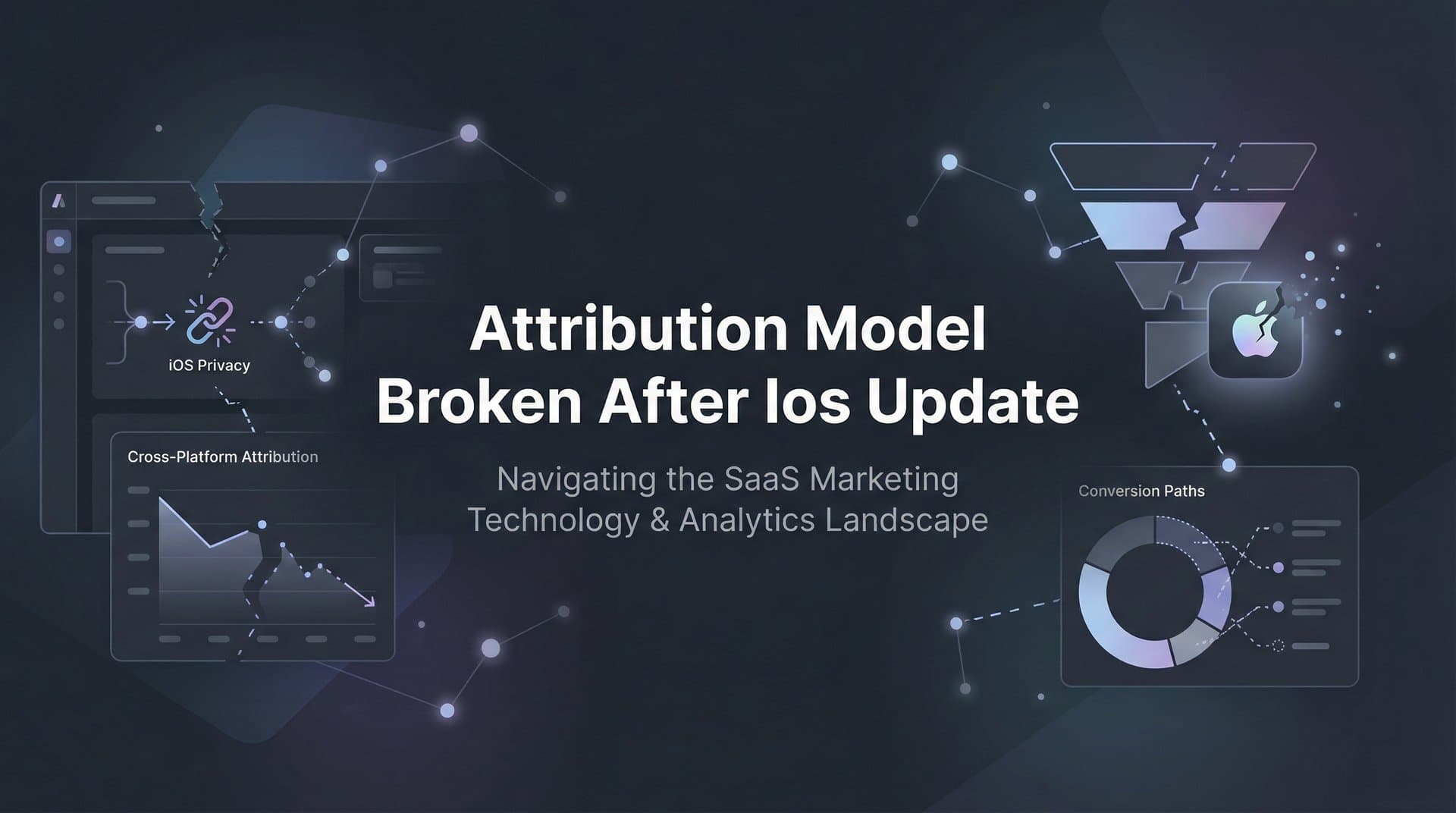
This wasn't a campaign issue. This wasn't a creative problem. This was the iOS 14.5 update fundamentally breaking the attribution infrastructure that marketers had relied on for years.
If you're still seeing discrepancies between what your ad platforms report and what's actually happening in your business, you're not alone. The shift Apple introduced didn't just create temporary tracking issues—it permanently changed how mobile attribution works. Understanding what broke, why it broke, and how to rebuild your attribution strategy isn't optional anymore. It's the difference between making decisions based on accurate data versus flying blind with millions of dollars on the line.
The Technical Shift That Changed Everything
Apple's App Tracking Transparency framework did something that seemed simple on the surface: it required apps to ask users for permission before tracking their activity across other apps and websites. That single change dismantled the entire infrastructure of mobile attribution.
Before iOS 14.5, advertisers could access the IDFA—the Identifier for Advertisers—for every iOS device. This unique identifier allowed deterministic tracking across the customer journey. When someone clicked your Facebook ad, visited your website, and later made a purchase, the IDFA connected those dots with certainty. Attribution wasn't perfect, but it was based on actual device-level data, not estimates.
When ATT rolled out, users started seeing that now-familiar prompt: "Allow [App] to track your activity across other companies' apps and websites?" The opt-in rates tell the story. Many marketers report that significant portions of their iOS traffic now come from users who declined tracking. Without access to IDFA for these users, the deterministic matching that powered attribution simply stopped working.
Here's what actually broke: Ad platforms can no longer follow individual users across their journey from ad click to conversion. They can't see when someone who clicked your Instagram ad later converted on your website. They can't connect the dots between touchpoints. They're essentially blind to large portions of the customer journey. For a deeper dive into these challenges, explore how iOS updates broke tracking for marketers everywhere.
The platforms didn't just lose visibility—they lost the ability to optimize effectively. Facebook's algorithm used to learn from every conversion, adjusting targeting and bidding based on who actually bought. Now, with limited conversion data flowing back, the algorithm is making decisions with incomplete information. It's like trying to improve your golf swing while wearing a blindfold for half your shots.
What you see in your ad dashboards now isn't necessarily what's happening in reality. It's what the platforms can measure within the new constraints. That gap between measured performance and actual performance is where millions of marketing dollars are being misallocated every day.
Five Signs Your Attribution Data Can't Be Trusted
The first warning sign is obvious: your platform-reported conversions dropped dramatically, but your actual revenue didn't. You're seeing 40% fewer conversions in Facebook Ads Manager, yet your Shopify dashboard shows sales held steady or even grew. That's not a coincidence—that's broken attribution telling you it can't see what's actually happening.
The second sign shows up when you compare platforms. Google Ads suddenly looks like your top performer, reporting strong conversion numbers, while Meta's reporting suggests your campaigns are struggling. But here's the twist: Google benefits from last-click attribution and search intent, while Meta often drives earlier touchpoints that now go untracked. You're not seeing the full picture—you're seeing which platform retained better tracking capabilities.
Third, you'll notice timing issues that make real-time optimization impossible. Conversions that used to appear within minutes now show up days later, if at all. Meta's Aggregated Event Measurement introduces delays of up to 72 hours for conversion reporting. When you're running campaigns that need daily optimization, three-day-old data is practically useless. You're making budget decisions based on information that's already outdated.
The fourth indicator is over-reliance on modeled conversions. Your Facebook dashboard starts showing "estimated" or "modeled" conversions alongside actual tracked conversions. These statistical estimates are the platform's best guess at what's happening in the tracking blind spots. Sometimes they're close. Sometimes they're wildly off. Either way, you're making decisions based on educated guesses rather than facts.
Finally, watch for attribution inflation on certain channels. If one platform suddenly claims credit for conversions that other data sources suggest came from elsewhere, you're seeing the self-reporting bias problem in action. Each platform wants to prove its value, and when tracking is limited, they're incentivized to attribute conversions generously to themselves. The result? Your attribution adds up to more than 100% of your actual conversions.
Why Platform-Native Attribution Falls Short Now
Meta's Aggregated Event Measurement was their solution to the iOS tracking restrictions, but it introduced limitations that fundamentally changed how marketers can use the platform. You're now restricted to tracking just eight conversion events per domain. For businesses with complex funnels—multiple product lines, various conversion types, different customer segments—eight events isn't nearly enough.
The 72-hour reporting delay compounds the problem. In the old world, you could launch a campaign in the morning and see conversion data by afternoon, allowing you to optimize or kill underperforming ads quickly. Now you're waiting three days for complete data. By the time you see that an ad isn't working, you've already spent three days of budget on it. Understanding how privacy updates affect attribution data is essential for adapting your strategy.
Modeled conversions sound sophisticated, but they're statistical estimates filling in the gaps where actual tracking failed. The platforms use various signals—aggregated data, historical patterns, similar user behavior—to estimate what probably happened. When tracking is working for 30% of your traffic and modeled for the other 70%, you're basing major budget decisions on assumptions rather than measurements.
The self-reporting bias creates a more insidious problem. Every ad platform has an incentive to show strong performance. When Google Ads reports a conversion, and Facebook also claims credit for that same conversion, who's right? Often, both platforms are using their own attribution windows and models, each designed to show their platform in the best light.
This creates a scenario where your total attributed conversions across all platforms might add up to 150% of your actual conversions. You think you're getting more efficient, but you're actually just seeing the same conversions counted multiple times by different platforms, each using tracking methods that favor their own contribution.
Platform-native attribution also can't connect the dots across your entire marketing ecosystem. Facebook doesn't know what happened in your CRM. Google doesn't see your email marketing touchpoints. Neither platform knows about your offline conversions or phone call leads. You're left with fragmented data silos, each telling part of the story but none showing the complete customer journey. This is why understanding marketing channel attribution modeling has become critical for modern marketers.
Server-Side Tracking: The Foundation for Accurate Attribution
Server-side tracking flips the entire approach to data collection. Instead of relying on browser cookies or device identifiers that users can block, you're capturing data directly on your server before it ever touches the user's device. This bypasses the iOS restrictions entirely because you're using first-party data collection methods that don't require cross-app tracking permission.
Here's how it works in practice: When someone visits your website, your server captures that visit along with key information—what they clicked, which pages they viewed, what actions they took. When they convert, your server records that conversion with all the relevant context. Then your server sends that enriched conversion data directly to your ad platforms through their APIs, like Meta's Conversions API or Google's Enhanced Conversions.
The technical advantage is significant. Client-side tracking—the traditional pixel-based approach—is limited by what happens in the user's browser. Ad blockers can prevent pixels from firing. Browser privacy settings can block cookies. iOS restrictions can prevent cross-site tracking. Server-side tracking operates outside these constraints because the data collection happens on infrastructure you control. Learn more about ad tracking after privacy updates to understand the full scope of these changes.
Implementing server-side tracking requires connecting your website, CRM, and ad platforms through server-side integrations. For Meta, that means setting up the Conversions API alongside your existing pixel. For Google, it involves implementing Enhanced Conversions. The setup is more technical than dropping a pixel on your site, but the data quality improvement is substantial.
The real power comes from data enrichment. When a conversion happens, your server can attach additional context that client-side tracking would miss—customer lifetime value, subscription tier, product category, or CRM status. This enriched data flows back to your ad platforms, giving their algorithms better information for optimization. Facebook's AI can't learn from conversions it can't see, but when you're feeding it complete, accurate conversion data through the Conversions API, it can optimize more effectively.
Server-side tracking also solves the timing problem. Conversions are sent to platforms immediately, without the delays inherent in aggregated event measurement. You get faster feedback on campaign performance, enabling real-time optimization decisions based on actual data rather than waiting days for complete reporting.
Building a Post-iOS Attribution Strategy That Works
Last-click attribution was already problematic before iOS 14.5, but the tracking limitations made it completely unreliable. When you can't track the early touchpoints in the customer journey, last-click attribution over-credits bottom-funnel channels and under-credits the awareness and consideration channels that actually started the journey. You need multi-touch attribution that reflects how customers actually discover and evaluate your business.
Multi-touch attribution models—whether linear, time-decay, or position-based—distribute credit across all touchpoints in the customer journey. Someone might discover your brand through a Facebook ad, research on Google, read your email campaign, and then convert through a retargeting ad. Each touchpoint played a role, and your attribution model should reflect that reality. The challenge is connecting these touchpoints when platform-native tracking can't see the full journey. Understanding the difference between single source and multi-touch attribution helps clarify which approach fits your needs.
This is where unified attribution platforms become essential. By connecting data from your ad platforms, website analytics, CRM, and other marketing tools, you create a single source of truth that shows the complete customer journey. You're no longer relying on Facebook's version of events or Google's perspective—you're seeing the actual path customers took from first touch to conversion.
The data enrichment component is equally important. When you feed better data back to ad platforms, their algorithms can optimize more effectively. Meta's AI learns from the conversions you send through the Conversions API. Google's Smart Bidding improves when you provide Enhanced Conversion data. The platforms aren't getting smarter on their own—they're getting smarter because you're giving them better information to learn from.
Your attribution strategy should also account for offline conversions and non-digital touchpoints. If customers call your sales team, visit your retail location, or convert through channels that aren't tracked by pixels, those conversions need to flow into your attribution model. Otherwise, you're optimizing based on incomplete data, potentially cutting budgets from channels that drive valuable offline results. Knowing how to choose the right attribution model for your business ensures you capture these nuances.
Putting Your Attribution Back Together
The shift from device-level tracking to server-side, first-party data collection isn't temporary. This is the new foundation of digital marketing attribution. The marketers who adapt to this reality—implementing server-side tracking, building unified attribution systems, and enriching their conversion data—gain a competitive advantage that compounds over time.
Accurate attribution in a privacy-first landscape isn't just about seeing better reports. It's about making smarter budget allocation decisions, optimizing campaigns based on reality rather than estimates, and feeding your ad platforms the data they need to improve their targeting and bidding. When your competitors are flying blind with broken attribution, your accurate data becomes a strategic moat.
The first step is auditing your current attribution setup. Where are the gaps? Which conversions aren't being tracked? How much discrepancy exists between platform reporting and actual business results? Once you understand what's broken, you can prioritize the fixes that will have the biggest impact on your ability to scale profitably.
The solution isn't going back to the way things were—that's impossible. The solution is building a modern attribution infrastructure that works within today's privacy constraints while delivering the data accuracy you need to grow. That means server-side tracking, unified data across platforms, and enriched conversion events that help ad algorithms optimize effectively.
Ready to elevate your marketing game with precision and confidence? Discover how Cometly's AI-driven recommendations can transform your ad strategy—Get your free demo today and start capturing every touchpoint to maximize your conversions.