You wake up, grab your coffee, and open your ad dashboard. Something's off. Your conversion numbers have dropped by 40% overnight. Your Facebook campaigns that were printing money yesterday now look like they're barely breaking even. Your Google Ads attribution is showing question marks where customer journeys used to be crystal clear.
You check your CRM. Sales are still coming in. Customers are still buying. But according to your ad platforms, nobody's converting.
If this sounds familiar, you're not alone. Since Apple started rolling out privacy changes with iOS 14.5 in 2021, marketers across every industry have watched their tracking infrastructure crumble. Each new iOS update brings another wave of panic as attribution gaps widen, conversion data becomes more fragmented, and the tools we've relied on for years suddenly can't tell us which ads are actually working.
The frustrating part? Your marketing isn't necessarily broken. Your tracking is. And that distinction matters because the solution isn't to panic and cut budgets—it's to understand what changed and rebuild your measurement infrastructure on a foundation that actually works in this new privacy-first world.
Let's break down exactly what happened, why your tracking stopped working, and most importantly, how to fix it so you can make confident marketing decisions again.
Why Apple's Privacy Changes Disrupted Your Marketing Data
Apple didn't break your tracking on accident. They broke it on purpose, with a clear privacy agenda that fundamentally changed how marketers can measure ad performance on iOS devices.
The catalyst was App Tracking Transparency (ATT), introduced with iOS 14.5 in April 2021. Before ATT, apps could freely track users across other apps and websites using a unique identifier called the IDFA (Identifier for Advertisers). This allowed Facebook, Google, and other platforms to follow users from ad click to conversion, building detailed profiles of behavior and preferences. Understanding how to fix iOS 14 tracking issues became essential for marketers navigating this shift.
ATT flipped this model upside down by requiring apps to explicitly ask permission before tracking users across other companies' apps and websites. When you open an app on iOS now, you see that familiar prompt: "Allow [App Name] to track your activity across other companies' apps and websites?"
Most users tap "Ask App Not to Track." Industry data suggests opt-in rates hover around 25-30% globally, meaning roughly 70% of iOS users are now invisible to traditional tracking methods.
But ATT was just the beginning. Apple introduced SKAdNetwork as their privacy-preserving alternative for measuring app install campaigns. Instead of detailed, user-level conversion data, SKAdNetwork provides advertisers with aggregated, delayed attribution information. You get conversion signals, but they're stripped of identifying information and reported with a time delay of 24-72 hours.
For app install campaigns, this created challenges. For web-based conversions—the bread and butter of most digital marketing—it created chaos.
Here's what many marketers miss: iOS tracking limitations extend beyond apps into Safari browsing. Intelligent Tracking Prevention (ITP) in Safari restricts how long cookies last and how they can be used for cross-site tracking. When combined with Mail Privacy Protection (which masks IP addresses and preloads email content), iOS users became increasingly difficult to track across their entire digital journey. Marketers should also be preparing for iOS17 Link Tracking Shield as privacy restrictions continue to evolve.
The technical reality is that when someone using an iOS device clicks your Facebook ad, visits your website in Safari, and converts three days later, traditional tracking methods often can't connect those dots anymore. The cookie might have expired. The tracking pixel might be blocked. The attribution signal never makes it back to Facebook.
This isn't a bug. It's exactly what Apple intended. They positioned these changes as protecting user privacy, giving people control over their data. For marketers, it meant losing visibility into conversion paths that used to be perfectly clear.
The Real Impact on Your Ad Platform Reporting
The privacy changes didn't just affect tracking—they fundamentally altered how ad platforms like Meta and Google receive and process conversion data. Understanding this impact is crucial because it explains why your dashboards suddenly look so different.
Meta (Facebook and Instagram) felt the impact most dramatically. Before iOS 14.5, Facebook's pixel could track users across the web with minimal restrictions. After ATT, Meta introduced Aggregated Event Measurement (AEM) to work within Apple's new constraints. Many advertisers began experiencing Facebook Ads tracking pixel issues that required immediate attention.
AEM limits advertisers to tracking eight conversion events per domain, and those events must be prioritized in order of importance. If someone triggers your ninth event, it might not get reported. Worse, attribution windows shortened dramatically—from the standard 28-day click, 1-day view window to much tighter constraints, often just 7 days for clicks.
This means conversions that happen outside these windows simply disappear from your Meta reporting. Your campaigns are still driving sales, but Meta's dashboard shows nothing. The algorithm that optimizes your ad delivery? It's making decisions based on incomplete information.
Google Ads faces similar challenges, though the impact varies by campaign type. Search campaigns, which rely less on third-party tracking, weathered the changes better. Display and YouTube campaigns, which depend heavily on cross-site tracking, saw significant attribution gaps.
The delayed reporting is particularly frustrating. Instead of seeing conversions in near real-time, you might wait 24-72 hours for attribution data to trickle in. This delay makes it nearly impossible to make quick optimization decisions or respond to performance changes as they happen. Implementing real time data tracking solutions has become a priority for performance-focused teams.
But here's the most insidious part: the ad platform algorithms themselves suffer. Meta's algorithm learns from conversion signals to identify which users are most likely to convert. When 70% of iOS conversions go unreported, the algorithm is essentially flying blind. It can't properly identify high-intent audiences. It can't optimize delivery toward users who actually convert. It makes increasingly poor decisions based on increasingly poor data.
This creates a vicious cycle. Incomplete data leads to poor optimization, which leads to worse performance, which generates even less usable data. Your campaigns don't just look worse—they actually perform worse because the systems optimizing them are starved of the signals they need.
Signs Your Tracking Is Broken (And What's Actually Happening)
Not every performance drop is a tracking issue, but certain patterns clearly indicate your measurement infrastructure is failing. Learning to recognize these signs helps you diagnose problems quickly and avoid making optimization decisions based on bad data.
The most obvious symptom is a sudden, dramatic drop in reported conversions that doesn't match your actual business performance. Your CRM shows steady lead flow, your sales team is hitting targets, but your ad platforms report 40-50% fewer conversions than last month. This disconnect is the clearest signal that you're experiencing attribution gaps, not actual performance decline.
Another telltale sign is mismatched conversion counts across platforms. Facebook reports 100 conversions, Google Analytics shows 150, and your CRM logged 200. These discrepancies always existed to some degree, but post-iOS updates, the gaps widened dramatically. If your platforms disagree by more than 20-30%, your tracking infrastructure is likely compromised. Learning how to fix broken conversion tracking should be your immediate priority.
Watch for broken attribution paths in your analytics. When you examine customer journeys, do you see logical progressions from ad click to landing page to conversion? Or do conversions appear to happen spontaneously with no clear source? If your analytics show a spike in "direct" or "none" as the traffic source, users are converting but the attribution signal is lost.
Campaign performance that suddenly looks terrible despite stable business metrics is another red flag. If your Facebook campaigns show a 300% increase in cost per acquisition overnight, but your actual cost to acquire customers hasn't changed, you're looking at a measurement problem, not a performance problem.
To audit your tracking setup, start by comparing three data sources: your ad platform reporting, your web analytics (Google Analytics or similar), and your CRM or transaction records. Run this comparison for the same time period and conversion action. Significant discrepancies indicate tracking gaps.
Check your pixel implementations. Are they still firing correctly? Browser developer tools can show you whether tracking pixels load and send data. If pixels are blocked or failing to fire, that's your smoking gun. Exploring pixel tracking alternatives for iOS users can help you recover lost visibility.
Test conversions yourself. Complete a purchase or lead form on your site from an iOS device using Safari. Does it show up in your ad platform reporting? How long does it take to appear? If your test conversions don't track properly, neither do your real ones.
Server-Side Tracking: The Foundation for Accurate Data
If client-side tracking is broken, the solution is to stop relying on it. Server-side tracking represents a fundamental architectural shift in how conversion data flows from your website to ad platforms—and it's the most effective way to restore measurement accuracy in a privacy-first world.
Traditional client-side tracking works like this: A user clicks your ad, lands on your website, and a JavaScript pixel fires in their browser. That pixel sends data directly from the user's browser to Facebook, Google, or other platforms. This approach worked fine when browsers and operating systems allowed unrestricted tracking. Now, iOS limitations, browser privacy features, and ad blockers frequently prevent these pixels from firing or block the data they try to send.
Server-side tracking takes a different approach. Instead of relying on browser-based pixels, your website server sends conversion data directly to ad platforms through secure server-to-server connections. When a user converts, your server logs that event and transmits it to Facebook's Conversions API, Google's Enhanced Conversions, or similar server-side endpoints. Understanding the differences between Google Analytics vs server side tracking helps clarify why this architectural change matters.
This architecture bypasses the limitations that break client-side tracking. iOS can't block a server-to-server connection. Safari's Intelligent Tracking Prevention doesn't affect data sent from your server. Ad blockers can't intercept server-side transmissions. The data flow happens entirely outside the user's browser, making it immune to privacy restrictions that target client-side tracking.
But server-side tracking isn't just about avoiding blocks—it's about data quality. When you control the data collection and transmission process, you can enrich conversion events with first-party data from your CRM, email system, or customer database. You can send more accurate customer information, better match rates, and higher-quality signals that help ad platforms optimize more effectively.
The technical implementation varies by platform, but the core concept remains consistent. You need infrastructure that captures conversion events on your server, matches them to the appropriate ad clicks or impressions, and transmits that data to ad platforms with proper user identification parameters.
Meta's Conversions API is the server-side solution for Facebook and Instagram campaigns. Instead of relying solely on the Facebook Pixel, you send conversion events directly from your server to Meta's API. This gives Meta visibility into conversions that the pixel misses, dramatically improving Facebook attribution tracking accuracy and algorithm performance.
Google offers Enhanced Conversions, which allows you to send hashed first-party data (email addresses, phone numbers) alongside conversion events. This helps Google match conversions to the correct ad clicks even when cookies are unavailable or unreliable.
The challenge is that implementing server-side tracking requires technical infrastructure. You need server-side code that can capture conversion events, store necessary data, and make API calls to ad platforms. Many businesses lack the development resources or technical expertise to build this themselves.
This is where specialized attribution platforms become valuable. They provide the server-side tracking infrastructure as a service, handling the technical complexity while giving you accurate conversion data across all your marketing channels.
Rebuilding Your Attribution Strategy Post-iOS
Server-side tracking solves the data collection problem, but accurate measurement requires a broader rethinking of how you attribute conversions and evaluate marketing performance. The old single-touch attribution models that worked in a world of perfect tracking don't cut it anymore.
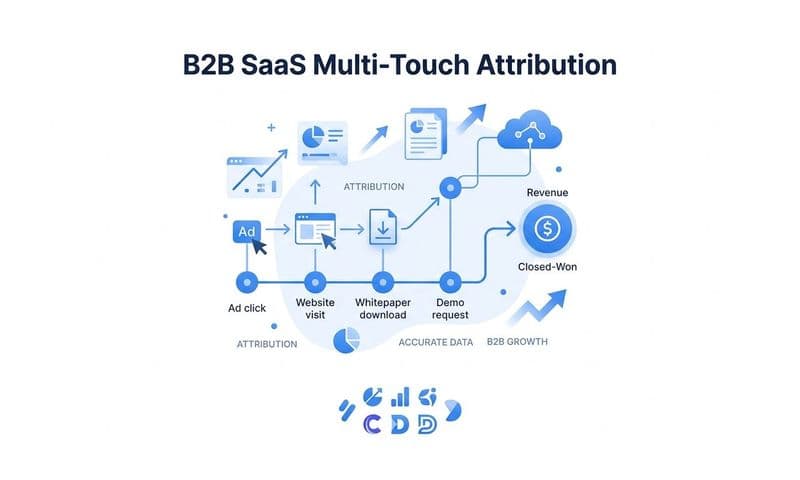
Multi-touch attribution becomes essential when tracking gaps exist. Instead of crediting the last ad click before conversion, multi-touch models recognize that customer journeys involve multiple touchpoints across channels and devices. Someone might see your Instagram ad on their iPhone, search for your brand on their laptop, and convert three days later after clicking a Google ad. Implementing proper attribution tracking methods helps capture these complex journeys.
In a post-iOS world, capturing these full customer journeys requires infrastructure that can track users across devices and sessions using first-party data. When someone enters their email address on your website, that becomes a persistent identifier you can use to connect their activity across visits, even when cookies expire or tracking pixels fail.
The key is connecting your CRM data to your ad platform performance. Your CRM knows which customers came from which sources because it tracks actual transactions and customer records. By feeding this CRM data back to your ad platforms through server-side connections, you can close the attribution loop that iOS limitations broke. A solid first party data tracking setup is the foundation for this approach.
This approach has a powerful secondary benefit: it improves ad platform optimization. When you send better conversion data back to Meta or Google—data that includes actual customer value, purchase details, and accurate attribution—their algorithms can make smarter targeting decisions. The platforms learn which audiences actually convert and optimize delivery accordingly.
Consider implementing conversion value optimization rather than just tracking conversion counts. Not all conversions are equal. A customer who spends $500 is more valuable than one who spends $50. By sending revenue data with your conversion events, ad platforms can optimize toward higher-value customers, not just higher conversion volumes.
Attribution modeling should also account for view-through conversions and assisted conversions that don't show up in last-click models. Someone who sees your Facebook ad but doesn't click might still be influenced by that exposure. When they later search for your brand and convert, Facebook deserves some credit for that awareness. Using touchpoint tracking analytics helps quantify these assisted conversions.
The challenge is that ad platforms naturally want to claim credit for every conversion. Facebook attributes conversions to Facebook. Google attributes them to Google. Without an independent attribution system that sees the full customer journey, you're left trying to reconcile conflicting reports from platforms that each overstate their impact.
This is why many sophisticated marketers now use attribution platforms that sit above individual ad channels. These platforms track users across all touchpoints—paid ads, organic search, email, social, direct traffic—and apply consistent attribution logic across channels. You get a single source of truth instead of conflicting reports from each platform.
Your Path to Tracking Recovery
Fixing broken tracking isn't a one-time project—it's an ongoing process of adapting your measurement infrastructure to work within evolving privacy constraints. But the path forward is clearer than you might think.
Start by implementing server-side tracking for your most important conversion events. Whether you build this yourself or use a platform that provides server-side infrastructure, getting conversion data flowing through server-to-server connections is the foundation everything else builds on. This immediately reduces attribution gaps and improves the data quality your ad platforms receive. Following best practices for tracking conversions accurately ensures you maximize data quality from the start.
Next, connect your CRM or transaction data to your marketing measurement. Your CRM knows the truth about which customers converted and what they purchased. By linking this first-party data to your ad platform reporting, you create a more complete picture of marketing performance that doesn't rely solely on cookie-based tracking.
Adopt multi-touch attribution models that recognize the complexity of modern customer journeys. Move beyond last-click attribution to models that credit multiple touchpoints appropriately. This gives you more accurate insights into which channels and campaigns actually drive results, even when individual touchpoints can't be tracked perfectly.
Feed enriched conversion data back to your ad platforms through their server-side APIs. The more accurate and detailed the conversion signals you send, the better their algorithms can optimize. This creates a virtuous cycle where better data leads to better targeting, which drives better performance, which generates more valuable data.
Regularly audit your tracking setup to catch issues before they compound. Test conversions from iOS devices, compare data across platforms, and investigate discrepancies quickly. The sooner you identify tracking problems, the less damage they cause to your optimization decisions.
Accept that perfect attribution is gone. Privacy changes aren't reversing. Browser restrictions are tightening, not loosening. The goal isn't to return to 2019-era tracking—it's to build measurement infrastructure that provides accurate, actionable insights within the constraints of today's privacy-first environment. Exploring cookieless attribution tracking solutions prepares you for the continued evolution of privacy standards.
The marketers who thrive in this new landscape are those who stop fighting privacy changes and instead adapt their infrastructure to work with them. They invest in server-side tracking, first-party data strategies, and attribution platforms that can connect the dots across fragmented touchpoints.
Your tracking broke because the old infrastructure couldn't survive iOS privacy changes. But broken tracking doesn't mean broken marketing. It means it's time to rebuild on a foundation that actually works in 2026 and beyond.
Ready to elevate your marketing game with precision and confidence? Discover how Cometly's AI-driven recommendations can transform your ad strategy—Get your free demo today and start capturing every touchpoint to maximize your conversions.