Your Facebook Ads dashboard shows 50 conversions. Your Stripe account shows 127 actual sales. That's not a rounding error—that's iOS 14 breaking your tracking.
When Apple rolled out App Tracking Transparency in 2021, they gave iPhone users a simple choice: allow apps to track them or don't. Most users chose "don't." The impact on digital advertising was immediate and brutal. Conversion data became unreliable overnight. Attribution windows shrank from 28 days to just 7 days for clicks and 1 day for views. Audience targeting that once felt surgical suddenly felt like throwing darts blindfolded.
If your campaigns are underperforming and your analytics look like Swiss cheese, you're dealing with the iOS 14 tracking problem. The good news? These issues are entirely fixable with the right technical approach.
This guide walks you through seven concrete steps to restore accurate tracking, recover lost attribution data, and rebuild campaign performance. You'll implement server-side tracking that bypasses iOS restrictions, configure your ad platforms correctly, and create systems that capture conversions regardless of whether users opt in or out. No fluff, no theory—just the exact technical fixes that work in 2026.
Let's fix your tracking.
Step 1: Audit Your Current Tracking Setup to Identify Gaps
Before you fix anything, you need to know exactly what's broken. Start by comparing what your ad platforms report against what actually happened in your business.
Pull your Facebook Ads conversion data for the last 30 days. Now pull your actual sales data from Stripe, Shopify, or whatever system processes your transactions. Calculate the gap. If Facebook reports 60 conversions but you processed 150 sales, you're missing 60% of your conversion data. That's your baseline—the number you're working to improve.
Do the same exercise for Google Ads, TikTok, and any other platform you're running. Document these gaps in a spreadsheet. You'll reference these numbers later to measure whether your fixes actually worked.
Next, identify which specific events are getting lost. iOS 14 tracking issues typically hit hardest at two points: mid-funnel engagement events and final conversions. Check your Facebook Events Manager to see which events show dramatically lower volumes on iOS versus Android. Look for drop-offs in "Add to Cart," "Initiate Checkout," and "Purchase" events specifically.
Now audit your pixel implementation itself. Log into your Facebook Business Manager and navigate to Events Manager. Check the "Overview" tab for any warnings or errors. Common issues include multiple pixels firing on the same page, missing parameters in your conversion events, or outdated pixel code that doesn't include the latest iOS 14 compatibility updates. Understanding what a tracking pixel is and how it works will help you identify these implementation problems.
Review your tracking architecture. If you're relying entirely on client-side tracking—meaning the Facebook pixel fires from the user's browser—you've identified your core problem. Browser-based tracking is exactly what iOS 14 restrictions block. Users who opt out of tracking prevent that pixel from firing, which means Facebook never receives the conversion data.
Create a simple document that captures your findings: current tracking gap percentage, which events are most affected, which platforms show the biggest discrepancies, and whether you're using any server-side tracking currently. This becomes your roadmap for the fixes ahead.
One more critical check: look at your attribution windows. If you're still using 28-day click or 7-day view attribution in your internal reporting, but Facebook is now limited to 7-day click and 1-day view, your expectations don't match reality. Adjust your internal benchmarks to reflect the new constraints so you're measuring success accurately.
Step 2: Implement Server-Side Tracking as Your Foundation
Server-side tracking is the single most important fix for iOS 14 issues. Here's why it works: instead of relying on a pixel that fires in the user's browser—which iOS can block—server-side tracking sends conversion data directly from your server to the ad platform. The user's device never enters the equation.
Think of it like this: client-side tracking is like asking someone to deliver a message for you, but they might refuse. Server-side tracking is you delivering the message yourself. It always gets through.
Start with Facebook Conversions API (CAPI). This is Facebook's server-side tracking solution, and it's now essential rather than optional. If you're using Shopify, WooCommerce, or another major e-commerce platform, you're in luck—most have CAPI integration plugins that handle the technical setup for you.
For Shopify users, install the Facebook & Instagram app from the Shopify App Store. Navigate to Settings, then Data Sharing, and enable "Maximum" data sharing. This automatically implements Conversions API alongside your pixel. The two work together: the pixel captures what it can from the browser, and CAPI fills in the gaps with server-side data.
For custom websites or other platforms, you'll need to implement CAPI through your server code or use a tag management solution that supports server-side tracking. Google Tag Manager Server-Side is a popular option that centralizes your tracking infrastructure. For a complete walkthrough, check out our guide on how to set up server-side tracking. You'll need to set up a server container, configure it to receive events from your website, and then forward those events to Facebook via CAPI.
The key data points to send through CAPI include: event name (Purchase, AddToCart, etc.), event time, user data (email, phone, external ID if available), and custom data (value, currency, content IDs). The more customer data you include, the better Facebook can match the conversion to the right user and attribute it to the correct ad.
Now implement Google Enhanced Conversions. This is Google's equivalent to CAPI. It works by capturing first-party customer data—like email addresses and phone numbers—from your conversion pages, hashing it for security, and sending it to Google alongside your conversion events.
In Google Ads, navigate to Conversions, select the conversion action you want to enhance, click Edit Settings, and enable Enhanced Conversions. You'll need to implement the enhanced conversion tag on your website, which captures customer data from form fields and transmits it securely to Google.
If you're using Google Tag Manager, configure your conversion tag to include user-provided data variables. Map these to form fields on your checkout or lead form pages. Google will automatically hash this data before transmission, so you're not sending plain-text customer information.
After implementing both CAPI and Enhanced Conversions, verify they're working correctly. In Facebook Events Manager, check the "Test Events" tool to confirm your server events are firing. You should see events labeled as coming from "Server" rather than just "Browser." For Google, use the Google Tag Assistant Chrome extension to verify that Enhanced Conversions data is being captured and sent with your conversion events.
Give your server-side tracking 48-72 hours to start populating data, then check your conversion volumes. You should see an immediate increase in reported conversions as the server-side events fill in gaps that the pixel was missing.
Step 3: Configure Your Ad Platforms for iOS 14 Compliance
Server-side tracking solves the data transmission problem, but you still need to configure your ad platforms correctly to work within iOS 14's constraints.
Start with domain verification in Facebook Business Manager. Apple requires advertisers to verify ownership of their domains before using Aggregated Event Measurement. Navigate to Business Settings, then Brand Safety, then Domains. Add your website domain and verify it using one of three methods: DNS verification, HTML file upload, or meta tag verification. DNS is the most reliable—add the TXT record Facebook provides to your domain's DNS settings.
Once your domain is verified, configure Aggregated Event Measurement. This is Apple's compromise solution: you can still track conversions from iOS users, but you're limited to eight conversion events per domain, and the data is aggregated rather than user-level.
Navigate to Events Manager, select your pixel, then click "Aggregated Event Measurement" in the left sidebar. You'll see a list of your conversion events. Click "Configure Web Events" and prioritize your eight most important events. This is critical: if you have more than eight events and don't prioritize them, Facebook will choose for you based on activity volume, which might not align with your business priorities.
Prioritize bottom-funnel events first. Your event priority should typically look like this: Purchase (priority 1), Complete Registration/Lead (priority 2), Initiate Checkout (priority 3), Add Payment Info (priority 4), Add to Cart (priority 5), View Content (priority 6), Search (priority 7), Page View (priority 8). Adjust based on your specific business model—if you're lead generation rather than e-commerce, move Complete Registration to priority 1.
Enable value optimization if you're tracking purchase values. In your campaign settings, use "Maximize Conversion Value" as your optimization goal rather than just "Maximize Conversions." This tells Facebook's algorithm to prioritize higher-value purchases, which is especially important when conversion data is limited.
Now configure Google Ads for iOS 14 compliance. Google's approach is different—they use conversion modeling to estimate conversions that can't be directly observed due to privacy restrictions. Navigate to Tools & Settings, then Conversions. For each conversion action, click Edit Settings and ensure "Include in Conversions" is enabled. This tells Google to use modeled data to fill gaps.
Check your attribution settings in Google Ads. Go to Tools & Settings, then Attribution, then Attribution Models. Review which model you're using. Data-driven attribution is generally the best choice in the iOS 14 era because it uses machine learning to distribute credit across touchpoints based on actual conversion patterns, compensating for incomplete data.
Update your campaign settings to account for longer conversion delays. iOS 14 restrictions mean conversion data takes longer to populate. In your campaign settings, consider extending your conversion window to allow for delayed reporting. This doesn't change the actual attribution window Apple enforces, but it prevents you from making optimization decisions based on incomplete data.
Step 4: Connect Your CRM and Backend Systems
Your CRM knows the truth. It knows exactly who became a customer, when they converted, and how much they spent. The problem is your ad platforms don't know what your CRM knows—and that disconnect is costing you attribution accuracy.
CRM integration captures conversions that pixels miss entirely. When someone clicks your Facebook ad on their iPhone, browses your site, then converts three days later on their laptop, traditional pixel tracking might miss the connection. But if you're capturing their email address and syncing CRM data back to Facebook, you can close that loop.
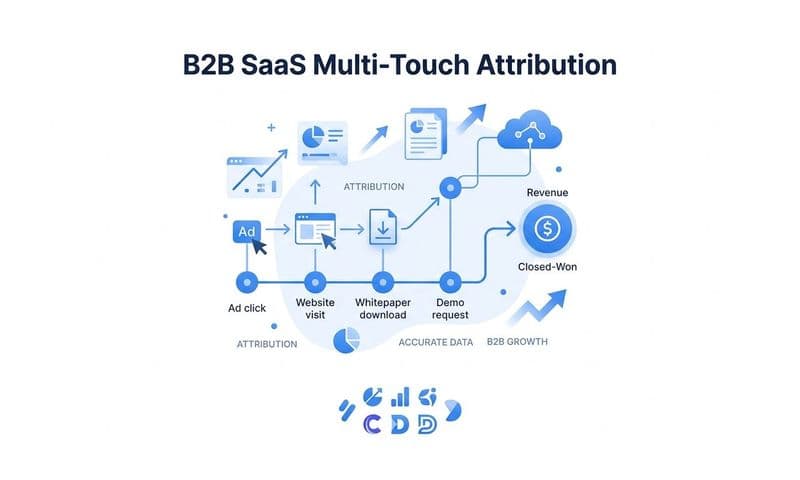
Start by mapping your customer journey touchpoints. Document every step from first click through final sale: ad click → landing page → email capture → nurture sequence → sales call → closed deal. Identify where data lives at each stage. Your ad platforms know about the click. Your website analytics know about the landing page visit. Your email platform knows about the nurture sequence. Your CRM knows about the sale. The goal is connecting all these data points.
If you're using a CRM like HubSpot, Salesforce, or Pipedrive, check whether they offer native integrations with your ad platforms. HubSpot, for example, has built-in Facebook Ads integration that automatically syncs conversions back to Facebook, including conversions that happened offline or through non-tracked channels.
Set up offline conversion imports for sales that happen outside your website. This is critical for businesses with sales teams or phone-based conversions. In Facebook Business Manager, navigate to Events Manager, then click the hamburger menu and select "Offline Events." Create an offline event set, then upload a CSV file containing conversion data from your CRM. Include columns for event time, email or phone number, and conversion value.
For Google Ads, use offline conversion imports to sync CRM data. Go to Tools & Settings, then Conversions, then Uploads. Create a new conversion upload and map your CRM fields to Google's required format. You'll need to include GCLID (Google Click ID) or other identifiers that tie the conversion back to the original ad click.
Create a unified data flow that connects every system. The ideal architecture looks like this: user clicks ad (ad platform captures click ID) → user visits website (your tracking captures click ID and user behavior) → user provides email (you store email + click ID) → user converts (CRM records sale + email) → attribution platform matches email to original click ID → enriched conversion data syncs back to ad platform.
If you're using Cometly, this unified data flow is built in. Cometly captures ad clicks, website behavior, and CRM events, then connects them into complete customer journeys. When someone converts, Cometly knows exactly which ad, keyword, and touchpoint contributed, even if they switched devices or opted out of tracking. That complete data then syncs back to your ad platforms through conversion sync, feeding their algorithms accurate information for better optimization.
The key is capturing identifying information early. The sooner you collect an email address or phone number, the more reliably you can track that user across devices and sessions, regardless of iOS restrictions.
Step 5: Deploy First-Party Data Collection
Third-party cookies are dying. iOS 14 killed them on Safari. Chrome is phasing them out. The future of marketing attribution is first-party data—information users give you directly, with their consent.
First-party data includes email addresses, phone numbers, account information, and behavioral data collected on your own website. Because users provide this data directly to you, it's not subject to the same privacy restrictions as third-party tracking. This makes it gold for attribution in the iOS 14 era. Learn more about what first-party data tracking is and why it's become essential for modern marketers.
Capture email addresses as early as possible in the customer journey. Don't wait until checkout to collect contact information. Use lead magnets, email gates, or account creation prompts on your landing pages. Even if someone doesn't convert immediately, having their email allows you to track their journey across sessions and devices.
Use UTM parameters consistently across all campaigns. UTM tags are query parameters you add to your URLs that specify the traffic source, medium, campaign, and other details. When someone clicks a link with UTM parameters, your analytics platform captures that information as first-party data.
Structure your UTM parameters systematically: utm_source identifies the platform (facebook, google, linkedin), utm_medium identifies the channel type (cpc, email, social), utm_campaign identifies the specific campaign name, and utm_content and utm_term identify the ad or keyword. Use a URL builder tool to create UTM-tagged links consistently, and document your naming conventions so your entire team uses the same structure. For a deeper dive, read our guide on UTM tracking and how it can help your marketing.
Implement first-party cookies on your website. Unlike third-party cookies set by external domains, first-party cookies are set by your own domain and persist longer. Configure your analytics and tracking tools to use first-party cookies for session tracking and user identification. This ensures you can recognize returning visitors even if they've blocked third-party cookies.
Build customer match audiences using your owned data. Both Facebook and Google allow you to upload lists of customer emails, phone numbers, or other identifiers to create custom audiences. These audiences are built on first-party data you own, so they're not affected by iOS 14 restrictions.
In Facebook Ads Manager, navigate to Audiences and create a Custom Audience. Select "Customer List" as the source and upload a CSV file containing customer emails or phone numbers. Facebook will hash and match this data to user profiles, creating an audience you can target or exclude. Use these audiences to create lookalikes for prospecting or to retarget existing customers with upsells.
For Google, use Customer Match to upload similar lists. Navigate to Tools & Settings, then Audience Manager, then create a new audience using customer data. Google requires a minimum list size of 1,000 contacts for Customer Match, so this works best for established businesses with substantial customer databases.
The more first-party data you collect, the less dependent you become on third-party tracking. This isn't just an iOS 14 fix—it's future-proofing your marketing infrastructure for whatever privacy changes come next.
Step 6: Set Up Multi-Touch Attribution for Complete Visibility
Last-click attribution is a lie. It tells you the last thing someone clicked before converting, but it ignores everything that happened before that final click. In the iOS 14 era, when individual platform reporting is incomplete, relying on last-click attribution is like navigating with a map that's missing half the roads.
Multi-touch attribution shows you the full customer journey. It tracks every touchpoint—Facebook ad, Google search, email click, website visit—and distributes credit across all the interactions that contributed to the conversion. This gives you a complete picture of what's actually driving results.
Start by understanding different attribution tracking methods. Linear attribution gives equal credit to every touchpoint. Time-decay attribution gives more credit to recent touchpoints. Position-based (U-shaped) attribution gives more credit to the first and last touchpoints. Data-driven attribution uses machine learning to determine which touchpoints actually influence conversions based on patterns in your data.
Compare different models to understand true channel performance. Run reports using multiple attribution models and look for discrepancies. If Google Search gets 40% credit in last-click attribution but only 15% in linear attribution, it means Google is often the final click but not necessarily driving the journey. Conversely, if Facebook gets 10% credit in last-click but 30% in linear, Facebook is introducing customers who convert through other channels later.
These insights are critical for budget allocation. If you only look at last-click data, you'll over-invest in bottom-funnel channels and under-invest in top-funnel channels that actually start customer journeys. Multi-touch attribution reveals these dynamics so you can fund the full funnel appropriately.
Set up a multi-touch attribution platform that connects all your data sources. This is where Cometly excels. Cometly tracks every touchpoint across every channel—paid ads, organic search, email, social, direct traffic—and connects them into complete customer journeys. When someone clicks a Facebook ad, then Googles your brand name, then converts through an email link, Cometly sees all three touchpoints and attributes credit appropriately.
The platform's AI analyzes these journeys to identify patterns. It shows you which ad channels work best together, which sequences lead to the highest-value customers, and which touchpoints you're over-crediting or under-crediting. This level of visibility is impossible with platform-native reporting, which only shows you what happens within that platform's walled garden.
Use attribution data to reallocate budget toward genuinely high-performing campaigns. If your multi-touch analysis reveals that Facebook prospecting campaigns start journeys that convert through Google Brand Search, don't cut your Facebook budget just because it shows weak last-click conversions. Instead, recognize that Facebook and Google are working together, and fund both appropriately.
Review your attribution reports weekly. Look for changes in customer journey patterns, shifts in which channels initiate versus close deals, and opportunities to test new channel combinations. The goal isn't finding the "one best channel"—it's understanding how your channels work together to drive conversions.
Step 7: Feed Better Data Back to Ad Platform Algorithms
Here's something most marketers miss: fixing your tracking isn't just about seeing better data in your reports. It's about feeding better data back to ad platform algorithms so they can optimize more effectively.
Facebook's algorithm needs to know which ads drive conversions to show those ads to more people likely to convert. Google's algorithm needs conversion data to optimize bids and targeting. When iOS 14 blocks conversion data, these algorithms operate partially blind, which degrades performance across your entire account.
Server-side tracking and CRM integration capture more accurate conversion data, but that data often stays trapped in your analytics platform. The final step is syncing it back to your ad platforms so their algorithms can use it.
This is called conversion syncing or conversion enrichment. You take the complete, accurate conversion data from your attribution platform—data that includes conversions from iOS users, cross-device conversions, and offline conversions—and send it back to Facebook, Google, and other platforms through their APIs.
Cometly's conversion sync feature automates this process. When Cometly identifies a conversion and attributes it to a specific ad, it sends that conversion event back to the ad platform with enriched data: customer identifiers, purchase value, product details, and attribution information. This gives the ad platform's algorithm accurate signals to optimize against.
The result is improved match rates. Match rate is the percentage of your conversion events that ad platforms can successfully match to specific users and ads. Higher match rates mean better optimization. By including additional customer identifiers—email, phone, external ID, click ID—conversion syncing dramatically improves match rates compared to pixel-only tracking.
Monitor algorithm performance improvements as data quality increases. After implementing conversion syncing, watch your campaign metrics over the next two to four weeks. You should see improvements in cost per acquisition, conversion rate, and ROAS as the algorithms receive better data and optimize more effectively. Learn more about how to improve ROAS with better tracking to maximize these gains.
Check your Events Manager in Facebook to see the match rate for your events. Click on an event, then view the "Event Match Quality" score. This score indicates how well Facebook can match your conversion events to specific users. Scores above 7.0 are good; scores above 8.0 are excellent. If your score improves after implementing conversion syncing, you're successfully feeding better data to the algorithm.
For Google Ads, monitor your conversion tracking status. Navigate to Tools & Settings, then Conversions, and check the status column for each conversion action. Look for improvements in the number of conversions recorded and reductions in "unverified" conversions as Enhanced Conversions and conversion syncing provide more reliable data.
The feedback loop is critical: better tracking captures more conversions, conversion syncing feeds that data to ad platforms, algorithms optimize more effectively, campaign performance improves, and you get better results from the same ad spend. This is how you turn iOS 14 tracking fixes into actual business outcomes.
Your iOS 14 Tracking Fix Implementation Roadmap
Let's consolidate everything into an actionable checklist you can start implementing today.
First, audit your current tracking gap. Compare ad platform reported conversions against actual sales data from your CRM or payment processor. Document the percentage gap for each platform. This is your baseline—the number you're working to close.
Second, implement server-side tracking immediately. Set up Facebook Conversions API and Google Enhanced Conversions. If you're on Shopify or another major platform, use their native integrations. If you have a custom website, implement through Google Tag Manager Server-Side or direct API integration. Verify events are firing correctly using platform diagnostic tools.
Third, configure Aggregated Event Measurement in Facebook. Verify your domain, prioritize your eight conversion events strategically, and enable value optimization. Update your Google Ads attribution settings to use data-driven attribution and account for conversion delays.
Fourth, connect your CRM to your ad platforms. Set up offline conversion imports for sales that happen outside your website. Create a unified data flow that connects ad clicks, website behavior, email capture, and CRM conversions into complete customer journeys.
Fifth, deploy first-party data tracking setup. Capture emails early in the customer journey. Use UTM parameters consistently across all campaigns. Build customer match audiences from your owned data. Implement first-party cookies for persistent user tracking.
Sixth, set up multi-touch attribution. Stop relying on last-click reporting. Compare different attribution models to understand true channel performance. Use an attribution platform that connects all your data sources and shows complete customer journeys across channels.
Seventh, sync enriched conversion data back to your ad platforms. Feed your complete, accurate conversion data to Facebook, Google, and other platforms so their algorithms can optimize effectively. Monitor match rates and algorithm performance improvements.
iOS 14 tracking issues aren't going away. Apple continues to tighten privacy controls with each iOS update—you should already be preparing for iOS 17 Link Tracking Shield and beyond. Google is eliminating third-party cookies in Chrome. Other browsers and platforms are implementing similar restrictions. The trend is clear: privacy-first tracking is the future.
The marketers who thrive in this environment are those who build tracking infrastructure that doesn't depend on third-party cookies or user opt-ins. Server-side tracking, first-party data, CRM integration, and multi-touch attribution aren't optional anymore—they're the foundation of modern marketing analytics.
Start with server-side tracking today. It's the single highest-impact fix you can implement, and most platforms offer straightforward integration options. Once your server-side tracking is live, layer in the other fixes systematically. You'll see your tracking gap close, your attribution accuracy improve, and your campaign performance recover.
Ready to elevate your marketing game with precision and confidence? Discover how Cometly's AI-driven recommendations can transform your ad strategy—Get your free demo today and start capturing every touchpoint to maximize your conversions.