You're staring at three different dashboards. Google Ads says you got 127 conversions last month. Meta Ads Manager claims 143. Your CRM shows 98 closed deals. Same campaign period. Same business. Wildly different numbers.
Welcome to the attribution puzzle that keeps marketers up at night.
Here's the truth: every platform is telling you a version of reality, but they're using completely different rules to decide what counts. Google might be crediting a click that happened two weeks before purchase. Meta could be claiming credit for an impression someone scrolled past. Your CRM is only counting what actually closed. They're all looking at the same customer journey through different lenses—and without understanding attribution models, you're essentially throwing darts blindfolded when it comes to budget decisions.
Attribution models are the frameworks that determine how conversion credit gets distributed across the touchpoints in a customer's journey. Think of them as the scoring systems that decide which marketing efforts deserve recognition for driving revenue. The model you choose fundamentally changes which channels look like heroes and which look like budget drains. And if you're still relying on whatever default settings your ad platforms shipped with, you're probably making million-dollar decisions based on incomplete information.
This guide breaks down how different attribution models assign credit, when each approach makes sense, and how to match your attribution strategy to your actual business goals. Because the right attribution model isn't about finding perfect accuracy—it's about making better-informed decisions with the data you have.
The Credit Assignment Problem: Why Attribution Models Exist
Modern customer journeys are messy. Someone might see your Instagram ad on Monday, click a Google search result on Wednesday, read a blog post on Thursday, get retargeted on Friday, and finally convert on Saturday after clicking an email. That's five touchpoints across four channels in one week. Which one deserves credit for the conversion?
This is where attribution models come in. They're systematic approaches to answering that credit assignment question. Without a clear framework, you're left with chaos—every platform claiming full credit for conversions, leading to inflated numbers that don't add up when you try to reconcile them.
The challenge has intensified dramatically with privacy changes. iOS tracking restrictions and the phase-out of third-party cookies mean platforms have less visibility into the full customer journey. When Meta can't track what happens after someone leaves their platform, they're working with partial data. Same with Google. Your attribution model becomes the bridge that connects these fragmented pieces into a coherent picture of what's actually driving results.
Here's why this matters for your budget: if you're using last-touch attribution (the most common default), you're giving 100% credit to whatever touchpoint happened right before conversion. That Instagram ad that introduced your brand to the customer? Zero credit. The blog post that educated them about the solution? Zero credit. Only the final retargeting click gets recognized. You end up over-investing in bottom-funnel tactics while starving the awareness and consideration channels that actually built the pipeline.
Attribution models exist because marketing is a team sport, but most scoring systems only recognize the player who made the final shot. The right model helps you see which teammates set up that winning play—and deserve budget allocation accordingly. Understanding the importance of attribution models in marketing is essential for any team serious about optimizing spend.
The framework you choose shapes everything: which campaigns get scaled, which get paused, where new budget flows, and ultimately whether you're optimizing for real revenue drivers or just the last click before purchase. Let's break down how each major model approaches this credit assignment challenge.
Single-Touch Models: First-Touch vs. Last-Touch Attribution
Single-touch attribution models are the simplest approach: give 100% of the conversion credit to one touchpoint and ignore everything else. They're easy to understand, easy to implement, and dangerously oversimplified for most modern marketing strategies.
Last-Touch Attribution: This is the default setting in most ad platforms, and it's exactly what it sounds like. Whatever touchpoint happened immediately before the conversion gets full credit. Someone clicks your retargeting ad and converts five minutes later? That retargeting campaign is the hero. The fact that they first discovered you through an organic social post two weeks ago, then clicked a Google ad, then read three blog posts? Completely invisible in last-touch reporting.
Last-touch attribution makes bottom-funnel tactics look phenomenal. Retargeting campaigns, branded search ads, email campaigns to existing subscribers—these all perform incredibly well in last-touch models because they're typically the final interaction before purchase. The problem is they're often converting people who were already convinced by earlier touchpoints. You're giving credit to the closer while ignoring the entire sales process that preceded it.
When last-touch makes sense: If you're running pure direct-response campaigns with short consideration cycles, last-touch can be useful. Someone searches for "buy running shoes online," clicks your ad, and purchases immediately—there's a reasonable argument that the ad drove that conversion. It's also valuable when you specifically want to measure conversion efficiency of bottom-funnel tactics without the noise of upper-funnel interactions.
First-Touch Attribution: This flips the script entirely. The first interaction gets 100% credit, and everything that follows is ignored. That initial Instagram ad impression? Full credit. The five subsequent touchpoints that actually convinced them to buy? Zero credit.
First-touch attribution makes awareness campaigns look like revenue-driving machines. Top-of-funnel content, cold audience ads, brand campaigns—these all shine in first-touch reporting because they're often the entry point to your ecosystem. The challenge is that introducing someone to your brand and actually converting them are very different accomplishments. First-touch gives the same credit to an ad impression that led to a conversion six months later as it does to one that converted the next day.
When first-touch makes sense: If your primary goal is measuring which channels are best at generating new customer awareness and starting relationships, first-touch provides that visibility. It's particularly useful for brands with long sales cycles where the initial touchpoint genuinely matters for pipeline generation. Marketing teams focused on top-of-funnel optimization often run first-touch analysis alongside other models to understand acquisition sources.
The fundamental limitation of both single-touch models is right there in the name: they only touch one point in a multi-point journey. They're useful for specific analytical questions, but terrible as your only attribution framework. Most customer journeys involve multiple meaningful interactions, and single-touch models systematically blind you to that reality. For a deeper dive into all the options, explore this types of marketing attribution models breakdown.
Multi-Touch Models: Spreading Credit Across the Journey
Multi-touch attribution models acknowledge reality: most conversions involve multiple touchpoints, and each one plays a role. Instead of giving all the credit to one interaction, these models distribute credit across the customer journey using predetermined rules. They're more sophisticated than single-touch approaches, but they still rely on assumptions about how influence works.
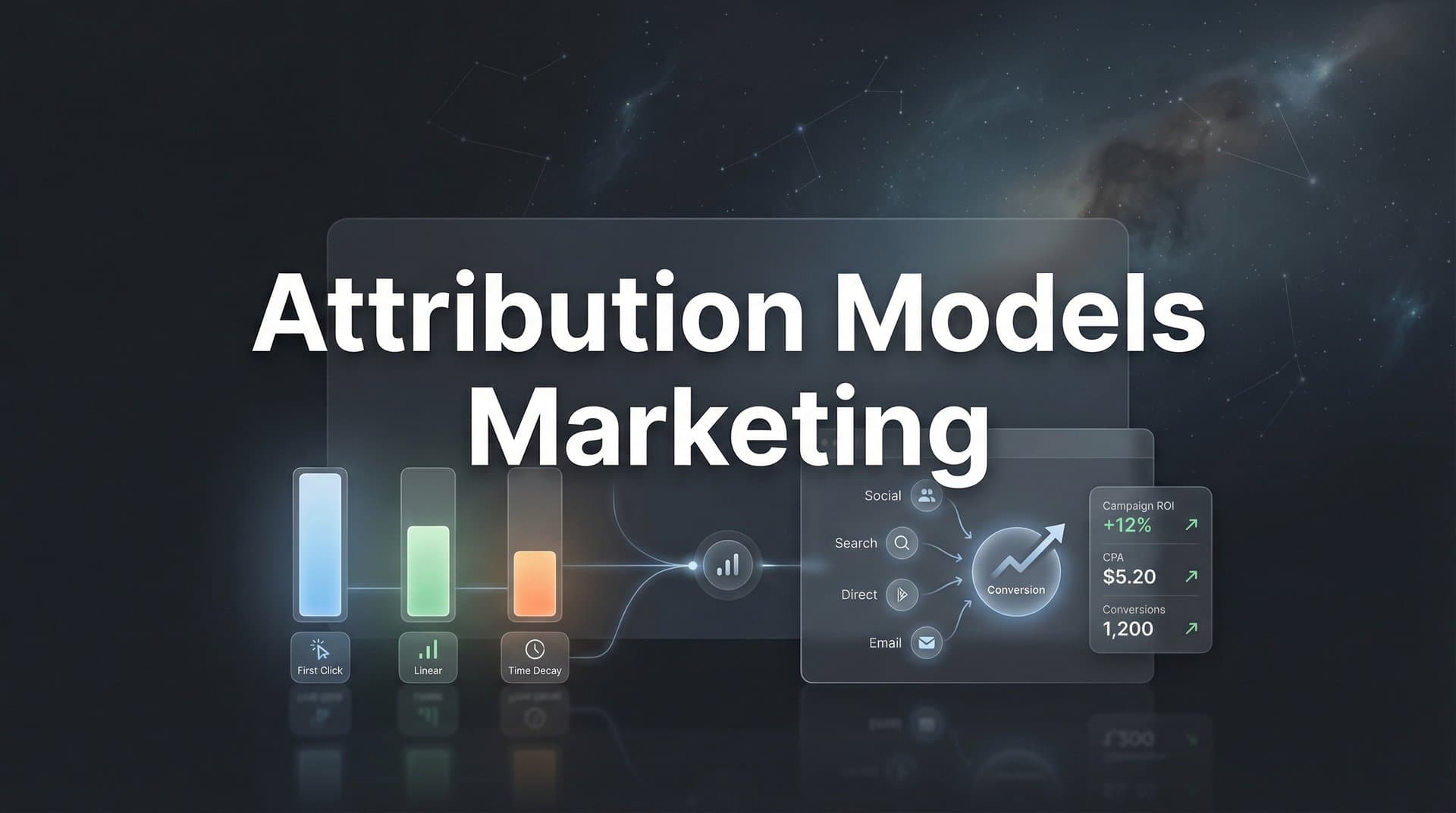
Linear Attribution: This is the most democratic approach—every touchpoint gets equal credit. If someone had five interactions before converting, each one receives 20% of the credit. First touch, last touch, and everything in between are treated as equally important.
Linear attribution prevents the extreme blind spots of single-touch models. Your awareness campaigns get recognized. Your mid-funnel content gets credit. Your closing tactics are acknowledged. Nobody gets ignored, which sounds fair until you realize that treating everything equally might not reflect actual influence. The retargeting ad someone clicked right before purchase probably had more impact than an ad impression they scrolled past three weeks earlier—but linear attribution says they're identical.
When linear makes sense: If you're running integrated campaigns where multiple touchpoints genuinely work together and you want to avoid over-crediting any single channel, linear provides a balanced view. It's particularly useful when you're trying to justify continued investment in mid-funnel activities that don't show up well in last-touch reporting. The model helps teams avoid the trap of cutting channels that look weak in last-touch but actually play important supporting roles.
Time-Decay Attribution: This model acknowledges that touchpoints closer to conversion probably had more influence. It distributes credit across all interactions but weights recent ones more heavily. The exact decay rate varies by implementation, but the principle is consistent: yesterday's click matters more than last month's impression.
Time-decay attribution captures the reality that consideration often builds over time, with later interactions pushing prospects over the decision line. It still recognizes earlier touchpoints—they just receive progressively less credit as you move backward in time. This approach tends to favor remarketing and nurture campaigns while still giving some recognition to awareness efforts.
When time-decay makes sense: For businesses with moderate-length sales cycles where prospects engage multiple times before converting, time-decay reflects the natural acceleration toward purchase. It's useful when you want to emphasize recent engagement without completely ignoring the journey that preceded it. Marketing teams often find time-decay provides a middle ground between last-touch tunnel vision and linear over-simplification.
Position-Based Attribution (U-Shaped): This model makes a specific claim about journey structure: the first and last touches are most important, with everything in between playing a supporting role. Typically, first and last touches each get 40% of the credit, and the remaining 20% is distributed among middle interactions.
Position-based attribution recognizes that introducing someone to your brand and closing the deal are both critical moments—but it doesn't ignore the nurturing that happened between them. It's based on the assumption that customer journeys have a beginning, middle, and end, with the bookends carrying more weight. This multi-touch marketing attribution platform guide explains how to implement these models effectively.
When position-based makes sense: If your sales process has clear awareness and decision phases with multiple touchpoints in between, U-shaped attribution captures that structure. It's popular among B2B marketers with longer sales cycles because it credits both the initial lead generation and the final conversion push while acknowledging the nurture sequence that connected them.
The strength of multi-touch models is that they see the whole journey. The limitation is that they use predetermined rules that might not match how influence actually flows in your specific business. A position-based model assumes first and last touches matter most—but what if your customers actually make decisions based on a mid-journey demo or case study? The model won't adapt to that reality because it's following a fixed formula.
Data-Driven Attribution: Letting Algorithms Analyze Patterns
Data-driven attribution takes a fundamentally different approach: instead of using predetermined rules, it analyzes your actual conversion data to determine which touchpoints statistically correlate with successful outcomes. Machine learning algorithms compare the paths of customers who converted against those who didn't, identifying which interactions appear to make a genuine difference.
Think of it this way: rule-based models like time-decay or position-based decide in advance how credit should be distributed. Data-driven attribution looks at thousands of actual customer journeys in your data and says, "Based on what we're seeing, here's which touchpoints seem to move the needle." It's empirical rather than theoretical.
The algorithm identifies patterns. Maybe customers who saw your educational video content were 3x more likely to convert than those who didn't, even controlling for other factors. Maybe your email nurture sequence shows strong correlation with conversion, but only when it comes after paid social exposure. Data-driven attribution surfaces these insights and adjusts credit accordingly. Understanding content marketing attribution modeling with machine learning can help you leverage these algorithmic approaches.
This sounds ideal, and in many cases it is—but it comes with significant requirements. Data-driven attribution needs volume. You typically need hundreds of conversions per month at minimum for the algorithms to identify reliable patterns. With too little data, the model becomes unstable and produces unreliable results. It's also only as good as your tracking—if you have gaps in your customer journey visibility, the algorithm is working with incomplete information and will draw flawed conclusions.
There's another consideration: data-driven models are often black boxes. A rule-based model like time-decay is transparent—you know exactly how credit is being assigned. With algorithmic attribution, you're trusting the machine learning to make good decisions, but you can't always see the specific logic behind credit distribution. For some marketing teams, that lack of transparency is uncomfortable.
When data-driven makes sense: If you have sufficient conversion volume, complete tracking across channels, and complex customer journeys where predetermined rules feel arbitrary, data-driven attribution often provides the most accurate picture. It's particularly valuable for businesses with diverse customer segments that might follow different paths to conversion—the algorithm can identify these patterns where fixed rules would apply the same formula to everyone.
Platforms like Google Ads and Google Analytics offer data-driven attribution as an option, but they're working with their own data siloed from other channels. The real power comes from data-driven attribution that sees across your entire marketing ecosystem—paid ads, organic channels, email, CRM interactions, and website behavior all feeding into one unified model. Learn how to use GA4 for marketing attribution to get started with platform-native options.
Matching Your Attribution Model to Your Marketing Goals
Here's the reality that most attribution guides skip: there is no universally "best" attribution model. The right choice depends on what you're trying to optimize for, how your customer journey actually works, and what decisions you need to make with the data.
For Brand Awareness and Top-of-Funnel Focus: If your primary goal is understanding and optimizing how prospects first discover you, first-touch attribution provides that visibility. It shows which channels are best at starting relationships, even if they don't close deals. Marketing teams running significant awareness campaigns often analyze first-touch alongside other models to ensure they're not accidentally defunding the channels that fill the pipeline.
Position-based attribution also works well here because it gives substantial credit to initial touchpoints while still recognizing the conversion moment. You get visibility into awareness performance without completely ignoring what closed the deal.
For Performance Marketing and ROAS Optimization: If you're laser-focused on immediate conversion efficiency and return on ad spend, last-touch attribution gives you the clearest picture of what's directly driving purchases. It's not the complete story, but it's useful for optimizing conversion tactics. Many performance marketers run last-touch as their primary model while checking other models periodically to ensure they're not missing important context.
Data-driven attribution is often ideal for performance optimization when you have the data volume to support it. It identifies which touchpoints genuinely correlate with conversion rather than just happening to be last, helping you optimize based on actual influence rather than position in the journey.
For Complex, Multi-Channel Strategies: If you're running integrated campaigns across awareness, consideration, and conversion tactics—which describes most modern marketing—multi-touch models or data-driven attribution become essential. Linear attribution ensures all your channels get recognized. Time-decay captures the building momentum toward conversion. Position-based reflects the structure of journeys with distinct beginning and end phases. For a detailed breakdown, check out this comparison of attribution models for marketers.
The sophistication of your attribution model should match the sophistication of your strategy. Running simple direct-response campaigns? Last-touch might be sufficient. Running coordinated campaigns across paid social, search, content, and email with distinct awareness and conversion phases? You need multi-touch visibility or you're flying blind.
Consider Your Sales Cycle Length: Short sales cycles with immediate purchases (e-commerce impulse buys, for example) often work fine with simpler attribution models. When someone searches, clicks, and converts in one session, last-touch tells most of the story. Long sales cycles with multiple touchpoints over weeks or months demand more sophisticated approaches. B2B software sales, high-ticket services, considered purchases—these need multi-touch or data-driven attribution to capture the extended journey. If you're in the B2B space, this B2B marketing attribution 101 guide offers targeted strategies.
The smartest approach is often running multiple attribution models simultaneously. Compare last-touch against position-based or data-driven. The differences reveal which channels are over-credited in last-touch and under-credited in your current optimization strategy. That gap is where budget reallocation opportunities hide.
Putting Attribution Insights Into Action
Understanding attribution models is useful. Actually using them to make better marketing decisions is where the value lives. Here's how to turn attribution insights into action that improves your results.
Compare Models Side-by-Side: Don't just pick one attribution model and call it done. Run multiple models against the same data and look for meaningful differences. If a channel looks weak in last-touch but strong in first-touch or position-based, that's a signal it's driving awareness and consideration that later touchpoints are converting. If a channel performs consistently across all models, it's genuinely driving results at multiple journey stages. These comparisons reveal which channels are being systematically under-credited in your current optimization approach.
Reallocate Budget Based on True Contribution: Attribution insights should directly inform budget decisions. If your content marketing and organic social are driving strong first-touch performance but you've been defunding them because they look weak in last-touch, that's a budget reallocation opportunity. If your retargeting campaigns look amazing in last-touch but mediocre in multi-touch models, they might be converting people who were already decided—still valuable, but perhaps not deserving of unlimited budget expansion. Understanding cross-channel attribution and marketing ROI helps you make these budget shifts confidently.
The goal isn't perfection; it's better-informed decisions. Use attribution insights to shift budget toward channels that contribute meaningfully across the journey, even if they don't always get the final touch.
Feed Better Data Back to Ad Platforms: Here's where attribution becomes particularly powerful: when you understand which conversions are genuinely valuable and which touchpoints contributed, you can send more accurate conversion data back to your ad platforms. Meta's algorithm, Google's Smart Bidding, and other automated systems optimize based on the conversion signals you send them. If you're only sending last-touch conversions, you're teaching the algorithms to optimize for closing touches while ignoring the awareness and consideration tactics that built the pipeline.
Server-side tracking combined with proper attribution allows you to send enriched conversion events that reflect true value and proper credit assignment. The ad platforms' algorithms get better training data, which improves their optimization over time. This creates a virtuous cycle: better attribution leads to better data, which leads to better algorithmic optimization, which leads to better results. Explore marketing attribution software for revenue attribution to implement this approach.
Track the Complete Journey in One Place: The biggest attribution challenge is fragmented data. Google knows what happens on Google. Meta knows what happens on Meta. Your CRM knows what closes. Nobody sees the complete picture unless you're connecting these data sources. Unified tracking that captures every touchpoint—ad clicks, website visits, email opens, CRM events—provides the foundation for meaningful attribution analysis. Without that complete view, even sophisticated attribution models are working with partial data and drawing incomplete conclusions. Learn more about attribution marketing tracking to build this unified view.
Your Next Steps Toward Smarter Attribution
Attribution models aren't about finding perfect accuracy—they're about moving beyond the default last-click tunnel vision that causes most marketers to systematically undervalue the channels building their pipeline. Every model has limitations. The key is understanding those limitations and using multiple perspectives to inform better budget decisions.
If you're still relying on whatever attribution your ad platforms shipped with by default, you're probably over-crediting bottom-funnel tactics while starving the awareness and consideration channels that actually fill your funnel. Multi-touch and data-driven approaches reveal the full picture: which channels start relationships, which nurture consideration, and which close deals. All three matter, and your attribution framework should recognize that reality.
The marketers winning in 2026 aren't the ones with the fanciest attribution model—they're the ones actually using attribution insights to reallocate budget toward what's working across the entire customer journey. They're comparing multiple models. They're feeding better conversion data back to ad platforms. They're tracking the complete journey instead of relying on fragmented platform-specific reporting.
Start by questioning your current attribution approach. If you can't explain why you're using the model you're using, or if you've never compared it against alternatives, that's your starting point. Run a side-by-side comparison of last-touch, position-based, and data-driven attribution if you have the volume. Look for the gaps—channels that perform very differently across models. Those gaps reveal where your current optimization strategy might be missing opportunities.
Ready to elevate your marketing game with precision and confidence? Discover how Cometly's AI-driven recommendations can transform your ad strategy—Get your free demo today and start capturing every touchpoint to maximize your conversions.