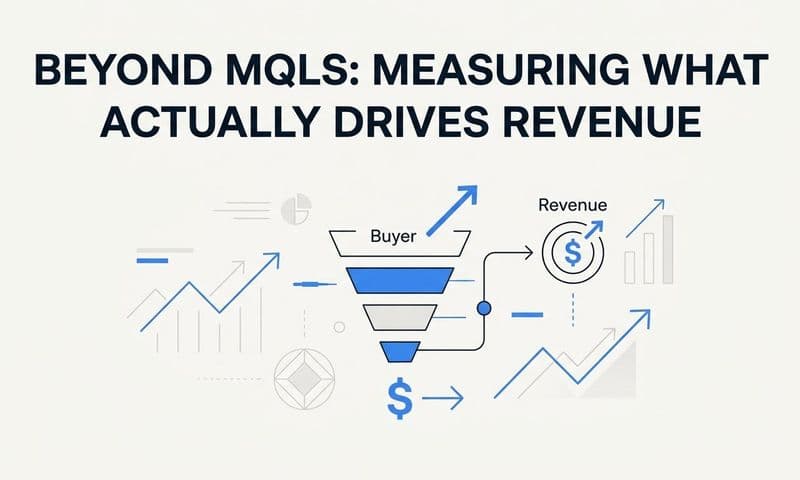
You've just closed a major deal. The sales team is celebrating, the CRM is updated, and now someone in the boardroom asks the question that makes every B2B marketer pause: "Which marketing efforts actually led to this?"
If your answer involves a lot of guesswork, you're not alone. B2B marketing attribution is one of the most genuinely difficult problems in modern marketing, and not because marketers aren't trying hard enough. It's because the challenge is structurally complex. A deal that takes four months to close might touch a LinkedIn ad, a webinar, three nurture emails, a sales demo, a retargeting campaign, and a referral from a colleague before it ever reaches closed-won status. Pinpointing which of those moments "caused" the conversion is rarely straightforward.
Yet without a clear B2B marketing attribution strategy, you're essentially flying blind. Budget decisions get made on gut feel. High-performing awareness campaigns get cut because they don't show direct conversions. Bottom-funnel channels get over-funded because they're easy to measure. And the whole cycle repeats until pipeline dries up and nobody can explain why.
This article is your practical guide to building an attribution strategy that actually reflects how B2B buying works. We'll cover why B2B attribution is fundamentally different from B2C, how to choose the right attribution model for your sales cycle, what data infrastructure you need to make it work, and how to use attribution insights to optimize spend with confidence. Let's get into it.
Why B2B Attribution Is a Different Beast Entirely
Most attribution frameworks were designed with e-commerce in mind. Someone sees an ad, clicks it, buys a product, and the loop closes within hours. The data is clean, the journey is short, and even a simple last-click model tells you something useful.
B2B buying looks nothing like this. Sales cycles routinely stretch three to six months or longer. Deals involve buying committees, not individual consumers, meaning five to ten people might each interact with your brand in completely different ways before a purchase decision is made. The CFO might have seen your LinkedIn thought leadership content. The end user might have attended your webinar. The IT lead might have found you through a Google search. And the final decision might have been influenced by a peer recommendation that never appeared in your analytics at all.
This complexity creates a dangerous gap between what your analytics tools report and what's actually happening. Last-click attribution, which credits the final touchpoint before conversion, is particularly misleading in B2B. It systematically over-credits bottom-funnel activities like demo request forms or branded search while completely ignoring the awareness and nurture efforts that built trust and moved the prospect through the funnel over several months. Understanding what is attribution marketing at a foundational level helps teams avoid these common traps.
The consequence is predictable but painful. Teams that rely on last-click attribution tend to defund their top-of-funnel campaigns because those campaigns don't show direct conversions. Webinars, LinkedIn content, display awareness, and email nurture sequences all look like money pits in a last-click world. So budgets shift toward channels that appear to "close" deals, while the pipeline quietly starves because nothing is filling the top of the funnel anymore.
There's also a structural data problem. Marketing touchpoints typically live in ad platforms, email tools, and website analytics. Revenue events live in your CRM. These two worlds rarely talk to each other by default, and most analytics platforms were never designed to bridge that gap. Without deliberate integration, you end up with marketing data on one side and revenue data on the other, with no reliable way to connect them.
A proper B2B marketing attribution strategy starts by acknowledging this reality and building a framework that respects the full length and complexity of the buying journey, not just the final click.
Choosing the Right Attribution Model for Your Sales Cycle
Attribution models are essentially rules for distributing credit across the touchpoints in a buyer's journey. Each model tells a different story, and choosing the wrong one can lead you to entirely wrong conclusions about what's working.
Here's a breakdown of the major models and how they apply to B2B:
First-Touch Attribution: Gives 100% of the credit to the very first interaction a prospect had with your brand. This is useful for understanding what's generating awareness and filling the top of your funnel, but it ignores everything that happened between that first touch and the eventual deal. Best used as a supplementary view, not a primary model.
Last-Touch Attribution: Gives 100% credit to the final touchpoint before conversion. As discussed, this is the most misleading model for B2B because it systematically ignores the long journey that preceded the final action. Avoid using it as your primary model for anything beyond quick-close transactional products.
Linear Attribution: Distributes credit equally across every touchpoint in the journey. It's simple and democratic, and it's a significant improvement over single-touch models because it acknowledges that multiple interactions matter. The limitation is that it treats a casual blog visit the same as a high-intent product demo, which may not reflect reality.
Time-Decay Attribution: Gives more credit to touchpoints that occurred closer to the conversion event. The logic is that recent interactions were more influential in pushing the prospect over the line. This can work well for shorter B2B sales cycles but may undervalue early awareness touchpoints in longer cycles.
Position-Based (U-Shaped) Attribution: Gives the most credit to the first touch and the last touch, with the remaining credit distributed across middle touchpoints. This is a popular choice for B2B because it acknowledges both the moment of discovery and the moment of decision, while still giving some weight to the nurture journey in between.
Data-Driven Attribution: Uses machine learning to analyze your actual conversion data and assign credit based on which touchpoints statistically correlate with closed deals. This is the most accurate model when you have enough data volume to support it, and it's the direction the industry is moving. For a deeper dive into each approach, explore this guide on types of marketing attribution models every marketer should know.
For most B2B teams, multi-touch attribution models (linear, time-decay, position-based, or data-driven) are far more appropriate than single-touch alternatives. They reflect the reality that buying committees don't convert from a single interaction. No one touchpoint closes a complex B2B deal on its own.
The practical guidance is this: if you're an early-stage company with limited conversion volume, start with a position-based or linear model. It's simple enough to implement but sophisticated enough to give you meaningful directional insights. As your data matures and your CRM integration deepens, migrate toward data-driven attribution, where the model learns from your actual deal patterns rather than applying a fixed rule.
The key is to pick a model and commit to it consistently, then use it to inform decisions rather than treating it as the absolute truth. Attribution is a lens, not a verdict.
The Data Foundation: Connecting Ads, CRM, and Revenue
Even the best attribution model is only as good as the data feeding it. And in B2B, data quality is where most attribution efforts quietly fall apart.
The first infrastructure requirement is reliable tracking. Browser-based tracking has become increasingly unreliable due to iOS privacy changes, cookie deprecation trends, and ad blockers. If your attribution relies solely on client-side pixels, you're already missing a meaningful portion of your conversion data. Server-side tracking addresses this by processing events on your own server before sending them to analytics platforms and ad tools, bypassing the browser restrictions that cause data loss. The result is a more complete and accurate picture of what's actually happening across your campaigns.
The second requirement is CRM integration. This is the bridge between marketing activity and revenue outcomes. When your attribution platform connects to your CRM, you can tie every marketing touchpoint to the actual pipeline stages and closed deals that matter to your business. A well-implemented marketing attribution CRM integration lets you optimize for opportunities created and revenue won rather than just form fills. That's a fundamentally different and far more valuable signal.
The third piece is conversion sync, which involves feeding your enriched conversion data back to ad platforms like Meta and Google. These platforms rely on conversion signals to optimize their algorithms and targeting. When you send them clean, complete data (rather than the partial, browser-limited data most advertisers send), their algorithms can do their job more effectively. The downstream effect is better audience targeting, improved campaign performance, and lower acquisition costs over time.
There are also several common data pitfalls worth calling out explicitly. First, broken tracking is more common than most teams realize. UTM parameters get stripped, tracking scripts fail to fire, and cross-domain journeys break session continuity. Regular tracking audits should be a standard part of your attribution hygiene. Second, siloed platforms create attribution blind spots. When your ad data, website analytics, email platform, and CRM all live in separate systems with no shared customer identifier, you can't reconstruct the full journey. Centralizing this information in an attribution data warehouse helps connect these sources into a unified view. Third, relying on platform-reported metrics from individual ad channels is a recipe for inflated numbers. Meta, Google, and LinkedIn each take credit for conversions using their own attribution windows, which means the same conversion often gets counted multiple times across platforms. Your attribution platform should serve as the neutral source of truth.
Getting this data foundation right is not glamorous work, but it's the difference between attribution that informs real decisions and attribution that produces misleading reports nobody trusts.
Building Your B2B Marketing Attribution Strategy Step by Step
With the right model selected and the data infrastructure in place, here's how to build your attribution strategy in practice.
Step 1: Define your conversion events with precision. Attribution is only useful if it's tied to meaningful outcomes. Most B2B teams need to track multiple conversion events across the funnel: marketing qualified lead (MQL), sales qualified lead (SQL), opportunity created, and closed-won. Each of these events represents a different level of intent and a different stage of the journey. If you're only attributing to top-of-funnel form fills, you're measuring activity, not business impact. Define each event clearly, make sure it's captured in your CRM, and connect it to your attribution system.
Step 2: Map your buyer journey and audit your tracking coverage. Before you can attribute touchpoints, you need to know what touchpoints exist. Walk through your typical buyer journey from first awareness to closed deal. Which channels do prospects typically encounter? Which content assets appear most frequently in the paths of your best customers? Where are the gaps in your tracking? This exercise often reveals that certain high-influence channels (like LinkedIn organic, webinars, or email sequences) are either untracked or poorly tracked. A comprehensive guide on how to track marketing campaigns can help you identify and close those gaps before you try to draw conclusions from the data.
Step 3: Select your attribution model and implement it consistently. Based on your sales cycle length, data volume, and team maturity, choose the attribution model that best fits your situation. Implement it across your full stack: your attribution platform, your ad channels, and your CRM reporting. Consistency matters here. Switching models frequently makes it impossible to identify trends or compare performance over time. If you need hands-on guidance, this resource on how to build a marketing attribution model walks through real examples step by step.
Step 4: Establish a regular review cadence. Attribution data is only valuable if it informs decisions. Set a recurring schedule, whether weekly or monthly, to review your attribution reports and ask specific questions. Which channels are contributing to pipeline? Which campaigns appear in the journeys of your highest-value closed deals? Where is budget going that isn't showing up in revenue paths? Use these insights to guide budget reallocation and campaign optimization on an ongoing basis.
The goal is to build attribution into your normal operating rhythm, not treat it as a quarterly reporting exercise. The teams that use attribution data continuously are the ones who compound their advantage over time.
Turning Attribution Insights Into Smarter Spend Decisions
Attribution data is only valuable when it changes how you make decisions. Here's where the real return on investment shows up.
The most immediate application is budget reallocation. When you can see which campaigns and channels appear consistently in the journeys of your closed deals (rather than just your form fills), you can move budget with confidence. A LinkedIn campaign that generates modest click volume but appears in the paths of your highest-value opportunities deserves more investment, not less. An email sequence that drives a high volume of MQLs but rarely appears in closed-won paths might need to be rethought entirely. Attribution gives you the evidence to have these conversations based on revenue contribution, not surface metrics. Generating a detailed marketing attribution report makes it easier to present these insights to stakeholders and drive alignment on budget shifts.
Feeding enriched conversion data back to your ad platforms is another high-leverage action. When Meta and Google receive complete, accurate conversion signals tied to real revenue events, their optimization algorithms improve. They learn which audiences, creatives, and placements are actually driving deals, not just clicks. Over time, this creates a compounding effect: better data leads to better algorithmic targeting, which leads to better campaign performance, which generates even better data to feed back into the system.
AI-powered attribution tools add another layer of value here. Human analysts can review dashboards and spot obvious patterns, but machine learning can surface correlations across large datasets that would be invisible to the naked eye. Which combination of ad creative and audience segment produces the highest average deal value? Which touchpoint sequences correlate most strongly with short sales cycles? Exploring the latest B2B marketing attribution tools can help you find platforms that answer these questions at scale, enabling recommendations that go beyond what any manual analysis could produce.
The practical output of all this is a marketing team that can scale with confidence. Instead of hoping that increased spend will produce proportional results, you're making calculated bets based on what the data shows actually drives revenue. That's a fundamentally different and far more powerful position to operate from.
The Pitfalls That Quietly Undermine Attribution Efforts
Even teams that invest seriously in attribution often make mistakes that limit its effectiveness. These are the three most common ones to watch out for.
Treating attribution as a one-time setup. Attribution is not a project you complete and move on from. Buyer behavior evolves. New channels emerge. Campaigns change. Your CRM processes shift. If you set up your attribution model and data integrations once and never revisit them, the data will gradually drift from reality. Attribution requires ongoing maintenance: regular tracking audits, model reassessment as your data volume grows, and periodic reviews of whether your defined conversion events still reflect your actual business goals.
Ignoring offline and dark social touchpoints. A meaningful portion of B2B influence happens in places that are difficult or impossible to track directly. Podcast appearances, word-of-mouth referrals, Slack community discussions, industry events, and peer recommendations all shape buying decisions without leaving a clear digital trail. If you optimize exclusively for what's trackable, you risk defunding the activities that generate the most influential touchpoints. The solution isn't to ignore these channels but to supplement your quantitative attribution data with qualitative feedback from sales conversations and customer surveys about how prospects first heard about you and what influenced their decision.
Optimizing for vanity metrics instead of revenue outcomes. Click-through rates, impressions, and even cost-per-lead can all look great while contributing nothing to closed revenue. A solid marketing analytics strategy anchors every metric to downstream outcomes: opportunities created, pipeline influenced, and deals closed. If your attribution reports are still organized around top-of-funnel metrics, you're measuring the wrong things. Connect every campaign to its contribution to revenue, and let that be the primary lens through which you evaluate performance.
Avoiding these pitfalls requires discipline and organizational alignment. It also requires tools that make it easy to maintain data quality and connect marketing activity to revenue outcomes without heroic manual effort.
The Compounding Advantage of Getting Attribution Right
A strong B2B marketing attribution strategy is not about achieving perfect measurement. It doesn't exist. Buyer journeys are too complex, too human, and too influenced by untrackable moments for any model to capture them completely. What attribution gives you is a progressively clearer picture of what's actually driving revenue, and that clarity compounds over time.
The teams who invest in connecting their ad data, CRM events, and revenue outcomes make better decisions than those who don't. Better decisions lead to better results. Better results generate better data. And better data makes the next round of decisions even sharper. This is the compounding advantage that separates high-performing marketing organizations from those perpetually guessing at what's working.
Building that advantage requires the right infrastructure: server-side tracking that captures accurate data despite browser restrictions, CRM integration that ties marketing touches to real pipeline and revenue, multi-touch attribution that respects the full complexity of the B2B buying journey, and AI-powered insights that surface patterns at a scale no human analyst can match.
That's exactly what Cometly is built to deliver. Cometly connects your ad platforms, CRM, and website to track the entire customer journey in real time, giving you multi-touch attribution, server-side tracking, conversion sync, and AI-driven recommendations all in one place. Whether you're trying to understand which campaigns are filling your pipeline or looking to feed better data back to Meta and Google to improve algorithmic performance, Cometly gives you the tools to do it with confidence.
If you're ready to stop guessing and start making attribution work for your B2B marketing team, Get your free demo today and see how Cometly can help you capture every touchpoint and connect it to the revenue outcomes that actually matter.