You've run the campaigns. You've tracked the clicks. You've filled the spreadsheets. And yet, when your CFO asks which marketing channels are actually driving revenue, you hesitate. Sound familiar?
This is the reality for most B2B SaaS marketing teams. Unlike an e-commerce store where someone clicks an ad and buys a product within minutes, B2B SaaS deals unfold over weeks or months. A prospect might discover you through a LinkedIn ad, read three blog posts, attend a webinar, download a case study, sit through a demo, and then finally sign a contract after three rounds of internal review. Which of those touchpoints gets the credit?
The answer, if you're relying on platform-native reporting or basic last-click attribution, is almost certainly the wrong one. And when your attribution is wrong, your budget decisions are wrong too. You end up starving the campaigns that actually build pipeline and pouring money into the ones that just happen to be last in line.
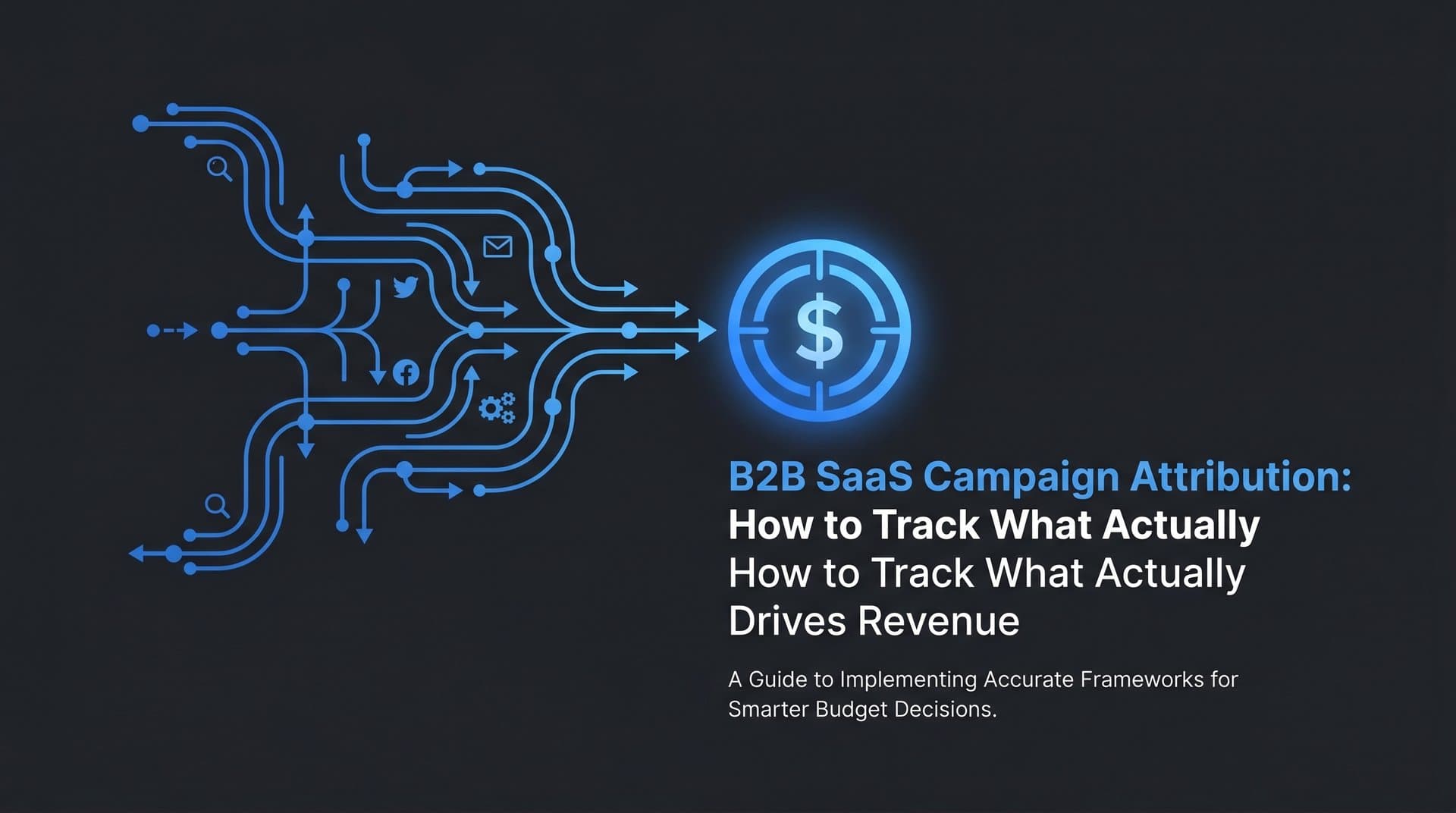
B2B SaaS campaign attribution is the practice of connecting every marketing touchpoint across that long, complex journey to actual revenue outcomes. Not just form fills. Not just clicks. Real pipeline created, deals closed, and customers retained. Getting this right is one of the highest-leverage capabilities a modern marketing team can build, especially as budgets face tighter scrutiny and the pressure to prove ROI intensifies.
This guide breaks down everything you need to know: why traditional tracking falls short, which attribution models fit B2B SaaS, how to build the data foundation, and how to turn attribution insights into smarter spending decisions. Let's get into it.
Why B2B SaaS Sales Cycles Break Traditional Tracking
Traditional attribution was designed for simple, short buying journeys. A user sees an ad, clicks it, and converts. One touchpoint, one conversion, one clear winner. That model works reasonably well for consumer purchases. It falls apart completely in B2B SaaS.
Consider what a typical B2B SaaS buyer journey actually looks like. A marketing manager at a mid-sized company sees a sponsored LinkedIn post. They don't click it, but they remember the brand name. Two weeks later, they search for a solution to a specific problem, find your blog through organic search, and subscribe to your newsletter. A month after that, they register for a webinar. After the webinar, they request a demo. The demo involves two other stakeholders from their team who have never interacted with your marketing at all. The deal closes 75 days after that first LinkedIn impression.
Now ask yourself: which campaign gets credit for that deal? In most standard setups, it's the last click before the demo request, which was probably a branded search ad or a direct visit. The LinkedIn campaign that planted the initial seed gets nothing. The content team that wrote the blog post gets nothing. The webinar that converted interest into intent gets nothing.
This is exactly why platform-native attribution creates so much confusion. Google Ads claims the conversion because the prospect clicked a Google ad before submitting the demo form. LinkedIn claims the conversion because it served an impression early in the journey. Understanding revenue attribution to wrong campaigns is critical for avoiding these misleading signals. Add up all those platform-reported conversions and you'll often see numbers that far exceed your actual closed deals.
Each platform operates in its own silo, optimizing for its own metrics using its own attribution window. None of them see the full picture. And none of them connect back to what actually happened in your CRM: which leads became opportunities, which opportunities became customers, and what those customers are worth over time.
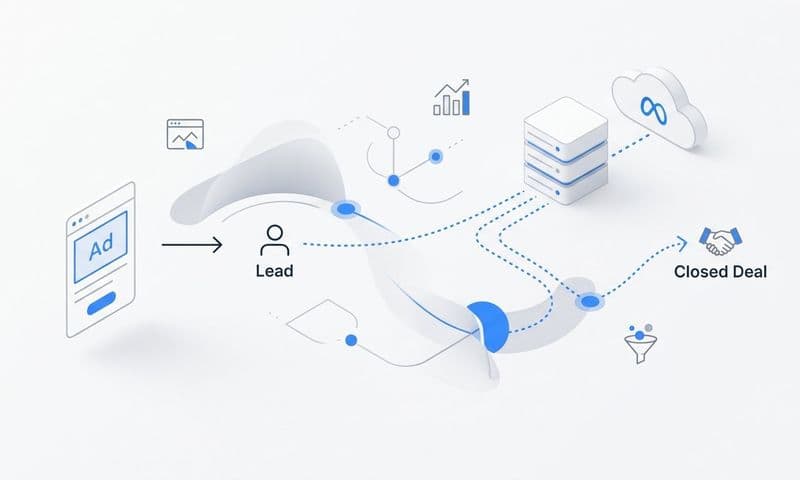
True B2B SaaS campaign attribution fixes this by building a connected view of the entire customer journey, from the first ad impression to the closed-won deal and beyond. Teams that invest in proper tracking for B2B marketing campaigns gain a foundation for decisions that actually move the business forward.
Attribution Models That Fit the B2B Buyer Journey
There is no single attribution model that works perfectly for every B2B SaaS business. The right approach depends on your sales cycle length, your funnel complexity, and the specific question you're trying to answer. Understanding the strengths and limitations of each model helps you use them strategically rather than defaulting to whatever your analytics tool uses out of the box.
First-Touch Attribution: All credit goes to the first marketing touchpoint a prospect ever interacted with. This model is useful for understanding what drives awareness and demand generation. If you want to know which campaigns are filling the top of your funnel, first-touch gives you that view. The limitation is that it ignores everything that happened after that initial interaction, which in a long B2B sales cycle is most of the story.
Last-Touch Attribution: All credit goes to the final touchpoint before conversion. This model tells you what's closing deals or triggering demo requests. It's useful for evaluating bottom-of-funnel campaigns and conversion drivers. But it systematically undervalues the campaigns that built awareness and nurtured prospects over weeks or months before that final click happened.
Linear Attribution: Credit is distributed equally across every touchpoint in the journey. This model acknowledges that multiple interactions contributed to the outcome, which is more realistic for B2B SaaS. The limitation is that it treats all touchpoints as equally important, which isn't always true. A webinar that drove a prospect to request a demo probably had more impact than a display ad impression they barely noticed.
Time-Decay Attribution: More credit is given to touchpoints that occurred closer to the conversion. The logic is that recent interactions are more influential in the final decision. This makes intuitive sense in many B2B contexts, but it can undervalue top-of-funnel campaigns that created the initial awareness and intent.
Position-Based (U-Shaped) Attribution: The largest share of credit goes to the first touch and the last touch, with the remaining credit distributed across middle touchpoints. This model recognizes that both the moment of discovery and the moment of conversion are particularly significant, while still acknowledging the nurturing in between. For many B2B SaaS teams, this is a strong starting point.
Here's where it gets interesting: the real value of understanding these models isn't picking one and sticking with it forever. It's comparing them side by side. For a deeper dive into what attribution model approach is mainly used in marketing, it helps to see how different models surface completely different insights. A campaign that looks weak on last-touch might be your single biggest driver of first-touch pipeline.
Multi-touch attribution, which distributes credit across all touchpoints using one of the models above, is generally the best fit for B2B SaaS because it reflects the reality of how complex deals actually close. Use first-touch to evaluate top-of-funnel campaigns, last-touch to understand what converts, and multi-touch for holistic budget allocation decisions. The combination gives you a complete picture rather than a partial one.
The Data Foundation: Connecting Ads, CRM, and Revenue
Attribution models are only as good as the data flowing into them. And for most B2B SaaS teams, the data foundation is where things break down. You can choose the most sophisticated multi-touch model in the world, but if your tracking is incomplete or your systems aren't connected, the outputs will be unreliable.
The first critical piece is server-side tracking. Traditional browser-based tracking pixels have become increasingly unreliable due to iOS privacy changes, ad blockers, and cookie restrictions. When a pixel fails to fire because a user has an ad blocker installed or because their browser restricts third-party cookies, that conversion event disappears from your data entirely. Server-side tracking solves this by sending conversion data directly from your server to the ad platforms, bypassing browser-level restrictions. The result is significantly more complete and accurate SaaS marketing attribution tracking data.
The second piece is CRM integration. This is where B2B SaaS attribution gets its real power. Your CRM contains the ground truth: which leads became qualified opportunities, which opportunities progressed through pipeline stages, and which ones closed as paying customers. When your attribution system connects to your CRM, you can trace a closed-won deal all the way back to the specific campaigns and touchpoints that influenced it. Without this connection, you're attributing to form fills and demo requests, which is better than nothing but still far removed from actual revenue.
The data flow, when built correctly, looks like this: a prospect clicks an ad and that click is captured with full UTM parameter data. Their website activity is tracked across sessions. When they submit a form, they enter your CRM as a lead with their source data attached. Understanding the difference between UTM tracking vs attribution software helps you appreciate why both layers are necessary for a complete picture.
The third piece is conversion sync, which means sending accurate, enriched conversion data back to the ad platforms themselves. When Meta, Google, or LinkedIn receive better signal data about which of their conversions actually led to closed revenue, their bidding and targeting algorithms improve. This creates a compounding effect: better data leads to better optimization, which leads to better results, which generates better data.
Common data gaps that undermine this entire system include missing or inconsistent UTM parameters on ad links, disconnected tools that don't share data with each other, over-reliance on "how did you hear about us" fields that are notoriously inaccurate, and dark social or offline touchpoints like word-of-mouth referrals and in-person events that are genuinely difficult to capture. Acknowledging these gaps is important because no attribution system is perfect. The goal is to get as complete a picture as possible while understanding where the blind spots are.
From Vanity Metrics to Revenue Metrics
Most marketing dashboards are full of numbers that feel meaningful but don't actually connect to business outcomes. Impressions, clicks, click-through rates, cost per click, and even cost per lead can all look great on paper while the sales team struggles to find qualified opportunities in the pipeline. B2B SaaS campaign attribution shifts the conversation from activity metrics to revenue metrics.
The metrics that actually matter for B2B SaaS attribution start with cost per qualified lead rather than cost per lead. A campaign that generates 500 leads at a low cost per lead might look like a winner until you discover that only 2% of those leads meet your ideal customer profile. A campaign that generates 50 leads at a higher cost per lead but converts at 25% is the real winner. Dedicated revenue attribution tracking tools help you see this distinction clearly.
Pipeline Generated Per Campaign: How much total deal value did a campaign contribute to, across all the opportunities it touched? This metric connects marketing activity directly to sales outcomes and is far more meaningful than conversion volume alone.
Customer Acquisition Cost by Channel: When you connect closed-won revenue back to the campaigns that influenced those deals, you can calculate a true CAC by channel. Exploring SaaS customer acquisition attribution in depth often reveals significant differences between platforms that look similar on surface-level metrics.
Return on Ad Spend Tied to Revenue: Platform-reported ROAS is based on whatever conversion event you've set up, which is often a form fill or a demo request. True ROAS connects ad spend to actual closed revenue, which gives you a completely different and far more accurate picture of campaign performance.
Beyond these core metrics, look at downstream outcomes for customers acquired through different channels. Do customers who came in through organic content have higher retention rates than those who came through paid ads? Do customers from a specific campaign have higher average contract values? These patterns inform not just budget allocation but also your ideal customer profile and your content strategy.
A practical attribution dashboard for marketing leadership should surface these revenue-connected metrics at the campaign level, updated in as close to real time as your CRM sync allows. The goal is to walk into any budget conversation with clear answers about which campaigns are generating pipeline and which are not.
Putting Attribution Insights Into Action
Attribution data is only valuable if it changes how you make decisions. The whole point of understanding which campaigns drive revenue is to do more of what works and less of what doesn't. Here's how to turn those insights into action.
The most direct application is budget reallocation. When your attribution data clearly shows that LinkedIn campaigns are generating a disproportionate share of high-quality pipeline while a particular Google display campaign is generating lots of clicks but no meaningful opportunities, the decision becomes much easier. You shift budget toward LinkedIn, reduce or pause the display campaign, and measure the impact. Learning how to track marketing campaigns effectively is the prerequisite for making these data-driven reallocation decisions.
Feeding enriched conversion data back to ad platforms accelerates this process. When Google's algorithm knows which of your conversions actually became paying customers rather than just form fills, it can optimize toward those higher-value events. The same applies to Meta and LinkedIn. Over time, this feedback loop improves targeting precision and can meaningfully reduce acquisition costs. The platforms become smarter because you're giving them smarter inputs.
This is also where AI-powered analysis becomes particularly valuable. When you're running campaigns across multiple platforms simultaneously, managing dozens of ad sets, and tracking a pipeline that spans months, the volume of data quickly exceeds what any analyst can process manually. Mastering how to use data analytics in marketing allows teams to identify which combinations of touchpoints correlate with the highest-value customers and where budget is being wasted on audiences that never convert to revenue.
Platforms like Cometly are built specifically for this use case, combining multi-touch attribution with AI-powered recommendations that surface these insights automatically. Rather than spending hours building manual reports, marketing teams can see which campaigns are driving real business outcomes and get specific recommendations on where to shift spend, all in one place.
Building Your Attribution Stack: A Practical Roadmap
Knowing that you need better attribution and actually implementing it are two different things. Here's a practical sequence for building a B2B SaaS attribution stack that actually works.
1. Start with server-side tracking. Before you can do anything else, you need reliable data capture. Implement server-side tracking to ensure that conversion events are being recorded accurately, regardless of browser restrictions or ad blockers. This is the foundation everything else builds on.
2. Integrate your CRM. Connect your marketing attribution system to your CRM so that lead source data flows through to deal stages and closed revenue. This requires coordination with your sales team and agreement on data hygiene standards, particularly around how leads are entered and how deal stages are defined. Getting sales buy-in here is critical because your attribution is only as good as the CRM data feeding it.
3. Set up multi-touch attribution. With reliable tracking and CRM integration in place, configure your attribution models and start building the connected view of your customer journeys. Reviewing the SaaS marketing attribution best practices will help you run multiple models in parallel so you can compare first-touch, last-touch, and multi-touch insights side by side.
4. Implement conversion sync. Once your attribution data is accurate, send enriched conversion signals back to your ad platforms. This improves their optimization algorithms and starts the feedback loop that compounds over time.
5. Layer in AI-driven optimization. With a solid data foundation in place, AI recommendations become genuinely useful. Without clean, connected data, AI just produces confident-sounding noise. With it, AI can surface actionable insights that accelerate your optimization cycle.
The most common implementation pitfall is trying to do everything at once. Teams that attempt to set up complex multi-touch models before they have reliable tracking or CRM integration end up with sophisticated reports built on shaky data. Understanding common SaaS marketing attribution challenges upfront helps you avoid these traps. Start with the foundation, validate your data quality at each step, and add complexity only when the layer below it is solid.
The second most common pitfall is failing to establish a single source of truth. If your marketing team is pulling numbers from platform dashboards, your sales team is pulling from the CRM, and your executives are looking at a separate BI tool, you'll spend more time reconciling numbers than acting on them. Define one authoritative system for marketing performance data and get alignment across teams before you start optimizing.
The Bottom Line on B2B SaaS Campaign Attribution
B2B SaaS campaign attribution is not a reporting exercise. It's a strategic capability that directly determines how well you allocate your marketing budget, how confidently you can defend your spend to leadership, and how effectively you can scale the campaigns that actually drive revenue.
The key takeaways are straightforward. Choose attribution models that match the complexity of your sales cycle, and compare multiple models to get different strategic perspectives. Build a data foundation that connects your ad platforms, website tracking, and CRM so that attribution reflects real revenue outcomes rather than proxy metrics. Focus on revenue metrics like pipeline generated and customer acquisition cost by channel rather than vanity metrics like impressions and clicks. And use attribution insights to actively reallocate budget, improve ad platform algorithms through conversion sync, and leverage AI to identify patterns at scale.
The marketers who get this right don't just have better reports. They have better conversations with their CFOs, better relationships with their sales teams, and better-performing campaigns because every optimization decision is grounded in data that connects to actual business outcomes.
Cometly is built specifically to solve these challenges for B2B SaaS teams. With multi-touch attribution, server-side tracking, CRM integration, conversion sync, and AI-powered recommendations all in one platform, Cometly gives you the complete picture of what's driving your pipeline and the tools to act on it with confidence. Get your free demo today and start connecting every touchpoint to the revenue it actually generates.