You're running paid ads, leads are coming in, and your ad platform dashboard looks healthy. But when you check your CRM, the story is different. Most of those "conversions" never became customers. Your Meta or Google campaigns are optimizing for form fills and trial sign-ups, but the deals that actually close? The algorithm has no idea they exist.
This is one of the most expensive and least visible problems in B2B SaaS marketing. Ad platforms are powerful, but they're only as smart as the data you feed them. When all they see is a top-of-funnel action, they optimize for more of that exact behavior, regardless of whether those leads ever generate revenue.
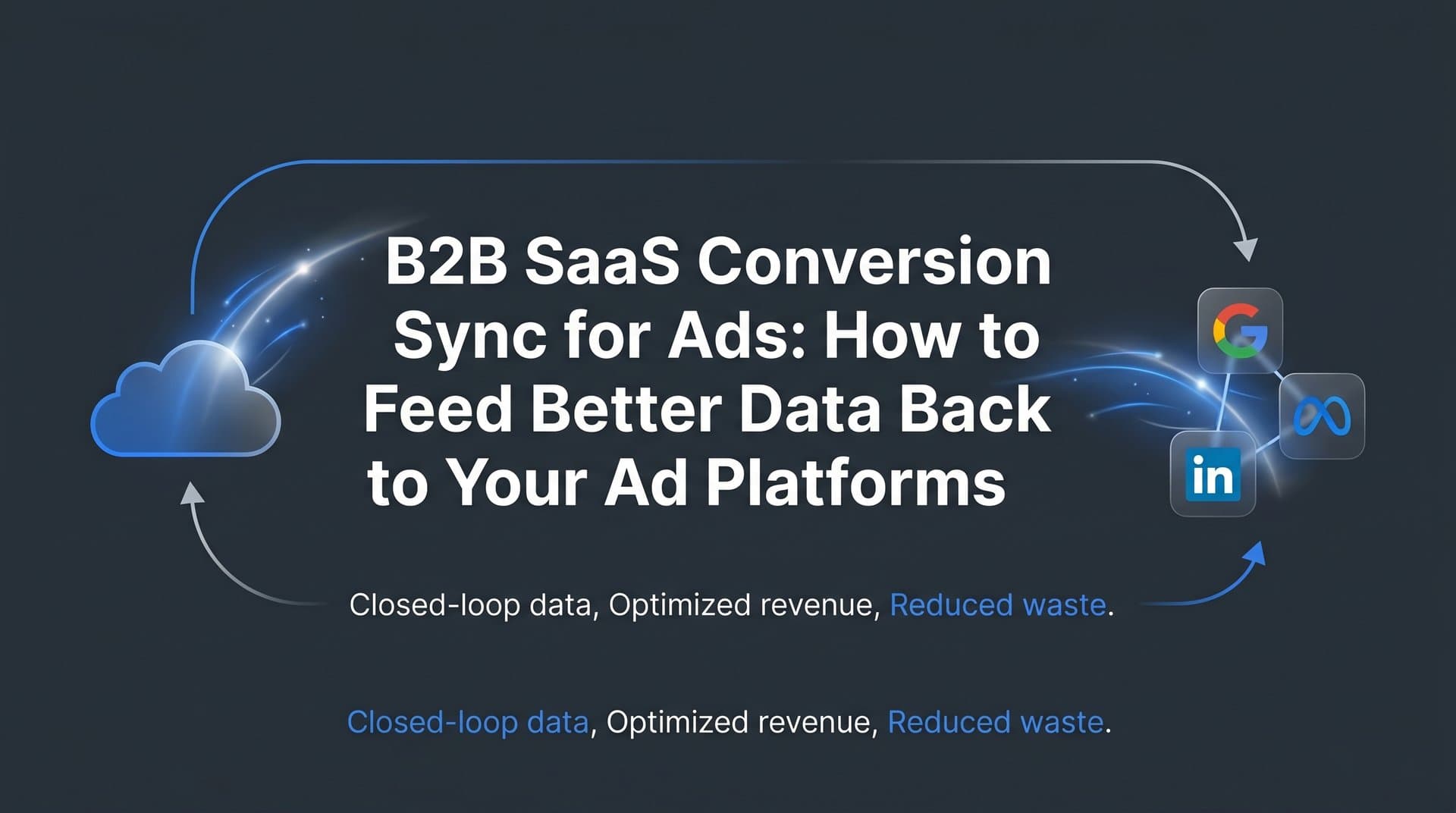
Conversion sync changes the equation entirely. Instead of letting your ad platforms operate on incomplete signals, conversion sync sends your actual revenue data back to Meta, Google, LinkedIn, and other platforms via server-side connections. The result is a closed-loop system where algorithms learn from real outcomes, not just clicks and form submissions.
This article breaks down exactly what conversion sync is, why it matters more for B2B SaaS than almost any other business model, how to implement it effectively, and how platforms like Cometly make the whole process seamless.
The Data Gap That Costs B2B SaaS Marketers the Most
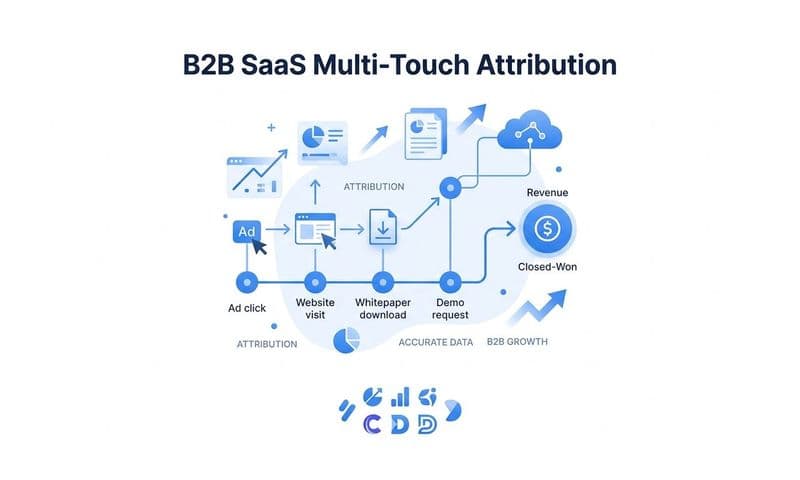
Think about how a typical B2B SaaS deal actually unfolds. A prospect clicks your Google ad, fills out a demo request form, gets nurtured by your sales team over several weeks, goes through a procurement process, and finally signs a contract two months later. Your pixel fired the moment they submitted that form. Your ad platform logged a conversion. But the deal closed sixty days after that click.
Here's the problem: most ad platforms have attribution windows of seven to thirty days. By the time that deal closes, the platform has already moved on. It has no way of knowing that the lead became a paying customer. From the algorithm's perspective, that click was a success the moment the form was submitted. This disconnect is a core reason ads show conversions but no sales for so many B2B teams.
Now multiply this across hundreds of leads. Your ad platform is building its understanding of your ideal customer based on who fills out forms, not who actually buys. It finds more people who look like your form-fillers, which sounds reasonable until you realize your form-fillers include tire-kickers, students doing research, and people who will never have the budget or authority to purchase your product.
This problem is uniquely severe in B2B SaaS for three reasons. First, sales cycles are long. Unlike e-commerce, where a purchase happens within hours or days of an ad click, B2B SaaS deals can take weeks or months to close. The gap between the trackable event and the revenue event is enormous.
Second, multiple decision-makers are involved. A single lead might represent a committee of five people evaluating your product. The person who filled out the form might not be the economic buyer. Standard pixel tracking captures one action from one person and treats it as a complete conversion signal.
Third, deal values vary dramatically. A B2B SaaS company might close deals ranging from a few hundred dollars per year to six-figure enterprise contracts. When your ad platform optimizes purely for conversion volume, it has no way to distinguish between a small deal and a massive one. Understanding SaaS marketing attribution challenges is the first step toward solving this problem.
The result is a slow bleed: ad budgets flowing toward audiences that generate activity but not revenue, while the high-value segments your sales team loves never get enough exposure because the algorithm doesn't know they exist.
Closing the Loop: What Conversion Sync Actually Does
Conversion sync, sometimes called offline conversion tracking or server-side conversion API integration, is the mechanism that sends your CRM's verified revenue events back to your ad platforms. Instead of relying solely on what a browser pixel can see, you're actively pushing enriched conversion data from your backend systems to Meta, Google, LinkedIn, and other platforms. For a deeper technical overview, explore what conversion sync technology is and how it works under the hood.
The technical flow works like this. When a prospect clicks your ad, the platform assigns a unique click identifier, such as Google's gclid or Meta's fbclid. That identifier gets captured and stored alongside the lead record in your CRM. As the lead moves through your pipeline, each milestone is recorded: qualified lead, opportunity created, proposal sent, closed-won deal. When one of those milestones occurs, your attribution or analytics platform takes that CRM event and sends it back to the ad platform via a server-side API, matched to the original click ID.
This is fundamentally different from browser-based pixel tracking. A pixel fires in the user's browser, which means it's subject to everything that can interfere with browser-based data collection. Ad blockers prevent pixels from loading. Apple's App Tracking Transparency framework, introduced with iOS 14.5, significantly reduced the ability to track users across apps and websites on Apple devices. Cookie deprecation is making third-party tracking increasingly unreliable across the board.
Server-side conversion sync bypasses most of these limitations. The data travels directly from your server to the ad platform's server, without depending on a browser cookie or a pixel firing correctly in a user's session. This makes the data more complete, more accurate, and more resilient to the privacy changes that have degraded browser-based tracking over the past few years.
The matching process is worth understanding in detail. Ad platforms use a combination of identifiers to match your CRM event to the original ad interaction. Click IDs are the most precise method. But platforms can also match on hashed email addresses, phone numbers, and other first-party identifiers, which gives you fallback options when a click ID isn't available. The better your data matching, the more credit the platform can accurately assign to its campaigns.
For B2B SaaS teams, this means you can finally close the loop between a prospect clicking an ad and a deal appearing in your revenue reports. The ad platform learns which of its audiences, placements, and creative variations are actually driving revenue, not just form fills.
Why Better Signals Make Ad Algorithms Dramatically Smarter
Modern ad platforms run on machine learning. Meta's advantage algorithm, Google's Smart Bidding, LinkedIn's campaign optimization, all of them are constantly analyzing signals to decide who to show your ads to, when to show them, and how much to bid. The quality of those decisions depends entirely on the quality of the signals they receive.
When you feed these algorithms top-of-funnel events like form fills and trial sign-ups, they optimize for audiences that are likely to fill out forms. That's a very different population from audiences likely to become paying customers. The moment you start syncing closed-won deals back to your ad platforms, the algorithm gets a fundamentally different picture of who your best customers actually are.
This is where value-based bidding becomes a powerful lever. Both Google Ads and Meta's Conversions API support the ability to pass a conversion value alongside the conversion event. For B2B SaaS, this means you can send the actual deal value when a contract closes. Instead of telling the platform "this person converted," you can tell it "this person converted and was worth $24,000 annually." The algorithm can then optimize not just for conversion volume but for conversion value, actively seeking out prospects who resemble your highest-value customers. This approach is central to effective revenue attribution for B2B SaaS companies.
The compounding effect here is significant. Better signals lead to better audience targeting. Better targeting brings in more qualified leads. More qualified leads generate more closed-won events to sync back. More closed-won events give the algorithm an even richer dataset to learn from. Each cycle reinforces the next, and over time, your campaigns become progressively more efficient at finding the right buyers.
This feedback loop is the core reason why B2B SaaS teams that implement conversion sync often see meaningful shifts in lead quality from paid channels over time. The algorithm stops chasing volume and starts chasing value, because that's what you've taught it to do.
Setting Up Conversion Sync for a B2B SaaS Funnel
Getting conversion sync right requires a few key components working together. Before you think about API connections and platform configurations, you need to get the foundations in place.
A CRM with defined pipeline stages: Your CRM needs to have clear, consistently used pipeline stages that represent meaningful funnel milestones. Vague or inconsistently applied stages will produce noisy data that degrades your signal quality. At minimum, you want stages for qualified lead, opportunity created, and closed-won deal clearly defined and reliably updated by your sales team.
An attribution platform that connects ad clicks to CRM events: This is the connective tissue of the whole system. You need a platform that can capture click IDs at the moment of ad interaction, associate them with the lead record in your CRM, and then trigger the conversion sync event when the appropriate CRM stage is reached. This is where solutions like Cometly come in, handling the matching logic and the server-side API connections on your behalf. Choosing the right SaaS marketing attribution tools is critical to getting this layer right.
Server-side API connections to each ad platform: Each platform has its own API for receiving offline or server-side conversion events. Meta uses the Conversions API (CAPI). Google uses Enhanced Conversions and the Google Ads API. LinkedIn has its own Conversions API. Setting these up requires technical configuration, but the payoff is a direct, reliable channel for sending your CRM data back to each platform.
When it comes to which conversion events to sync, more is better, but prioritization matters. Syncing only closed-won deals gives the algorithm the cleanest signal, but in B2B SaaS, where deal volumes from paid channels can be relatively low, you may not generate enough events per week for the platform's machine learning to optimize effectively. Most platforms need a meaningful volume of conversion events weekly to learn efficiently.
Syncing multiple funnel stages solves this. By sending qualified lead, opportunity created, and closed-won events, you give the algorithm more data points to work with while still anchoring the optimization to revenue-correlated milestones. You can also assign different values to each stage to reflect their relative importance. Teams looking to go deeper should explore how to track offline conversions from online ads for a more complete implementation guide.
A few implementation considerations to keep in mind. Data latency is real: deals close weeks after clicks, and ad platforms have attribution windows. Work with platforms that support extended lookback windows and understand that some revenue-level conversions will fall outside standard attribution periods. Data matching accuracy depends on capturing click IDs at the moment of ad interaction, which requires proper URL parameter handling on your landing pages. And CRM data hygiene matters more than most teams realize. Incomplete contact records, inconsistent pipeline updates, and duplicate entries all degrade the quality of the signals you're sending.
Measuring What Actually Changes After Conversion Sync
Once conversion sync is live, the metrics you track need to evolve. The goal is no longer to minimize cost per lead. It's to understand which ad dollars are generating actual pipeline and revenue.
The primary metrics to watch are cost per qualified lead rather than cost per lead, pipeline value generated per dollar of ad spend, and return on ad spend calculated against actual closed revenue rather than attributed form fills. These numbers tell a completely different story than surface-level campaign metrics and often reveal that channels or campaigns that looked expensive were actually your best performers, and vice versa. Having the right SaaS marketing analytics tools in place makes tracking these metrics far more manageable.
To evaluate the impact of conversion sync, look at lead quality trends from paid channels over time. Are the leads coming from your Meta or Google campaigns showing higher close rates than before? Are they moving through your pipeline faster? Is your sales team reporting better fit from inbound paid leads? These qualitative signals often appear before the quantitative data fully catches up.
It's also worth monitoring how your ad platforms shift their budget allocation after receiving better signals. As the algorithm learns from your revenue events, you may notice it naturally deprioritizing audiences or placements that were generating volume but not quality, and increasing spend on segments that correlate with higher-value deals. This reallocation is a sign the system is working. If you're seeing discrepancies, understanding why platforms are underreporting conversions in ads manager can help you interpret the data more accurately.
One important caveat: give the algorithms time. Machine learning models need sufficient data to update their understanding of your ideal customer. Making drastic campaign changes in the first few weeks after enabling conversion sync can interrupt the learning process and produce misleading results. Set a realistic evaluation window, typically several weeks to a couple of months depending on your conversion volume, before drawing firm conclusions about performance changes.
How Cometly Makes Conversion Sync Work for B2B SaaS Teams
Implementing conversion sync from scratch involves stitching together multiple systems: your ad platforms, your website tracking, your CRM, and the server-side APIs for each platform you advertise on. For most B2B SaaS teams, that's a significant engineering lift on top of an already full marketing roadmap.
Cometly is built specifically to handle this complexity. It connects your ad platforms, website, and CRM into a single attribution system that tracks the full customer journey from the first ad click to a closed deal. When a conversion event occurs in your CRM, Cometly syncs that event back to Meta, Google, and other platforms via server-side connections, matched to the original click ID. For teams evaluating their options, comparing the best marketing attribution tools for B2B SaaS can help clarify what to look for in a solution.
The server-side tracking layer is particularly valuable for B2B SaaS teams dealing with the realities of modern web privacy. Because Cometly captures and transmits data server-to-server, it's not dependent on browser cookies or pixels firing correctly in a user's session. This means you get more complete data even when users have ad blockers installed, are on Apple devices with ATT restrictions, or are browsing in privacy-focused modes. More complete data means better matching accuracy and stronger conversion signals for your ad platforms.
Beyond the data plumbing, Cometly's AI-powered features help you act on what the data reveals. The AI Ads Manager analyzes performance across every channel and surfaces recommendations about which campaigns and ads are driving actual revenue, not just clicks or form fills. Instead of manually cross-referencing your CRM pipeline data with your ad platform reports, you get a clear view of which spend is working and where to scale with confidence.
Cometly's multi-touch attribution capabilities also give you a more complete picture of how prospects interact with your campaigns before converting. In B2B SaaS, where buyers often research across multiple touchpoints before requesting a demo, understanding the full path to conversion helps you allocate budget more intelligently across channels and campaign types.
For teams that want to move from guessing which ads drive revenue to knowing with confidence, Cometly's Conversion Sync feature closes the loop between your ad spend and your actual business outcomes.
Putting It All Together: From Click to Closed Deal
The gap between a click and a closed deal is where most B2B SaaS ad spend quietly disappears. Standard pixel tracking captures the click and the form fill, then goes silent. The algorithm optimizes for what it can see, which means it gets better and better at finding leads that fill out forms, regardless of whether those leads ever become customers.
Conversion sync is the solution to this fundamental mismatch. By sending your CRM's real revenue events back to your ad platforms via server-side connections, you give algorithms the signals they need to find actual buyers. You unlock value-based bidding strategies that optimize for deal value, not just volume. And you create a compounding feedback loop where better data produces better targeting, which produces better data.
The implementation requires the right components: a clean CRM, a platform that can match ad clicks to CRM events, and reliable server-side API connections to each ad platform. But the payoff is campaigns that improve over time because they're learning from real outcomes.
If you're running paid ads for a B2B SaaS product and your current setup only tracks top-of-funnel events, the first step is evaluating what your ad platforms actually know about your best customers. The answer is probably much less than it should be.
Get your free demo and see how Cometly's Conversion Sync and AI-powered attribution can help your ad platforms learn from real revenue, so every dollar you spend works harder to find the customers who actually close.