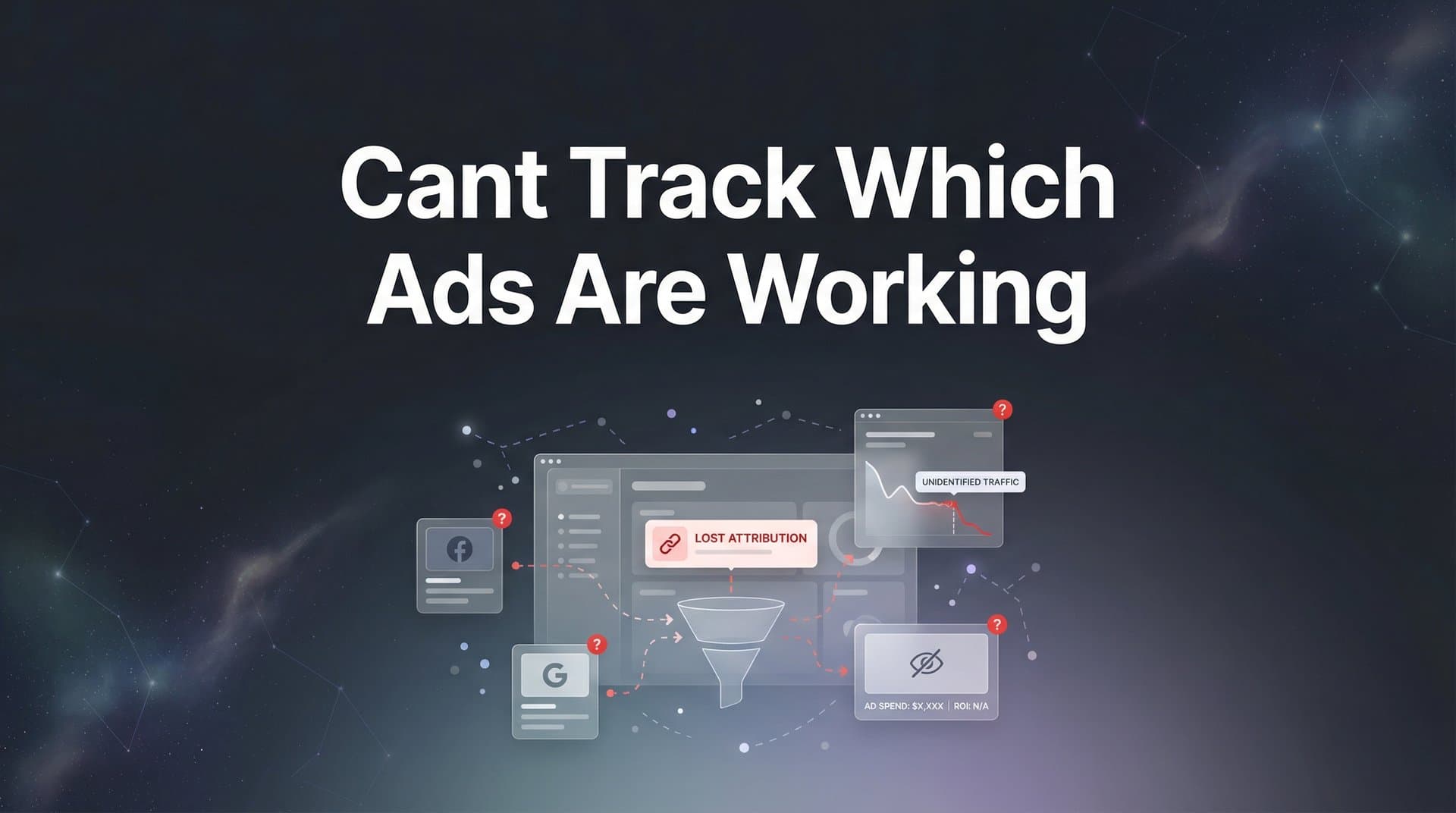
You're spending thousands on ads every month. Your dashboards light up with clicks, impressions, and engagement metrics. But when you try to connect those numbers to actual revenue, everything goes dark.
Which campaign brought in that $50K deal? Was it the Facebook ad they clicked last week, or the Google search they ran three months ago? Did the LinkedIn post matter, or was it just noise?
You can't answer these questions with confidence. So you keep spending, hoping something sticks, while your best-performing ads might be getting cut and your worst ones scaled.
This isn't your fault. Modern ad tracking is broken by design. iOS privacy changes block conversion data. Cookie restrictions create blind spots. Customers jump between devices and platforms, leaving fragmented trails that traditional tracking can't follow.
The result? You're flying blind with your ad budget. You can't scale what works because you don't know what works. Every budget decision feels like a guess.
But here's the good news: you can fix this. Not with more dashboards or fancier analytics tools, but with a systematic approach to capturing, connecting, and understanding your marketing data. This guide walks you through five concrete steps to finally see which ads actually drive revenue. No guesswork. No conflicting reports. Just clear, accurate attribution that lets you scale with confidence.
Step 1: Audit Your Current Tracking Setup for Gaps
Before you can fix your tracking, you need to know exactly where it's breaking. Most marketers assume their pixels are firing correctly because they see some data flowing in. But partial data is worse than no data—it gives you false confidence while hiding your best opportunities.
Start with your conversion pages. Open your website in Chrome, right-click anywhere on the page, and select "Inspect" to access developer tools. Navigate to the "Network" tab, then trigger a conversion action on your site—complete a form, make a purchase, whatever counts as a conversion for your business.
Watch the network requests. You should see your tracking pixels fire: Facebook Pixel, Google Analytics events, LinkedIn Insight Tag, whatever platforms you're using. If you don't see these requests, your pixel isn't working. Period.
But seeing the pixel fire isn't enough. You need to verify it's sending the right data. Use the Facebook Pixel Helper extension for Chrome or Google Tag Assistant to check if your events include the correct parameters: conversion value, currency, product details, customer information.
Now comes the hard part: identifying where your tracking fails in real-world scenarios. Test your conversion flow on an iPhone with Safari. Many marketers discover their tracking works perfectly on desktop Chrome but completely fails on iOS devices—the platform where a huge portion of your high-value customers browse. Understanding why your paid ad tracking not working is the first step toward fixing it.
Check your ad platform dashboards against your actual sales data. Pull your CRM reports or e-commerce backend numbers for the last 30 days. Compare total conversions and revenue. If your ad platforms show 100 conversions but your CRM shows 150 sales, you're missing 50 conversions—33% of your data.
This discrepancy reveals your blind spots. Maybe iOS users aren't being tracked. Maybe customers who use ad blockers don't appear in your data. Maybe cross-device journeys—someone clicks your ad on mobile but converts on desktop—aren't being connected.
Document everything you find. Create a simple spreadsheet listing each tracking issue: which platform, which device or browser, what percentage of data you're losing. A marketing campaign tracking spreadsheet becomes your roadmap for fixes.
Success looks like this: you have a clear, written list of where your tracking breaks. You know which platforms show conflicting data. You understand approximately how much conversion data you're missing. You've moved from "something feels off" to "here are the specific problems I need to solve."
Step 2: Implement Server-Side Tracking to Capture Lost Data
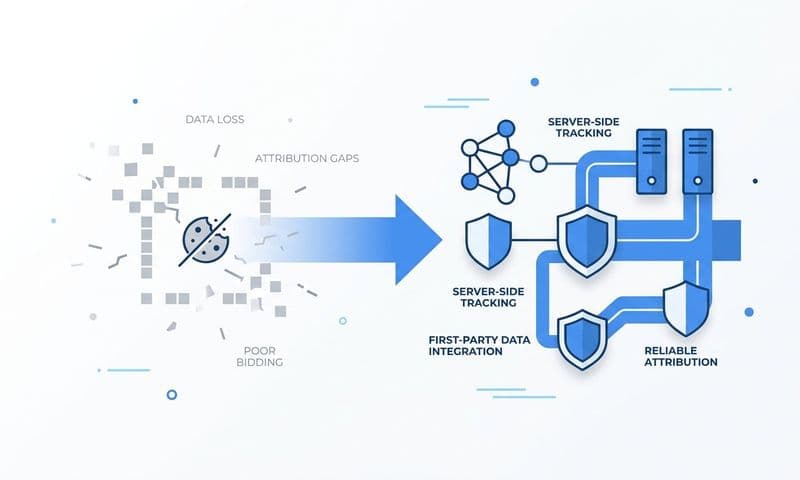
Here's the uncomfortable truth: browser-based tracking is dying. iOS privacy features, cookie restrictions, and ad blockers are killing the traditional pixel-based approach that marketers have relied on for years.
When someone visits your site on Safari with iOS 14.5 or later, App Tracking Transparency blocks your pixels by default unless they explicitly opt in. Most people don't. When someone uses Brave browser or has an ad blocker installed, your tracking code never even loads. When someone clears their cookies or browses in incognito mode, you can't connect their sessions.
The result? You're missing massive chunks of your conversion data. Industry observations suggest that browser-based tracking can miss significant portions of actual conversions, especially from iOS users and privacy-conscious browsers.
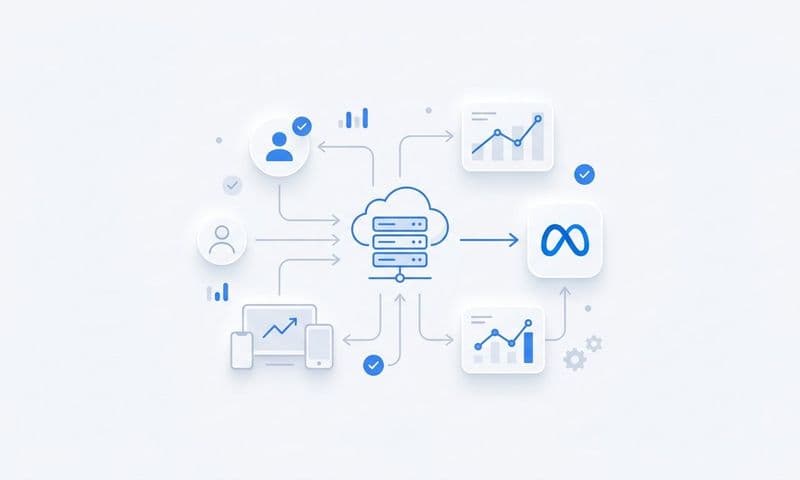
Server-side tracking solves this by moving data collection from the browser to your server. Instead of relying on JavaScript pixels that run in the user's browser—where they can be blocked—your server sends conversion data directly to ad platforms through their APIs.
Here's how it works: A customer clicks your ad and lands on your site. Your server logs this visit with a unique identifier. When they convert, your server records the conversion and sends that data to Facebook's Conversions API, Google's offline conversion tracking, or other platform APIs. The browser never needs to run tracking code. Nothing can be blocked.
To implement server-side tracking, you need three components working together. First, a way to capture user interactions on your server—this usually means server-side tagging through Google Tag Manager Server-Side or a dedicated attribution platform. Second, integration with your backend systems where conversions actually happen: your CRM, payment processor, or e-commerce platform. Third, API connections to your ad platforms to send conversion data back. Learn more about connecting your server side tracking warehouse for maximum data accuracy.
Start by connecting your CRM or backend database to your tracking system. When someone fills out a form, makes a purchase, or becomes a qualified lead in your CRM, that event needs to trigger a server-side conversion event. This ensures you capture conversions even when browser tracking fails.
Next, implement Facebook's Conversions API (CAPI). This lets your server send conversion events directly to Facebook, bypassing the browser entirely. You'll need to match these events to the original ad click using the Facebook Click ID (fbclid) or other identifiers.
Do the same for Google Ads using offline conversion tracking or enhanced conversions. Send conversion data from your server to Google, matching it to the original click using GCLID (Google Click ID). Proper Google Ads conversion tracking is essential for accurate attribution.
The technical setup varies depending on your stack, but the principle stays the same: capture conversions where they actually happen—in your CRM, your database, your payment system—then send that data to ad platforms through server-side APIs.
Success looks like this: you start seeing conversions in your ad platform dashboards that weren't appearing before. Your Facebook Ads Manager shows more conversions than your pixel was catching. Your Google Ads reports include sales that happened offline or through channels the browser couldn't track. The discrepancy between your CRM data and ad platform data shrinks dramatically.
Step 3: Connect All Your Marketing Touchpoints in One Place
Your customer's journey doesn't happen in one platform. They see your Facebook ad on Monday. They Google your brand name on Wednesday. They click a LinkedIn post on Friday. They finally convert after reading your email on Sunday.
If you're only looking at Facebook's dashboard, it claims credit for the conversion. If you're only looking at Google Ads, it takes credit. LinkedIn says it drove the sale. Your email platform reports a conversion. Everyone claims victory, but you still don't know the truth.
This happens because each platform only sees its own touchpoint. Facebook doesn't know about the Google search. Google doesn't know about the LinkedIn click. Your email platform has no idea about any of the ads. They're all reporting accurately based on what they can see—they just can't see the full picture.
To understand which ads actually work, you need to connect every marketing touchpoint in a single system that tracks the complete customer journey from first interaction to closed deal. This is where customer journey tracking software becomes essential.
Start by mapping out your typical customer journey. Write down every touchpoint where someone might interact with your marketing: Facebook ad click, Instagram story view, Google search ad, YouTube video view, LinkedIn post engagement, email open, website visit, blog post read, demo request, sales call, purchase.
Now identify which systems currently track each touchpoint. Your ad platforms track clicks and some conversions. Your website analytics tracks visits and on-site behavior. Your CRM tracks leads and sales. Your email platform tracks engagement. These systems need to talk to each other.
The foundation of connected tracking is consistent UTM parameters. Every ad, every link, every campaign needs properly structured UTM tags that identify the source, medium, campaign, and content. When someone clicks your Facebook ad, the URL should include utm_source=facebook, utm_medium=paid_social, utm_campaign=your_campaign_name, and utm_content=your_ad_name.
These UTM parameters travel with the user as they navigate your site, get captured when they convert, and flow into your CRM when they become a lead. This creates a thread you can follow backward from sale to original ad click. Understanding how to track marketing campaigns properly is fundamental to this process.
Next, integrate your ad platforms with your CRM. When someone becomes a lead in your CRM, you should be able to see which ad they clicked, which campaign they came from, and every marketing touchpoint they hit along the way. Modern attribution platforms can automatically pull data from Meta, Google, TikTok, LinkedIn, and other ad platforms, then connect it to your CRM records.
Your website analytics also needs to flow into this unified system. Google Analytics tracks user behavior, page views, and session data. This context matters—someone who visited your pricing page five times before converting is different from someone who converted on their first visit. Both patterns tell you something about which ads attract ready-to-buy customers versus which ads attract researchers.
The technical implementation usually involves three layers: tracking code on your website that captures all interactions with consistent identifiers, integrations between your ad platforms and your central attribution system, and connections between your CRM and that same system so conversion data flows backward to the original touchpoints.
Success looks like this: you can pull up any customer in your CRM and see their complete marketing journey. You see the Facebook ad they clicked three months ago, the Google search they ran two months ago, the LinkedIn post they engaged with last month, and the email that finally drove them to convert. Every touchpoint is visible in chronological order with timestamps and details.
Step 4: Apply Multi-Touch Attribution to See the Full Picture
Last-click attribution is a lie. It's the default model in most ad platforms, and it's completely misleading.
Here's why: imagine someone sees your Facebook ad and clicks through to learn about your product. They're not ready to buy yet, so they leave. A week later, they Google your brand name, click your search ad, and convert. Last-click attribution gives 100% credit to that Google search ad.
But think about what really happened. The Facebook ad introduced them to your brand. Without that first touchpoint, they never would have searched for you. The Google ad didn't create demand—it captured existing demand that Facebook created. Yet your attribution model says Facebook drove zero value and Google drove the entire conversion.
This is how you end up cutting your best-performing campaigns. You pause the Facebook ads that are actually generating awareness and demand because they don't show last-click conversions. You scale the Google brand search ads that are just harvesting the demand someone else created. Your overall performance drops, and you don't understand why.
Multi-touch attribution fixes this by distributing credit across all the touchpoints that contributed to a conversion. Instead of giving 100% credit to the last click, it acknowledges that multiple ads and channels worked together to drive the sale. Explore multi-touch marketing attribution software options to implement this approach effectively.
There are several attribution models to consider, each with different logic for distributing credit. First-touch attribution gives all credit to the first ad someone clicked—useful for understanding which campaigns generate initial awareness but ignores everything that happened after. Linear attribution splits credit evenly across all touchpoints—simple but treats every interaction as equally important, which isn't realistic.
Time-decay attribution gives more credit to recent touchpoints while still acknowledging earlier ones. This reflects how customers often need multiple touches before they're ready to buy, with later interactions becoming more influential. Position-based attribution (also called U-shaped) gives the most credit to the first and last touchpoints, with remaining credit split among middle interactions—recognizing that introduction and close matter most.
Data-driven attribution uses machine learning to analyze your actual conversion patterns and assign credit based on which touchpoints statistically correlate with conversions. This is the most sophisticated approach, but it requires significant data volume to be accurate.
The model you choose depends on your business and sales cycle. If you have a short sales cycle and most people convert quickly, last-click might be acceptable. If you have a long sales cycle with multiple touchpoints over weeks or months, you need multi-touch attribution to understand what's really working. The right software for tracking marketing attribution can make this process seamless.
Implement multi-touch attribution by using a platform that can track the complete customer journey and apply different attribution models to the same data. Look at your conversions through multiple lenses: What does first-touch attribution say about your awareness campaigns? What does time-decay attribution reveal about your nurture sequences? What does last-click show about your closing tactics?
Compare these views. You'll often discover that the campaigns you thought were underperforming are actually driving significant top-of-funnel value. The ads that look amazing in last-click attribution might just be capturing low-hanging fruit while contributing nothing to new customer acquisition.
Success looks like this: you understand each ad's true contribution to revenue. You know which campaigns generate awareness, which ones nurture consideration, and which ones close deals. You can confidently invest in top-of-funnel campaigns because you see their influence on downstream conversions, even when they don't get last-click credit. Your budget allocation reflects the actual customer journey, not just the final touchpoint.
Step 5: Feed Accurate Data Back to Ad Platforms for Better Optimization
Here's something most marketers miss: fixing your attribution isn't just about seeing better reports. It's about making your ads perform better.
Ad platform algorithms are incredibly powerful, but they're only as good as the data you feed them. Facebook's algorithm, Google's Smart Bidding, TikTok's automated targeting—they all learn from conversion data to optimize who sees your ads and how much you bid.
When your conversion tracking is broken, you're training these algorithms on incomplete, inaccurate data. Facebook thinks certain audiences don't convert because you're not capturing their conversions. Google optimizes toward the wrong signals because it only sees partial results. Your campaigns underperform because the AI driving them is working with bad information.
This is where server-side tracking and proper attribution create a compounding benefit. You're not just fixing your reports—you're feeding better data back to ad platforms so their algorithms can optimize more effectively. Discover how ad tracking tools can help you scale ads using accurate data.
Start with Facebook's Conversions API. When you implement server-side tracking, you capture conversions that the browser pixel misses. But the real power comes when you send this enriched data back to Facebook through CAPI. Facebook's algorithm sees conversions it was previously blind to, learns which audiences and creative actually drive results, and adjusts targeting and bidding accordingly. Proper Facebook ads tracking is crucial for this optimization loop.
The same principle applies to Google Ads. Use offline conversion tracking or enhanced conversions to send server-side conversion data back to Google. Include conversion values, not just conversion counts—Google's Smart Bidding works much better when it knows which clicks drive $50 sales versus $5,000 sales.
Here's where attribution data becomes crucial: you can send weighted conversion values based on multi-touch attribution. Instead of only reporting last-click conversions, you can feed back data about first-touch and mid-funnel contributions. This helps platforms understand the full value their ads create, not just the immediate last-click results.
For example, if your attribution model shows a Facebook ad contributed 40% of the value to a $10,000 sale (even though a Google ad got the last click), you can send a $4,000 conversion value back to Facebook. This trains Facebook's algorithm to value and optimize for ads that generate awareness and consideration, not just bottom-funnel conversions.
The technical implementation requires API connections between your attribution system and your ad platforms. Most modern attribution platforms can automatically sync enriched conversion data back to Meta, Google, TikTok, LinkedIn, and other channels. You configure the rules—which attribution model to use, which conversion events to send, how to value different touchpoints—and the system handles the data sync. A warehouse to ads sync setup can automate this entire process.
Beyond just conversion data, send customer quality signals back to ad platforms. If certain leads close at higher rates or generate higher lifetime value, feed that information back. This helps platforms optimize not just for conversion volume but for conversion quality.
You'll also want to implement conversion value optimization. Instead of optimizing for conversions (where a $10 sale and a $10,000 sale look identical), optimize for conversion value. This requires sending accurate revenue data with each conversion event, but it dramatically improves campaign performance by teaching algorithms to prioritize high-value customers.
Success looks like this: your ad platforms start showing improved performance metrics. Your cost per acquisition drops because algorithms can better identify high-intent audiences. Your return on ad spend increases because platforms optimize toward actual revenue, not just conversion counts. Your campaigns require less manual optimization because the AI driving them has accurate data to work with. You see better results without increasing spend—the same budget performs better because it's guided by complete, accurate data.
Putting It All Together: Your Action Plan
You now have a complete roadmap to fix your ad tracking and finally see which campaigns actually drive revenue. Let's recap the five steps:
Audit your current tracking setup for gaps. Use browser dev tools to verify pixels fire correctly, test on different devices and browsers, and compare ad platform data against your actual sales records. Document every blind spot.
Implement server-side tracking to capture lost data. Move conversion tracking from browser pixels to server-side APIs. Connect your CRM and backend systems. Send conversion data directly to ad platforms through Facebook CAPI and Google offline conversions.
Connect all your marketing touchpoints in one place. Use consistent UTM parameters across every campaign. Integrate ad platforms with your CRM. Build a unified view of the complete customer journey from first ad click to closed deal.
Apply multi-touch attribution to see the full picture. Move beyond last-click attribution. Compare first-touch, linear, time-decay, and data-driven models. Understand each ad's true contribution to revenue, not just which ad got the final click.
Feed accurate data back to ad platforms for better optimization. Send enriched conversion data through API connections. Include conversion values and customer quality signals. Let platform algorithms optimize based on complete, accurate information instead of partial data.
These steps build on each other. You can't implement effective multi-touch attribution without first connecting all your touchpoints. You can't feed accurate data back to ad platforms until you've fixed your tracking gaps. Start at step one and work through systematically.
The payoff is massive. You'll stop wasting budget on campaigns that look good in reports but don't drive real results. You'll scale the ads that actually generate revenue with confidence. You'll make budget decisions based on data instead of guesses. Most importantly, you'll finally answer the question that's been haunting you: which ads are actually working?
Accurate tracking isn't optional anymore. It's the foundation for every smart marketing decision you make. The marketers who figure this out will dominate their markets. The ones who keep flying blind will keep wondering why their competitors are winning.
Ready to elevate your marketing game with precision and confidence? Discover how Cometly's AI-driven recommendations can transform your ad strategy—Get your free demo today and start capturing every touchpoint to maximize your conversions.