Digital marketers are facing a quiet crisis. The tracking infrastructure most paid advertising strategies have relied on for years is eroding fast, and many teams are only beginning to feel the full impact on their data quality and campaign performance.
Browser-based pixels and third-party cookies were once the backbone of conversion tracking. Then came Apple's App Tracking Transparency framework, stricter browser cookie restrictions, and the widespread adoption of ad blockers. Together, these forces have created significant gaps in the data that ad platforms receive, leaving marketers with incomplete attribution, underreported conversions, and algorithms that optimize against a distorted picture of reality.
Conversion APIs emerged as the industry's answer to this challenge. By sending conversion event data directly from your server to an ad platform's server, bypassing the browser entirely, CAPIs restore the accuracy and completeness that pixel-based tracking can no longer guarantee on its own. But understanding the conversion API benefits explained in this guide goes beyond the technical mechanics. This is a strategic shift that affects how well your campaigns optimize, how confidently you can allocate budget, and how clearly you can attribute revenue to the right channels.
This guide breaks down exactly how Conversion APIs work, why they matter for any team running paid campaigns, and how to implement them in a way that turns raw server-side data into a genuine competitive advantage.
How Conversion APIs Work Behind the Scenes
To understand why Conversion APIs matter, it helps to first understand what they replaced and why that replacement became necessary.
Traditional pixel-based tracking works by embedding a small snippet of JavaScript code on your website. When a user visits a page or completes an action, that code fires in the user's browser and sends event data back to the ad platform. It sounds straightforward, but this process has a critical vulnerability: it depends entirely on the browser cooperating.
Ad blockers intercept pixel requests before they ever reach the ad platform. Safari's Intelligent Tracking Prevention limits how long cookies persist. Firefox blocks third-party cookies by default. And since Apple's iOS 14.5 App Tracking Transparency update in 2021, users are prompted to opt out of cross-app tracking, which dramatically reduced the volume of events that Meta's pixel could capture from mobile users. The result is a growing percentage of real conversions that simply go unrecorded, a problem explored in depth in discussions about underreporting conversions in Facebook Ads.
A Conversion API solves this by moving the tracking logic off the browser entirely. Instead of a pixel firing in a user's browser, your server sends event data directly to the ad platform's server. The user's browser settings, ad blocker preferences, and device privacy configurations are irrelevant because the data never passes through them. It travels server-to-server, making it far more reliable and consistent.
The major ad platforms have all built their own CAPI infrastructure. Meta's Conversions API is the most widely discussed, largely because Meta was hit hardest by the iOS 14.5 changes. Google offers enhanced conversions and server-side import options through the Google Ads API. TikTok launched its Events API, and Snapchat followed with its own Conversions API. What was once considered a technical nice-to-have is now treated as best practice across the industry.
The data that travels through a CAPI can include standard event information like purchase value, product category, or lead type, alongside customer matching parameters such as hashed email addresses and phone numbers. These identifiers are typically sent as SHA-256 hashes, meaning the actual personal data is never transmitted in plain text. The ad platform uses these hashed identifiers to match events back to users in its system, a process that directly affects how accurately conversions are attributed to specific ads and audiences.
One important technical concept to understand here is event deduplication. Because many teams run both a pixel and a CAPI simultaneously (which is the recommended approach), the same conversion could theoretically be reported twice: once by the pixel firing in the browser and once by the server-side event. Ad platforms provide deduplication logic, typically using a shared event ID, to ensure that duplicate events are filtered out and each conversion is counted only once. Getting this right is essential to maintaining data integrity.
Five Core Benefits That Make CAPIs a Game-Changer
The case for implementing a Conversion API is not built on a single advantage. It is the combination of several interconnected benefits that makes server-side conversion tracking such a meaningful upgrade for paid advertising teams.
More accurate data collection: This is the most immediate and tangible benefit. Pixels miss conversions because of ad blockers, browser restrictions, and iOS privacy prompts. Server-side events are not subject to any of these obstacles. If a conversion happens and your server processes it, that event gets sent to the ad platform. Many advertisers who implement CAPIs discover that their actual conversion volume is meaningfully higher than what their pixels were reporting, which changes how they evaluate campaign performance and calculate return on ad spend.
Better ad platform optimization: Modern ad platforms like Meta and Google rely heavily on machine learning to optimize targeting, bidding, and delivery. These algorithms are only as good as the data they receive. When pixel-based tracking is underreporting conversions, the algorithm is optimizing against an incomplete signal. It may conclude that certain audiences or placements are underperforming when they are actually driving conversions that simply are not being captured. Feeding the algorithm more complete, accurate conversion data through a CAPI gives it a better foundation to work from, which typically results in improved optimization over time and stronger return on ad spend.
Improved event matching and attribution: This is where the hashed customer identifiers become particularly valuable. When you send a conversion event through a CAPI that includes a hashed email address or phone number, the ad platform can attempt to match that event to a specific user in its system. Meta measures this through an Event Match Quality score, which indicates how well your CAPI data is matching to user profiles. Understanding your CAPI match rate is essential because higher match quality means more conversions are correctly attributed to the ads that drove them, which makes your attribution data more trustworthy and your optimization decisions more sound.
Greater data control and privacy alignment: With server-side tracking, you control exactly what data gets sent to the ad platform and in what form. You can hash sensitive identifiers before they ever leave your server. You can filter out data points that are not relevant to your measurement goals. This level of control is difficult to achieve with browser-based pixels, where the data collection happens on the client side and is harder to govern precisely. Server-side tracking puts your team in a much stronger position to align with evolving privacy expectations while still maintaining the measurement capabilities your campaigns depend on.
Reduced data loss from latency and page load issues: Pixels depend on the page fully loading before they fire. If a user completes a purchase and immediately closes the tab, or if they are on a slow mobile connection and the page does not finish loading, the pixel event may never fire at all. Server-side events are triggered independently of what happens in the browser after the conversion occurs. Your server processes the transaction, fires the event, and the data reaches the ad platform regardless of what the user does next. This is especially important for mobile users and markets with variable internet connectivity.
Beyond the Basics: Privacy, Latency, and Data Control
The five benefits above are compelling on their own, but there are deeper strategic dimensions to server-side tracking that are worth understanding before you implement.
One of the most important is the relationship between CAPIs and your existing pixel setup. A common misconception is that implementing a Conversion API means retiring your pixel. The recommended approach is actually to run both simultaneously. Your pixel continues to capture events from users where browser-based tracking works normally, while your CAPI captures the events that the pixel misses. Together, they provide redundancy and a more complete picture of your conversion activity. For a deeper dive into the various approaches available, see our guide on understanding conversion tracking methods.
The critical piece that makes this dual-tracking setup work correctly is deduplication. As mentioned earlier, you need to ensure that conversions captured by both the pixel and the CAPI are not counted twice. This is handled by passing a consistent event ID with both the browser-side and server-side versions of the same event. The ad platform uses this ID to recognize duplicates and filter them out. Setting this up correctly from the start saves you from inflated conversion counts that can skew your performance data in the opposite direction.
Data latency is another dimension worth considering. Server-side events can sometimes be sent with a slight delay compared to browser-based pixel fires, particularly if your server-side implementation involves processing or queuing logic. For most conversion events, this delay is negligible. But it is worth monitoring, especially if you rely heavily on real-time reporting to make intraday bidding decisions.
Privacy alignment is also becoming a more prominent consideration as regulations evolve in different markets. Because server-side tracking gives you control over what data is transmitted and how it is formatted, it is generally easier to build a privacy-conscious measurement framework around a CAPI implementation than around a purely pixel-based approach. Teams looking to understand the full scope of advantages should explore the server-side tracking benefits for advertisers in greater detail.
The bottom line is that CAPIs and pixels are complementary tools, not competing ones. The goal is not to choose between them but to layer them intelligently so that your tracking infrastructure captures the most complete picture of conversion activity possible, while giving you the control and reliability that browser-based tracking alone can no longer provide.
Real-World Impact: What Changes When You Implement a CAPI
Understanding the mechanics and benefits of Conversion APIs is valuable, but it is worth grounding this in what actually changes for a marketing team after implementation.
Consider a team running Meta ads that started noticing a decline in reported conversions following iOS privacy updates. Their pixel-based tracking was capturing fewer and fewer events from mobile users, and their ad sets were struggling to exit the learning phase because they were not receiving enough conversion signals to optimize effectively. If this scenario sounds familiar, you may want to explore why your Facebook Ads conversions are dropping. Campaign performance plateaued, and the team had limited visibility into which audiences and creatives were actually driving results.
After implementing Meta's Conversions API alongside their existing pixel, the picture changes. More conversion events reach Meta's system, including purchases and leads from iOS users who had previously opted out of tracking. The Event Match Quality score improves as hashed customer identifiers help match more events to user profiles. Ad sets that were starved of conversion signals now have enough data to optimize, and the algorithm begins identifying higher-quality audiences more reliably. Budget allocation decisions become easier because the data is more trustworthy.
This is the virtuous cycle that good CAPI implementation creates. Better data leads to better algorithmic optimization, which leads to more efficient spending, lower cost per acquisition, and more confident decisions about where to scale. The improvement is not always immediate, but the direction is consistent: more complete data inputs produce better outputs.
One misconception worth addressing directly is that Conversion APIs are only viable for large enterprises with dedicated engineering teams. This was arguably true in the early days when direct API integration required significant developer resources. Today, the implementation landscape has changed considerably. Partner integrations, plugin-based solutions, and third-party platforms have made CAPI implementation accessible to businesses of almost any size. A small e-commerce team or a lean marketing agency can implement server-side tracking without needing a full engineering team on standby.
Another misconception is that CAPIs are a one-time setup that runs on autopilot indefinitely. Like any tracking infrastructure, they require monitoring and occasional maintenance, particularly when your website or checkout flow changes, when ad platforms update their API specifications, or when you add new conversion events to track. Teams wondering why their conversion tracking numbers are wrong often discover that maintenance gaps in their CAPI setup are the root cause. Building a process for validating your CAPI data quality on a regular basis is an important part of sustaining the benefits over time.
Getting Started: Implementation Paths and Platform Options
If you are ready to implement a Conversion API, the first decision is which implementation approach fits your team's technical capacity and business needs.
Direct API integration: This involves your development team building a direct server-to-server connection between your infrastructure and the ad platform's API. It offers the most flexibility and control, allowing you to customize exactly which events are sent, when they are sent, and what data accompanies them. The tradeoff is that it requires meaningful engineering resources to build and maintain. For teams with in-house developers who understand the ad platform APIs and have capacity to own the integration, this approach provides the most robust and customizable solution.
Partner integrations: Major e-commerce and CMS platforms have built native CAPI integrations that significantly reduce the technical lift. Shopify, for example, offers a native Meta Conversions API integration that can be configured without writing custom code. WordPress plugins provide similar functionality for sites built on that platform. These partner integrations handle the core server-side event transmission and often include basic deduplication logic out of the box. They are a practical starting point for teams that want server-side tracking without a heavy development investment. For a step-by-step walkthrough, our setup conversion API tutorial covers the essentials.
Third-party tracking and attribution platforms: This is increasingly the preferred path for marketing teams that want comprehensive server-side tracking across multiple ad platforms without managing separate integrations for each one. Platforms like Cometly handle server-side tracking and conversion sync automatically, feeding enriched conversion data back to Meta, Google, and other ad platforms from a single integration point. You can explore the leading options in our comparison of top conversion API tracking tools. This approach is particularly valuable for teams running campaigns across multiple channels, where maintaining separate CAPI integrations for each platform would quickly become complex and difficult to manage.
Before you implement, there are a few key decisions to work through. First, identify which conversion events are most important to your business: purchases, lead form submissions, sign-ups, phone calls. Focus your initial CAPI implementation on these high-value events rather than trying to track everything at once. Second, plan your deduplication strategy before you go live. Decide how you will generate and pass consistent event IDs across your pixel and server-side events to prevent double-counting. Third, validate your implementation after launch by checking the ad platform's event manager or diagnostics tool to confirm that events are being received, matched, and processed correctly. Meta's Event Match Quality score is a useful indicator of how well your CAPI data is connecting to user profiles.
The implementation path you choose matters less than getting the fundamentals right: accurate event data, proper deduplication, and ongoing validation that your server-side events are reaching the ad platform with the quality and completeness needed to drive optimization.
Maximizing Your CAPI Investment with Smarter Attribution
Here is where many teams stop short of the full opportunity. Implementing a Conversion API and feeding better data to Meta or Google is a meaningful step forward. But the conversion API benefits explained throughout this guide only reach their full potential when server-side tracking is paired with a robust attribution framework.
Think about what a CAPI actually does from the ad platform's perspective: it sends conversion signals back to that specific platform, helping it optimize its own delivery and targeting. Meta's algorithm gets better at finding people who convert. Google's smart bidding has more accurate conversion data to work with. That is genuinely valuable. But it does not give your team a cross-channel view of what is actually driving revenue.
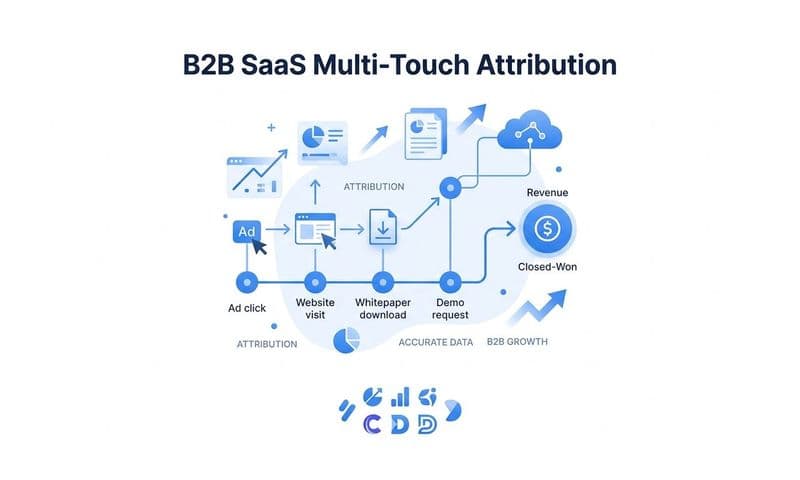
A user might click a Meta ad, then search on Google, then click a retargeting ad before converting. Each platform's CAPI receives the conversion signal and attributes it according to its own model. Without a unified attribution layer sitting above all of these platforms, you are left with fragmented, platform-specific reporting that often overstates each channel's individual contribution. Understanding conversion path analysis helps reveal the true customer journey and makes it easier to identify which touchpoints genuinely matter.
This is where combining server-side tracking with multi-touch attribution creates a genuinely different level of insight. Cometly's platform captures every touchpoint across the customer journey, from the first ad click to the final conversion, and applies multi-touch attribution models that give you a clear, cross-channel view of what is driving revenue. Instead of relying on each ad platform's self-reported attribution, you have an independent, unified source of truth.
Cometly's AI-powered recommendations layer on top of this attribution data to identify which ads, campaigns, and channels are performing and which are not, across every platform simultaneously. Rather than manually analyzing reports from Meta, Google, and TikTok separately, you get a consolidated view with actionable guidance on where to scale and where to pull back.
The conversion sync technology completes the loop by feeding enriched conversion data back to the ad platforms, ensuring their algorithms have the complete, accurate signals they need to optimize effectively. This is the combination that turns server-side tracking from a technical upgrade into a strategic advantage: accurate data collection through CAPIs, unified attribution across all channels, and AI-powered insights that tell you exactly what to do with that data.
Putting It All Together
The direction of the industry is clear. Browser-based tracking is becoming less reliable, and that trend is not reversing. Conversion APIs are no longer an advanced option for technically sophisticated teams. They are the baseline for any marketer who wants accurate data and strong ad performance in a privacy-first landscape.
The conversion API benefits explained throughout this guide compound on each other: more complete data collection, better algorithmic optimization, improved event matching, greater data control, and reduced conversion loss from browser and page load issues. Each benefit reinforces the others, creating a data foundation that is meaningfully more reliable than pixel-only tracking.
But the teams that get the most out of server-side tracking are those who pair it with intelligent attribution. Knowing that your conversions are being captured accurately is the starting point. Understanding which touchpoints, channels, and campaigns actually drove those conversions is what lets you optimize with confidence and scale what is working.
Ready to elevate your marketing game with precision and confidence? Discover how Cometly's server-side tracking, conversion sync, and AI-driven recommendations can help you capture every touchpoint, feed better data to your ad platforms, and make smarter budget decisions based on real revenue data. Get your free demo today and start building the data foundation your campaigns deserve.