If you've been running paid advertising campaigns over the past few years, you've likely stared at your reporting dashboard wondering why the numbers stopped making sense. Conversion counts dropped. Return on ad spend looked worse. Campaigns that used to perform well suddenly appeared unprofitable. And yet, your actual business results told a different story.
The culprit wasn't your creative. It wasn't your targeting strategy. It was a fundamental shift in how Apple's iOS handles user privacy, and the ripple effects have touched every corner of digital advertising since iOS 14.5 launched in April 2021.
Conversion tracking issues after iOS update rollouts have become one of the most persistent challenges marketers face today. The problem isn't simple, and it hasn't gotten easier with time. Each subsequent iOS release has added new layers of privacy protection, further limiting the data ad platforms can collect and use for optimization. The good news is that the tracking landscape, while more complex, is not broken beyond repair. There are clear, proven strategies to rebuild accurate data collection and restore the visibility you need to make confident campaign decisions.
This article breaks down exactly what changed, which specific problems you're likely experiencing, and how to build a tracking infrastructure that holds up in a privacy-first world.
How Apple's Privacy Framework Disrupted the Old Tracking Playbook
For years, digital advertising relied on a relatively simple mechanism: a device identifier called the IDFA (Identifier for Advertisers) that allowed ad platforms to follow users across apps and websites. When someone clicked a Facebook ad on their iPhone and later made a purchase, Meta could connect those two events using the IDFA. Attribution was deterministic, meaning it was based on actual observed data rather than estimates.
iOS 14.5 changed everything. Apple introduced App Tracking Transparency (ATT), a framework that requires apps to explicitly ask users for permission before tracking them across other companies' apps and websites. The permission prompt is clear and direct, and the majority of users choose to opt out. Without the IDFA, ad platforms lost their primary mechanism for connecting ad clicks to downstream conversions. Understanding why Facebook ads stopped working after iOS 14 helps illustrate the scale of this disruption.
But iOS 14.5 was just the beginning. Apple has continued expanding its privacy protections with each subsequent release. iOS 15 introduced Mail Privacy Protection, which pre-loads email content and masks whether a recipient actually opened an email, and iCloud Private Relay, which obscures IP addresses and browsing activity from websites and network providers.
iOS 17 brought Link Tracking Protection, which strips certain tracking parameters, including UTM parameters, from URLs when links are opened in Safari, Messages, and Mail. This means that even if a user clicks a link with your carefully constructed UTM tags, those parameters may be removed before your analytics platform can read them, creating gaps in your UTM tracking and attribution data.
iOS 18 has continued this trajectory, reinforcing Apple's commitment to privacy as a core product feature rather than a regulatory checkbox.
The cumulative effect is significant. Ad platforms like Meta and Google now operate with far less device-level data than they had before. Without reliable identifiers to match an ad click on one app to a purchase on another, these platforms increasingly rely on statistical modeling to estimate what happened rather than reporting what they can actually observe. The gap between what occurred in reality and what gets reported in your dashboard has widened considerably.
For marketers, this creates a disorienting situation. Your campaigns may be performing better than your data suggests. Or they may be performing worse. Without accurate attribution, it's genuinely difficult to tell, and that uncertainty makes scaling decisions feel like guesswork.
The Five Most Common Conversion Tracking Problems Marketers Face Today
Understanding the specific ways that iOS privacy changes manifest in your reporting helps you diagnose your situation accurately and prioritize the right fixes. Here are the problems that come up most consistently.
Underreported conversions: This is the most immediately painful issue. Ad platforms show significantly fewer conversions than actually occurred because they cannot reliably match conversion events back to the original ad click. Marketers look at their Meta or Google Ads dashboard, see a high cost per conversion, and conclude the campaign isn't working. They pause or kill it. But the campaign may have been driving real results that simply weren't being attributed correctly. If you're asking yourself why your conversion tracking numbers are wrong, underreporting is often the primary culprit.
Delayed and modeled data: Meta's Aggregated Event Measurement (AEM) framework, introduced as a response to ATT, limits advertisers to reporting a small number of conversion events per domain and introduces reporting delays of up to 72 hours. SKAdNetwork, Apple's framework for app install attribution, also relies on aggregated and modeled data rather than individual-level tracking. The result is that real-time optimization becomes nearly impossible. By the time your data stabilizes, the campaign window has already shifted.
Attribution window compression: Before iOS 14.5, advertisers could use 28-day click attribution windows, giving them a longer view of how ads influenced purchases that happened days or weeks after the initial click. Post-iOS changes forced platforms to shorten these windows significantly. Purchases that happen more than a few days after an ad interaction may not be attributed to that ad at all, making campaigns appear less effective than they are for products with longer consideration cycles.
Broken audience targeting and retargeting: Retargeting campaigns depend on pixel data to build audiences of people who visited your site or took specific actions. With fewer users trackable via browser-side pixels, retargeting pools shrink. Lookalike audiences, which depend on strong seed audience data, become less precise. The ad platform algorithms that optimize for conversions receive weaker signals, which means they make less effective targeting decisions and your costs tend to rise while performance falls.
Cross-platform double counting: Here's a problem that runs in the opposite direction. When a customer interacts with your ads on Meta and Google before converting, both platforms may claim credit for that conversion in their respective dashboards. Add in a TikTok touchpoint and you might see three conversions reported across platforms for a single actual sale. This inflates your apparent total conversions and makes it nearly impossible to understand which platform is actually driving results without a unified attribution view.
Why Platform-Native Fixes Only Get You Partway There
The major ad platforms recognized that iOS privacy changes threatened their advertising businesses and moved quickly to develop solutions. Meta launched the Conversions API (CAPI), Google introduced Enhanced Conversions, and TikTok built its Events API. These are all server-side solutions that allow advertisers to send conversion data directly from their servers to the platform, bypassing the browser-level restrictions that iOS imposes on pixel-based tracking. You can learn more about what conversion API tracking is and how it fits into the broader picture.
These tools genuinely help. Server-to-server data transfer is more reliable than browser-based pixel fires, which can be blocked by iOS privacy settings, ad blockers, and cookie restrictions. If you're not using these platform-native server-side tools, implementing them should be a priority.
But there's a fundamental limitation you need to understand: each of these solutions operates within that platform's own silo. Meta's CAPI helps Meta attribute more conversions to Meta ads. Google's Enhanced Conversions helps Google attribute more conversions to Google ads. Neither tool helps you understand how a customer's interaction with a Meta ad and a Google search ad together contributed to a single purchase.
This siloed structure also perpetuates the double-counting problem described earlier. When each platform runs its own attribution model and claims credit for conversions that touched multiple channels, your combined reported conversions will consistently exceed your actual conversions. You end up with conflicting data sets that cannot be reconciled without an independent, cross-platform attribution layer. Exploring dedicated tracking conversions across multiple ad platforms is essential for solving this.
Platform-native tools also don't give you visibility into the full customer journey. A customer might click a Facebook ad, visit your site twice through organic search, receive a retargeting email, and then convert. Each platform sees only its own piece of that journey. None of them can show you the complete picture, and none of them have an incentive to tell you when another channel deserves more credit than they do.
The conclusion is straightforward: platform-native tools are necessary but not sufficient. They reduce data loss within each platform's ecosystem, but they don't solve cross-channel attribution or give you a reliable single source of truth for marketing performance.
Server-Side Tracking: The Foundation for Accurate Data in a Privacy-First World
If you take one technical concept away from this article, make it this: server-side tracking is the most important infrastructure change you can make to address conversion tracking issues after iOS updates.
Here's the core idea. Traditional pixel-based tracking relies on code that runs in the user's browser. When someone loads your website, a JavaScript pixel fires and sends data to Meta, Google, or your analytics platform. iOS privacy features, ad blockers, and browser restrictions can all interfere with this process, preventing the data from being sent or received accurately. Understanding the full scope of tracking pixel limitations from privacy updates makes the case for change even clearer.
Server-side tracking moves this data collection upstream. Instead of relying on the browser to send conversion events, your own server captures the conversion data and sends it directly to ad platforms and analytics tools. The user's browser privacy settings and iOS restrictions don't interfere with server-to-server communication in the same way. The data flow is more reliable, more complete, and under your control.
This approach also enables first-party data collection, which is increasingly the foundation of sustainable marketing measurement. When you capture conversion events through your own website and CRM infrastructure, you own that data pipeline. You're not dependent on third-party cookies or device identifiers that can be revoked by a software update. Investing in first-party data tracking is more durable, more accurate, and more valuable for building audiences and feeding optimization algorithms.
The second major benefit of server-side tracking is what happens when you send that enriched data back to ad platforms. This is often called conversion syncing. When Meta or Google receives richer, more complete conversion signals from your server, their optimization algorithms have better information to work with. They can identify patterns in who converts, optimize bidding more effectively, and improve targeting accuracy. You're essentially giving the platform AI better fuel, which tends to improve campaign performance over time.
Think of it this way: ad platform algorithms are only as good as the data you feed them. If your pixel is missing a significant portion of conversions due to iOS restrictions, the algorithm is optimizing based on an incomplete picture. Server-side tracking fills in those gaps, restoring the signal quality that drives better automated optimization.
Building a Multi-Touch Attribution Strategy That Holds Up Over Time
Server-side tracking solves the data collection problem. Multi-touch attribution solves the interpretation problem. Together, they give you both the raw material and the analytical framework to understand what's actually driving revenue.
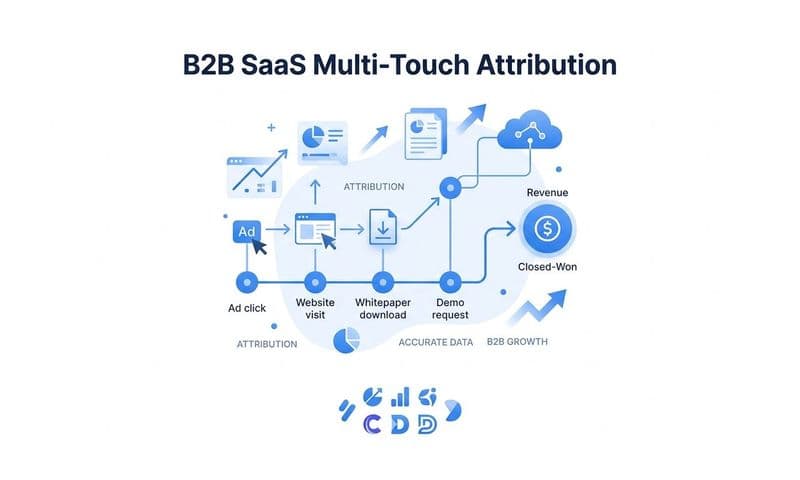
Multi-touch attribution is the practice of tracking every meaningful touchpoint in a customer's journey and distributing conversion credit across those touchpoints rather than assigning all credit to a single interaction. Instead of asking "which ad did this customer click last before buying?", multi-touch attribution asks "which combination of interactions led this customer to become a buyer?" Mastering tracking conversions across multiple touchpoints is the key to answering that question accurately.
The difference matters enormously in a world where customers interact with brands across many channels before converting. A customer might first discover your brand through a YouTube ad, later click a Google search ad, open a promotional email, and finally convert after seeing a retargeted Facebook ad. Last-click attribution gives all the credit to Facebook. Multi-touch attribution distributes credit across all four touchpoints, giving you a much more accurate picture of what's working.
Building a true multi-touch attribution system requires connecting your ad platforms, your website analytics, and your CRM into a unified data environment. When all three data sources feed into one system, you can see the complete customer journey rather than the fragmented view that each platform provides on its own. CRM data is particularly valuable because it captures offline and post-click behavior that ad platforms can't see, including sales calls, trial activations, and subscription renewals.
This is where AI-powered analysis becomes a genuine competitive advantage. When you have a unified data set covering every touchpoint across every channel, AI can identify patterns that human analysts would miss. Which campaign combinations most often appear in the journeys of your highest-value customers? Which channels tend to initiate the journey versus close the deal? Dedicated revenue attribution tracking tools can answer these questions with real confidence.
The result is that you can make budget decisions based on actual revenue contribution rather than each platform's self-reported performance. In a privacy-restricted environment where individual-level tracking is increasingly limited, this unified, AI-analyzed view of aggregate performance becomes your most reliable compass.
Putting Your Tracking Back on Solid Ground
Conversion tracking issues after iOS updates are not a temporary inconvenience. Apple's privacy framework reflects a durable shift in how the industry treats user data, and subsequent iOS releases have made clear that these protections will only expand. Building a tracking infrastructure that works within this reality isn't optional for marketers who want to scale campaigns with confidence. It's essential.
The path forward has three core components. First, implement server-side tracking to move data collection off the browser and onto your own server infrastructure, restoring the reliability and completeness of your conversion data. Second, adopt a unified multi-touch attribution approach that connects your ad platforms, website, and CRM into a single source of truth, eliminating the double-counting and siloed reporting that platform-native tools create. Third, feed that enriched, first-party conversion data back to ad platforms through conversion syncing, giving their algorithms better signals to optimize bidding, targeting, and delivery.
These aren't advanced tactics reserved for enterprise marketing teams. They're the new baseline for anyone serious about understanding what their advertising dollars are actually doing.
Cometly is built specifically to address these challenges. It combines server-side tracking, multi-touch attribution across every channel, conversion syncing to Meta, Google, and other platforms, and AI-powered recommendations that identify which campaigns and channels are actually driving revenue. Instead of piecing together conflicting reports from multiple platform dashboards, you get a single, accurate view of your entire marketing performance in real time.
If your current tracking setup is leaving you with incomplete data, inflated platform-reported conversions, or uncertainty about where to invest your next dollar, now is the right time to audit what you have and build something more resilient.
Get your free demo today and start capturing every touchpoint to maximize your conversions with the accurate, cross-platform attribution data your campaigns need to scale with confidence.