You're watching your Meta ads dashboard show hundreds of conversions. Google Ads reports strong performance. Your retargeting campaigns appear to be crushing it. Then you check your actual revenue, and the numbers don't match. Not even close.
This isn't a platform glitch or a reporting delay. It's the reality of cookie tracking in 2026—a system that's fundamentally broken and getting worse every month.
The technology that powered digital advertising for two decades is collapsing under the weight of privacy regulations, browser restrictions, and user behavior shifts. And if you're still relying on cookie-based tracking to measure and optimize your campaigns, you're making decisions based on incomplete data at best, and completely misleading signals at worst.
Let's break down exactly why cookie tracking is failing advertisers, how it's impacting your campaign performance right now, and what modern tracking infrastructure actually looks like in a privacy-first world.
How Cookie-Based Tracking Was Supposed to Work
To understand why cookie tracking is breaking, you need to understand how it worked in the first place.
Third-party cookies are small text files that ad platforms and analytics tools place on a user's browser when they visit a website. These cookies follow users across different websites, creating a profile of their browsing behavior and allowing advertisers to track their journey from initial ad click to final conversion.
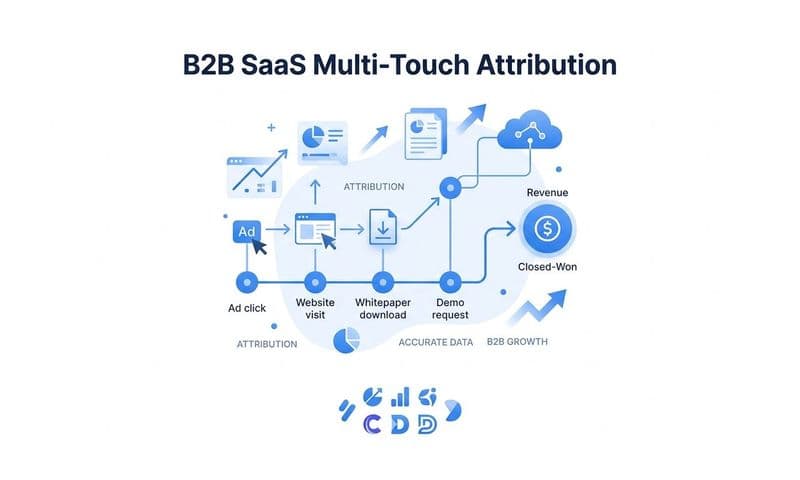
When someone clicked your Facebook ad, visited your landing page, browsed a few product pages, left without buying, saw a retargeting ad three days later, and finally converted—cookies were tracking every step of that journey. The ad platform could see the entire sequence and attribute the conversion back to the original ad that started it all.
This system powered three critical advertising functions. First, conversion attribution: knowing which ads actually drove sales so you could invest more in what worked. Second, retargeting: showing ads to people who had already visited your site based on their browsing behavior. Third, frequency capping: limiting how many times the same person saw your ad to avoid wasting impressions on someone who'd already seen it ten times.
Ad platforms built their entire optimization algorithms around this data. Facebook's algorithm learned which audiences converted by analyzing cookie-tracked behavior patterns across millions of users. Google Ads automated bidding strategies relied on accurate conversion signals to know when to bid higher or lower. The whole system depended on consistent, reliable tracking.
For years, this worked remarkably well. Advertisers could measure ROI with reasonable accuracy. Ad platforms could optimize campaigns automatically. The feedback loop between ad spend and revenue was clear enough to make data-driven decisions.
Then the foundation started cracking.
The Forces That Broke Cookie Tracking
The collapse of cookie-based tracking didn't happen overnight. It's been a slow-motion train wreck driven by three major forces that converged over the past few years.
Safari's Intelligent Tracking Prevention (ITP) struck first. Apple introduced ITP in 2017, and with each update, it became more aggressive. By 2020, Safari was blocking all third-party cookies by default and limiting first-party cookies to just seven days of storage. Since Safari powers roughly 20% of web traffic globally and dominates mobile browsing, this alone created massive blind spots in advertiser tracking.
Firefox followed with Enhanced Tracking Protection (ETP), blocking third-party cookies by default for all users. Mozilla positioned this as a privacy feature, and users embraced it. Between Safari and Firefox, a significant chunk of web traffic became effectively invisible to cookie-based tracking systems.
Then came the earthquake: iOS 14.5 in April 2021. Apple's App Tracking Transparency framework required apps to ask explicit permission before tracking users across other apps and websites. Most users declined. Overnight, mobile attribution—which had already been challenging—became nearly impossible for advertisers relying on traditional tracking methods.
The impact was immediate and brutal. Advertisers who had built entire businesses on Facebook's pixel-based tracking suddenly couldn't see which mobile users were converting. Retargeting campaigns lost most of their mobile audience. Attribution windows that once stretched 28 days were compressed to just one day for users who opted out of tracking.
Google Chrome, which commands the majority of browser market share, announced plans to phase out third-party cookies entirely. While Google has delayed this transition multiple times—most recently pushing it to 2025 and beyond—the direction is clear. When Chrome finally pulls the trigger, cookie-based tracking as we know it will be effectively dead.
But the technical restrictions are only part of the story. User behavior has shifted dramatically. Privacy-conscious users have flocked to tools that block tracking: ad blockers, VPNs, privacy-focused browsers like Brave and DuckDuckGo. These users aren't just opting out of tracking—they're actively preventing it.
The combination of browser restrictions, platform policies, and user behavior has created a perfect storm. Cookie tracking isn't just less effective than it used to be. It's fundamentally unreliable for measuring advertising performance in 2026.
What This Actually Costs Your Campaigns
The breakdown of cookie tracking isn't just a technical problem. It's actively destroying campaign performance and wasting ad budgets right now.
Start with attribution. When your tracking can only see 60% of conversions, your campaigns appear to be performing worse than they actually are. That Facebook ad campaign that looks like it's breaking even? It might actually be profitable—you just can't see all the conversions it's driving. This broken attribution leads to terrible optimization decisions. You cut budgets on campaigns that are working. You shift spend away from channels that are actually driving revenue.
The problem compounds when you try to scale. You identify a winning ad set based on the conversions you can see, increase the budget, and performance tanks. Why? Because the original performance data was incomplete. You were optimizing toward a fraction of the actual results, and when you scaled, the real performance didn't match what the limited data suggested.
Then there's the ad platform optimization problem. Facebook's algorithm needs conversion signals to learn which users are most likely to buy. When it only sees 60% of conversions, it's learning from an incomplete dataset. The algorithm can't accurately identify your best customers because it's missing too many data points. Your cost per acquisition increases because the platform is optimizing toward the wrong patterns.
Google Ads faces the same issue. Automated bidding strategies like Target ROAS depend on accurate conversion tracking. Feed them incomplete data, and they'll make suboptimal bidding decisions. You'll overpay for clicks that don't convert and underbid on opportunities that would have driven sales. Understanding these Google Ads conversion tracking problems is essential for any advertiser relying on automated optimization.
The wasted spend adds up quickly. You're running retargeting campaigns to audiences that include people who already converted—you just couldn't track it. You're showing ads to users who opted out of tracking, burning impressions on an audience you can never properly measure or optimize. You're paying for conversions that your analytics system attributes to "direct" traffic because the cookie that would have shown the ad's influence was blocked.
Perhaps most frustrating is the reporting chaos. Your ad platform shows one conversion number. Google Analytics shows a different number. Your CRM shows actual revenue that doesn't match either platform. You're flying blind, making budget decisions based on data you know is wrong but can't fix with traditional tracking methods.
Why First-Party Data Changes Everything
The solution to cookie tracking problems isn't trying to resurrect a dying system. It's building a fundamentally different tracking infrastructure based on first-party data.
First-party data is information you collect directly from your customers through your own properties—your website, your app, your CRM. Unlike third-party cookies that follow users across the internet, first-party data comes straight from your relationship with the customer. When someone fills out a form on your site, makes a purchase, or logs into their account, that's first-party data. You own it, you control it, and most importantly, it's not subject to the same browser restrictions that are killing third-party cookies.
The key difference is where the tracking happens. Cookie-based tracking relies on the user's browser to store and send data. When browsers block cookies, the entire system breaks. First-party tracking happens on your server, independent of browser restrictions. Even if a user has Safari's ITP enabled or has opted out of tracking on iOS, your server can still capture their conversion events when they interact directly with your properties.
This is where server-side tracking becomes critical. Instead of relying on a pixel in the user's browser to fire tracking events, server-side tracking sends conversion data directly from your server to ad platforms. When someone completes a purchase, your server tells Facebook, Google, and other platforms about the conversion—regardless of whether the user's browser allowed cookies or not. A proper first-party data tracking setup forms the foundation of any modern attribution system.
The privacy implications are actually better, not worse. You're tracking actions users take on your own website with data you legitimately own, rather than following them across the internet with third-party cookies. You can build this system in full compliance with GDPR, CCPA, and other privacy regulations by collecting consent appropriately and giving users control over their data.
But first-party data is only as good as your ability to connect it across platforms. This is where the real infrastructure work comes in. You need to tie together your website analytics, your CRM, your ad platforms, and your revenue data into a unified view of the customer journey. When someone clicks a Facebook ad, browses your site, requests a demo, and converts three weeks later through a sales call, your system needs to connect all those dots—even if cookies couldn't track the middle steps.
Building this infrastructure requires technical investment, but it's not optional anymore. The marketers winning in 2026 are the ones who stopped depending on cookies years ago and built first-party data systems that capture the complete customer journey.
How Better Data Transforms Ad Platform Performance
Feeding accurate conversion data back to ad platforms isn't just about better reporting. It fundamentally improves how the platforms optimize your campaigns.
Ad platform algorithms are essentially machine learning systems trained on conversion signals. Facebook's algorithm looks at thousands of data points about users who converted and finds patterns: these demographics, these interests, these behaviors tend to predict purchases. Then it shows your ads to more people who match those patterns. But here's the critical part: the algorithm is only as good as the conversion data you feed it.
When your tracking only captures 60% of conversions, the algorithm is learning from incomplete information. It might conclude that certain audience segments don't convert when they actually do—you just couldn't track it. It misses patterns that would improve targeting. It optimizes toward the wrong signals because it's working with a biased dataset.
Enriched conversion events change this completely. Instead of just telling Facebook "someone converted," you can send detailed information: the conversion value, the product purchased, the customer lifetime value prediction, whether this was a first-time buyer or repeat customer. This enriched data gives the algorithm much more to work with. It can optimize not just for conversions, but for high-value conversions. It can identify patterns that predict repeat customers versus one-time buyers.
The impact on cost per acquisition can be dramatic. When the algorithm has accurate signals about which users actually convert and how much they spend, it can bid more efficiently. It stops wasting impressions on low-intent users and focuses budget on audiences with genuine purchase intent. Your ROAS improves because the platform is making smarter decisions based on complete data. Learn how ad tracking tools can help you scale ads by providing the accurate data platforms need.
This is why connecting your CRM data to your ad platforms matters so much. Your CRM knows which leads actually turned into customers and how much revenue they generated. When you feed that information back to Facebook or Google, you're teaching the algorithm which initial clicks and impressions led to real business value. The platform can then find more users who look like your actual customers, not just people who clicked an ad once.
The feedback loop accelerates over time. Better data leads to better optimization. Better optimization leads to better results. Better results give you more conversion data to feed back into the system. Marketers who build this virtuous cycle gain a compounding advantage over competitors still relying on broken cookie tracking.
Building Attribution That Tracks the Full Journey
Accurate tracking is only half the battle. You also need attribution models that make sense for how customers actually buy from you.
Multi-touch attribution recognizes that most customers don't convert on their first interaction. They might see a Facebook ad, click a Google search result three days later, read a blog post, receive an email, and finally convert after seeing a retargeting ad. Which touchpoint deserves credit for the conversion? The answer depends on your business model and sales cycle. Understanding attribution marketing tracking is essential for making informed budget decisions.
Last-click attribution gives all credit to the final touchpoint before conversion. It's simple and easy to implement, but it completely ignores the earlier interactions that moved the customer toward a purchase. If you're running awareness campaigns or content marketing, last-click attribution will make them look worthless even if they're actually starting customer journeys that convert later.
First-click attribution does the opposite, crediting the initial touchpoint that introduced the customer to your brand. This can overvalue top-of-funnel channels while ignoring the retargeting and nurture efforts that actually closed the sale. Neither extreme tells the complete story.
Linear attribution spreads credit evenly across all touchpoints. Time-decay attribution gives more credit to interactions closer to the conversion. Position-based attribution emphasizes both the first and last touchpoints while giving some credit to middle interactions. Each model reveals different insights about your marketing mix.
The key is comparing multiple attribution models to understand the full picture. If a channel looks strong in last-click but weak in first-click, it's probably good at closing deals but not at starting new customer relationships. If it's strong in first-click but weak in last-click, it's driving awareness but might need better follow-up to convert those initial touches into sales.
This is where AI-powered attribution becomes valuable. Instead of choosing one rigid model, AI can analyze your actual conversion paths and identify which touchpoints have the strongest correlation with eventual purchases. It can recognize patterns that simple attribution rules miss: maybe users who interact with both Facebook ads and organic search convert at 3x the rate of users who only touch one channel. That insight should influence how you allocate budget.
The goal isn't perfect attribution—that's impossible. The goal is accurate enough attribution to make smart optimization decisions. You need to know which channels are starting customer journeys, which are assisting conversions, and which are closing deals. You need to understand how your channels work together, not just how they perform in isolation. The best software for tracking marketing attribution provides these multi-model insights in a single dashboard.
Modern attribution systems connect ad clicks to CRM events to revenue, creating a complete view of the customer journey from first touch to final purchase. This level of visibility was possible with cookie tracking in theory, but in practice, the broken tracking made it unreliable. First-party data infrastructure makes it achievable again.
Moving Forward in a Cookie-Less World
Cookie tracking problems aren't a temporary setback that browsers will eventually reverse. Privacy regulations are expanding globally, not retreating. Browser restrictions are getting stricter, not looser. User expectations around data privacy are rising, not falling.
The marketers who thrive in this environment are the ones who stop fighting the tide and build tracking infrastructure designed for the current reality. That means first-party data collection at the foundation. Server-side tracking to capture conversions that cookies miss. Enriched conversion events that feed ad platform algorithms better signals. Multi-touch attribution that reveals the full customer journey from first touch to revenue. Exploring cookieless tracking solutions for marketers is no longer optional—it's essential for survival.
This shift actually creates opportunity. While competitors struggle with broken cookie tracking and make optimization decisions based on incomplete data, you can build a competitive advantage with cleaner, more accurate insights. You can scale campaigns confidently because you know the real performance, not just the fraction that cookie tracking could see. You can feed ad platforms the conversion signals they need to optimize effectively, lowering your acquisition costs while competitors overpay due to degraded algorithm performance.
The technical investment required is real, but it's not optional. The gap between marketers with modern attribution infrastructure and those still depending on cookies will only widen as browser restrictions continue to tighten. Every month you delay is another month of optimization decisions based on broken data. Understanding the cookie deprecation impact on tracking helps you prioritize this transition.
The good news? The solutions exist right now. You don't need to build server-side tracking from scratch or figure out complex attribution models on your own. Modern attribution platforms handle the technical complexity while giving you the clean data and actionable insights you need to scale profitably.
Ready to elevate your marketing game with precision and confidence? Discover how Cometly's AI-driven recommendations can transform your ad strategy—Get your free demo today and start capturing every touchpoint to maximize your conversions.