You're running ads on Meta, Google, TikTok, and sending email campaigns while working with influencers on the side. A customer sees your brand on Instagram, clicks away, comes back through a Google search three days later, and finally converts after opening a promotional email. So which channel gets the credit?
For most D2C brands, the honest answer is: it depends on who's asking. Meta says it was the Instagram ad. Google claims the search click sealed the deal. Your email platform counts it as an email conversion. Add them all up and you've attributed the same purchase three times over, which means your reported ROAS looks great while your actual profitability tells a very different story.
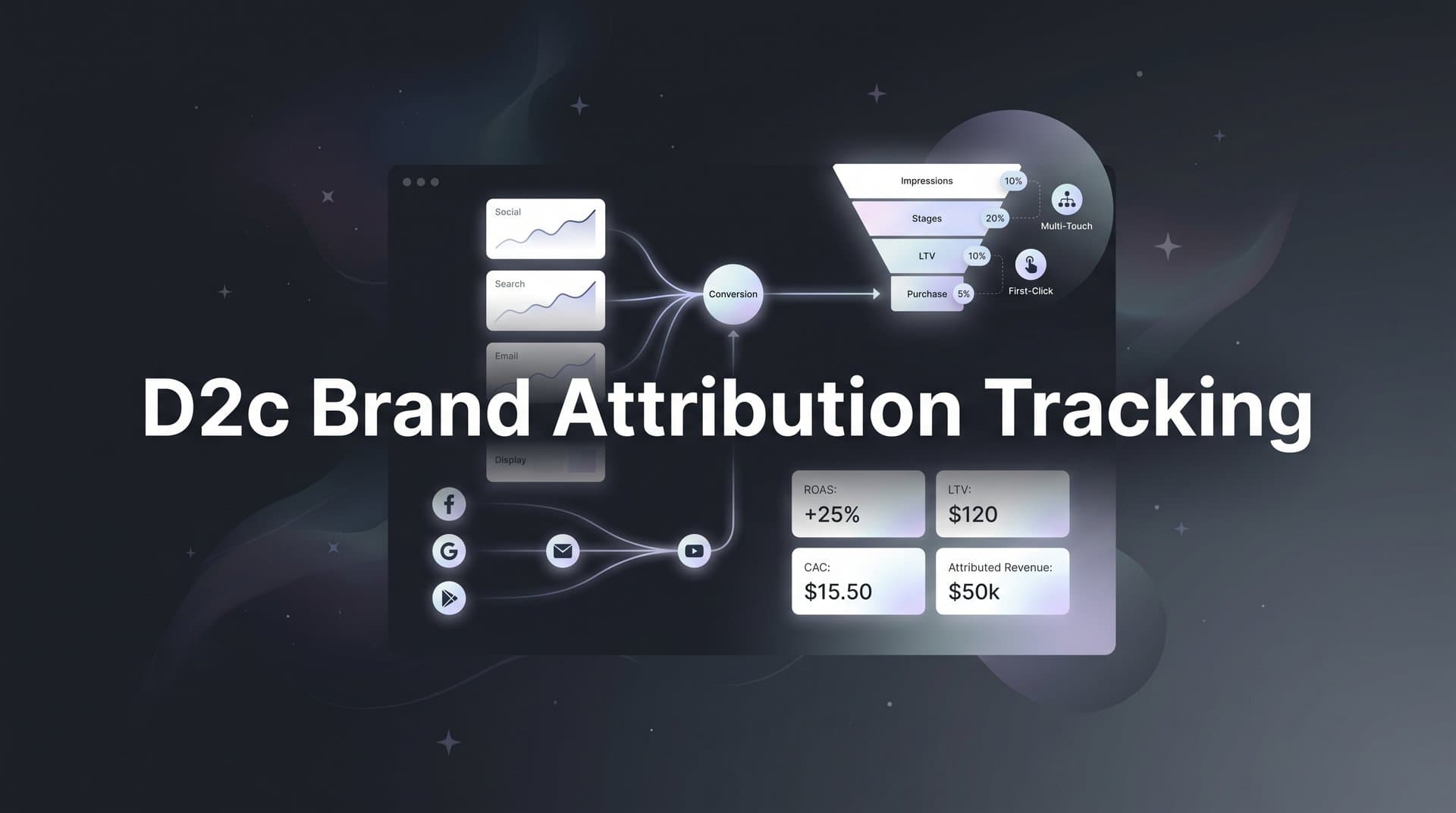
This is the attribution problem at the heart of modern D2C marketing. And in 2026, with privacy changes continuing to erode pixel-based tracking accuracy, it's getting harder to ignore. D2C brand attribution tracking is the discipline of connecting every marketing touchpoint to actual revenue, so you can stop guessing and start making decisions based on what's real. This guide breaks down how it works, which models to use, and how to build a tracking setup that gives you clarity across every channel you run.
Why D2C Brands Face a Unique Attribution Challenge
Direct-to-consumer brands operate without the buffer of retail partners or distribution networks. Every customer relationship is built and managed digitally, which means every dollar of acquisition spend flows through channels the brand controls directly. That's a competitive advantage in many ways, but it also creates an attribution environment that's significantly more complex than traditional retail or B2B funnels.
Think about the typical D2C customer journey. A shopper might discover your brand through a TikTok video, follow you on Instagram, click a retargeting ad a week later, abandon their cart, receive a recovery email, and finally purchase after seeing a promotional offer. That's five or more touchpoints across multiple platforms, devices, and days. Tracking that journey end-to-end is genuinely difficult, and most brands are only capturing fragments of it.
The privacy landscape has made this harder. Apple's App Tracking Transparency framework, introduced in 2021, dramatically reduced the signal available from iOS users. When people opt out of tracking, pixel-based attribution loses visibility into a significant portion of conversions. Google's Privacy Sandbox initiative has continued evolving through 2025 and into 2026, further limiting how third-party cookies function in Chrome. The result is that browser-level tracking, which most ad platforms still rely on heavily, misses an increasing share of actual customer activity.
Here's where the problem compounds for D2C brands specifically. Because D2C growth is almost entirely dependent on paid acquisition, attribution errors don't stay small. When Meta over-reports conversions by claiming credit for purchases that were already attributed to Google, and you scale your Meta budget based on that inflated ROAS, you're essentially pouring money into a distorted signal. Implementing cross-platform attribution tracking is essential to avoid this kind of duplication.
Platform-reported data also suffers from inherent self-interest. Each ad platform uses its own attribution window, its own conversion counting methodology, and its own definition of what constitutes a "view" or a "click." Meta might use a 7-day click and 1-day view window by default. Google might count an assisted conversion that Meta also claimed. Neither platform has visibility into what the other is doing, so duplication is built into the system.
D2C brands need an independent source of truth that sits above the individual platforms and tracks the full customer journey from first touch to final purchase. Without it, budget decisions are made on data that's incomplete at best and actively misleading at worst.
Attribution Models Every D2C Marketer Should Know
Before you can build an accurate attribution system, you need to understand the models that determine how credit gets assigned across touchpoints. Each model tells a different story about your marketing, and knowing which story each one tells is essential for interpreting your data correctly.
Last-Click Attribution: All conversion credit goes to the final touchpoint before purchase. It's simple and easy to implement, but it systematically undervalues every channel that contributed earlier in the journey. For D2C brands running awareness campaigns on TikTok or YouTube, last-click makes those channels look ineffective even when they're driving significant pipeline.
First-Click Attribution: The opposite approach, where all credit goes to the channel that first introduced the customer to your brand. This is useful for understanding which channels are best at driving discovery, but it ignores everything that happened after the first touch, including the retargeting and email campaigns that often close the sale.
Linear Attribution: Credit is distributed equally across every touchpoint in the customer journey. It's more balanced than single-touch models and gives you a clearer picture of which channels are consistently present across the funnel. The downside is that it treats every touchpoint as equally important, which isn't always accurate.
Time-Decay Attribution: Touchpoints closer to the conversion receive more credit than earlier ones. This model is useful when you believe that recency matters most, such as in short-consideration-cycle purchases where the final push is the most influential moment.
Position-Based (U-Shaped) Attribution: The first and last touchpoints each receive a larger share of credit, typically around 40 percent each, with the remaining 20 percent distributed across middle touchpoints. This is a practical compromise that values both discovery and conversion while still acknowledging the role of mid-funnel channels.
For most D2C brands, multi-touch attribution (MTA) is the preferred framework because it distributes credit across the full customer journey rather than collapsing it into a single point. A comprehensive attribution marketing tracking guide can help you understand how these models apply to your specific business.
The honest truth is that no single model is perfect. Each one reflects a set of assumptions about how customers make decisions, and those assumptions don't always match reality. The most valuable thing you can do is compare models side by side. When you run last-click and linear attribution in parallel, for example, the channels that look strong under last-click but weak under linear are likely closing channels that depend on earlier touchpoints to do the heavy lifting. That insight alone can reshape how you allocate budget.
The Building Blocks of Accurate D2C Tracking
Understanding attribution models is one thing. Having the infrastructure to actually collect reliable data is another. Most D2C brands have gaps in their tracking setup that undermine the quality of their attribution data, often without realizing it.
The most important shift in tracking infrastructure over the past few years has been the move toward server-side tracking. Traditional pixel-based tracking works by placing a small piece of JavaScript on your website that fires when a user takes an action, such as viewing a product or completing a purchase. The problem is that browsers increasingly block these pixels, ad blockers interfere with them, and iOS restrictions prevent them from capturing data from a large portion of your audience.
Server-side tracking bypasses these limitations by sending conversion data directly from your server to the ad platform's API, rather than relying on the browser to do it. When a customer completes a purchase, your server records that event and sends it to Meta's Conversions API, Google's Enhanced Conversions, or TikTok's Events API. The browser never needs to be involved, which means the data gets through even when cookies are blocked or pixels are suppressed.
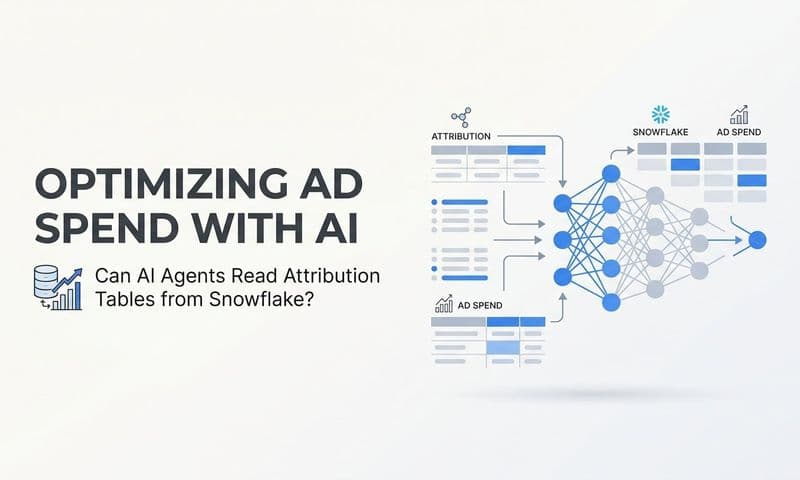
The second building block is connecting your data sources into a unified pipeline. Your ad platforms, your website, and your CRM all hold pieces of the customer journey, but if they're operating in silos, you can only see fragments. The goal is to create a system where an ad click on Meta flows into a website session, connects to a purchase event, and links back to a customer record in your CRM, all in one traceable chain. This is what makes it possible to measure not just first-purchase attribution but also lifetime value attribution, which is where D2C profitability is really determined. Exploring ecommerce attribution tracking setup best practices can help you build this foundation correctly.
The third building block is the unglamorous but essential work of UTM discipline and consistent naming conventions. If your campaign names are inconsistent across platforms, your UTM parameters are missing on some links, or your events are tagged differently across your website and app, your attribution data will be fragmented and unreliable. Understanding the difference between UTM tracking and attribution software is key to knowing when each approach is appropriate.
Proper event tagging is equally important. Beyond the standard purchase event, you want to track add-to-cart, initiate-checkout, email sign-up, and ideally post-purchase events like repeat purchase or subscription renewal. The more complete your event data, the more accurate your attribution becomes, and the better signal you're feeding back to the ad platforms that rely on that data to optimize their algorithms.
Turning Attribution Data Into Smarter Budget Decisions
Attribution data is only valuable if it changes how you act. The point of building an accurate tracking setup is not to produce interesting reports. It's to make better decisions about where your budget goes and how your campaigns are structured.
One of the most useful things attribution reveals is the difference between channels that assist conversions and channels that close them. A TikTok campaign might rarely appear as the last click before purchase, but when you look at multi-touch data, you might find that a large portion of your converted customers touched a TikTok ad earlier in their journey. Proper marketing funnel attribution tracking helps you see these assist-level contributions clearly. Under last-click reporting, that campaign looks like it's underperforming. Under multi-touch attribution, it's clearly generating demand that other channels are closing. Cutting it based on last-click data would be a costly mistake.
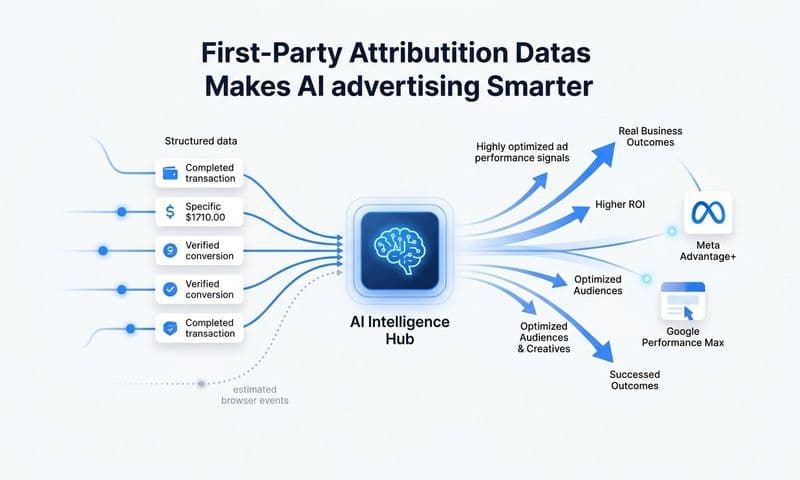
Attribution data also helps you feed better signals back to the ad platforms themselves. When you sync verified purchase events, including revenue values and customer identifiers, back to Meta and Google through their conversion APIs, you're giving their algorithms a more accurate picture of what a valuable customer looks like. This improves the quality of lookalike audiences, sharpens automated bidding, and helps the platform's machine learning optimize for outcomes that actually matter to your business rather than proxy metrics like clicks or landing page views.
Real-time dashboards are the operational layer that makes all of this actionable. When your attribution data is flowing in close to real time, you can spot a campaign that's burning budget without contributing to conversions and shift spend before the waste accumulates. Investing in accurate revenue attribution tracking ensures the data powering those dashboards reflects real business outcomes.
Platforms like Cometly bring this together by connecting your ad platforms, CRM, and website data into a single analytics view, then using AI to surface recommendations about where to scale and where to pull back. Instead of manually cross-referencing reports from five different platforms, you get a unified picture of what's actually driving revenue.
Common Attribution Mistakes D2C Brands Make
Even brands with solid tracking infrastructure make attribution errors that distort their decision-making. Knowing the most common mistakes helps you avoid the traps that cause otherwise smart marketers to scale the wrong things.
Over-relying on platform-reported ROAS: Every ad platform has a financial incentive to show you strong performance numbers. Meta's reported ROAS and Google's reported ROAS are calculated using their own attribution logic, their own conversion windows, and their own data, none of which is cross-referenced against the other. When you compare platform-reported ROAS to your actual blended ROAS measured through an independent attribution tool, the gap is often significant. Making scaling decisions based solely on platform-reported numbers means you're trusting each platform to grade its own homework. Reviewing the best software for tracking marketing attribution can help you find an independent solution.
Defaulting to last-click and starving upper-funnel channels: This is one of the most common and costly attribution mistakes in D2C marketing. When your reporting defaults to last-click, awareness channels like YouTube, TikTok, and display consistently look like poor performers because they rarely close the sale directly. Marketers cut these budgets, retargeting and branded search pick up more of the final-click conversions, and the numbers look fine in the short term. But over time, the top of the funnel dries up because there's no new demand being generated. Multi-touch attribution is the antidote because it gives upper-funnel channels credit for the role they actually play.
Failing to separate new customers from returning customers: Retargeting campaigns are valuable, but they often target people who were already going to purchase. When attribution doesn't distinguish between new customer acquisitions and returning customer conversions, retargeting looks far more efficient than it actually is. Your reported customer acquisition cost (CAC) gets pulled down by return purchases that didn't require acquisition spend at all. Segmenting your attribution by new versus returning customers gives you a much more accurate picture of what it actually costs to grow your customer base.
Ignoring the post-purchase journey: Attribution doesn't end at the first purchase. For D2C brands where lifetime value is the real metric of success, understanding which acquisition channels bring in customers who buy again, subscribe, or refer others is just as important as understanding which channels drive the initial conversion. Implementing post-purchase attribution tracking lets you connect long-term customer value back to original acquisition sources for much smarter investment decisions.
Building Your D2C Attribution Stack: Putting It All Together
Accurate D2C brand attribution tracking is not a single tool or a one-time setup. It's a stack of connected systems that work together to give you a complete, trustworthy view of your marketing performance.
The foundation is server-side tracking that captures conversion data beyond what browser pixels can see. On top of that, you need a multi-touch attribution platform that aggregates data from all your channels and applies consistent attribution logic across them. Your CRM should be integrated so that customer lifetime value and repeat purchase behavior are connected back to original acquisition sources. And conversion sync should be running continuously, sending verified purchase events back to Meta, Google, TikTok, and any other platforms you're running, so their algorithms are optimizing on real signals.
The final layer is AI-powered analysis that turns all of this data into actionable recommendations. Knowing that a channel is underperforming is useful. Knowing exactly which campaigns to scale, which to cut, and how to reallocate budget to improve blended ROAS is what actually moves the needle.
Start by auditing your current setup. Are your pixels firing reliably? Do you have server-side tracking in place? Are your UTMs consistent across every campaign? Is your attribution platform pulling data from every channel you run? Identify the biggest gaps and address them in order of impact.
In 2026, D2C brand attribution tracking is not optional. It's the difference between scaling confidently on accurate data and burning budget on misleading signals from platforms that are each telling their own version of the story. The brands that win are the ones that build an independent source of truth and use it to make every dollar count.
Ready to elevate your marketing game with precision and confidence? Discover how Cometly's AI-driven recommendations can transform your ad strategy. Get your free demo today and start capturing every touchpoint to maximize your conversions.