You're running campaigns on Meta, Google, TikTok, and email. Your Shopify dashboard shows steady sales. But when you try to figure out which channel actually drove those purchases, the picture gets murky fast. Google Analytics credits organic search. Meta claims the conversion. Your email platform takes credit too. Meanwhile, you're making budget decisions based on incomplete data, potentially scaling campaigns that barely contribute while starving the ones that actually drive revenue.
This is the attribution gap that costs ecommerce brands millions in wasted ad spend every year. When you can't connect marketing touchpoints to actual purchases, you're essentially flying blind—optimizing for clicks and impressions instead of the revenue outcomes that matter. The solution isn't running more campaigns or spending more money. It's implementing ecommerce conversion attribution that tracks the complete customer journey from first interaction to final checkout.
Understanding what drives your sales isn't just about better reporting. It's about feeding accurate conversion data back to your ad platforms so their algorithms can find more customers like the ones who actually buy. It's about confidently scaling campaigns that generate ROI and cutting the ones that only look good on paper. Let's break down how attribution works in practice and why it's become essential for competitive ecommerce marketing.
The Real Problem: Why Standard Analytics Miss the Full Picture
Most ecommerce marketers rely on platform-specific analytics that only show part of the story. Google Analytics defaults to last-click attribution, giving full credit to whichever source the customer interacted with right before purchasing. But here's the reality: your customer probably discovered your brand through a TikTok ad two weeks ago, researched your products via organic search, clicked a retargeting ad on Instagram, and finally converted after receiving an email promotion.
Last-click attribution would credit that email with the entire sale, completely ignoring the three touchpoints that built awareness and consideration. This creates a distorted view of channel performance. You might think email is your top revenue driver when it's actually just capturing demand created by your paid social campaigns. The result? You underinvest in the channels doing the heavy lifting and potentially over-allocate budget to the final touchpoint.
The situation gets even more complicated when customers switch between devices. Someone might browse your store on their phone during lunch, research competitors on their laptop that evening, and complete the purchase on their tablet the next morning. Traditional cookie-based tracking struggles to connect these sessions into a single customer journey. Each device interaction looks like a different person, fragmenting your attribution data and making it nearly impossible to understand the true path to purchase. Implementing cross-device attribution tracking becomes essential for connecting these fragmented sessions.
Privacy changes have intensified these challenges significantly. iOS updates limiting tracking capabilities mean a large portion of mobile traffic now appears as "direct" or gets misattributed. Third-party cookies are being phased out across browsers, further degrading the accuracy of pixel-based tracking. Many ecommerce brands report attribution gaps of 30-40% or more—purchases happening with no clear source because traditional tracking methods can't capture the complete journey anymore. Understanding how you're losing attribution data from privacy updates is the first step toward solving this problem.
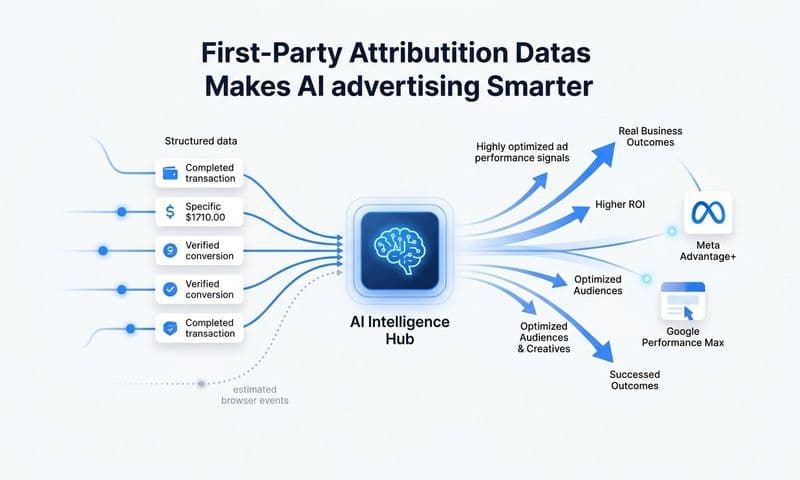
This isn't just a reporting problem. When your attribution data is incomplete or inaccurate, you can't make informed decisions about where to allocate budget. Worse, you're sending incomplete conversion data back to ad platforms like Meta and Google, which means their algorithms can't effectively optimize for the customers most likely to purchase. You end up in a cycle of mediocre performance because the systems designed to improve your results don't have the accurate data they need to learn.
Breaking Down Attribution Models for Online Stores
Think of attribution models as different lenses for viewing your customer journey. Each one tells a different story about which touchpoints deserve credit for a conversion. First-touch attribution gives 100% credit to the initial interaction—the ad or channel that first brought someone to your site. This model favors top-of-funnel awareness campaigns and helps you understand what's driving new customer discovery.
For ecommerce brands focused on customer acquisition, first-touch attribution reveals which channels are most effective at introducing new audiences to your products. If you're launching in new markets or building brand awareness, this model shows you where your discovery efforts are paying off. The limitation? It completely ignores everything that happened between that first visit and the eventual purchase, which for many products involves significant consideration and multiple touchpoints.
Last-touch attribution sits on the opposite end, crediting whichever channel closed the deal. This model naturally favors bottom-funnel tactics like retargeting ads, branded search, and email campaigns. It's useful for understanding what finally converts hesitant shoppers into buyers. Many ecommerce platforms default to this model because it's simple and aligns with how conversion tracking pixels work—they fire when someone completes a purchase and attribute it to the most recent source.
The problem with both single-touch models is they oversimplify the reality of modern ecommerce purchases. Customers rarely see one ad and buy immediately. They research, compare, return multiple times, and interact with various marketing touchpoints before committing. This is especially true for higher-priced products or considered purchases where the decision cycle extends over days or weeks. For a deeper dive into these differences, explore single source attribution versus multi-touch attribution models.
Multi-touch attribution acknowledges this complexity by distributing credit across multiple touchpoints in the customer journey. Linear models give equal credit to every interaction. Time-decay models give more weight to touchpoints closer to the conversion. Position-based models credit both the first and last touch heavily while acknowledging middle interactions. The right multi-touch model depends on your specific business dynamics.
If you sell impulse-buy products under $50, your customer journey might be relatively short, and a simpler attribution model could suffice. But if you're selling furniture, electronics, or other considered purchases, customers typically interact with your brand 5-10 times before buying. Comprehensive attribution modeling for ecommerce becomes essential for understanding which combination of touchpoints drives conversions.
Here's a practical framework: Use first-touch data to evaluate your awareness and acquisition channels. Use last-touch to understand what closes deals. But make budget decisions based on multi-touch attribution that shows the complete picture. A channel might look weak in last-touch data but play a crucial role in the middle of the journey, building consideration that other channels capitalize on later. Without multi-touch visibility, you risk cutting campaigns that actually contribute significantly to your revenue.
Mapping the Complete Customer Journey From Ad to Checkout
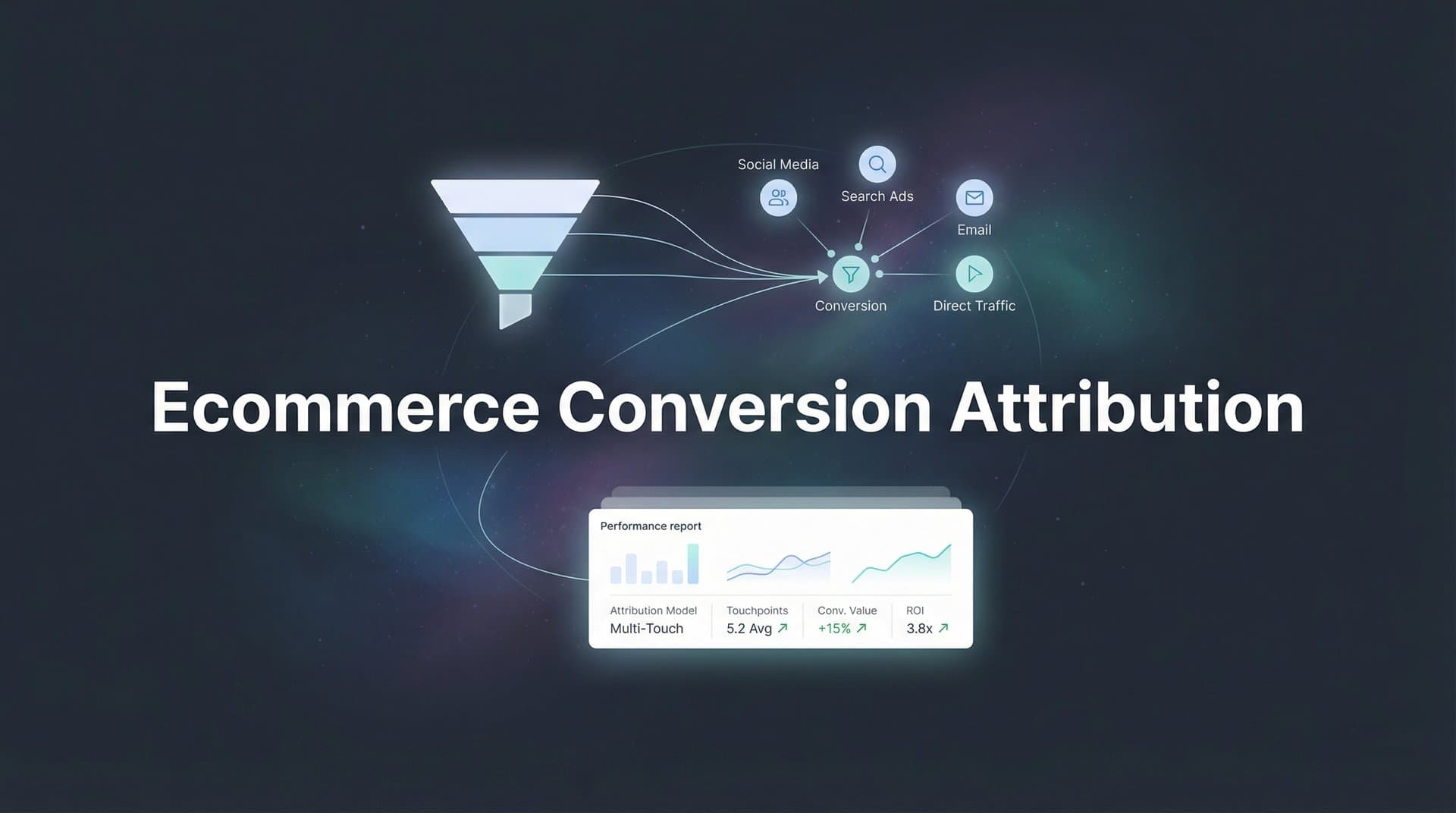
Building accurate attribution starts with identifying every touchpoint where customers interact with your brand. This includes obvious channels like paid ads on Meta, Google, and TikTok, but also organic search visits, direct traffic, email clicks, SMS messages, influencer content, affiliate links, and even offline interactions if you have retail locations or attend events. Each of these represents a potential step in the journey toward purchase.
The challenge is connecting these scattered touchpoints into unified customer profiles. When someone clicks your Instagram ad on their phone, searches your brand name on their laptop, and finally purchases via your email link on their tablet, you need a system that recognizes these as the same person's journey—not three separate, unrelated sessions. This requires moving beyond basic cookie tracking to more sophisticated identity resolution.
Server-side tracking has become essential for capturing accurate conversion data in the post-iOS-privacy world. Unlike browser-based pixels that rely on third-party cookies and can be blocked by privacy settings, server-side tracking sends conversion events directly from your server to ad platforms. This creates a more reliable data pipeline that isn't affected by browser restrictions or ad blockers, dramatically improving attribution accuracy.
Connecting your CRM or customer database to your attribution system adds another critical layer. When someone makes a purchase, you capture their email address and other identifying information. This allows you to track their behavior across sessions and devices using first-party data you own, rather than relying solely on cookies. You can see when that same customer returns weeks later, what they browse, and whether they make additional purchases—creating a complete view of customer lifetime value by source.
UTM parameters and consistent tracking conventions are the foundation that makes all of this work. Every ad campaign, email, and link you share should include properly formatted UTM tags that identify the source, medium, campaign, and specific creative. This metadata travels with the click and gets stored in your attribution system, allowing you to trace conversions back to the exact ad or email that contributed to the journey.
Many ecommerce brands discover gaps in their tracking when they start implementing comprehensive attribution. Direct traffic often represents a significant portion of conversions, but "direct" is frequently misattributed traffic from mobile apps, untagged emails, or lost referral data. Learning how to fix attribution discrepancies in data can significantly reduce this gap and give you visibility into the true sources driving your sales.
The technical setup requires coordination between your ecommerce platform, ad pixels, analytics tools, and any CRM or email systems you use. But the investment pays off in dramatically improved data quality. Instead of seeing 40% of your revenue attributed to "direct/none," you get clear visibility into which specific campaigns, ads, and channels contributed to those purchases—enabling much smarter optimization decisions.
Turning Attribution Data Into Smarter Budget Decisions
Once you have accurate attribution data, the real value comes from using it to make better marketing decisions. Start by identifying campaigns that generate strong return on ad spend when you account for their full contribution across the customer journey. A prospecting campaign might show a weak last-click ROAS, but multi-touch attribution reveals it's initiating journeys that convert at high rates after retargeting and email follow-up. That campaign deserves more budget, not less.
Look for channels that appear successful in surface metrics but contribute little to actual revenue. High click-through rates and engagement don't matter if those interactions rarely lead to purchases. Attribution data helps you distinguish between channels that drive real business outcomes versus those that generate vanity metrics. You might discover that a social platform with impressive engagement metrics barely contributes to your revenue, while a channel with lower engagement consistently initiates high-value customer journeys.
This is where attribution transforms from reporting tool to optimization engine. When you feed accurate conversion data back to ad platforms like Meta and Google, their machine learning algorithms get better at finding customers similar to the ones who actually purchase from you. Understanding Facebook conversion attribution specifically helps you maximize the effectiveness of your Meta campaigns by ensuring the platform receives accurate signals.
The feedback loop works like this: Your attribution system tracks which customers convert and what their journey looked like. This enriched conversion data gets sent back to your ad platforms through their Conversion APIs. The platforms use this information to refine their targeting, showing your ads to people who match the behavioral patterns of your actual buyers. Over time, this improves your campaign performance as the algorithms learn which audiences and placements generate the best results.
Budget allocation becomes more strategic when you understand the role each channel plays in your funnel. Top-of-funnel awareness campaigns might have longer payback periods but generate the new customer flow that keeps your business growing. Mid-funnel consideration tactics warm up prospects and move them closer to purchase. Bottom-funnel retargeting captures ready-to-buy intent. Leveraging channel attribution in digital marketing revenue tracking shows you the optimal budget split across these stages based on what actually drives conversions for your specific business.
You can also identify underperforming segments within otherwise strong channels. Maybe your Google Shopping campaigns perform well overall, but specific product categories or audience segments consistently underdeliver. Attribution data at the product or SKU level reveals these patterns, allowing you to refine targeting and creative to focus on what works. This granular optimization compounds over time into significantly better overall performance.
The competitive advantage here is substantial. While competitors make budget decisions based on incomplete data and last-click metrics, you're allocating spend based on true revenue contribution. You know which campaigns to scale aggressively and which to pause. You're feeding ad platforms the accurate data they need to improve targeting. This translates directly into better ROAS and more efficient customer acquisition.
Building Your Attribution System: Essential Components
Implementing effective attribution starts with solid technical foundations. Your tracking pixels need to be properly installed on all pages of your ecommerce site, particularly the checkout confirmation page where conversion events fire. This includes pixels from your ad platforms, analytics tools, and any attribution software you're using. Each pixel should be configured to capture the specific events and data points relevant to your business—not just generic page views, but add-to-cart actions, checkout initiations, and completed purchases.
UTM parameter consistency is non-negotiable for accurate attribution. Establish clear naming conventions for your campaigns, ad groups, and creative variations, then enforce them across your entire marketing team. When someone uses "facebook" as a source while another person uses "fb" and a third uses "Facebook," you fragment your attribution data and make analysis unnecessarily difficult. Document your UTM structure and make it easy for everyone to follow the same format.
Server-side tracking implementation takes your data accuracy to the next level. This requires technical setup on your web server to capture conversion events and send them directly to ad platforms via their Conversion APIs. The advantage is reliability—server-to-server communication isn't affected by browser privacy settings, ad blockers, or connection issues that can cause client-side pixels to fail. For many ecommerce brands, implementing server-side tracking reveals 20-30% more conversions that were previously invisible.
Integrating your CRM or customer database with your attribution system creates powerful identity resolution capabilities. When you can connect anonymous website sessions to known customer records based on email addresses, purchase history, or other identifiers, you build much more complete customer journey maps. This also enables lifetime value analysis by source—understanding not just which channels drive initial purchases, but which ones bring customers who make repeat purchases and generate the most long-term value.
Real-time data processing matters more than many marketers realize. Delayed attribution reporting means you're making optimization decisions based on outdated information. In fast-moving ecommerce environments where you might be testing multiple ad variations daily, waiting 24-48 hours for attribution data to populate means you're spending budget on underperforming ads longer than necessary. Modern attribution systems process data in real-time or near-real-time, enabling faster optimization cycles.
Creating feedback loops between your attribution data and ad platforms amplifies performance improvements. This means not just analyzing attribution data in reports, but actively sending enriched conversion events back to Meta, Google, TikTok, and other platforms through their APIs. When ad platforms receive detailed information about which conversions came from high-value customers, which led to repeat purchases, and which customer segments perform best, their algorithms can optimize more effectively for the outcomes that matter to your business. Selecting the right conversion attribution software makes this integration seamless.
Testing and validation should be ongoing processes. Regularly audit your tracking to ensure pixels fire correctly, UTM parameters pass through properly, and conversion data matches between your attribution system and your ecommerce platform. Discrepancies are common and can indicate tracking issues that need resolution. Set up alerts for significant data anomalies—sudden drops in tracked conversions or unusual attribution patterns often signal technical problems rather than actual performance changes.
Transforming Guesswork Into Revenue-Driven Confidence
Ecommerce conversion attribution is the difference between hoping your marketing works and knowing exactly what drives results. When you can trace every sale back through the complete customer journey, you stop wasting budget on channels that look good in surface metrics but contribute little to revenue. You identify the campaigns worth scaling aggressively and the ones that need refinement or elimination. Most importantly, you feed your ad platforms the accurate data they need to find more customers like the ones who actually buy from you.
The competitive landscape has shifted dramatically. Privacy changes and cookie deprecation aren't temporary challenges—they're the new reality of digital marketing. Brands that rely on outdated tracking methods and last-click attribution are operating with increasingly incomplete data, making optimization decisions based on partial information. Meanwhile, companies that implement comprehensive ecommerce attribution tracking gain clearer visibility into what drives their growth, creating a sustainable advantage that compounds over time.
Building an effective attribution system requires technical investment and ongoing maintenance, but the return justifies the effort. Better data quality leads to smarter budget allocation, which improves campaign performance, which generates more revenue at better margins. The feedback loops between accurate attribution data and ad platform optimization create a virtuous cycle where your marketing gets progressively more efficient as the systems learn what works for your specific business.
Ready to elevate your marketing game with precision and confidence? Discover how Cometly's AI-driven recommendations can transform your ad strategy—Get your free demo today and start capturing every touchpoint to maximize your conversions.