You're running Facebook ads, Google Shopping campaigns, email sequences, and maybe even TikTok promotions. Sales are coming in. Your revenue dashboard looks healthy. But here's the question that keeps you up at night: which of those efforts actually drove the purchases?
Was it the Instagram ad someone clicked three weeks ago? The Google search they did yesterday? The abandoned cart email that landed in their inbox this morning? Or some combination of all three?
Most ecommerce marketers face this exact frustration. They're investing across multiple channels, seeing results, but operating with a fundamentally incomplete picture of what's working. Facebook claims credit for a sale. Google says it was them. Your email platform takes a victory lap. Everyone's reporting wins, but the math doesn't add up.
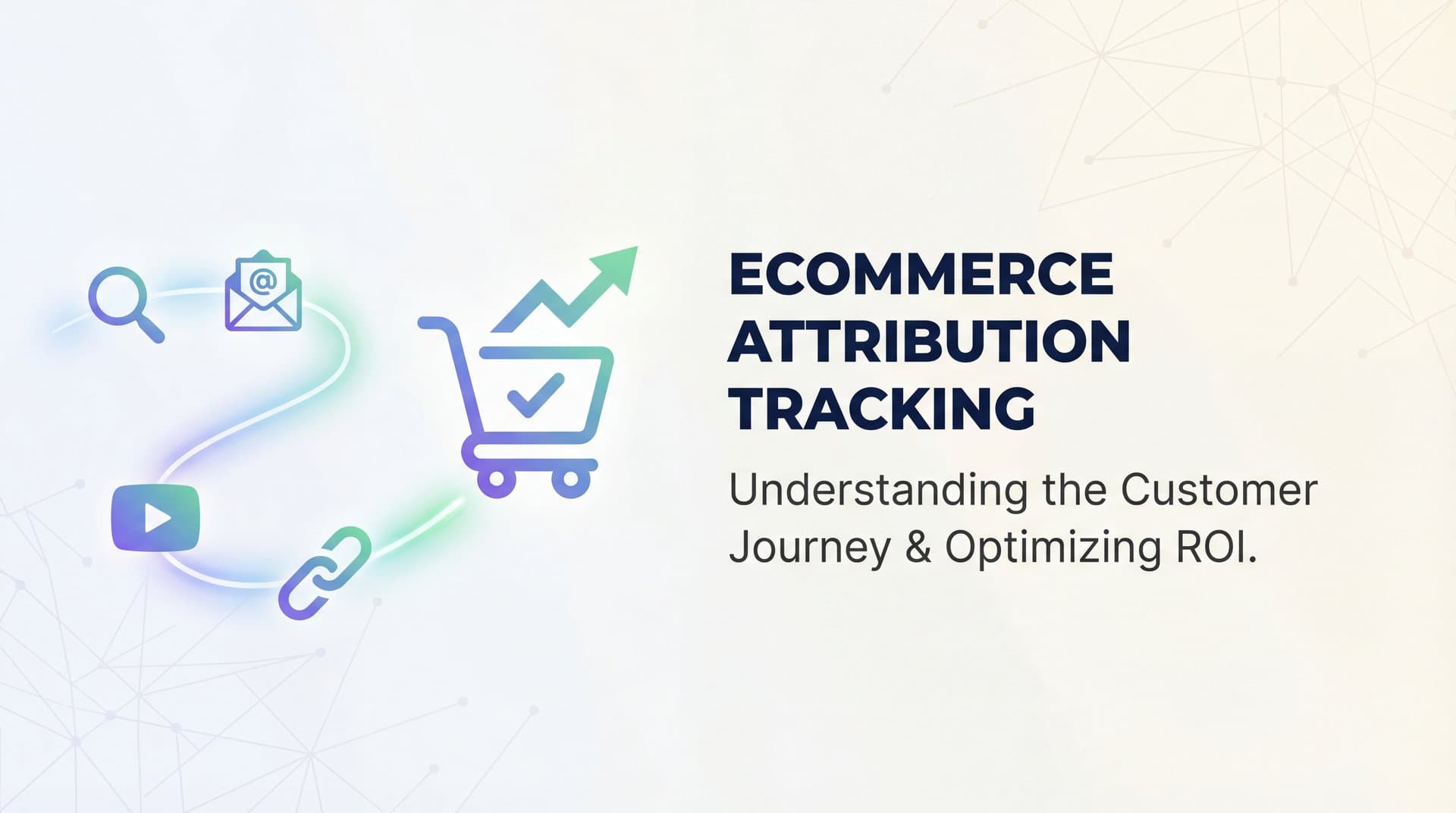
This is where ecommerce attribution tracking becomes your competitive advantage. It's the system that connects the dots between every marketing touchpoint and actual revenue, giving you clarity on what's truly driving sales versus what's just along for the ride. This guide will walk you through how attribution tracking works, why it matters more than ever, and how to implement it in a way that transforms your marketing from educated guessing into data-driven decision-making.
The Revenue Mystery: Why Ecommerce Marketers Struggle to Connect Ads to Sales
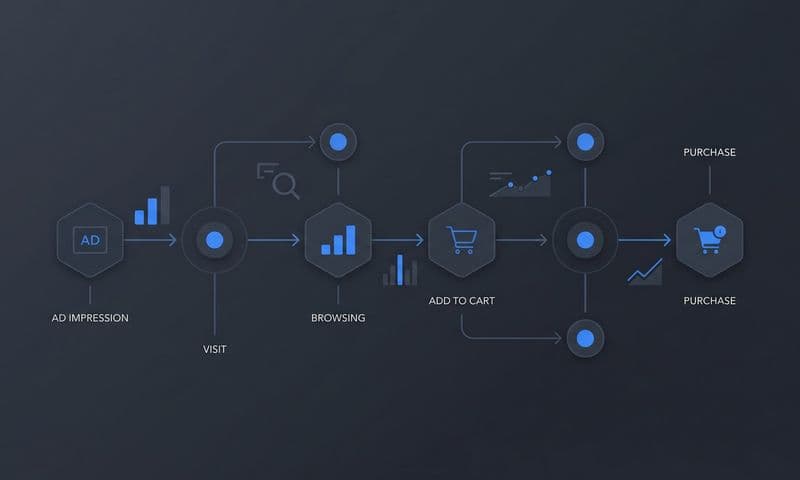
Let's start with a reality check: the modern ecommerce customer journey is messy. Gone are the days when someone saw an ad, clicked through, and immediately purchased. Today's shoppers interact with your brand across multiple platforms, devices, and sessions before they ever hand over their credit card.
Think about your own buying behavior. You might discover a product through an Instagram ad while scrolling on your phone during lunch. Later that evening, you search for reviews on Google using your laptop. A few days pass. You see a retargeting ad on Facebook. You click, browse, but don't buy. Then an email reminder hits your inbox offering free shipping. That's when you finally convert.
From the customer's perspective, this feels like a natural research and consideration process. From the marketer's perspective, it's a nightmare to track accurately.
Here's where things get complicated: each advertising platform reports conversions based on its own attribution window and methodology. Meta might claim that sale because someone clicked their ad within the past seven days. Google attributes it because the customer searched your brand name right before purchasing. Your email platform counts it as an email-driven conversion because they opened that free shipping campaign.
The result? You're seeing 150% to 200% more conversions reported across platforms than you actually had. Everyone's taking credit for the same sale. Understanding how to fix attribution discrepancies in data becomes essential for getting an accurate picture of performance.
This problem intensified dramatically when Apple introduced App Tracking Transparency with iOS 14.5. Suddenly, the majority of iPhone users opted out of tracking, creating massive blind spots in platform-reported data. Facebook ads that used to show clear attribution now report conversions as "unknown" or miss them entirely. Cookie deprecation continues to erode browser-based tracking accuracy across the board.
Add in the explosion of new advertising channels—TikTok, Pinterest, influencer partnerships, connected TV—and you're trying to piece together a puzzle where half the pieces are missing or duplicated. Without a unified view of the customer journey, you're making budget decisions based on incomplete, often conflicting information.
The stakes are high. Over-invest in a channel that's getting credit it doesn't deserve, and you're wasting budget that could fuel actual growth. Under-invest in channels that assist conversions without getting last-click credit, and you're starving the touchpoints that actually build your funnel.
How Ecommerce Attribution Tracking Actually Works
At its core, ecommerce attribution tracking is about building a complete map of every interaction a customer has with your brand, then connecting those interactions to final purchase events. It's the difference between knowing "we made 100 sales today" and knowing "these 100 sales came from these specific marketing touchpoints in these specific combinations."
The foundation starts with first-party data collection. This means capturing information directly from your customers and their interactions with your properties—your website, your checkout process, your email system. Unlike third-party cookies that track users across the web, first-party data comes from your own sources and is more reliable, privacy-compliant, and accurate.
Tracking pixels are one key component. These are small snippets of JavaScript code placed on your website that fire when specific events occur—page views, add-to-cart actions, purchases. When someone completes a purchase, the pixel captures that conversion event along with information about how they arrived at your site. Proper event tracking in Google Analytics ensures you're capturing these critical touchpoints accurately.
UTM parameters work alongside pixels to identify traffic sources. These are the tags you add to URLs in your campaigns (utm_source=facebook, utm_medium=cpc, utm_campaign=spring_sale). When someone clicks a tagged link, those parameters travel with them and get recorded, telling you exactly which campaign, ad set, and even which specific ad they came from.
But here's where it gets more sophisticated: server-side tracking. Traditional pixel-based tracking happens in the user's browser, which means it's vulnerable to ad blockers, browser privacy settings, and iOS tracking restrictions. Server-side tracking bypasses these limitations by sending conversion data directly from your server to advertising platforms and analytics tools.
When a purchase happens, your server—not the customer's browser—communicates that conversion event to Meta, Google, TikTok, and your attribution platform. This creates a more reliable, complete data stream that isn't affected by whether someone has an ad blocker installed or opted out of app tracking. Following a comprehensive server-side tracking implementation guide can dramatically improve your data accuracy.
The most complex piece is identity resolution—stitching together anonymous sessions into complete customer journeys. Someone might visit your site on their phone without logging in (anonymous session one), come back on their laptop and browse while logged in (now you know who they are), then complete the purchase on their phone again days later (back to a potentially different session).
Identity resolution uses various signals to connect these dots: email addresses when someone logs in or subscribes, device fingerprinting, cross-device matching, and behavioral patterns. The goal is to recognize that these seemingly separate sessions are actually the same person moving through your funnel. Effective customer attribution tracking depends on getting this identity resolution right.
When all these components work together—pixels capturing events, UTMs identifying sources, server-side tracking ensuring data reliability, and identity resolution connecting the journey—you get a comprehensive view of how customers actually find and buy from you. This complete picture is what makes accurate attribution possible.
Attribution Models Decoded: Choosing the Right Lens for Your Data
Once you're capturing complete customer journey data, you face a new question: how do you assign credit for a conversion when someone interacted with five different touchpoints before purchasing? This is where attribution models come in—they're the rules that determine how credit gets distributed across the customer journey.
Last-click attribution is the simplest model. It gives 100% of the credit to the final touchpoint before conversion. If someone clicked a Google Shopping ad and immediately purchased, that ad gets full credit. Last-click is straightforward and easy to understand, but it ignores everything that happened earlier in the journey. It's like giving the closer on a sales team all the credit while ignoring the lead generation and nurturing that made the close possible.
First-click attribution does the opposite—it credits the initial touchpoint that introduced the customer to your brand. If someone first discovered you through a Facebook ad three weeks ago, that ad gets 100% credit even if they converted through a different channel later. This model highlights your top-of-funnel awareness efforts but ignores the nurturing and conversion touchpoints that sealed the deal.
Both single-touch models have their place. If you run a simple funnel where most customers convert in a single session, last-click might accurately reflect reality. If you're primarily focused on measuring brand awareness and new customer acquisition, first-click can show which channels are best at introducing people to your brand. For a deeper dive, explore the nuances of single source attribution and multi-touch attribution models.
But most ecommerce businesses need something more nuanced. That's where multi-touch attribution models come in.
Linear attribution distributes credit equally across all touchpoints. If someone had five interactions before purchasing—Facebook ad, Google search, email open, retargeting ad, direct visit—each touchpoint gets 20% credit. This model acknowledges that multiple efforts contributed to the sale, though it assumes each touchpoint was equally influential, which often isn't true.
Time-decay attribution weights recent touchpoints more heavily than earlier ones. The logic is that interactions closer to the purchase decision had more influence on the final conversion. A retargeting ad someone clicked an hour before buying gets more credit than the initial awareness ad they saw two weeks ago. This model works well when you believe momentum builds as customers move through your funnel.
Position-based attribution (also called U-shaped) typically assigns 40% credit to the first touchpoint, 40% to the last touchpoint, and distributes the remaining 20% among the middle interactions. This model recognizes that both discovering your brand and the final conversion trigger are critical moments, while still acknowledging the nurturing that happened in between.
Then there's data-driven attribution, which uses machine learning to assign credit based on statistical analysis of your actual conversion patterns. Instead of following predetermined rules, the algorithm looks at thousands of customer journeys, identifies which touchpoint combinations correlate most strongly with conversions, and assigns credit accordingly. This approach adapts to your specific business and customer behavior.
Which model should you use? It depends on your sales cycle and business model. If you sell impulse-buy products with short consideration periods, last-click or time-decay might accurately reflect how customers make decisions. If you sell higher-ticket items with longer research phases, position-based or data-driven models will give you better insights into the full journey. Many businesses use multiple models simultaneously, and a thorough comparison of attribution models for marketers can help you determine the right approach.
Building Your Attribution Stack: Essential Components for Accurate Tracking
Understanding attribution models is one thing. Actually implementing accurate tracking is another. Your attribution stack—the combination of tools and integrations that capture and connect customer journey data—determines how reliable your insights will be.
Server-side tracking has become non-negotiable for accurate ecommerce attribution. As browser-based tracking faces increasing limitations from privacy features and ad blockers, server-side tracking ensures your conversion data actually reaches the platforms and tools that need it. When a purchase happens on your site, your server sends that conversion event directly to Meta's Conversions API, Google's server-side tagging, and your attribution platform.
This approach bypasses the browser entirely, which means it works regardless of whether someone has an ad blocker, has opted out of app tracking, or is using privacy-focused browsers. The data is more complete and more accurate because it's coming from your authoritative source—your actual transaction system—rather than relying on pixels that may or may not fire correctly.
Integration with your CRM and customer data platform is equally critical. Your attribution platform needs to connect with where your actual customer and revenue data lives. This integration enables you to track not just initial purchases but lifetime value, repeat purchase behavior, and customer cohorts over time.
When someone makes their first purchase, that conversion gets attributed to the marketing touchpoints that drove it. But if that customer returns six months later and makes another purchase, you want to track whether they came back through a different channel or converted directly. This complete view of customer behavior reveals which acquisition channels bring you the most valuable long-term customers, not just the most initial conversions. Platforms focused on marketing attribution and revenue tracking excel at connecting these data points.
Ad platform integration works in both directions. You're pulling campaign and ad performance data into your attribution platform to analyze it alongside conversion data. But you're also pushing verified conversion data back to the platforms through conversion sync functionality.
Here's why that matters: when Meta or Google's algorithm optimizes your campaigns, it's using conversion signals to learn who's likely to purchase. But if those signals are incomplete or inaccurate due to tracking limitations, the algorithm is optimizing based on flawed data. Conversion sync sends verified purchase events from your server back to the ad platforms, giving them accurate signals about who actually converted.
This creates a virtuous cycle. Better data helps the platforms' algorithms find more qualified customers. Those better-targeted campaigns drive more actual purchases. Those verified purchases feed back as training data, further improving optimization. You're not just measuring performance more accurately—you're actively improving it.
The technical implementation requires coordination between your ecommerce platform, your marketing tools, and your attribution solution. Most modern attribution platforms offer pre-built integrations with Shopify, WooCommerce, BigCommerce, and other major ecommerce systems, along with native connections to Meta, Google, TikTok, and other ad platforms. A proper attribution tracking setup typically involves installing tracking code, configuring server-side endpoints, and mapping your conversion events to platform-specific formats.
If you're evaluating vendors, our WooCommerce Instagram ad tool breakdown can help.
From Data to Decisions: Using Attribution Insights to Scale Profitably
Attribution tracking is only valuable if it changes how you make decisions. The real payoff comes when you use these insights to reallocate budget, refine creative, and scale the efforts that actually drive revenue.
Start with identifying true ROAS by channel. When you compare platform-reported ROAS to attribution-modeled ROAS, you often discover significant discrepancies. A channel that appears to deliver 4x ROAS based on its own reporting might actually be closer to 2.5x when you account for overlapping attribution and journey complexity. Conversely, a channel showing weak last-click performance might be contributing substantial assisted conversions that justify continued investment.
These insights drive budget reallocation. Many ecommerce brands discover they're over-investing in retargeting and branded search—channels that capture demand but don't necessarily create it—while under-investing in upper-funnel channels that introduce new customers but rarely get last-click credit. Understanding cross-channel attribution and marketing ROI helps you find the right balance between demand capture and demand generation.
Assist channel analysis reveals which touchpoints influence purchases without directly converting them. Email might show mediocre last-click performance but appear in 60% of converting customer journeys as an assist touchpoint. Cutting email budget based solely on last-click metrics would damage overall performance because you'd be removing a critical nurturing layer.
Similarly, you might discover that customers who interact with both Facebook ads and Google search convert at twice the rate of those who only interact with one channel. This insight suggests that your channels work synergistically—Facebook builds awareness, Google captures intent, and together they create a more effective funnel than either channel alone.
Creative and audience testing becomes more sophisticated with attribution data. Instead of just testing which ad generates the most immediate clicks or conversions, you can test which creative approaches influence the entire journey. An educational video ad might have a lower direct conversion rate than a promotional offer ad, but if it significantly increases the conversion rate of retargeting audiences, it's actually the more valuable creative.
You can segment attribution analysis by customer cohorts to understand which acquisition strategies bring the most valuable customers. New customers acquired through influencer partnerships might have a lower immediate ROAS than those from Google Shopping, but if they have 40% higher lifetime value and better retention, influencer partnerships deserve more investment despite weaker first-purchase metrics. Tracking the right ecommerce performance metrics ensures you're optimizing for long-term value.
The key is moving from reactive optimization to strategic planning. Instead of simply pausing ads that show weak last-click performance, you're analyzing the complete customer journey, understanding how different touchpoints work together, and making decisions that optimize for total business impact rather than individual channel metrics.
Your Path Forward: Implementing Attribution Tracking That Actually Works
Building effective ecommerce attribution tracking doesn't happen overnight, but you can approach it systematically to avoid overwhelm and see progressive improvements.
Start with foundational tracking infrastructure. Ensure you have proper UTM parameters on all your campaigns so you can identify traffic sources accurately. Implement tracking pixels across your site to capture key events—page views, add-to-cart actions, checkout initiation, and purchases. Clean up your existing tracking by auditing for duplicate pixels, outdated code, and gaps in event coverage.
Layer in server-side tracking as your next priority. This is where you'll see the biggest improvement in data accuracy and completeness. Work with your development team or ecommerce platform to implement server-side conversion tracking that sends verified purchase data to your ad platforms and attribution tools. This step requires more technical work but delivers substantial returns in data reliability.
Connect your CRM and customer data systems to your attribution platform. This integration enables you to track beyond first purchase into lifetime value and cohort analysis. You'll be able to answer not just "which channel drove this sale?" but "which channel acquires customers who stick around and buy repeatedly?"
Choose an attribution model that matches your business complexity. If you're just starting out, begin with last-click to establish a baseline, then graduate to multi-touch attribution models as you build confidence in your data quality. Many businesses find that comparing multiple models side-by-side—last-click, first-click, and a multi-touch model—provides the most complete understanding of channel performance.
Establish a regular review cadence. Attribution isn't a set-it-and-forget-it system. Customer behavior evolves, new channels emerge, and platform algorithms change. Review your attribution data weekly to identify trends and opportunities. Monthly, do deeper analysis of customer journey patterns and channel interactions. Quarterly, reassess your attribution model and tracking infrastructure to ensure they still serve your business needs.
Remember that attribution is directionally accurate, not perfectly precise. The goal isn't to achieve perfect attribution—that's impossible given the complexity of modern customer journeys and privacy limitations. The goal is to have substantially better visibility into what's working than you would with platform-reported data alone, enabling smarter decisions that compound over time.
Moving Forward with Confidence
Ecommerce attribution tracking transforms marketing from an exercise in hope and guesswork into a data-driven discipline where you can confidently answer the question: what's actually driving our sales?
The modern ecommerce landscape demands this level of visibility. With customers interacting across multiple channels, platforms over-reporting their own performance, and privacy changes eroding traditional tracking methods, marketers who rely on surface-level metrics are flying blind. Attribution tracking gives you the clarity to see which efforts deserve more investment and which are getting credit they don't deserve.
Yes, implementation requires effort. You'll need to upgrade your tracking infrastructure, integrate systems that previously operated in silos, and develop new analytical skills to interpret multi-touch customer journeys. But the alternative—making million-dollar budget decisions based on incomplete, conflicting data—is far riskier.
The businesses winning in ecommerce today aren't necessarily the ones with the biggest budgets. They're the ones with the clearest understanding of their customer journeys, the most accurate measurement of what's working, and the discipline to double down on proven winners while cutting efforts that look good on paper but don't drive real results.
Attribution tracking gives you that advantage. It reveals the hidden patterns in your customer data, the synergies between channels you didn't know existed, and the opportunities to scale profitably that others miss because they're looking at the wrong metrics.
Ready to elevate your marketing game with precision and confidence? Discover how Cometly's AI-driven recommendations can transform your ad strategy—Get your free demo today and start capturing every touchpoint to maximize your conversions.