

Facebook's native attribution has become increasingly unreliable since iOS 14.5 rolled out, leaving marketers guessing which ads actually drive revenue. The 7-day click attribution window, delayed reporting, and modeled conversions mean you're often making budget decisions based on incomplete data.
Whether you're scaling ad spend or trying to prove ROI to stakeholders, you need attribution that captures the full customer journey, not just what Facebook chooses to show you.
This guide covers seven proven alternatives to Facebook's built-in attribution, from server-side tracking solutions to multi-touch attribution platforms. Each approach addresses specific gaps in Facebook's reporting, so you can finally see which campaigns deserve more budget and which ones are burning cash.
1. Server-Side Tracking Platforms
The Challenge It Solves
Facebook's pixel relies on browser-based tracking, which means iOS privacy features and ad blockers can block conversion events before they ever reach Facebook. This creates massive blind spots in your data. When conversions don't fire, Facebook's algorithm can't optimize properly, and you're left wondering why your ROAS keeps dropping despite consistent ad spend.
Server-side tracking bypasses these browser limitations entirely by sending conversion data directly from your server to Facebook's Conversions API.
The Strategy Explained
Server-side tracking captures conversion events on your server before they reach the user's browser. When someone completes a purchase or fills out a form, your server sends that event data directly to Facebook through the Conversions API. This happens regardless of whether the user has an ad blocker enabled or has opted out of tracking through iOS privacy settings.
The result is significantly more accurate conversion data. You're no longer losing 30-40% of your conversions to tracking limitations. Facebook's algorithm receives better data, which improves targeting and optimization over time.
Server-side tracking also reduces the delay in reporting. Instead of waiting 72+ hours for modeled conversions, you get real-time data on what's actually converting.
Implementation Steps
1. Set up Facebook's Conversions API integration through your website platform or tag management system, ensuring your server can communicate directly with Facebook's servers.
2. Configure event matching parameters including email, phone number, and user agent data to help Facebook match server events with user profiles for better attribution.
3. Test your implementation using Facebook's Event Manager to verify that server events are firing correctly and matching with pixel events when both are present.
Pro Tips
Send both pixel and server events when possible. Facebook uses event deduplication to count each conversion only once, but having both sources creates redundancy. If the pixel fails, the server event still gets through. This dual approach gives you the most complete data while protecting against tracking failures.
2. Multi-Touch Attribution Software
The Challenge It Solves
Facebook's default attribution model uses last-click attribution, which means Facebook takes full credit for any conversion that happened after someone clicked a Facebook ad. This creates a distorted picture of your marketing mix. If someone discovered your brand through a podcast, researched you on Google, and then clicked a Facebook retargeting ad before buying, Facebook claims 100% of the credit.
This overcrediting leads to budget misallocation. You might be cutting budgets from awareness channels that are actually driving demand, while overfunding retargeting campaigns that are simply capturing existing intent.
The Strategy Explained
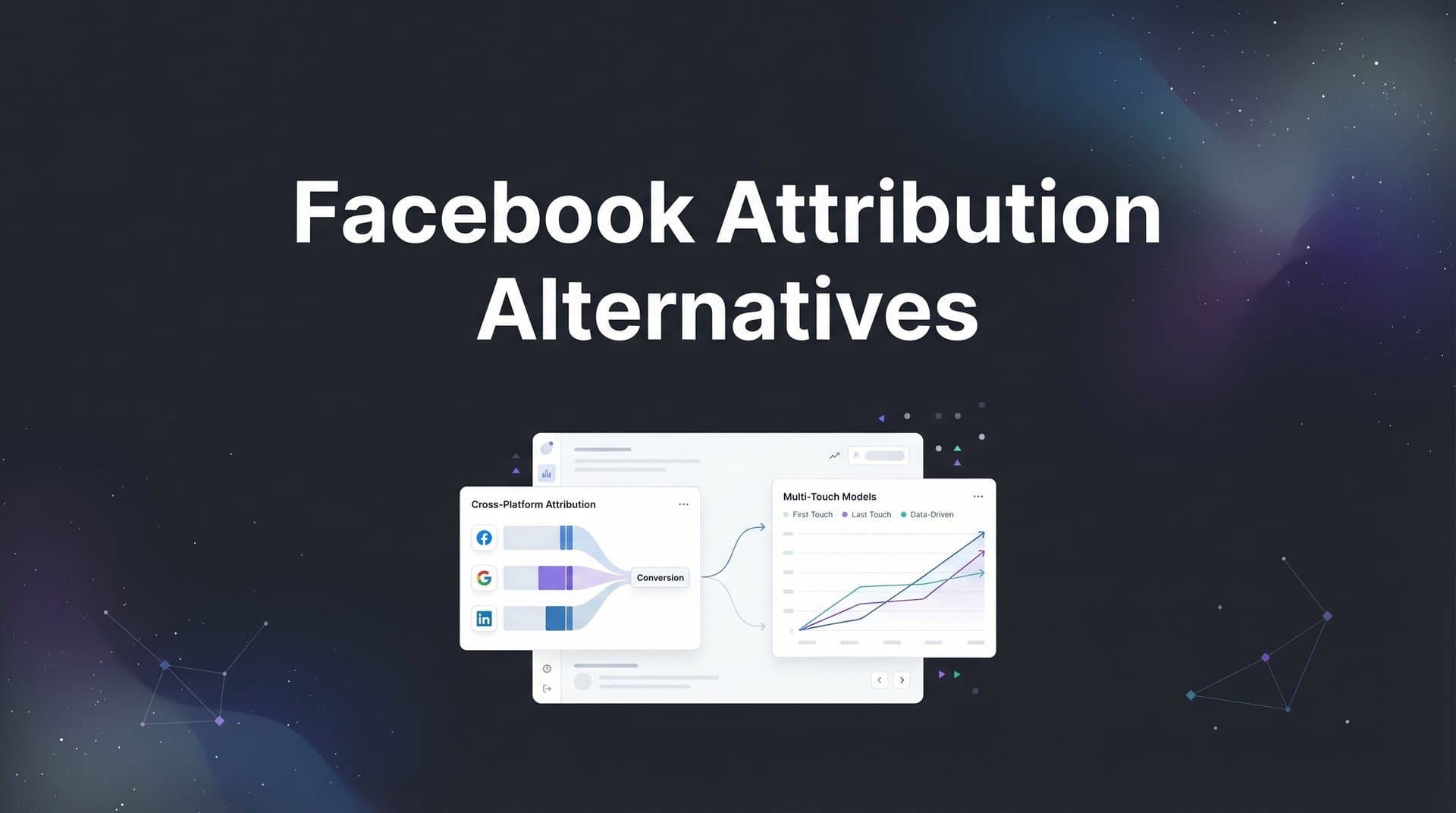
Facebook multi touch attribution tracks every touchpoint in the customer journey and assigns fractional credit to each interaction. Instead of giving Facebook all the credit, you see how Facebook ads work alongside email campaigns, organic search, paid search, and other channels to drive conversions.
Different attribution models distribute credit differently. Linear attribution splits credit evenly across all touchpoints. Time-decay gives more credit to recent interactions. Position-based models emphasize the first and last touchpoints. The key is choosing a model that reflects how your customers actually buy.
With multi-touch attribution, you can identify which Facebook campaigns are genuinely driving new demand versus which ones are just retargeting people who were already going to convert. This clarity helps you optimize your entire marketing mix, not just your Facebook campaigns in isolation.
Implementation Steps
1. Implement tracking across all marketing channels using consistent UTM parameters and conversion tracking so every touchpoint is captured in your attribution platform.
2. Choose an attribution model that aligns with your typical customer journey length and complexity, testing multiple models to see which provides the most actionable insights.
3. Compare multi-touch attribution results with Facebook's reported conversions to identify the gap between what Facebook claims and what actually happens across your full funnel.
Pro Tips
Start by analyzing your top-converting customer journeys to understand the typical path to purchase. Many marketers discover that their highest-value customers interact with 5-7 touchpoints before converting. Once you know your typical journey, you can set up attribution models that accurately reflect how Facebook contributes at different stages.
3. UTM Parameter Tracking with Analytics Platforms
The Challenge It Solves
Facebook's reporting often shows conversions that don't appear in your analytics platform, or vice versa. These discrepancies make it impossible to trust your data. When your CFO asks for proof that Facebook ads are working, you need a second source of truth beyond what Facebook reports.
Without independent verification, you're relying entirely on Facebook's self-reported metrics, which are increasingly modeled rather than directly measured. This creates accountability gaps when you're trying to justify ad spend.
The Strategy Explained
UTM parameter tracking creates an independent record of where your traffic comes from and which campaigns drive conversions. When you add consistent UTM tags to all your Facebook ad URLs, Google Analytics or your chosen analytics platform can track those visits and conversions separately from Facebook's pixel.
This gives you a second data source to validate Facebook's claims. If Facebook reports 100 conversions but your analytics platform only shows 60 conversions from Facebook traffic, you know there's a 40-conversion gap to investigate. Understanding the differences between Facebook attribution vs Google Analytics is essential for accurate reporting.
UTM tracking also helps you analyze post-click behavior that Facebook doesn't show you. You can see how long Facebook traffic stays on your site, which pages they visit, and whether they return through other channels before converting.
Implementation Steps
1. Create a standardized UTM naming convention for all Facebook campaigns using utm_source=facebook, utm_medium=paid_social, and campaign-specific utm_campaign values that match your Facebook campaign names.
2. Set up conversion tracking in Google Analytics or your analytics platform that mirrors the conversion events you're tracking in Facebook, ensuring you can compare apples to apples.
3. Build custom reports that compare Facebook-attributed conversions with analytics-tracked conversions from Facebook traffic, investigating any significant discrepancies to understand data gaps.
Pro Tips
Use dynamic UTM parameters in your Facebook ads whenever possible. Facebook's URL parameters feature lets you automatically append campaign ID, ad set ID, and ad ID to your URLs. This granular tracking helps you identify which specific ads are driving conversions in your analytics platform, giving you campaign-level validation of Facebook's reporting.
4. CRM-Based Attribution
The Challenge It Solves
Facebook can tell you when someone submitted a lead form, but it can't tell you whether that lead actually became a customer or generated revenue. This disconnect between marketing metrics and sales outcomes makes it nearly impossible to calculate true ROI from Facebook advertising.
For businesses with longer sales cycles or high-touch sales processes, the Facebook ads attribution window limitations miss most of the actual revenue. A lead might click your ad today but not close for 30, 60, or 90 days. Facebook gets no credit, even though the ad initiated the relationship.
The Strategy Explained
CRM-based attribution connects your Facebook ad data directly to your customer relationship management system, tracking leads from initial ad click through the entire sales pipeline to closed revenue. This approach tags each lead with the Facebook campaign, ad set, and ad that generated it, then follows that lead through qualification, opportunity, and closed-won stages.
You can measure metrics that actually matter to your business, like cost per qualified lead, cost per opportunity, and cost per closed customer. Instead of optimizing for form fills that might never convert, you optimize for the ad creative and targeting that generates real customers.
CRM attribution also reveals the quality differences between Facebook campaigns. You might discover that one campaign generates cheaper leads but a lower close rate, while another campaign costs more upfront but produces leads that convert at 3x the rate.
Implementation Steps
1. Implement Facebook's offline conversions feature or use a CRM integration tool to pass Facebook click IDs and campaign data into your CRM when leads are created.
2. Create custom fields in your CRM to store Facebook attribution data including campaign name, ad set name, ad name, and the timestamp of the original ad click.
3. Build pipeline reports that calculate cost per stage for Facebook-sourced leads, comparing Facebook's performance against other lead sources at every stage of your sales funnel.
Pro Tips
Set up automated reports that show Facebook ad performance based on closed revenue, not just leads generated. Share these reports with your sales team to get their feedback on lead quality. Sales reps often notice patterns in which Facebook campaigns produce the most qualified prospects, insights that can dramatically improve your targeting and creative strategy.
5. Incrementality Testing
The Challenge It Solves
Attribution models can only tell you which touchpoints were present before a conversion. They can't tell you whether those touchpoints actually caused the conversion or whether the person would have converted anyway. This is the fundamental limitation of all attribution approaches.
You might be spending heavily on Facebook retargeting ads that are reaching people who were already going to buy. The ads get credit in your attribution model, but they're not actually incremental—they're just expensive victory laps.
The Strategy Explained
Incrementality testing uses controlled experiments to measure the true lift from your Facebook advertising. You create a holdout group that doesn't see your ads and compare their conversion rate to a test group that does see your ads. The difference between these groups represents the incremental impact of your advertising.
This approach answers the critical question: what would happen if you stopped running these ads? If your holdout group converts at 2% and your test group converts at 3%, your ads are driving a 50% lift. That's real, measurable impact beyond what attribution models can show.
Incrementality testing is particularly valuable for retargeting campaigns and brand awareness campaigns where Facebook attribution challenges make it difficult to assign accurate credit. You can test different audience segments, creative approaches, and budget levels to find the optimal strategy.
Implementation Steps
1. Set up a conversion lift study through Facebook's Experiments tool or create your own holdout test by excluding a randomized segment of your target audience from seeing your ads.
2. Run the test for at least two full purchase cycles to ensure you're capturing the complete impact, avoiding tests that are too short to show meaningful results.
3. Calculate incremental cost per conversion by dividing your total ad spend by the number of incremental conversions (test group conversions minus holdout group conversions).
Pro Tips
Run incrementality tests on your highest-spending campaigns first. Many marketers discover that their retargeting campaigns have lower incrementality than prospecting campaigns because they're reaching people with high purchase intent regardless of ads. Use these insights to reallocate budget toward campaigns with proven incremental impact.
6. Marketing Mix Modeling
The Challenge It Solves
Digital attribution only tracks online touchpoints, but many businesses have significant offline marketing investments including TV, radio, direct mail, and retail presence. Facebook attribution can't account for how these channels interact with your digital advertising to drive overall demand.
For a deeper dive into this space, see our AI advertising agent guide.
Marketing mix modeling addresses this gap by using statistical analysis to measure the contribution of all marketing channels, including those that can't be tracked with pixels or UTM parameters. This holistic view helps you understand Facebook's true role in your complete marketing ecosystem.
The Strategy Explained
Marketing mix modeling analyzes historical data to identify correlations between marketing spend across all channels and business outcomes like revenue, store visits, or brand awareness. Instead of tracking individual customer journeys, it looks at aggregate patterns to determine how much each channel contributes to overall performance.
The model accounts for external factors like seasonality, competitor activity, and economic conditions that influence your results independent of marketing. This helps you isolate the true impact of your Facebook advertising from natural fluctuations in demand.
You can use marketing mix modeling to simulate different budget scenarios. What happens if you shift 20% of your Facebook budget to connected TV? What if you increase Facebook spend by 50% while holding other channels constant? The model predicts outcomes based on historical relationships between spend and results. For comprehensive guidance, explore our digital marketing attribution measurement complete guide.
For a deeper dive, see our guide to marketing attribution models complete guide.
Implementation Steps
1. Collect at least 18-24 months of historical data on marketing spend by channel, revenue or conversions, and relevant external factors like seasonality or major promotional periods.
2. Work with a marketing mix modeling platform or data science team to build a statistical model that identifies the relationship between each marketing channel and your business outcomes.
3. Use the model to optimize your budget allocation across channels, testing the model's recommendations in small increments to validate accuracy before making major shifts.
Pro Tips
Marketing mix modeling works best when combined with digital attribution. Use attribution for tactical optimization of your Facebook campaigns, and use marketing mix modeling for strategic decisions about overall budget allocation. The two approaches complement each other by operating at different levels of granularity.
7. Unified Attribution Platforms
The Challenge It Solves
Managing multiple attribution solutions creates data silos and conflicting reports. Your server-side tracking shows one set of numbers, your multi-touch attribution platform shows another, and your CRM shows a third. Reconciling these sources becomes a full-time job, and you still don't have a single source of truth.
Unified attribution platforms solve this by combining server-side tracking, multi-touch attribution, and conversion sync in a single system. You get complete visibility into the customer journey without juggling multiple tools or trying to merge incompatible data sets.
The Strategy Explained
Unified attribution platforms capture every touchpoint from first click to final purchase, using server-side tracking to ensure data accuracy and multi-touch attribution to understand the full customer journey. They connect to your ad platforms, CRM, and analytics tools to create a complete picture of marketing performance.
These platforms also sync conversion data back to Facebook through the Conversions API, feeding better data to Facebook's algorithm. When Facebook's AI knows which conversions actually happened, it can optimize more effectively for the outcomes you care about. Selecting the best attribution tool for Facebook ads is critical for maximizing your advertising ROI.
The real power comes from AI-driven recommendations that analyze your complete data set to identify optimization opportunities. You get specific guidance on which campaigns to scale, which audiences are underperforming, and where to reallocate budget for maximum impact.
Implementation Steps
1. Connect all your marketing platforms, CRM, and conversion sources to the unified attribution platform so it can track the complete customer journey across every channel.
2. Configure your attribution model preferences and conversion sync settings to ensure the platform is optimizing for your specific business goals and feeding the right data back to ad platforms.
3. Review AI-generated recommendations regularly and test suggested optimizations in controlled experiments to validate the platform's insights before making major budget changes.
Pro Tips
Start with a platform that offers both tracking accuracy and actionable optimization. The goal isn't just to see better data, it's to make better decisions. Look for platforms that combine accurate attribution with clear recommendations on what to do with that information. The best attribution platform is the one that actually improves your ROAS, not just your reporting.
Putting It All Together
Choosing the right Facebook attribution alternative depends on your business model, budget, and technical resources. Start with server-side tracking if you need quick wins on data accuracy. Add multi-touch attribution when you're ready to understand the full customer journey.
For brands scaling aggressively, a unified attribution platform that combines tracking, analytics, and conversion sync will give you the clearest picture of what's actually driving revenue.
The goal is simple: stop making budget decisions based on Facebook's incomplete data and start optimizing based on real conversions. Every approach in this guide addresses specific gaps in Facebook's native attribution. The right combination depends on your specific tracking challenges and growth stage.
If you're running multiple channels and need to understand how Facebook contributes to the broader marketing mix, multi-touch attribution or marketing mix modeling becomes essential. If you have a long sales cycle and need to track leads through to revenue, CRM-based attribution is non-negotiable.
Ready to elevate your marketing game with precision and confidence? Discover how Cometly's AI-driven recommendations can transform your ad strategy. Get your free demo today and start capturing every touchpoint to maximize your conversions.


