Picture this: you close a $20,000 deal after a six-week sales cycle. Your team is celebrating. But somewhere in your ad platform dashboard, that conversion is being credited to the last retargeting ad the prospect clicked, completely ignoring the YouTube ad that first introduced them to your brand, the webinar they attended, and the three email sequences that kept them engaged. You might cut the YouTube budget next month, thinking it's not performing. And just like that, your most powerful acquisition channel goes dark.
This is the defining problem of high ticket attribution tracking. When individual deals are worth thousands or tens of thousands of dollars, attribution errors are not minor data discrepancies. They are expensive strategic mistakes that compound over time, quietly redirecting budget away from what works and toward what merely looks like it works.
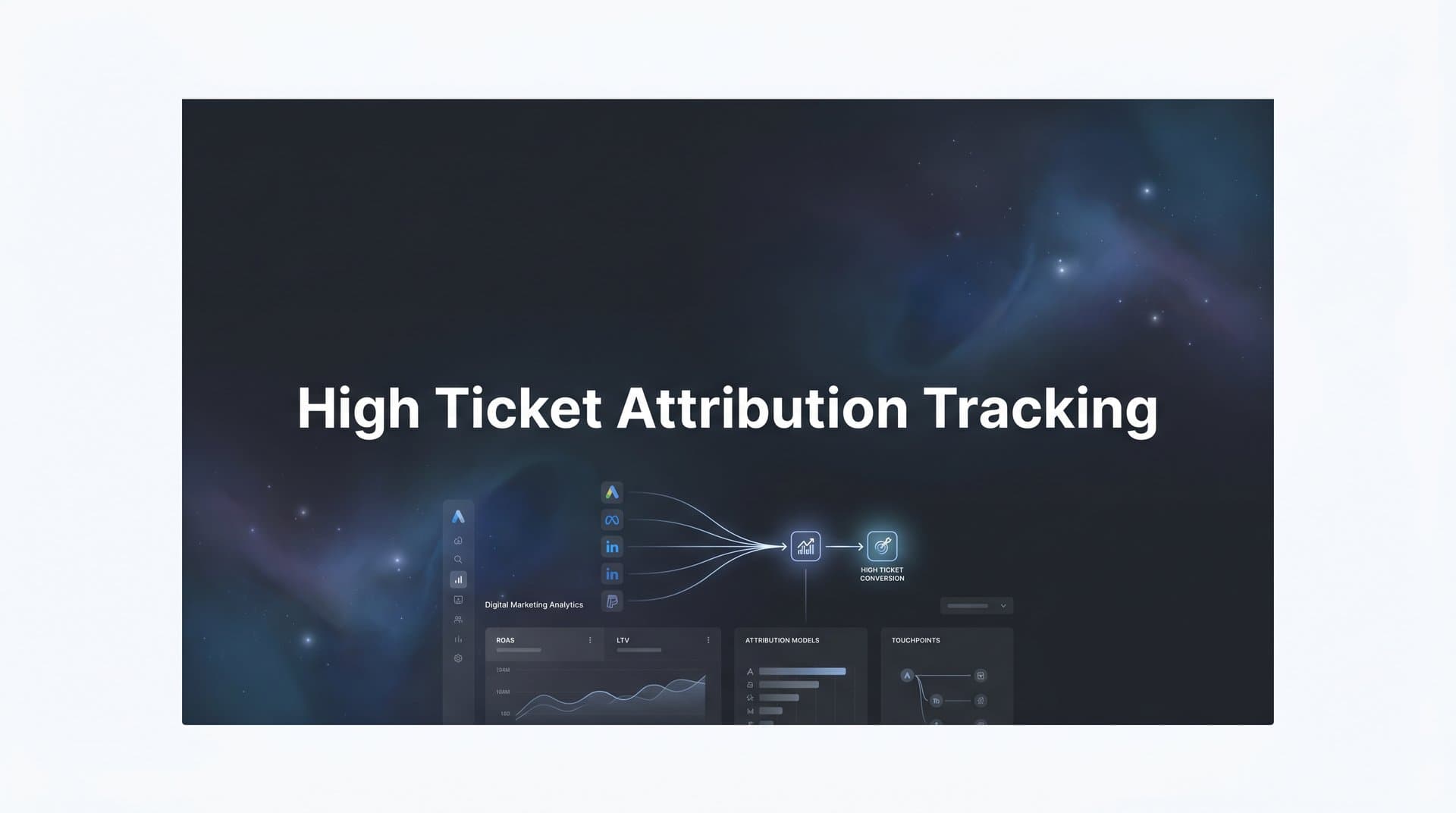
High ticket attribution tracking is the practice of mapping every interaction across a long, complex buyer journey so you can connect each touchpoint to premium revenue outcomes. It goes beyond what standard analytics tools provide out of the box, because high ticket funnels are fundamentally different: longer cycles, more decision-makers, more channels, and much higher financial stakes at every step.
In this article, you will learn why traditional tracking breaks down for premium offers, what a realistic high ticket buyer journey actually looks like, which attribution models suit long sales cycles, the technical infrastructure you need, and how to turn attribution data into confident scaling decisions. Let's get into it.
Why Standard Tracking Falls Apart for Premium Offers
Most tracking setups were designed with e-commerce in mind: someone clicks an ad, lands on a product page, adds to cart, and buys within 24 hours. The journey is short, the data is clean, and last-click attribution works reasonably well. High ticket funnels operate in an entirely different universe.
A premium buyer might first encounter your brand through a paid search ad, then watch a YouTube video, read two blog posts, register for a webinar, receive a nurture email sequence, hop on a discovery call, and finally sign a contract six weeks later. That is not one touchpoint. That is a dozen or more, spread across multiple devices, sessions, and channels. A single-touch model, whether first-click or last-click, captures one data point from that entire journey and pretends the rest did not happen.
The platform-level tracking problem makes this worse. Meta, Google, and other ad platforms each report conversions based on their own attribution windows and logic. Meta might claim credit for a conversion because the prospect saw a Facebook ad at some point in the past seven days. Google might claim the same conversion. Your actual closed deal gets counted twice, or more, across your dashboards, creating inflated numbers that make it nearly impossible to understand true channel performance. This is exactly why cross-platform attribution tracking has become essential for serious marketers.
Platform pixels also have an increasingly short shelf life. Browser-based tracking is disrupted by ad blockers, cookie restrictions, and Apple's App Tracking Transparency framework, which limits the ability to track user behavior across apps and websites on iOS devices. For a high ticket business running significant ad budgets, these gaps in data are not acceptable. Missing even a handful of conversion signals when each deal is worth $10,000 or more means your optimization decisions are built on incomplete information.
The financial amplification factor is what makes this so critical. If you misattribute a $50 product sale, the downstream budget decision might cost you a few hundred dollars. If you misattribute a $15,000 deal, the downstream budget decision could mean scaling the wrong channel with tens of thousands of dollars in monthly ad spend. Understanding conversion tracking for high ticket offers is not optional at this level — the margin for error shrinks dramatically as deal value rises.
Many high ticket marketers operate for months without realizing their attribution setup is actively misleading them. The numbers look plausible enough, leads are coming in, and some deals are closing. But without accurate multi-touch data, there is no reliable way to know which investments are actually responsible for those closed deals.
The Anatomy of a High Ticket Buyer Journey
To understand why high ticket attribution tracking is so complex, it helps to walk through what a realistic premium buyer journey actually looks like. Not the idealized version, but the messy, multi-week reality that most high ticket businesses experience.
Week one: a prospect searches for a solution to a specific business problem and clicks a paid search ad. They land on your website, read a case study, and leave without converting. A retargeting pixel fires, but they are on a work laptop with an ad blocker. The retargeting campaign never reaches them.
Week two: they see a LinkedIn post from your company, click through to a blog article, and this time subscribe to your email list. They are now on a different device, their personal laptop at home. The session is not connected to their original ad click.
Week three: they receive an email about an upcoming webinar, register, and attend. During the webinar, they submit a question that signals high purchase intent. Your sales team follows up the next day.
Week four through six: two discovery calls happen. The prospect brings in a second decision-maker. A proposal is sent. The deal closes in your CRM as a $22,000 contract.
Now ask yourself: which touchpoint gets credit? In a standard last-click setup, the answer is probably the webinar registration confirmation page or the final email click. In reality, the paid search ad, the LinkedIn content, the email nurture sequence, and the sales calls all played meaningful roles.
The tracking breaks at several critical points in this journey. The cross-device gap between the work laptop and personal laptop means the two sessions are never stitched together without proper identity resolution. Solving this requires dedicated cross-device attribution tracking capabilities that go beyond what standard analytics provides. The offline sales calls are completely invisible to ad platforms unless you explicitly pass that data back. And the CRM deal closure, the actual revenue event, exists in a completely separate system from your marketing analytics unless you integrate them.
This is the core challenge: front-end marketing data (ad clicks, page views, email opens) lives in one set of tools, and back-end revenue data (deal stages, closed-won amounts, customer lifetime value) lives in another. Without a system that connects both, you are making attribution decisions based on half the picture. You might know which channels drive leads, but you have no reliable way to know which channels drive revenue.
Connecting these two worlds is not just a nice-to-have for high ticket businesses. It is the foundation of any attribution setup that is actually worth acting on.
Attribution Models That Actually Work for Big Deals
Once you have the data infrastructure in place to capture the full buyer journey, you need to decide how to distribute credit across all those touchpoints. This is where attribution modeling comes in, and the right choice depends on the nature of your sales cycle and what decisions you are trying to make.
Linear attribution distributes credit equally across every touchpoint in the journey. If there were eight interactions before a deal closed, each one receives 12.5% of the credit. This model is useful for understanding overall channel contribution without over-indexing on any single interaction. For high ticket funnels where every touchpoint matters, linear attribution provides a balanced baseline view.
Time-decay attribution gives more credit to touchpoints that occurred closer to the conversion event. The logic is that the interactions that happened right before a deal closed were more influential in the final decision. This model can be useful when your sales team plays a heavy role in the closing stage, but it risks undervaluing the early-stage awareness channels that brought the prospect into your funnel in the first place.
Position-based attribution (sometimes called U-shaped) assigns the largest share of credit to the first touchpoint and the last touchpoint, with the remaining credit distributed across the middle interactions. This acknowledges that the initial awareness moment and the final conversion trigger are both critically important, which often aligns well with how high ticket sales funnels actually work.
Data-driven attribution uses machine learning to assign credit based on patterns in your actual conversion data, identifying which touchpoint combinations correlate most strongly with closed deals. This is the most sophisticated option, but it requires a meaningful volume of conversion data to produce reliable results.
First-touch and last-touch models deserve a specific warning for high ticket contexts. First-touch attribution gives all credit to the channel that generated the initial awareness, which can make your top-of-funnel paid ads look like revenue drivers even when they are consistently failing to attract prospects who ever close. Last-touch attribution has the opposite problem: it rewards the final interaction, often a direct visit or a branded search, while ignoring the upstream channels that built the relationship over weeks.
Here's where it gets interesting: the most valuable practice is not picking one model and locking in. It is the ability to toggle between models and observe how credit shifts. When you can see that a particular channel looks strong under first-touch but weak under time-decay, that tells you something meaningful about its role in your funnel. Reviewing attribution tracking best practices can help you develop this multi-model comparison habit effectively.
Technical Building Blocks: Server-Side Tracking and CRM Integration
Understanding attribution models is valuable, but none of it matters if your underlying data is incomplete. For high ticket businesses, getting the technical foundation right is non-negotiable. Two components are especially critical: server-side tracking and CRM integration.
Client-side tracking, the traditional approach of placing JavaScript pixels on your website pages, has become increasingly unreliable. Ad blockers prevent pixels from firing. Browser privacy settings limit cookie lifespans. iOS restrictions reduce the ability to track user behavior across sessions. Each of these gaps means conversion events go unrecorded, and for high ticket funnels where every closed deal represents significant revenue, missing even a few conversions can skew your attribution data enough to produce bad decisions.
Server-side tracking solves this by moving the data collection process off the browser and onto your server. Instead of relying on a pixel in the user's browser to fire and report back, your server directly sends conversion event data to your analytics platform and ad networks. Because this happens at the infrastructure level rather than the browser level, it bypasses ad blockers, cookie restrictions, and device-level privacy settings. The result is more complete, more accurate conversion data that reflects what is actually happening in your funnel.
CRM integration is the second essential building block. For most high ticket businesses, the true conversion event does not happen on a website. It happens in a CRM when a deal moves to closed-won. Without connecting your CRM to your marketing attribution system, you are limited to optimizing for leads, form fills, or demo requests, which are proxies for revenue rather than revenue itself. Building a robust accurate revenue attribution tracking system requires this CRM connection as its backbone.
When your CRM and your attribution platform are connected, you can trace a closed deal back through every marketing touchpoint that contributed to it. You can see that the $22,000 deal that closed last Tuesday originated from a specific paid search campaign, was nurtured through a specific email sequence, and attended a specific webinar. That level of visibility transforms how you think about campaign performance.
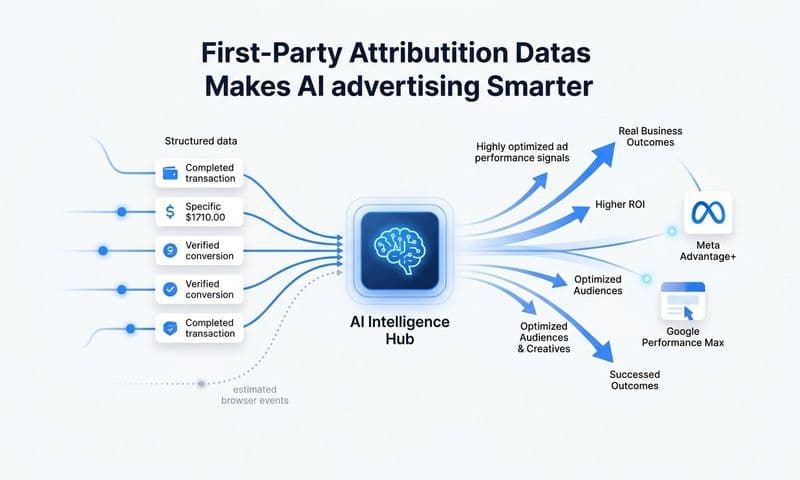
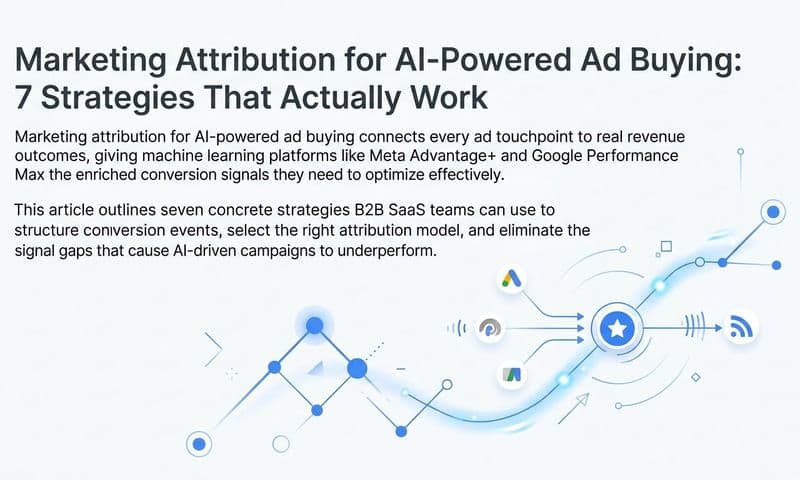
Conversion sync takes this one step further. Once you know which ad clicks and campaigns are producing closed deals, you can send that enriched conversion data back to ad platforms like Meta and Google through their conversion APIs. This feeds the ad platform algorithms with high-quality signals about what a real buyer looks like, enabling them to optimize their targeting toward similar prospects. Instead of Meta optimizing for anyone who fills out a lead form, it begins optimizing for the profile of people who actually close high ticket deals. Over time, this creates a compounding improvement in attribution tracking for multiple campaigns that is only possible when your attribution data is accurate and complete.
Turning Attribution Data Into Scaling Decisions
Accurate high ticket attribution data is only valuable if you act on it. The whole point of knowing which channels and campaigns drive premium revenue is to make smarter decisions about where to invest and where to pull back.
The most immediate application is budget reallocation. Without reliable attribution, many high ticket marketers spread spend relatively evenly across channels or follow platform-reported ROAS numbers that are inflated by double-counting. With accurate multi-touch attribution connected to real revenue outcomes, you can see which channels are genuinely contributing to closed deals and shift budget accordingly. Leveraging the right revenue attribution tracking tools makes this process far more reliable than relying on native platform dashboards.
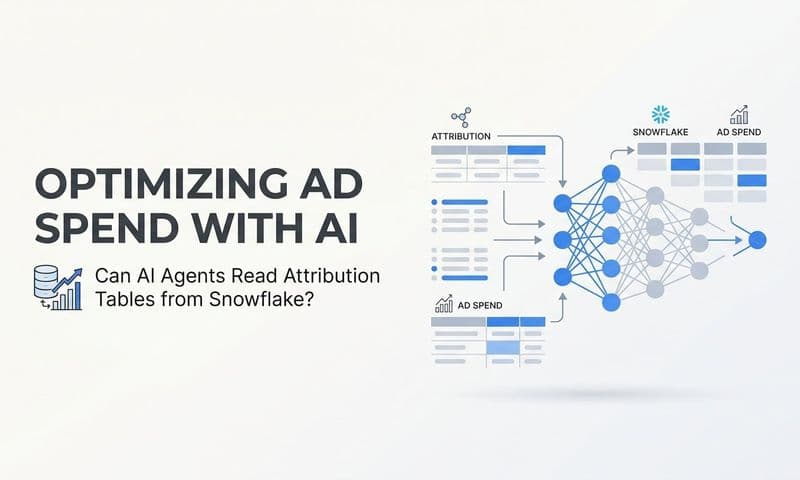
AI-powered analysis adds another layer of value here. When your attribution data is clean and connected to actual deal values, AI can surface patterns that are difficult to identify manually. For example, you might discover that prospects who engage with a specific video ad early in the journey tend to have shorter sales cycles. Or that a particular combination of content touchpoints correlates with higher average deal values. These are the kinds of insights that change how you structure campaigns, not just which ones you fund.
The feedback loop between attribution data and ad platform algorithms is perhaps the most powerful long-term benefit. Every time you send enriched, revenue-connected conversion data back to Meta, Google, or other platforms, their algorithms learn more about what a high-value buyer looks like for your business. Understanding channel attribution in digital marketing at this level means the targeting improves, the cost per qualified lead decreases, and the quality of prospects entering your funnel increases. Each closed deal makes the next campaign smarter, creating a compounding effect that builds momentum over time.
This is why high ticket attribution tracking is not just a measurement exercise. It is a growth strategy. The marketers who invest in getting attribution right are not just reporting more accurately; they are building a data asset that continuously improves the performance of every campaign they run.
Your High Ticket Attribution Roadmap
Pulling all of this together into a practical action plan comes down to five key steps, each building on the last.
1. Map your buyer journey in detail. Before you can track touchpoints accurately, you need to know what they are. Document every interaction a typical high ticket prospect has from first awareness to closed deal, including ads, content, emails, webinars, and sales calls.
2. Implement server-side tracking. Replace or supplement your client-side pixels with server-side event tracking to ensure conversion data is captured accurately regardless of browser settings, ad blockers, or device restrictions.
3. Connect your CRM to your attribution platform. Make sure deal closures and revenue amounts flow from your CRM into your attribution system so you are optimizing for actual revenue, not just lead volume.
4. Choose and compare attribution models. Start with a multi-touch model that fits your sales cycle, then build the habit of comparing multiple models to understand how credit shifts across channels. Use that perspective to inform budget decisions.
5. Feed enriched data back to ad platforms. Use conversion sync to send high-quality, revenue-connected events back to Meta, Google, and other platforms so their algorithms optimize toward real buyers.
It is worth emphasizing that high ticket attribution tracking is not a one-time setup. As your campaigns evolve, new channels emerge, and your sales process changes, your attribution data needs to evolve with it. The most effective marketers treat attribution as an ongoing practice of refining data quality and acting on new insights, not a box to check and forget.
The good news is that once the foundation is in place, the system gets smarter over time. Better data produces better decisions, better decisions produce better results, and better results generate more data to learn from. That compounding cycle is what separates high ticket marketers who scale predictably from those who are perpetually guessing.
Cometly is built to make this entire system work together. It connects your ad platforms, CRM, and website to track the complete high ticket customer journey in real time, giving you accurate multi-touch attribution, AI-powered recommendations, and conversion sync to feed better data back to your ad platforms. If you are ready to stop guessing and start scaling with confidence, Get your free demo and see exactly which touchpoints are driving your most valuable deals.