You've just launched what feels like a winning Facebook campaign. The creative is sharp, the offer is compelling, and your targeting seems spot-on. Then you check back a few hours later and see that dreaded yellow dot: "Learning." Days pass. Your cost per result swings wildly—$12 one day, $47 the next. Your budget bleeds while Meta's algorithm fumbles around trying to figure out who actually wants what you're selling.
Sound familiar?
The Facebook Ads learning phase is simultaneously one of the platform's most powerful features and its most frustrating obstacle. During this period, Meta's delivery system is essentially learning on the job—testing different users, placements, and delivery times to figure out the optimal way to spend your budget. The algorithm needs about 50 conversion events within seven days to gather enough signal to stabilize performance and exit learning.
But here's what most advertisers miss: you're not a passive bystander in this process.
The speed and success of your learning phase depends almost entirely on decisions you make before and immediately after launch. Underfunded campaigns, fragmented audience structures, conversion events with insufficient volume, and impatient mid-flight edits can all sabotage the learning process—leaving you stuck in "Learning Limited" status with inconsistent results and wasted spend.
The good news? When you understand how Meta's learning phase actually works, you can structure your campaigns to move through it faster, gather stronger signals, and reach stable performance in days instead of weeks. This guide breaks down seven specific steps that address the most common learning phase bottlenecks, giving you a clear playbook to launch campaigns that optimize quickly and scale confidently.
Step 1: Calculate and Set Your Budget to Generate 50 Weekly Conversions
The single biggest reason campaigns get stuck in "Learning Limited" status isn't creative quality or audience selection—it's math. Specifically, budget math that doesn't align with Meta's 50-conversion requirement.
Here's the calculation that matters: Take your average cost per conversion and multiply it by 50. That's your minimum weekly budget. Divide that number by seven to get your daily budget floor. If your typical cost per purchase is $40, you need at least $2,000 per week ($286 daily) for that ad set to realistically exit learning.
Many advertisers set budgets based on what feels comfortable or what they can afford, not on what the algorithm actually needs to learn. A $50 daily budget might sound reasonable, but if your conversions cost $40 each, you're only generating about nine conversions per week—nowhere near the 50 Meta needs. The algorithm can't optimize effectively with that little signal, so your ad set languishes in "Learning Limited" with erratic performance.
Start by reviewing your historical campaign data. Look at your cost per conversion over the past 30 days across similar campaigns. If you're launching something entirely new, use industry benchmarks as a starting point, but build in a buffer—learning phase CPAs are typically 20-40% higher than optimized performance.
Once you've calculated your minimum budget, here's the critical decision point: if you can't afford to fund an ad set at that level, you need to change your optimization event (more on that in Step 2) or consolidate your structure (Step 3). Launching underfunded ad sets doesn't save money—it wastes it on campaigns that never stabilize. Understanding learning phase completion requirements is essential before you allocate any budget.
Your success indicator here is straightforward: After launching, check the "Estimated Daily Results" range in Ads Manager. If the projected conversion volume aligns with 50+ weekly events, your budget is in the right range. If Meta's projection shows only 10-20 conversions per week, you're underfunded—pause and restructure before burning more budget.
Step 2: Select a Conversion Event Your Traffic Volume Can Actually Support
Not all conversion events are created equal when it comes to learning phase success. The harsh reality is that optimizing for your ideal business outcome—like purchases or qualified leads—only works if you generate enough of those events for Meta to learn from.
Think of it this way: if you're getting 200 landing page views per week but only 8 purchases, optimizing for purchases means Meta's algorithm is trying to find patterns in a tiny dataset. It's like asking someone to predict weather patterns after watching only eight days. The algorithm needs volume to identify which users are most likely to convert.
This is where strategic compromise comes in. If your purchase volume is too low to support learning, consider optimizing for a higher-funnel event that happens more frequently—Add to Cart, Initiate Checkout, or even Landing Page View. Yes, these events are less valuable than purchases, but a campaign that exits learning and stabilizes on Add to Cart will outperform a campaign perpetually stuck in "Learning Limited" on Purchase.
The key is matching your optimization event to your actual traffic reality. Pull your pixel data from the past 30 days and count weekly events for each potential optimization point. If you're seeing 50+ weekly Add to Cart events but only 12 purchases, Add to Cart is your better learning phase target—at least initially. Proper conversion data syncing to Facebook Ads ensures you're capturing every event accurately.
Here's the nuance: this doesn't have to be permanent. Many successful advertisers use a two-phase approach. Launch with a higher-funnel optimization event to exit learning quickly and build stable delivery. Once the campaign is spending consistently with predictable results, duplicate it and shift the optimization to your preferred conversion event. The new campaign inherits some algorithmic understanding from the original, often learning faster the second time around.
Your success indicator: Look at your Events Manager data. Your chosen optimization event should show at least 50 occurrences per week consistently over the past month. If the volume is borderline, choose the event one step higher in the funnel to give yourself margin.
Step 3: Consolidate Ad Sets to Pool Your Conversion Data
Here's a mistake that feels strategic but kills learning phase performance: splitting your budget across multiple narrow ad sets, each targeting slightly different audiences. The thinking makes sense on paper—test different demographics, interests, or behaviors to find your winners. But in practice, you're fragmenting your conversion data across multiple learning processes simultaneously.
Picture this scenario: You have a $200 daily budget split across four ad sets—one targeting fitness enthusiasts, one targeting healthy eating interests, one targeting yoga practitioners, and one targeting wellness content consumers. Each ad set gets $50 daily. If your CPA is $25, each ad set generates about 14 conversions per week. None of them hit the 50-event threshold. All four sit in "Learning Limited" indefinitely.
Now imagine consolidating those four audiences into a single ad set with broad targeting and letting Meta's Advantage+ audience expansion do the work. That same $200 daily budget now generates about 56 conversions per week in one ad set—enough to exit learning in seven days with stable delivery and optimized targeting.
The counterintuitive truth about Facebook advertising in 2026 is that broader often beats narrower. Meta's algorithm has billions of data points about user behavior. When you give it room to explore—using broad age ranges, minimal interest targeting, and Advantage+ features—it often finds high-intent converters you would never have thought to target manually. This approach is fundamental to understanding how to scale Facebook Ads effectively.
Start by auditing your current account structure. If you have multiple ad sets with overlapping audiences or similar targeting parameters, they're candidates for consolidation. Combine them into fewer, better-funded ad sets. If you're worried about losing targeting specificity, remember: the algorithm optimizes toward your conversion event. It will naturally favor users who convert, regardless of which specific interest category they fall into.
One practical approach: Launch with one or two broad ad sets initially. Let them exit learning and establish baseline performance. Then, if you want to test specific audience hypotheses, create new ad sets—but only if each one can be funded at the 50-conversion threshold.
Your success indicator: Each active ad set in your campaign has enough daily budget to generate 50+ conversions weekly based on your current or projected CPA. If an ad set can't hit that threshold, it should be consolidated or paused.
Step 4: Implement a Hands-Off Protocol During the First Seven Days
The urge to optimize is strong. You see an ad set with a higher CPA on day two, and your finger hovers over the pause button. You notice one ad creative getting more impressions than another, so you adjust the budget. You think of a better audience parameter and edit your targeting. Each of these actions feels productive. Each one resets your learning phase.
Meta's algorithm is sensitive to change during learning because it's building a delivery model based on early results. When you make significant edits, you're essentially telling the algorithm to throw out what it's learned and start over. The learning phase clock resets to zero, and you're back to volatile performance and inconsistent costs.
Here's what counts as a significant edit that triggers a reset: budget changes greater than 20% in either direction, any modification to your target audience, switching your optimization event, adding or removing ad creative, changing your bid strategy, or pausing the campaign for more than seven days. Even well-intentioned optimizations can sabotage your learning progress.
The solution is a launch protocol with built-in discipline. When you launch a new campaign or ad set, commit to a seven-day hands-off period. During this week, you can monitor performance and take notes, but you don't touch the settings. No budget tweaks, no audience refinements, no creative swaps. Let the algorithm do its job.
This doesn't mean ignoring catastrophic problems. If an ad set is spending without generating any conversions after 48 hours, that's a structural issue worth addressing. But normal learning phase volatility—CPA swinging day to day, delivery pacing unevenly, results clustering in certain hours—is expected behavior. The algorithm is testing different approaches and will stabilize as it gathers signal.
If you need to test new creative during this period, add it to existing ad sets rather than creating new ones, but understand this will extend learning. A better approach: plan your creative testing after the initial learning phase completes. Launch with your strongest two or three ads, let the campaign stabilize, then introduce new creative variations as separate tests. Learning how to run Facebook Ads properly means mastering this patience during the critical first week.
Your success indicator: Check the Delivery column in Ads Manager daily. Your campaign should maintain consistent "Learning" status (not "Learning Limited") without the status resetting. If you see the learning phase restart, review your recent account activity to identify which edit triggered it.
Step 5: Implement Server-Side Tracking to Capture Hidden Conversions
Here's a problem most advertisers don't fully appreciate: your Facebook pixel is missing conversions. Not a few—potentially 20-30% or more of your actual conversion events never make it back to Meta's algorithm. iOS privacy changes, browser tracking prevention, and ad blockers create blind spots in your data, which means Meta's learning phase is trying to optimize based on incomplete information.
When the algorithm only sees 35 conversions but you actually generated 50, it thinks your campaign is underperforming. It adjusts delivery based on faulty data, which leads to suboptimal targeting and extended learning periods. You're essentially asking Meta to solve a puzzle with missing pieces. Understanding why Facebook Ads stopped working after iOS 14 helps explain why server-side tracking has become essential.
The solution is Meta's Conversions API, which sends conversion data directly from your server to Facebook, bypassing browser-based tracking limitations. When someone converts on your website, your server fires an event to Meta with details about the conversion—user information, purchase value, event type—creating a more complete picture of campaign performance.
Setting up Conversions API requires some technical implementation, but the learning phase benefits are substantial. With server-side tracking, Meta sees more of your actual conversions, which means the algorithm hits that 50-event threshold faster and builds more accurate user models. The result is quicker learning phase exits and better long-term optimization. If you're experiencing issues, knowing how to fix Facebook Conversion API problems can save your campaigns.
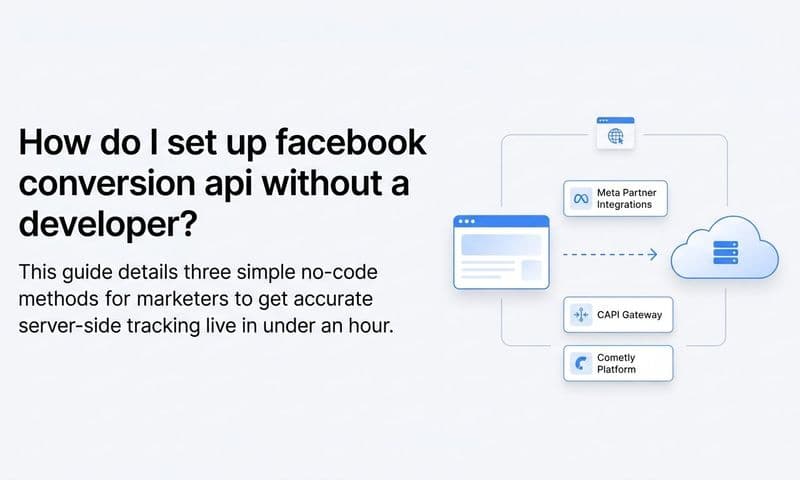
Start by accessing your Events Manager in Facebook Business Manager. Navigate to your pixel and look for the Conversions API setup option. If you're using platforms like Shopify, WordPress with specific plugins, or marketing tools like Cometly, server-side tracking can often be implemented with straightforward integrations that don't require custom coding.
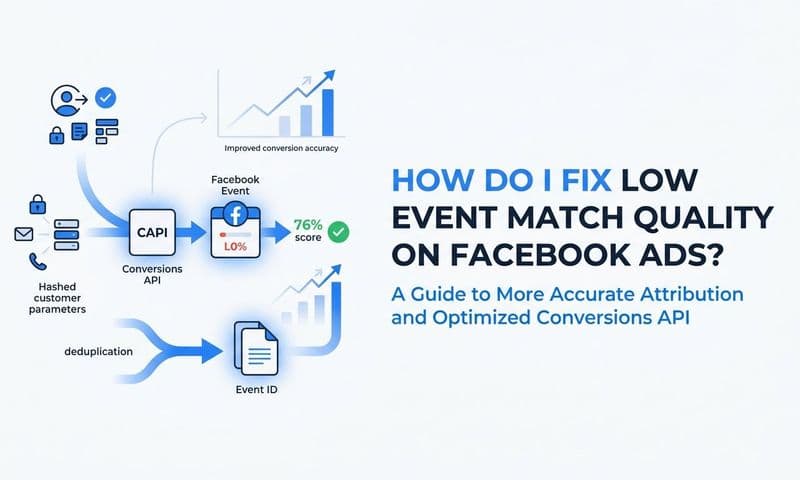
Once implemented, focus on your Event Match Quality score in Events Manager. This metric indicates how well your server-side conversion data matches Facebook users. Higher match quality means Meta can more accurately attribute conversions to specific users and ad exposures, which accelerates learning. Aim for "Good" or "Great" ratings by including customer information parameters like email, phone, and user agent data in your server events.
The compounding benefit here extends beyond the learning phase. Better conversion data doesn't just help you exit learning faster—it improves Meta's ongoing optimization, targeting accuracy, and lookalike audience quality. You're feeding the algorithm the complete picture it needs to find more people like your actual converters, not just the ones the pixel happened to catch. Implementing the best tracking solution for Facebook Ads is critical for long-term success.
Your success indicator: Check your Event Match Quality score in Events Manager after implementing Conversions API. You should see scores improve to "Good" or higher, and your total event count should increase as previously missed conversions are now captured.
Step 6: Enable Advantage Campaign Budget for Intelligent Spend Distribution
When you set individual budgets at the ad set level, you're making a rigid decision about how much each audience or approach deserves to spend. But during the learning phase, you don't actually know which ad sets will perform best—that's what learning is supposed to determine. Advantage Campaign Budget (formerly called Campaign Budget Optimization) solves this by letting Meta's algorithm distribute your total budget dynamically based on real-time performance.
Here's how it works: instead of allocating $100 to Ad Set A and $100 to Ad Set B, you set a $200 campaign budget and let the system decide how to split it. If Ad Set A starts generating conversions at $20 each while Ad Set B is stuck at $45, Advantage Campaign Budget automatically shifts more spend toward Ad Set A. This means your best-performing ad sets get the fuel they need to exit learning faster, while underperformers don't waste budget struggling.
The learning phase advantage is significant. With campaign-level budgeting, your high-potential ad sets aren't artificially constrained by preset limits. If one ad set is on track to generate 60 conversions this week while another will only hit 25, the budget flows toward the winner. This accelerates learning for your best performers and prevents you from overfunding ad sets that aren't gaining traction. This is a core principle of Facebook Ads optimization with data.
One concern advertisers have with Advantage Campaign Budget is that Meta might allocate all spend to one ad set, leaving others with no data. The solution is setting ad set spending limits. In your campaign settings, you can define minimum daily or lifetime spend amounts for each ad set, ensuring every approach gets enough budget to generate meaningful data. A practical approach: set minimums that guarantee each ad set can hit at least 30-40 conversions weekly—not quite the full 50, but enough to show potential.
When should you use campaign budget versus ad set budgets? If you're running multiple ad sets that are genuinely different approaches—different creative strategies, distinct audience types, or separate funnel stages—Advantage Campaign Budget helps you find winners faster. If you're running a single ad set or need precise control over spend distribution for strategic reasons, ad set budgets make sense.
Your success indicator: After enabling Advantage Campaign Budget, monitor the budget distribution in your campaign view. You should see spend shifting toward ad sets that are exiting or have exited learning, with those ad sets receiving proportionally more of your total budget as they demonstrate stronger performance.
Step 7: Monitor Learning Status and Diagnose Stuck Campaigns
Launching with the right structure is half the battle. The other half is knowing how to read what Meta is telling you about learning progress and responding appropriately when campaigns get stuck.
Your primary monitoring tool is the Delivery column in Ads Manager. Add it to your campaign view if it's not already visible. This column shows your current learning phase status: "Learning" means the algorithm is actively gathering data and making progress, "Active" means you've successfully exited learning, and "Learning Limited" means you're not generating enough conversion events to complete the process.
Check this status daily during the first week of any new campaign. "Learning" status should persist for approximately seven days if your campaign is properly structured and funded. If you exit learning in three or four days, that's excellent—it means you had strong conversion volume and gave the algorithm clear signal. If you're still in learning after ten days, something is constraining your conversion volume.
"Learning Limited" status is your red flag. This indicates Meta has determined your ad set won't reach 50 conversions weekly at current performance levels. Common causes include insufficient budget (your daily spend can't generate enough conversions even at optimal CPA), audience too narrow (not enough users in your targeting parameters), low conversion rates (traffic volume is fine but almost no one converts), or optimization event too rare (you're optimizing for an action that doesn't happen frequently enough).
Each cause requires a different fix. For budget issues, either increase your daily spend or switch to a cheaper conversion event. For narrow audiences, expand your targeting parameters or enable Advantage+ audience expansion. For low conversion rates, the problem is usually your offer, landing page, or creative—not your campaign structure. For rare optimization events, move to a higher-funnel conversion as discussed in Step 2. Addressing Facebook Ads reporting discrepancies can also reveal hidden issues affecting your learning phase.
Here's when to pause versus when to wait: If an ad set has been in "Learning Limited" for more than five days with minimal conversions (fewer than 10 total), pause it and restructure. The campaign isn't going to suddenly start working. If an ad set is in "Learning" status and generating conversions but just hasn't hit 50 yet, give it the full seven days before making changes. Patience during active learning pays off.
One often-overlooked diagnostic: check your frequency metric. If your ad frequency is climbing above 2.0 during the learning phase, your audience might be too small. You're showing ads to the same people repeatedly because there aren't enough users in your targeting parameters. This is a signal to broaden your audience or consolidate ad sets. Leveraging Facebook Ads insights helps you identify these patterns before they derail your campaigns.
Your success indicator: Most campaigns should exit learning within seven days with a stabilized CPA that's within 20-30% of your target. If you're consistently seeing learning phases extend beyond ten days or frequent "Learning Limited" status, revisit Steps 1-3 to ensure your structural foundation is sound.
Putting It All Together: Your Learning Phase Optimization Checklist
The Facebook Ads learning phase doesn't have to be a black box of frustration and wasted spend. When you understand the mechanics—50 conversions in seven days, sensitivity to changes, need for data volume—you can structure campaigns that move through learning efficiently and reach stable performance faster.
Before your next campaign launch, run through this checklist: Calculate your minimum budget based on 50 weekly conversions at your expected CPA. Verify your chosen optimization event generates sufficient weekly volume in your historical data. Consolidate similar audiences into fewer, better-funded ad sets. Commit to a seven-day hands-off period with no significant edits. Implement server-side tracking to capture conversions your pixel misses. Consider enabling Advantage Campaign Budget to let the algorithm allocate spend optimally. Set up daily monitoring of your Delivery status to catch issues early.
The campaigns that exit learning fastest aren't necessarily the ones with the best creative or the smartest targeting—they're the ones that give Meta's algorithm what it needs to learn. Sufficient budget, adequate conversion volume, structural simplicity, and clean data create the conditions for quick optimization and scalable performance.
One final insight: the learning phase isn't just about reaching stability—it's about building the foundation for long-term campaign success. The patterns Meta identifies during learning become the basis for ongoing optimization, audience expansion, and lookalike modeling. When you help the algorithm learn faster and more accurately, you're not just saving a few days of volatile performance. You're setting up campaigns that continue improving for weeks and months after they exit learning.
Ready to elevate your marketing game with precision and confidence? Discover how Cometly's AI-driven recommendations can transform your ad strategy—Get your free demo today and start capturing every touchpoint to maximize your conversions.