Every dollar you spend on advertising should be traceable to a result. Yet for many marketers, conversion data is riddled with gaps, duplicates, and misattributed events that make it nearly impossible to know what is actually working. Between browser privacy changes, iOS restrictions, cross-device journeys, and ad platforms self-reporting inflated numbers, the path from click to conversion has never been harder to follow.
The cost of inaccurate tracking is not just bad data. It is wasted budget, misguided optimization, and campaigns that scale in the wrong direction. You might be cutting the campaigns that are quietly driving your best customers while doubling down on ones that look good in a dashboard but never close a deal.
This guide walks you through a clear, repeatable process for setting up conversion tracking that reflects reality. You will learn how to define the right conversion events, implement server-side tracking, connect your ad platforms and CRM, validate your data, choose the right attribution model, sync enriched data back to ad platforms, and build an ongoing audit habit that keeps your numbers trustworthy over time.
Whether you are running ads on Meta, Google, TikTok, or multiple platforms simultaneously, these steps apply. The goal is not just cleaner reports. It is the confidence to make budget decisions, scaling moves, and optimization calls based on data you can actually trust.
Let us get your tracking right so you can finally trust the numbers behind your marketing decisions.
Step 1: Define Your Conversion Events and Funnel Stages
Before you touch a single tag or pixel, you need to get clear on what you are actually tracking. This sounds obvious, but it is the step most teams skip or rush, and it creates confusion that ripples through every report and optimization decision downstream.
Start by separating your conversion events into two categories: macro conversions and micro conversions.
Macro conversions are the high-value actions tied directly to revenue. Think purchases, qualified leads submitted, booked sales calls, or completed trials. These are the events that matter most to your business and should carry the most weight in your optimization strategy.
Micro conversions are the smaller steps that indicate intent and progression through your funnel. Examples include add-to-cart events, form starts, pricing page views, or video completions. These are useful for understanding behavior and diagnosing drop-off points, but they should not be your primary optimization signal sent to ad platforms.
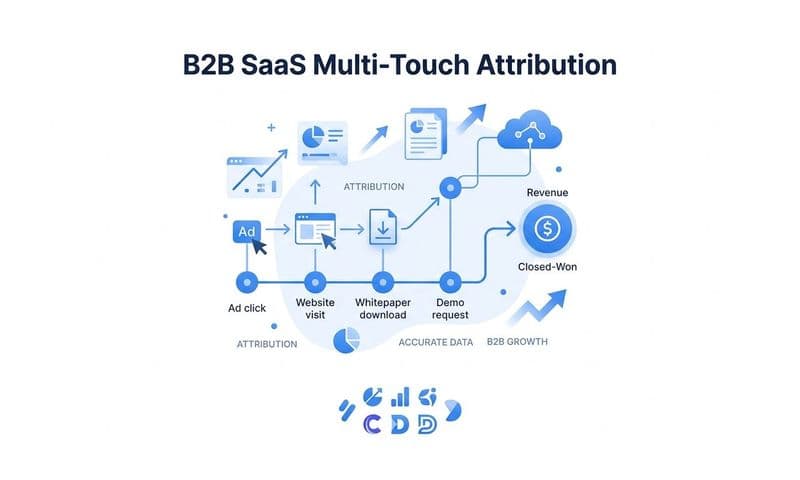
Once you have identified your events, map them to your full funnel. If you run a lead generation model, that might look like: ad click, landing page visit, form submission, marketing qualified lead (MQL), sales qualified lead (SQL), and closed-won deal. If you run an e-commerce model, it might be: ad click, product page view, add to cart, checkout initiation, and purchase. Learning how to track your marketing funnel accurately is essential for mapping these stages correctly.
This mapping exercise forces you to think about the entire customer journey from first touch to revenue, not just the moment someone fills out a form or hits a thank-you page. It also reveals where CRM data needs to connect with your tracking setup, which becomes critical in later steps.
Next, establish a clear naming convention. Every platform, tool, and team member should reference the same event names. If your CRM calls it "Closed Won" and your attribution tool calls it "Deal Closed" and your ad platform calls it "Purchase," you will spend hours reconciling data that should be automatic. Pick a convention and document it.
Common pitfall: Tracking too many low-value events clutters your data and dilutes the optimization signals sent back to ad platforms. If you send fifty different event types to Meta or Google, their algorithms struggle to understand what you actually want to optimize for. Focus on three to seven key events that represent meaningful funnel progression.
Success indicator: You have a documented list of three to seven key conversion events, each tied to a specific funnel stage, with a consistent naming convention shared across your team and tools.
Step 2: Implement Server-Side Tracking to Close Data Gaps
Here is the uncomfortable truth about browser-based tracking in 2026: it is no longer reliable enough to run a data-driven ad program on its own.
Browser pixels and client-side tags work by placing a small piece of JavaScript on your website that fires when a user takes an action. The problem is that this method depends entirely on the user's browser cooperating. And increasingly, browsers are not cooperating. Understanding the differences between server-side tracking vs pixel tracking is critical for making the right infrastructure decisions.
Apple's App Tracking Transparency framework, which began rolling out with iOS 14.5 and has expanded significantly since, limits the ability of pixels to track users across apps and websites on Apple devices. On top of that, a growing share of users browse with ad blockers enabled, which often block pixel scripts from firing at all. Safari's Intelligent Tracking Prevention further restricts cookie lifespans, meaning even users who do not use ad blockers may not be tracked accurately across sessions.
The result is a meaningful gap between the conversions that actually happen and the ones your pixel reports. And that gap compounds over time, quietly degrading your optimization decisions.
Server-side tracking solves this by moving the conversion event firing from the user's browser to your server. Instead of relying on a pixel script to fire in a browser that may block it, your server sends the conversion data directly to the ad platform's API. The browser's privacy settings become largely irrelevant because the data never passes through it. This is exactly why server-side tracking is more accurate than traditional pixel-based methods.
Here is how to approach the practical setup:
1. Choose a server-side tracking solution. You need a tool that can receive conversion data from your website or landing page, match it to ad click data, and forward it to your ad platforms. Cometly handles this end to end, capturing every touchpoint from ad clicks to CRM events and sending verified conversion data to platforms like Meta, Google, and TikTok via their server-side APIs.
2. Connect your website or landing page builder. Most modern web builders and e-commerce platforms have integration options. The goal is to ensure that when a conversion event occurs on your site, it is captured at the server level before it ever touches the user's browser environment.
3. Configure event matching parameters. Server-side tracking works best when you pass customer data like email addresses or phone numbers alongside conversion events. This allows platforms like Meta to match the conversion to a user in their system even without cookie data. The more matching parameters you provide, the higher your event match quality.
4. Run both browser and server-side tracking in parallel initially. During your transition, keep your existing pixel active while you validate that server-side events are firing correctly. Once you confirm the server-side setup is capturing events accurately, you can reduce reliance on the pixel.
Common pitfall: Relying solely on the Meta Pixel or Google tag without a server-side backup means you are likely missing a meaningful portion of your conversions. This is not a minor gap. It affects both your reporting accuracy and the quality of data you feed back to ad platform algorithms.
Success indicator: Conversion events fire consistently regardless of the user's browser, device, or privacy settings. You can verify this by comparing server-side event counts against your CRM or payment processor records.
Step 3: Connect Your Ad Platforms, CRM, and Revenue Data
Even with server-side tracking in place, you can still end up with a fragmented view of your marketing performance if your data lives in silos. Meta reports its own conversions. Google reports its own. Your CRM has a different number. And none of them agree.
This is not a bug. It is the natural result of each platform attributing credit differently and only seeing the portion of the journey that touches their ecosystem. The fix is to centralize your data in a single attribution platform that can reconcile all of it. If you are running campaigns on multiple networks, understanding the nuances of tracking conversions across multiple ad platforms is essential.
Start by connecting your ad platforms. Pull in your Meta Ads, Google Ads, TikTok Ads, LinkedIn Ads, and any other paid channels into one place. The goal is to see all your ad spend, clicks, and reported conversions side by side without switching between dashboards.
Next, connect your CRM. This is the step most teams skip, and it is the one that unlocks the most valuable insight. Your CRM holds the truth about what happened after the lead came in. Did they become a qualified opportunity? Did they close? What was the deal value? Without CRM data, you are optimizing for lead volume, not lead quality or revenue.
When you connect your CRM to your attribution platform, you can trace a specific ad, campaign, or channel all the way to closed revenue. You might discover that one campaign generates twice the lead volume but a fraction of the closed deals compared to another. That insight is invisible if you only track front-end conversions.
For e-commerce teams, connecting your payment processor or order management system serves the same purpose. You want to verify that the purchases your ad platforms report actually correspond to real transactions in your system, and you want to capture revenue values so you can calculate true return on ad spend. Teams focused on lead gen should also explore best practices for tracking conversions for lead generation specifically.
Cometly connects ad platforms, CRM, and website data to track the entire customer journey in real time, linking every touchpoint to revenue so you can see which specific ad drove a closed deal or purchase, all in one dashboard.
Common pitfall: Only tracking front-end conversions like form fills or add-to-cart events without connecting back-end revenue data means you are optimizing for volume, not quality. A campaign that generates many leads but few closed deals will look like a winner until you connect the CRM data and see the full picture.
Success indicator: You can open a single dashboard and see which specific ad, campaign, and channel drove a closed deal or purchase. The revenue data from your CRM or payment processor is visible alongside your ad spend, giving you a clear picture of true return on investment.
Step 4: Validate Your Tracking Setup Before Scaling
You have defined your events, implemented server-side tracking, and connected your platforms. Now, before you increase your budget or make any major optimization decisions, you need to verify that everything is actually working.
Skipping validation is one of the most expensive mistakes a marketing team can make. It is entirely possible to have a tracking setup that looks correct on the surface but is silently miscounting, duplicating, or missing conversions. Scaling on top of broken tracking amplifies every error. If your numbers already look off, it is worth investigating why your conversion tracking numbers are wrong before going further.
Here is how to validate systematically:
1. Run test conversions across every funnel stage. Go through your own funnel as a user. Submit a test lead, complete a test purchase, or trigger each conversion event manually. Then verify that each event appears correctly in your attribution tool, your ad platform event manager, and your CRM. If an event does not show up in all three places, you have a gap to fix.
2. Cross-reference conversion counts. Pull conversion numbers from your ad platform dashboards, your attribution tool, and your CRM or payment processor for the same time period. They will rarely match perfectly due to attribution window differences, but they should be reasonably close. Large discrepancies signal a problem worth investigating.
3. Check for common issues. Look for duplicate conversion events, which often happen when both a pixel and a server-side event fire for the same action. Check that UTM parameters are passing correctly through your landing pages and redirect chains. Verify that timezone settings are consistent across all platforms, since a mismatch can make it appear that conversions are missing when they are simply appearing in a different time window.
4. Use a controlled test budget. Run a small amount of spend across two or three campaigns specifically to confirm that data flows correctly from ad click to conversion event to attribution report. This gives you a low-risk environment to catch issues before they affect larger campaigns.
Common pitfall: Skipping validation and scaling immediately, only to discover weeks later that half your conversions were misattributed or duplicated. By then, your ad platform algorithms have already been trained on bad data, and unwinding the damage takes time.
Success indicator: Conversion counts in your attribution platform align with your CRM or payment records within a reasonable margin. Test events fire correctly and appear in all connected platforms without duplication.
Step 5: Choose the Right Attribution Model for Your Business
Once your tracking is validated and your data is flowing cleanly, you face a question that trips up even experienced marketers: how do you assign credit for a conversion when multiple touchpoints were involved?
That is the attribution model question, and the answer depends on your business, your sales cycle, and the complexity of your customer journey.
Here is a breakdown of the main models:
Last-click attribution gives 100% of the credit to the final touchpoint before conversion. It is simple and easy to understand, but it systematically over-credits bottom-of-funnel campaigns and ignores everything that happened earlier in the journey.
First-click attribution gives all credit to the first touchpoint. This is useful for understanding what initiates customer journeys, but it ignores the nurturing and closing touchpoints that also played a role.
Linear attribution distributes credit equally across every touchpoint in the journey. It is more balanced than single-touch models but does not account for the fact that some touchpoints have more influence than others.
Time-decay attribution gives more credit to touchpoints that occurred closer to the conversion. This reflects the reality that recent interactions often have more influence on the final decision, but it can undervalue early awareness campaigns.
Data-driven multi-touch attribution uses your actual conversion data to assign credit based on how each touchpoint statistically influenced the outcome. This is the most accurate model for most businesses, but it requires sufficient data volume to work well. Understanding how to track assisted conversions accurately is a key part of making multi-touch models work effectively.
Matching the model to your business matters. If you run an e-commerce store where customers typically convert in one or two sessions, last-click or time-decay attribution may be sufficient. If you run a B2B SaaS product with a 60-day sales cycle involving multiple ad exposures, retargeting campaigns, and content touchpoints, multi-touch attribution gives you a far more accurate picture of what is actually driving deals.
Cometly lets you compare attribution models side by side so you can see how credit shifts across channels when you change the model. This is particularly useful for understanding whether your top-of-funnel campaigns are being undervalued by your current default model.
Common pitfall: Defaulting to last-click attribution and over-crediting bottom-of-funnel retargeting campaigns while starving top-of-funnel efforts that actually initiate the customer journey. This creates a feedback loop where you cut the campaigns that generate awareness and then wonder why your retargeting pool shrinks.
Success indicator: You can articulate why you chose your attribution model, and it aligns with your actual sales cycle length and the number of touchpoints typically involved in a conversion.
Step 6: Sync Enriched Conversion Data Back to Ad Platforms
Here is a dimension of conversion tracking that many marketers overlook entirely: your conversion data does not just help you report on performance. It actively trains the algorithms that determine who sees your ads and how your budget is allocated.
Meta, Google, and other ad platforms use machine learning to optimize targeting and bidding. They look at the characteristics of users who converted and find more people who match that profile. But this only works if the conversion data you send them is accurate, timely, and enriched with enough information for their systems to learn from.
When your conversion data is incomplete or delayed, the algorithm is working with a distorted picture. It may optimize for users who look like your low-quality leads rather than your best customers. It may underbid for high-value audiences because it does not know those audiences convert at a higher rate. This is a common reason why your ad platform shows different numbers than your actual results.
Conversion sync closes this loop. Instead of only using conversion data for your own reporting, you send verified, enriched conversion events back to the ad platforms so their algorithms can use that data to improve targeting and bidding in real time.
Cometly's Conversion Sync sends enriched, conversion-ready events back to Meta, Google, and more. This means the conversion data that flows through your server-side tracking setup, validated and matched to real customer records, gets shared with ad platform algorithms to improve their optimization. The result is better targeting quality, more efficient bidding, and improved cost-per-acquisition over time.
The practical steps here involve configuring your attribution platform to send conversion events back to each ad platform via their respective APIs. You want to include as much matching data as possible, such as hashed email addresses, phone numbers, and customer identifiers, so the platform can accurately match the conversion to a user in their system.
You also want to be intentional about which events you send back. Sending your highest-value macro conversions, like purchases or closed deals, gives the algorithm the clearest signal about what you want to optimize for. Flooding it with micro conversions dilutes that signal.
Common pitfall: Treating attribution as a reporting-only tool and never closing the loop with ad platforms. This leaves their algorithms to optimize on whatever incomplete data they have collected on their own, which is almost always less accurate than what you can provide through a server-side conversion sync.
Success indicator: Ad platforms receive timely, accurate conversion signals. Over time, you notice improved cost-per-acquisition and better targeting quality as the algorithms learn from richer data.
Step 7: Monitor, Audit, and Optimize on an Ongoing Basis
Getting your tracking set up correctly is a significant achievement. But treating it as a one-time project is where many teams fall short. Tracking setups drift. Platforms update their policies. Funnels change. New campaigns introduce new UTM structures. And without regular audits, small data quality issues compound into major blind spots.
Build a recurring audit into your workflow. A weekly or biweekly review does not need to be exhaustive. It should focus on a few key checks: Are conversion counts within expected ranges? Are there any sudden drops or spikes that suggest a tracking break? Are UTM parameters passing correctly on new campaigns? Are all connected integrations still active and syncing? Understanding how wasted ad budget on untracked conversions accumulates will motivate your team to stay vigilant.
Use AI-powered recommendations to go beyond basic monitoring. Cometly's AI analyzes performance across every ad channel and surfaces insights about which campaigns and creatives are driving the best results. This turns your clean data into actionable direction, helping you scale what is working and cut what is not before budget is wasted.
Revisit your conversion event definitions and attribution model at least quarterly. As your product evolves, your sales cycle may change. As your ad mix shifts, the touchpoints in a typical customer journey may look different. An attribution model that made sense six months ago may no longer reflect how your customers actually buy. You should also keep an eye on emerging challenges like tracking conversions without cookies as privacy regulations continue to evolve.
Common pitfall: Treating tracking setup as a one-time project instead of an ongoing practice. Platforms update policies, tracking scripts break during site updates, and integrations occasionally disconnect. Without a regular audit habit, you may not notice data quality issues until they have already influenced major budget decisions.
Success indicator: You have a repeatable audit process on the calendar, and your team trusts the data enough to make budget decisions, scaling calls, and optimization moves based on it without second-guessing the numbers.
Putting It All Together: Your Accurate Conversion Tracking Checklist
Accurate conversion tracking is not a one-time setup. It is an ongoing system that compounds in value the longer you maintain it. Every clean data point you collect makes your next optimization decision more grounded, your next budget shift more confident, and your next scaling move more likely to succeed.
Here is a quick-reference checklist of the seven steps covered in this guide:
1. Define your conversion events and funnel stages. Document three to seven key events with a consistent naming convention tied to specific funnel stages.
2. Implement server-side tracking. Move beyond pixel-only tracking to capture conversions regardless of browser, device, or privacy settings.
3. Connect your ad platforms, CRM, and revenue data. Centralize all your data so you can trace every ad to actual revenue, not just front-end conversions.
4. Validate your setup before scaling. Run test conversions, cross-reference counts, and confirm data flows correctly across all connected platforms.
5. Choose the right attribution model. Match your model to your sales cycle length and touchpoint complexity, and compare models side by side to understand how credit shifts.
6. Sync enriched conversion data back to ad platforms. Close the feedback loop so ad platform algorithms optimize on your best, most accurate conversion signals.
7. Monitor, audit, and optimize on an ongoing basis. Build a recurring review process and use AI-powered recommendations to continuously improve performance.
When your data is trustworthy, every decision you make is grounded in reality. You stop guessing which campaigns to scale and start knowing. You stop cutting budgets based on incomplete reports and start making moves based on actual revenue attribution.
Cometly brings all of this together in one platform. From server-side tracking and multi-touch attribution to AI-powered recommendations and Conversion Sync, it gives marketers the complete picture they need to stop guessing and start scaling with confidence. Every touchpoint is captured, every conversion is connected to revenue, and every ad platform receives the enriched data it needs to perform at its best.
Ready to elevate your marketing game with precision and confidence? Discover how Cometly's AI-driven recommendations can transform your ad strategy. Get your free demo today and start capturing every touchpoint to maximize your conversions.